
The Effect of Bio and Inorganic Fertilizer on Yield, Nutrient Uptake and Economics of Mungbean (Vigna Radiata L. Wilczek) Varieties in Ethiopia
The wide use of mungbean (Vigna radiate) as food crops forages and green manure is mainly associated with their ability to establish symbiotic association with root nodulating rhizobia. The field experiment was conducted at Kemisie Zone Dawachefa district, Ethiopian in 2017 was designed to study the effect of different levels of bio fertilizers and phosphorus on yield, nutrient uptake and economics of mungbean varieties for improving the overall productivity of the crop. The experiment was laid out with split plot design with three replications. Three levels of Rhizobium inoculation rates (0, 400g and 500g) and three level of phosphorus (0, 23 and 46 kg P2O5 ha-1) as the sub-plot factor and two different varieties as main plot, thereby, making eighteen treatment combinations. The result showed that Rhizobium and phosphorous had significant (p < 0.05) effect on morphological and phonological traits. An increase in the rate of application of Rhizobium and phosphorous linearly increase agronomic, yield and yield component traits. The maximum seed yield (1808 kg ha-1) was obtained when we apply 500g Rhizobium inoculants and 0 kg P2O5 ha-1. Thus the application of Rhizobium inoculants at 500g alone or Rhizobium inoculants 500g combined with phosphorus application at the rate of 23 kg P2O5 ha-1 were economically optimum level for harvesting the highest yield of mungbean for the region. Despite significant increases observed in yield, nutrient uptake, economic response to the recommended rates of bio fertilizer, future studies should focus on multi-locations and seasons to arrive at conclusive results.
Introduction
The conversion of N2 into ammonia is facilitated through biological and chemical fixation, of which 60% is fixed by biological nitrogen fixation (BNF) [1]. The various legume crops and pasture plants is estimated to fix about 200-300kg of N/ha/yr and the global nitrogen fixation by BNF is estimated to be as much as 70 times 106 metric tons/yr [2]. The nitrogen thus fixed is the major source of nitrogen to different biological production systems. Consequently, legumes are integrated into various cropping systems such as alley cropping, intercropping and crop rotations [3]. The wide use of legumes as food crops, forages and green manure is mainly associated with their ability to establish symbiotic association with root nodulating rhizobia [4]. These enabled legumes to grow in depleted and exhausted soils in the absence of nitrogen fertilizers. However, all legumes are not capable of nodule formation and nitrogen fixation.
Mungbean (Vigna radiate) is a warm season annual seed legume. The crop requires 75 up to 90 days to mature. It is an important pulse crop with global economic importance. Mungbean can also be used as a green manure crop and its green plants are used as fodder after removing the mature pods. The sprouted seeds of mungbean are rich in ascorbic acid (vitamin C), riboflavin and thiamine [5]. It has a special importance in intensive crop production system of the country for its short growing period [6]. It is useful crop in drier areas and has a good potential for crop rotation and relay cropping with cereals using residual moisture. It is one of the shortest duration field crops in the world (can be harvested within two months), soil Rhizobium bacteria around the mungbean root zone can symbiotically fix N2 gas from the air and this makes it among the most popular components in the cropping systems [7].
In Ethiopia these crop also growing in smallholder farmers in drier marginal environments. Mungbean production in Ethiopia has grown three times in a year covering 43,680 hectare with an average yield of 0.78 tone ha-1, which is much lower than that of India and some other countries of the world [8]. Hence, there is a scope for improving the production potential of this crop by use of inorganic manures, and bio-fertilizers. Mungbean being a legume crop does not require much nitrogen except in small quantities in the beginning of its life cycle. Nitrogen is an essential constituent of compounds like amino acid, protein, nucleic acid, prophyrin, flavine, pyridines, nucleotides, enzymes, coenzymes and alkaloids [9]. Phosphorus plays a very significant role in the formation of energy rich phosphate bond (like ADP and ATP), nuclear protein, phospholipids and is also essential for growth of root system. It improves the quality of grains and serves the dual purpose of increasing yield of main crop as well as succeeding crop [10]. Bio-fertilizers play an important role in increasing availability of nitrogen and phosphorus besides increase in biological fixation of atmospheric nitrogen and enhance phosphorus availability to crop. Therefore, introduction of efficient strain of Rhizobium in soil enhances the quality of soil by providing more nitrogen fixation and which may be helpful in boosting up production. Inoculation of seeds with Rhizobium culture is a very low cost method of nitrogen fertilization in legume and has been found beneficial [11].
Despite the growing demand in the international market there is chronic supply gap in Ethiopia in terms of production. The major contributor to this increase in production is the remarkable improvement in productivity than the expansion in area. Several works showed that most of the rhizobia nodulation of legumes crop are very effective in soil fertility and nitrogen fixation and substantial yield increments have been reported for wheat planted after legume in Ethiopia and other countries [12, 13]. Application of such beneficial microbes alone or along with fertilizers are an economically and environmentally promising strategy and can aid in replenishing and maintaining long-term soil fertility by providing good soil biological activity, by suppressing pathogenic soil organisms; by stimulating microbial activity in the rhizosphere and to improve plant health of the various plant nutrients, even though P2O5 is abundant in soil, its availability is limited in plants due to fixation by other soil elements such as insoluble phosphates of iron, aluminum, and calcium [14, 15]. So the use and application of rhizobia nodulation and phosphorous seems to be the most effective way for the cultivation of summer mungbean. There was a gap of information on the actual rates of bio fertilizer and phosphorus specifically in the stated region; hence blanket recommendation was still used [16]. Therefore, the research findings could contribute to the development of rhizobial inoculants to fully realize the potential of BNF in low input agriculture in the country. In light of this the present study is aimed to study the effect of different levels of bio fertilizers and phosphorus on yield, nutrient uptake and economics of mungbean varieties for improving the productivity and overall production of the crop.
Materials and Methods
Description of the Study Area
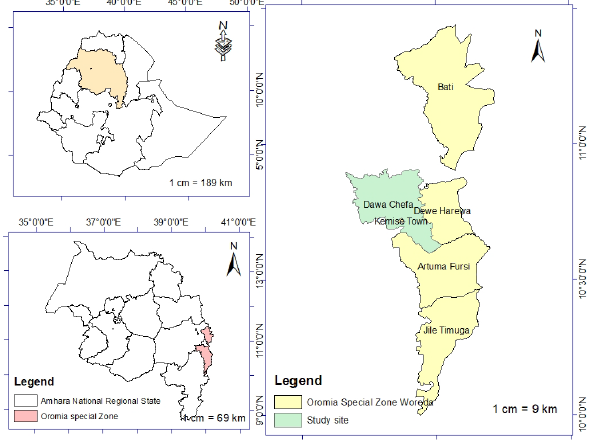
Field experiment was conducted in Amhara Region, Oromiya Zone Dawachefa district on farmers training center field near Kemisie during the 2016 main cropping season (Figure 1). The area is characterized by moisture deficit environments. The average annual minimum and maximum temperatures are 200C and 320C, respectively [16]. The experiment was carried out under rain-fed conditions. Weeding was done at two weeks after emergence and three weeks after the first weeding manually.
Plant Materials
Two mungbean varieties namely N-26 and Shewarobit were used. The varieties were planted in July with a row- to row distance of 30 cm with total of four rows with plot size of (0.8 m2).The recommended agronomic packages for the location was applied for growing a successful crop.
Soil sampling preparation and analysis was considered using the standard laboratory procedures. Seed and leaf nitrogen content was done as per the procedure of Fischer RA, et al. [18]. The percentage of nitrogen uptake was calculated as described by Ryan MG, et al. [19]. Seed and leaf phosphorus content analysis was done as per protocol [18]. The percentage phosphorus uptake was calculated as described by Ryan MG, et al. [19].
Experimental Design and Treatments
A split plot design with three replications was used. Mungbean varieties (N-26, Shewarobit) where taken as the main plot, whereas Rhizobium at the rate (0, 80 and 100 % inoculation) and phosphorus at the rate (0, 23 and
46 kg P 2O5 ha-1) where adjusted as the sub- plot treatments.
Seeds Inoculation and Experimental Procedure
Mungbean seeds were inoculated with legume fix inoculants /Rhizobium/ using the Slurry method outlined by Woomer PL, et al. [17]. The seeds of N-26 and Shewarobit varieties were each divided into three bowls with each one weighing 1 kg. The inoculum was then poured over the 1 kg seeds of each mungbean variety in the bowl after sprinkling water over the seeds. The seeds and inoculum in the bowl were mixed carefully until seeds were coated with black film of inoculants and allowed to dry for a minute after which they were planted in the rows. The full recommended rate of inoculation (100 % inoculation) was done at the rate of 5.4g of Rhizobium inoculants per 270g of seed just before planting while the inoculation rate was done by mixing 4.32g of Rhizobium inoculant with 270g of the seeds.
Days to flowering, Days to maturity, root length, number of nodules, number of branches plant-, number of pods plant-1, number of seedspod-1, 1000-seed weight (g), plant height (cm), leaf biomass plant-1, total biomass plot-1 (g), seed yield (g plot-1), harvest index, seed nitrogen uptake (kg ha-1), leaf nitrogen uptake (kg ha-1), total nitrogen uptake (kg ha-1), seed phosphorus uptake (kg ha-
1), leaf phosphorus uptake (kg ha-1), and total phosphorus uptake (kg ha-1) were considered in the data collection.
Statistical Analysis
All the data collected were subjected to statistical analysis using SAS software. All treatment means were compared using the Duncan multiple range test at 5 % level of significance.
Result and Discussion
Physical and Chemical Characteristics of the Experimental Soil before Planting
Soil analysis before sowing indicated that the soil has medium level of total nitrogen, available phosphorus, and organic matter. The pH of the soil was 7.2 showing nearly neutral. FAO Reported that the preferable pH ranges for most crops and productive soils are 4 to 8. Thus, the pH of the experimental soil was within the range of productive soil [20]. The level of phosphorous content of the experimental soil was high (12.8ppm) (Table 1). The organic carbon content (1.69%) and total nitrogen (0.12%) of the soil were low. According to low organic carbon and nitrogen content in the study area indicates low fertility status of the soil which is a limiting factor for optimum crop growth [21]. This could be due to continuous cultivation, depletion nutrient and lack of incorporation of organic materials into the soil.
Soil Analysis after Harvesting
The analysis of variance showed that there was highly significant (p<0.01) difference among treatments in the total nitrogen content. According to the soil textural class determination triangle, the soil of the experimental site was found to be clay loam (Table 1). The texture indicated the degree of weathering, nutrient and water holding capacity of the soil. High clay content might indicate better water and nutrient holding capacity of the soil in the experimental site. The Rhizobium inoculation and the application phosphorous fertilizer did not influence the soil pH 7.2, showing nearly neutral. Thus, the pH of the experimental soil was within the range of productive soils (Table 2).
The application of different dose of phosphorus and Rhizobium on the soil after harvest, showed highly significant effect on available phosphorus.
| Physical properties | Chemical properties | |||||||||||||||||||||||||
|---|---|---|---|---|---|---|---|---|---|---|---|---|---|---|---|---|---|---|---|---|---|---|---|---|---|---|
| P | article siz | e | Distribution (% | ) | Textural class | pH | O | C (% | ) | OM (%) | Total N (% | ) | Avail P (ppm) | Avail K(ppm) | ||||||||||||
| Sand | 10 | Clay loam | 7.2 | 1.69 | 2.6 | 0.12 | 18.8 | 21.95 | ||||||||||||||||||
| Silt | 34 | |||||||||||||||||||||||||
| Clay | 70 |
Table 1: Selected physico - chemical properties of the experimental soil after harvesting.
According to Olsen SR, et al. phosphorus sufficiency test soil grouping, the level of phosphorus content of the experimental soil was high (66.4ppm) [22]. The organic carbon content was recorded (1.93%) and total N (0.19%) of the soil were low. As per the classification made by Wakene N, et al. the soil has low organic carbon and nitrogen content in the study area, indicates medium fertility status [23]. The comparison before and after the crop harvest showed that, there was an increase in organic carbon content, organic matter, total nitrogen, available phosphorus while there was no difference in available potassium [22, 23].
| Chemical properties | |||||||||||||||||
| pH | OC (%) | OM (%) | Total N (%) | A | vailable P (ppm | ) | A | vailable K (ppm | ) | ||||||||
| 7.25 | 1.935 | 3.3 | 0.19 | 66.4 | 21.94 |
Table 2: Selected physico - chemical properties of the experimental soil after harvesting.
The effect of Rhizobium and Phosphorous on Morphological and Phonological Traits
Both varieties, application of Rhizobium and phosphorous have showed significant effects (p < 0.05), on days to 50% flowering and 90% physiological maturity, plant height, nodules number and number of branches while their interaction was non- significant effect (Table 3). An increase in the rate of application of Rhizobium and phosphorous linearly increase the mean for plant height, nodules number, root length and number branch in both cultivar.
The lowest mean for plant height, root length, nodules number, and number branch was recorded with the control treatment. Treatment combination of 500g Rhizobium inoculants and P205 46 kg ha-1 showed the longest mean values for 50% flowering and days to 90% physiological maturity. The highest mean values for plant height, and root length recorded for treatment combination of 500g Rhizobium inoculants and P205 46 kg ha-1, whereas treatment combination B500 and P205 23 kg ha-1 showed the highest number of branches plant-1 (Table 3). Number of nodules significantly influenced at high rate (100 %) Rhizobium inoculants with 46 and 0 kg ha-1 phosphorus levels produced (35.5 and 30.5 plant-1), respectively. This observation showed that, mungbean response positively for growth parameter at high rate (100 %) of Rhizobium inoculants and 23-46 kg P205. The overall improvement in crop growth under the influence of Rhizobia plus P2O5 application could be attributed to better environment for growth and development that might be due to increased availability of nitrogen to the growing plants. Further, addition of phosphatic fertilizers in the soil increases the concentration of readily available phosphorus in the rhizosphere. The increased availability of phosphorus to plant, might have enhanced early root growth and cell multiplication leading to more absorption of other nutrients from deeper layers of soil ultimately resulting an increased in plant growth in terms of plant height, root length, number of nodules and number of branches. In agreement to this finding, reported that phosphorus application at the rate of 60 kg P2O5 ha-1 significantly increased nodulation [24].
The application of Rhizobium 500gm ha-1 and P205 46 kg ha-1 increased plant height by 26.5 %, over the control (Table 3). An increment of plant height with the highest level of Rhizobium was probably due to the availability of nitrogen due to nitrogen fixation.
| Treat. No. | Treatment | DF | DM | PH | RL | NN | NB | ||||||||||||||||
|---|---|---|---|---|---|---|---|---|---|---|---|---|---|---|---|---|---|---|---|---|---|---|---|
| 1 | P 0 0B0 2 5 | 50.5b | 71.5b | 52cd | 22.17c | 11.17d | 4.33c | ||||||||||||||||
| 2 | P 0 0B400 2 5 | 52.33a | 73.3a | 58.83b | 29.83b | 22.17c | 5c | ||||||||||||||||
| 3 | P 0 0B500 2 5 | 52ab | 73a | 64.33a | 35.33ab | 35.5a | 5.17b | ||||||||||||||||
| 4 | P 0 23B0 2 5 | 50.17b | 71.2bc | 57.5b | 26.5c | 18.83c | 4.67c | ||||||||||||||||
| 5 | P 0 23B400 2 5 | 52ab | 73a | 63ab | 34ab | 24.33b | 6ab | ||||||||||||||||
| 6 | P 0 23B500 2 5 | 52.83a | 73.8a | 66.5a | 35.83ab | 30.17ab | 6.67a | ||||||||||||||||
| 7 | P 0 46B0 2 5 | 49.5bc | 70.5bc | 53.67c | 23.83c | 12.83d | 4.5c | ||||||||||||||||
| 8 | P 0 46B400 2 5 | 51.83ab | 72.8a | 64.17a | 35.17ab | 24.17b | 5.5b | ||||||||||||||||
| 9 | P 0 46B500 2 5 | 52.83a | 73.8a | 65.83a | 36.83a | 30.5ab | 6.5a | ||||||||||||||||
| LSD at 5% SP | 1.55 | 1.55 | 3.97 | 5.2 | 6.15 | 0.89 | |||||||||||||||||
| 1 | Shewa Robit | 50.5b | 71.5b | 58.7a | 27.7a | 19.93b | 5.41a | ||||||||||||||||
| 2 | N-26 | 52.5a | 73.6a | 62.6a | 34.4a | 26.67a | 5.33a | ||||||||||||||||
| LSD at 5% MP | 0.422 | 0.422 | 9.188 | 10.62 | 6.56 | 1.389 | |||||||||||||||||
| Grand mean | 51.56 | 72.56 | 60.65 | 31.06 | 23.3 | 5.37 | |||||||||||||||||
| CV% | 2.6 | 1.8 | 5.6 | 13.9 | 22.4 | 14 |
Table 3: Effect of Rhizobium, phosphorous rate and variety on morphological and phonological traits of Mungbean.
DF=Days to flowering, DM=Days to maturity, PH=plant height, RL=root length, NN=number of nodules NB=number of branches plant-1 Table 3: Effect of Rhizobium, phosphorous rate and variety on morphological and phonological traits of Mungbean.
This result was in line with who reported that an increasing nitrogen rates increased the plant height. Reported the highest plant height was recorded on plot receiving 35 kg P2O5ha-1 with Rhizobium inoculums on mungbean [25, 26]. Statistical analysis revealed that, the effect of with phosphorous and Rhizobium alone, were highly significant on root length. Similar results were also reported by Solaiman ARM, where Rhizobium inoculants alone gave 30% higher root length over uninoculated control [27].
Seed inoculation with Rhizobium alone (500g) and 500g plus P2O5 46 kg ha-1significantly increased nodule number plant-1 (218%) and (173%) compared to the uninoculated seeds of mungbean, respectively (Table 3). In agreement with this found that 50 kg P2O5 ha-1 with other fertilizers increased nodule number over the control by 245% on mungbean. In line with this reported that, seed inoculation with Rhizobium and application of 40 kg P2O5 ha-1 in chickpea (Cicer arietinum) either alone or in combination enhanced nodulation over uninoculated control [24, 28]. Khanam D also reported similar results with lentil [29].
Seed inoculation at the higher rate of Rhizobium (500 g) in combination of (P205 23 and P205 46 kg ha-1) produced significantly higher number of branches plant-1 than all other treatments (Table 5). In line with the present study, Muhammad D, reported that the number of branches plant-1 was significantly influenced by both higher level of Rhizobium inoculums and phosphorous application [26]. Also found an increased dry matter accumulation of mungbean with application of 20 kg N and 60 kg P2O5ha-1 over the control [30]. Similarly increases in various growth attributes in different pulses have been reported by Borse PA, et al. [31, 32, 33].
Effect of Rhizobium, Phosphorous and Cultivar on Yield and Yield Components of Mungbean
The effect of Rhizobium and phosphorous was significant on number of pods plant-1 (Table 4). Treatment containing 500 g Rhizobium with P20546 kg ha-1 produced 127% higher number of pods plant-1 than the control. Malik MA and Muhammad D reported similar observation on mungbean. Combination of Rhizobium inoculation and phosphorous application had a significant effect on leaf biomass plant-1, biomass plot-1 (g), seed yield in kg-1, and harvest index (Table 4) [9, 26]. An increase at the rate of Rhizobium and phosphorous linearly increase number of pods plant-1, 1000-seed weight (g), leaf biomass plant-1, biomass in g plot-1, seed yield in kg-1, and harvest index (Table 4). Malik MA, Reported that seed inoculation with Rhizobium significantly increased 100 seed weight of mungbean [34]. The highest biomass (7.7 tones ha-1) was found with treatment combination of 500 g Rhizobium plus P20546 kg ha-1 and the lowest biomass (3.2 tones ha-
1) was obtained with uninoculated treatment (Table 4).
Besides the analysis result showed that cultivars vary significantly at (P> 0.05) for leaf biomass plant-1, total biomass plot-1, seed yield in kg-1, and harvest index performance.
Seed yield of mungbean was significantly influenced by the different levels of phosphorus and Rhizobium inoculants. Treatment combination of 500 g Rhizobium plus P20546 kg ha-1 produced the highest seed yield (1846 kg ha-1), 58% yield advantage over the uninoculated control (Table 4). The application of Rhizobium 500g plus 46kg ha-1phosphorous significantly increased number of pods plant-1, number of seeds pod-1, and biological yield, and net returns of mungbean over the control (Table 4). The combined application of Rhizobium and phosphorous to mungbean might be increased the availability of major nutrients to the plant due to enhanced early root growth and cell multiplication leading to more absorption of other nutrients from deeper layers of soil ultimately resulting in increased crop growth rate and finally increased crop yield. Besides the increased yield attributes and yield might be due the increased supply of the major nutrients (NPK) by translocation of the photosynthates accumulated under the influence of the sources of inorganic nutrients. Further, the translocation and accumulation of photosynthates in the economic sinks, resulted an increased seed yield, leaf and biological yields. Malik MA, observed that phosphorous at 50 and 100 kg ha-1 increased mungbean seed yield over the control [34]. In addition to these, increased yield attributes and yield by various workers have been reported in different pulses [30].
Harvest index was significantly influenced by the application of phosphorous and Rhizobium inoculant (Table 4). The highest harvest index was recorded when Rhizobium inoculated with 500g alone, whereas the lowest harvest index was recorded for the control on both the test cultivars. Herridge DF observed that phosphorous at 50 and 100 kg ha-1 and Rhizobium 500g ha-1 increased mungbean harvest index than the control [7].
Effects of Rhizobium and Phosphorous on the Nutrient Uptake of Mungbean
Seed, leaf nitrogen content and uptake significantly influenced by the application of Rhizobium and phosphorus rates and the interaction. While non- significant variations were observed between cultivars for nitrogen content. The results showed that, higher nitrogen content was found in the leaf as compared to the seed at all levels of Rhizobium and phosphorus application. The highest nitrogen content was recorded in the leaf at the rate of Rhizobium (500g) plus phosphorous at 46kg P2O5 ha-1 (Table 5). Seed inoculation at higher dose of Rhizobium, and phosphorus significantly enhanced nitrogen and phosphorus content and their uptake and nitrogen content in seed over untreated control. This may be due to more nitrogen fixation by the bacteria which in turn helped in better absorption and utilization of all the plant nutrients, thus resulting in more nitrogen and phosphorus content in seed and leaf. The same conclusion was made by Awomi TA, nitrogen uptake was significantly higher with higher dose of Rhizobium and phosphorus, while lower with lower dose of Significant differences were also observed among Rhizobium and phosphorus rates for seed and leaf phosphorous uptake and its interaction with varieties. Phosphorus content in leaf was found significantly the highest with the Rhizobium 500 g in combination with phosphorous 23 P2O5 ha-1 in the Shewarobit cultivar and Rhizobium 500 g in combination with Phosphorous 46 P2O5 ha-1 in N-26 cultivar (Table 5).
Rhizobium [35]. Besides, these results are also confirmed by Walley FL, a significant increase in N uptake or their contents in the leaves or biomass due to Rhizobium and phosphorus application in chickpea [36].
| No. | Treatment | NP | NS | SWT | LB | BM | SY | HI | ||||||||||||||||||
|---|---|---|---|---|---|---|---|---|---|---|---|---|---|---|---|---|---|---|---|---|---|---|---|---|---|---|
| 1 | P 0 0B0 2 5 | 31.0d | 8.8a | 6.2a | 3233.8 | 5254.1 | 1157.0c | 21.9b | ||||||||||||||||||
| 2 | P 0 0B400 2 5 | 55.5b | 10.0a | 6.5a | 4101 | 6677.9 | 1588.0b | 24.2a | ||||||||||||||||||
| 3 | P 0 0B500 2 5 | 60.3b | 10.5a | 6.3a | 4541.6 | 7366.1 | 1682.0b | 23.0ab | ||||||||||||||||||
| 4 | P 0 23B0 2 5 | 35.3cd | 9.8a | 4.6a | 3586.3 | 5813.8 | 1292.0c | 22.1b | ||||||||||||||||||
| 5 | P 0 23B400 2 5 | 57.7b | 10.3a | 5.8a | 4386.9 | 7120.5 | 1620.0b | 22.9a | ||||||||||||||||||
| 6 | P 0 23B500 2 5 | 62.0ab | 9.8a | 6.8a | 4602.4 | 7459.1 | 1712.0ab | 23.1ab | ||||||||||||||||||
| 7 | P 0 46B0 2 5 | 42.3c | 9.7a | 5.9a | 3469.1 | 5614.4 | 1266.0c | 22.6b | ||||||||||||||||||
| 8 | P 0 46B400 2 5 | 63.2ab | 10.2a | 7.0a | 4528.3 | 7351.2 | 1745.0ab | 24.0a | ||||||||||||||||||
| 9 | P 0 46B500 2 5 | 70.3a | 10.3a | 7.3a | 4766 | 7738.2 | 1846.0a | 24.2a | ||||||||||||||||||
| LSD at 5% SP | 9.21 | 0.9 | 2.5 | 350.5 | 570.3 | 174 | 1.71 | |||||||||||||||||||
| 1 | Shewa Robit | 53.1a | 10.0a | 6.5a | 3849.5b | 5928.2b | 1478.0b | 24.9a | ||||||||||||||||||
| 2 | N-26 | 53.0a | 9.9a | 6.1a | 4420.6a | 7492.9a | 1612.0a | 21.5b | ||||||||||||||||||
| LSD at 5% MP | 11.19 | 2.09 | 0.844 | 529.334 | 842.605 | 129.7 | 1.17 | |||||||||||||||||||
| Grand mean | 53.1 | 9.94 | 3.626 | 4135.06 | 6710.59 | 1545 | 23.13 | |||||||||||||||||||
| CV% | 14.8 | 7.9 | 11.5 | 7.2 | 7.2 | 9.6 | 6.3 |
Table 4: Effect of Rhizobium, phosphorous and varieties on yield and yield component traits of Mungbean.
NP=number of pods plant-1, NS= number of seeds pod, SW=100-seed weight (g), LB=leaf biomass in gm, BI= biomass in gplot-1, SY=seed yield in kg ha-1, HI=harvest index %, SP= Sub-plot, MP= main plot Table 4: Effect of Rhizobium, phosphorous and varieties on yield and yield component traits of Mungbean.
The application of phosphorus might have improved the nutritional environment in rhizosphere as well as in plant system leading to the increased uptake and translocation of nutrients especially of nitrogen, and phosphorus in reproductive structures which led to higher content and uptake. Since, uptake of nitrogen and phosphorus were the function of seed and biomass yields and their concentration. Thus the significant increase in concentration of these nutrients coupled with increased seed and biomass yield enhanced the total uptake of thus nutrient.
Rhizobium inoculants alone led to 239 % higher phosphorus uptake over the control in N-26 cultivar. In line with this study, Chowdhury MI, reported that phosphorus content and uptake increased in both seed and leaf due to inoculation with Rhizobium in cowpea [37]. Besides Prajapati JP also reported similar findings; phosphorus content in the leaf biomass was significantly affected at higher level of Rhizobium inoculants and phosphorus rate [38]. In agreement with the present study, Prajapati JP reported the judicious application of phosphorous with Rhizobium was significantly increase the nutrient uptake [39].
| TN in leaf | TN in seed | AvP in leaf | AvP in seed (ppm) | |||||||||||||||||||||||
|---|---|---|---|---|---|---|---|---|---|---|---|---|---|---|---|---|---|---|---|---|---|---|---|---|---|---|
| Treatmen | t | |||||||||||||||||||||||||
| S | hewarobi | t | N-26 | S | hewarobi | t | N-26 | Shewarobit | N-26 | Shewarobit | N-26 | |||||||||||||||
| P0B0 | 1.25cd | 1.20a | 0.82d | 0.80c | 0.64d | 0.64c | 0.12ab | 0.08a | ||||||||||||||||||
| P0B400 | 1.30b | 1.36b | 0.83c | 0.79d | 0.60d | 0.80bc | 0.12ab | 0.64a | ||||||||||||||||||
| P0B500 | 1.33b | 1.15c | 0.79e | 0.88a | 0.92b | 0.98bc | 0.28a | 0.20a | ||||||||||||||||||
| P23B0 | 1.28c | 1.16c | 0.90b | 0.74g | 0.80c | 0.96bc | 0.44a | 0.92a | ||||||||||||||||||
| P23B400 | 1.26c | 1.20d | 0.78e | 0.77f | 0.82c | 1.06bc | 0.28a | 0.76a | ||||||||||||||||||
| P23B500 | 1.54a | 1.37be | 0.95a | 0.85b | 1.38a | 1.00bc | 0.12ab | 0.16a | ||||||||||||||||||
| P46B0 | 1.15e | 1.22f | 0.85c | 0.78df | 0.82c | 2.53a | 0.44a | 0.84a | ||||||||||||||||||
| P46B400 | 1.22f | 1.43g | 0.85c | 0.81c | 0.70cd | 1.24b | 0.48a | 0.76a | ||||||||||||||||||
| P46B500 | 1.34b | 1.37h | 0.81de | 0.88a | 0.94a | 1.56b | 0.40a | 0.64a | ||||||||||||||||||
| LSD (5%) | 0.02 | 0.02 | 0.01 | 0.01 | 0.2 | 0.55 | NS | NS |
Table 5: Effects of Rhizobium and phosphorous treatments on nitrogen (N) and phosphorus (P) uptake of mungbean.
Economics of Rhizobium, Phosphorous and Variety of Mungbean
were recorded with yield obtained from the control treatment. Application of a combination of 23 P2O5 ha-1 with 500g Rhizobium gave the maximum gross return (36576 ETB ha-1) and net return (34661 ETB ha-1) in Shewarobit. The best economic return was obtained from the combination of treatment of P2O5 kgha-1 plus 500g Rhizobium with gross return of (40010 ETB ha-1) and net return of (39294 ETB ha-1) in N-26 variety.
The economic parameters such as cost of cultivation, gross return, net return were found maximum with the higher dose of phosphorus (23 or 46 P205 ha-1) together with full higher dose of Rhizobium inoculation (500g) at N-26 cultivar (Table 7). The lowest economic parameters
| Treat. | Treatments | Yield | Adjusted yield | Gross return | Total variable cost | Net return | |||||||||||||||
| No. | (Rhizobium x P) | kg/ha | (kg/ha) | (ETB/ha) | (ETB/ha) | ||||||||||||||||
| (ETB/ha) | |||||||||||||||||||||
| Shewarobit Cultivar | |||||||||||||||||||||
| 1 | P0 | B0 | 1039 | 935.1 | 27074 | 675 | 26399.3 | ||||||||||||||
| 2 | P0 | B400 | 1459 | 1313 | 31037 | 715 | 30321.5 | ||||||||||||||
| 3 | P0 | B500 | 1604 | 1444 | 34889 | 715 | 34173.5 | ||||||||||||||
| 4 | P23 | B0 | 1242 | 1118 | 33388 | 1875 | 31512.8 | ||||||||||||||
| 5 | P23 | B400 | 1536 | 1382 | 32513 | 1915 | 30597.5 | ||||||||||||||
| 6 | P23 | B500 | 1696 | 1526 | 36576 | 1915 | 34661 | ||||||||||||||
| 7 | P46 | B0 | 1272 | 1145 | 29324 | 1875 | 27449.3 | ||||||||||||||
| 8 | P46 | B400 | 1681 | 1513 | 29626 | 1915 | 27710.8 | ||||||||||||||
| 9 | P46 | B500 | 1776 | 1598 | 36324 | 1915 | 34409 | ||||||||||||||
| N-26 Cultivar | |||||||||||||||||||||
| 1 | P0 | B0 | 1276 | 1148 | 28512 | 675 | 27837 | ||||||||||||||
| 2 | P0 | B400 | 1727 | 1554 | 30253 | 715 | 29538 | ||||||||||||||
| 3 | P0 | B500 | 1717 | 1545 | 40010 | 715 | 39295 | ||||||||||||||
| 4 | P23 | B0 | 1915 | 1724 | 31512 | 1875 | 29637.2 | ||||||||||||||
| 5 | P23 | B400 | 1260 | 1134 | 33072 | 1915 | 31156.8 | ||||||||||||||
| 6 | P23 | B500 | 1761 | 1585 | 39213 | 1915 | 37298 | ||||||||||||||
| 7 | P46 | B0 | 1808 | 1627 | 35772 | 1875 | 33896.8 | ||||||||||||||
| 8 | P46 | B400 | 1704 | 1534 | 35683 | 1915 | 33768.2 | ||||||||||||||
| 9 | P46 | B500 | 1342 | 1208 | 36096 | 1915 | 34180.8 |
Table 6: Effect of Rhizobium rate, variety and phosphorous rate on economics of mungbean.
Mungbean market price ETB 25/kg and 24 ETB/kg in Shewarobit and N-26 respectively. Combination of treatment of P2O5 kgha-1 plus 500g Rhizobium with gross return of (40010 ETB ha-1) and net return of (39294 ETB ha-1) in N-26 variety. Table 7: Effect of Rhizobium rate, variety and phosphorous rate on economics of mungbean.
Conclusion and Recommendation
It is well established fact that seed yield of mungbean is function of yield attributes such as number of pods per plant, seeds per pod and leaf biomass, 100 Seed weight, uptake of major nutrient and other agronomic traits. Increase in these yield attributes due to fertilization might have increased grain yield of mungbean. The significant increase in biomass yield due to application of Rhizobium and phosphorous could be attributed to the increased vegetative growth possibly as a result of effective utilization of nutrients absorbed through extensive root system and prolific branch development on account of improved nourishment through macro nutrient and bio fertilizer. Since, uptake of nitrogen, and phosphorous is the function of seed and biomass yields and their concentration, the significant increase in concentration of these nutrients coupled with the total uptake of nitrogen and phosphorous increased seed and biomass yield.
The combined application of Rhizobium inoculation and phosphorous fertilizer had profound effect on nodulation of mungbean varieties. The Rhizobium inoculation alone and along with application of phosphorus fertilizer significantly increased all the parameters measured. Application of mungbean with Rhizobium 500g plusP2O5 46 kg ha-1, Rhizobium 500g plus P 23 kg P2O5 ha-1 combinations and Rhizobium 500g alone, increased yield and yield component trait compared with other treatment combination. However, phosphorus fertilizer application at 23 kg P2O5 ha-1 was found more effective and economical than 46 kg P2O5ha-1. The study revealed that Rhizobium inoculation at 500g along with 23 kg P2O5ha-1 application increased growth and yield of mungbean. It is therefore recommended that farmers should adopt Rhizobium inoculants at 500g alone or Rhizobium inoculants 500g along with phosphorus application at the rate of 23 kg P2O5 ha-1 to increase mungbean productivity in North Eastern Region of Amhara, Ethiopia. Despite significant increases observed in yield, nutrient uptake, economic response to the recommended rates of bio fertilizer, future studies should focus on multi-locations and seasons to arrive at conclusive results.
Acknowledgements
We proudly thank to the Amhara Agricultural Bureau and Kemise Zone Administration and Agricultural Department for sponsoring and facilitating this research work. Our appreciations are also extended to Debreberhan Agricultural Research Center (DBARC) for provision of laboratory service for their generous assistance on the laboratory activities of the experiment.
References
-
Zahran HH (1999) _Rhizobium_-Legume symbiosis and nitrogen fixation under severe conditions and in an arid climate. Microbiol Mol Biol Rev 63(4): 968-989.
-
Peoples MB, Bowman AM, Gault RR, Herridge DF, McCallum KM, et al. (2001) Factors regulating the contributions of fixed nitrogen by pasture and crops to different farming systems of eastern Australia. Plant Soil 228(1): 29-41.
-
Thomas RJ (1995) Role of legumes in providing N for sustainable tropical pasture systems. Plant Soil 174(1): 103-118.
-
Menna P, Hungria M, Barcellos FG, Bangel EV, Hess PN, et al. (2006) Molecular phylogeny based on the 16S rRNA gene of elite rhizobial strains used in Brazilian commercial inoculants. System Appl Microbiol 29(4): 315-332.
-
Chaudhary HR (2010) Integrated Nutrient Management in Mungbean [Vigna radiate (L.) Wilczek]. Thesis, Rajastan Agricultural University, Bikaner.
-
Ahmed SU (1989) Response of mungbean (_Vignaradiata_) to inoculation with _Rhizobium_ as affected by phosphorus levels. Agronom 82: 349-353.
-
Herridge D, Rose I (2005) Breeding for enhanced nitrogen fixation in crop legumes. Field crops res 65(2-3): 229-248.
-
Central Statistical Agency (CSA) (2013) Report on area and production of major crops (private peasant holdings, meher season). Statistical bulletin 532: 10- 14.
-
Malik MA, Saleem MF, Ali A, Mahmood I (2003) Effect of nitrogen and phosphorus application on growth, yield and quality of mungbean (_Vigna radiata_ L.). Pakistan Journal of Agricultural Sciences 40(3-4): 133-136.
-
Chaudhary RP, Sharma SK, Dahama AK (2003) Yield components of mungbean [_Vigna radiate_ (L.)] as influenced by phosphorus and thiourea. Annals of Agricultural Research 24(1): 203-204.
-
Pathak K, Kalita MK, Barman U, Hararik BN (2001) Response of summer mungbean (_Vigna radita_) to inoculation and nitrogen level in Barak Vally Zone of Assam. Annals of Agricultural Research 22(1): 123- 124.
-
Getaneh T (2008) Symbiotic and phenotypic diversity of rhizobial isolates nodulating faba bean (_Vicia faba_ L.) from Western Shoa and Western Harerghe, Ethiopia. MSc Thesis submitted to AAU, school of graduate studies, pp: 92.
-
Chalk PM (1998) Dynamics of biologically fixed N in legume-cereal rotations: A review. Aust J Agric Res 49(3): 303-316.
-
Ouahmane L, Thioulouse J, Hafidi M, Prin Y, Ducousso M, et al. (2007) Soil functional diversity and P2O5 solubilization from rock phosphate after inoculation with native or allochtonous arbuscular mycorrhizal fungi. For Ecological Management 241: 200-208.
-
Khan MS, Zaidi A, Ahemad M, Oves M, Wani PA (2010) Plant growth promotion by phosphate solubilizing fungi-current perspective. Arch Agro and Soil Science 56(1): 73-98.
-
Ministry of Agriculture (MoA) (2015) Agricultural production statistics for the year 2015.
-
Woomer PL, Martin A, Albrecht A, Recsk DVS, Scharpens HM (1994) The importance and management of soil organic matter in the tropics. The biological management of tropical soil fertility pp: 47- 80.
-
Fischer RA (1993) Irrigated spring wheat and timing and amount of nitrogen fertilizer II. Physiology of grain yield response. Field Crops Res 33(1-2): 57-80.
-
Ryan MG, Hubbard RM, Pongracic S, Raison RJ, McMurtrie RE (1996) Foliage, fine-root, woody-tissue and stand respiration in _Pinus radiata_ in relation to nitrogen status. Tree Physiology 16(3): 333-343.
-
FAO (2008) Fertilizer and plant nutrition bulletin.
-
Wakene NC (2001) Assessment of important physico- chemical properties of DystricUdaf (Dysrtic Nitosols) under different management systems in Bako area, Western Ethiopia. An M.Sc. Thesis presented to School of Graduate Studies of Alemaya University pp: 93.
-
Olsen SR, Sommers LE (1982) Phosphorus. _In:_ Page AL 2nd (Edn.), Method of soil analysis, Agron pp: 403- 430.
-
Wakene N, Kefyalew N, Friesen DK, Ransom J, Yadessa A (2001) Determination of optimum farmy ard manure and np fertilizers for maize on farmers’ fields. Seventh Eastern and Southern Africa Regional Maize Conference pp: 387-393.
-
Chowdhury MU, Ullah MH, Afzal MA, Khanam D (1998) Growth, nodulation and yield of cowpea as affected by _Rhizobium_ inoculation and micronutrients in the hilly region. Bangladesh J Agri Res 23(2): 195- 203.
-
Khan MA, Aslam M, Tariq S, Mahmood IA (2002) Response of phosphorus application on growth and yield of inoculated and un-inoculated mungbean (_Vigna radiata_). Int J Agric Biol 4(4): 523-524.
-
Muhammad D, Gurmani AH, Matiullah K (2004) Effect of phosphorus and _Rhizobium_ inocualtion on the yield and yield components of mungbean under the rainfed conditions of D.I. Khan. Sarhad Journal of Agricultural 20(4): 575-582.
-
Solaiman ARM (1999) Response of mungbean to Brady _Rhizobium_ sp. (_Vigna_) inoculation with and without phosphorus and potassium fertilization. Bangladesh J Sci Res 17(2): 125-132.
-
Sharma RD, Pareck RP, Chandra R (1995) Residual effect of phosphate and _Rhizobium_ inoculation in chickpea on succeeding maize and fodder sorghum. J Indian Soc Soil Sci 43(4): 600-603.
-
Khanam D, Rahman MHH, Bhuiyan MAH, Hossain AKM (1993) Effect of rhizobial inoculation and chemical fertilizers on the growth and yield of lentil at two agroecological zones of Bangladesh. Bangladesh J Agril Res 18(2): 196-200.
-
Yakadri M, Ramesh T, Latchanna A (2004) Dry matter production and nutrient uptake of mungbean [_Vigna_ _radiata (_L_.)_Wilczek] as influenced by nitrogen and phosphorus application during wet season. Legume Research 27(1): 58-61.
-
Borse PA, Pawar VS, Tumbare AD (2002) Response of mungbean (_Phaseolus radiatus_) to irrigation schedule and fertilizer levels. Indian Journal of Agricultural Sciences 72(7): 418-420.
-
Ikraam M (2002) Influence of different fertilizer levels on the growth and productivity of three mungbean (_Vigna radiate_ L.) cultivars. UAF pp: 88.
-
Manivannan V, Thanunathan K, Mayavaramban V, Ramanathan N (2002) Effect of foliar application of NPK and chelated micronutrients (microsol) on growth and yield of rice fallow urdbean. Legume Research 25(4): 270-272.
-
Malik MA, Hussain S, Warraich E, Habib A, Ullah S, et al. (2002) Effect of seed inoculation and phosphorus application on growth, seed yield and quality of mungbean (_Vigna radiata_ L.) cv. NM-98. International Journal of Agriculture and Biology 4(4): 515-516.
-
Awomi TA, Singh AK, Kumar M, Bordoloi LJ (2012) Effect of phosphorus, molybdenum and cobalt nutrition on yield and quality of mungbean (_Vigna_ _radiate_ L.) in acidic soil of Northeast India. Indian Journal of Hill Farming 25(2): 22-26.
-
Walley FL, Kyei-Boahen S, Hnatowich G, Stevenson C (2005) Nitrogen and phosphorus fertility management for _desi_ and _kabuli_ chickpea. Can J Plant Sci 85: 73-79.
-
Chowdhury MI, Fujita K (1998) Comparison of phosphorus deficiency effects on the growth parameters of mashbean, mungbean, and soybean. Soil Science and Plant Nutrition 44(1): 19-30.
-
Prajapati JP, Singh RP, Kumar S, Kushwaha JK, Kushwahaand IK, et al. (2013) Yield and nutrient uptake of mungbean (_Vigna radiate_ (L.) Wilczek). Agriculture for Sustainable Development 1(1): 49-51.
-
Kumar P, Kumar P, Singh T, Singh AK, Yadav RI (2014) Effect of different potassium levels on mungbean under custard apple based Agri-Horti system. African Journal of Agricultural Research 9(8): 728-734.
- Enhancement of Vegetative Growth and Fruit Yield in Cucumber (Cucumis sativus L.) via Spiritual Blessing (Biofield) Energy Intervention
- Production of Açaí (Euterpe oleracea Mart.) under Different Agroforestry System Management Intensities in Amazonian Floodplain (Varzea) Forests
- Coffee and the Production Region: What is the Secret to the Expression "Quality"?
- Experiential Agripreneurship Training in Sub-Saharan Africa: Integrating a Business Incubator into Postgraduate Livestock Education at the University of Buea
- Advances in Agricultural High-Quality Development
- Linking Compost Residue to ABAGE in Plants - a Short Note