
Influence of Different Planting Dates on the Quantitative and Qualitative Traits of Soybean (Glycine max L.) under Coastal Environments
A pot experiment was conducted in spring season during 2018 under the coastal environmental conditions of Lasbela University of Agriculture, Water and Marine Sciences to examine the effect of planting date on seed yield and quality traits of soybean. In this study three sowing dates (T1 = Mid-January, T2 = Early February and T3 = Mid- February) were tested against three soybean varieties (NARC-I, NARC-II and Rawal) in CRD with four replicates. The results revealed that the effect of sowing dates on seed germination percentage was non-significant (p>0.05) but significant (p<0.05) on rest of the growth, yield and other quality traits of soybean. Similarly, varietal effect on all the growth, yield and its contributing traits were significant (p<0.05). Apart from germination percentage (79.79, 80.33, 81.35 %), significant difference between Mid-January, Early February and Mid-February sowing was determined for plant height (46.89 cm), pods plant-1 (74.79), pod length (4.90 cm), seed weight plant-1 (6.15 g), total biomass weight plant-1(22.91 g), harvest index (26.95 %), number of nodules plant-1 (15.09), root length (8.90 cm), protein content (44.11 %) and oil content (23.64 %), respectively. In case of soybean varieties, NARC- I, NARC-II and Rawal showed significant variation for seed germination (85.35 %), plant height (49.68 cm), pods plant-1(82.07), pod length (5.15 cm), seed weight plant-1 (6.27 g), plant biomass weight plant-1 (23.16 g), harvest index (28.33 %), number of nodules plant-1 (15.87), root length (9.36 cm), protein content (43.36 %) and oil content (23.99 %), respectively. It was concluded that sowing of soybean in first fortnight of February resulted in optimistic results in relation to seed weight plant-1. Too early (Mid-January) or too late (Mid-February) sowing showed similarity (p>0.05) for pods plant-1 and seed weight plant-1. Insignificant (p>0.05) difference between early February and mid- February sowing was observed for pod length, harvest index, nodules plant-1 and root length. On the basis of overall performance, variety NARC-I ranked 1st, NARC-II ranked 2nd and Rawal ranked 3rd; while interactive effect of NARC-II × Early- February sowing maximized seed weight plant-1; while variety Rawal × Early-February sowing resulted in maximum biomass weight. Similarly, interaction of variety ‘NARC-II’ × Mid-February sowing resulted in highest protein content; while interactive effect of variety ‘NARC-II’ × Early-February sowing resulted in highest oil content.
Introduction
Among non-conventional oilseeds, Soybean (Glycine max L.) is a leading crop contributing world’s significant portion of edible vegetable oil. The edible oil and protein supply especially from animal sources are becoming scarce and expensive particularly in developing nations [1]. Soybean as a natural source of oils and proteins has the potential to improve food quality conditions in developing countries where people suffer from protein deficiencies [2, 3].
Soybean is in annual oilseed belongs to the family Leguminosae. It is an annual edible oil seed crop. It is an important source of protein (40%) besides that it contains (18 - 22%) edible oil which fulfills the industry food demand. Soybeans were originated by Republic of China where its records go back to 2838 B.C. It was brought to Pakistan from the United States in the early 1960s for research purposes. In Pakistan’s mountainous regions, soybeans with black seeds (Mothi) have been grown such as Hazara, Swat, and Parachinar. But in Balochistan it is still in experimental stage [4].
The grain yields of soybean are usually greater if planted earlier because early planting linger the vegetative period as well as reproductive stage [5]. Heatherly LG [6] stated that MGIV through VI (vegetative and reproductive growth stages) in soybeans reduces due to late planting. He further specified that major variation is associated with length of vegetative growth of the plants as compared to the reproductive period. Planting too early is often affected by cool temperature; due to wet and cool soil condition seed emergence of soybean may delay, in consequent reduced canopy development as well as declined grain yield [7]. The planting earlier than optimum time may have exposure of frost in the late spring Meyer DW, et al. [8] and increased infestation of seasonal insect pests including beetle of leaf bean [9]. In Pakistan from the late 1990 to 2002 soybean cultivation area in the country increased to more than 6,000 hectares: however, the area under cultivation decreased in the recent years [10]. According to the Agriculture Statistics of Pakistan 2018 area under soybean cultivation in Pakistan during 2001-2017 has declined from 90 to 10 hectares due to abrupt slump and shifting to palm oil from soybean oil. But its grain increasing demand for solvent industry and poultry in 2015-16 has reached up to 1.02 billion US$.
Now, our country is establishing feed industry which shifts the import of the whole grain instead of Soybean from the Brazil and the United States. Its increasing demand in the country made it commercialized. It is observed that due to negligence of one or the other reasons it declined its cultivation. In mid 60s this crop introduced with other two crops namely sunflower, safflower and commercialized in 1970-71. There are many factors responsible for low yield of soybean in Pakistan including unavailability of high yielding varieties, agronomic and nutrient management practices. Among them sowing date is very important because it directly or indirectly affects all yield contributing traits.
In 2016, soybean 120.48 million hectare was planted on worldwide which produced 351.48 million tons seed. The largest producer of soybean is the USA (117.20) Million metric ton) followed by Brazil (114 Million metric ton) and Argentina (57.80 MMT). United States Department of Agriculture (USDA) expected its worldwide production for 2017-18 to reach 347.7 Million metric tons abrupt slump and shifting to palm oil from soybean oil. But its grain increasing demand for solvent industry and poultry in 2015-16 has reached up to 1.02 billion US$ [11]. In recent times, globally soybeans are processed for crushed meal and oil. According to an estimate 2 percent of its output is eaten as food, which equates to around 3 million metric tons. In Pakistan during 2016 its oil production was 240 tons which has increased up to 260 tons in 2017 [12].
Pakistan imports soybean for the manufacturing of poultry and livestock feed and its demand for solvent industry and poultry is increasing with the time; thus feed industry establishment has shifted to import whole grain instead of soybean meal and oil from countries in the American continents, particularly the USA and Brazil.
In Pakistan soybean varieties of American origin were introduced after broad based research experiments across environments prevailing in the country; which mainly include Ajmeri, Malakand-96, NARC-I, NARC-II, Kharif-93, FS-85 and Swat-84. These varieties have varied optimum sowing time; some are early maturing and other ones genetically late season maturing. Apart from the information regarding required inputs for these varieties, influence of environmental conditions in view of sowing time and associated factors is obvious; as varieties with genetic variation would have variable response to plant growth, flower abortion, vegetative growth and disease occurrence under different ecological conditions. Hence, sowing time is considered as one of the most important factor that influence crop yields in soybean. According to the relevant literature PARC [13], delayed sowing over the recommendation adversely affect crop yields; hence, variety specific sowing time under different ecological conditions needs to be optimized for soybean. Toum G, et al. [14] to determine yield and crop quality, height to first pod, number of pods per plant-1, 100-seed weight, harvest index, straw production, seed yield, grain protein, and oil content were all studied.
The height to first pod, 100-seed weight, harvest index, grain yield, and grain protein were all found to fluctuate considerably between planting dates. When compared to planting later in the season, planting on July 1st resulted in a 72 percent increase in grain yield (15th July). In comparison to later planting times, early (15th June) and mid-planting (1st July) soybean planting dates resulted in a 5% increase in grain protein (15th July). Sowing methods had no effect on soybean yield components except straw yield. Awad M, et al. [15] reported that detecting the optimum planting date, variety, and distances between rows are crucial parameters for crop yield quantity and quality.
In soybean farming, precise seed sowing dates should be given special consideration. To get the highest seed production, soybean genotypes that are suitable to the day length and heat parameters of the growing area must be bred.
Convincingly, it is a right commercial crop with augmenting demand for edible oil, poultry feed and solvent industry. In Pakistan the demand of soybean is associated with its quality edible oil and meal. Agro-climatic conditions of Balochistan are suitable for soybean cultivation. The absence of high yield varieties limits its cultivation. In Balochistan, the cultivation of soybean is quite limited and no varietal evaluation or sowing time studies have been conducted so far. District Lasbela has coastal climate and is quite productive agriculturally. So, this study might be helpful in identifying a suitable soybean variety with optimized sowing time for cultivation under agro-climatic condition of Lasbela. Keeping in view the importance of soybean in agriculture system, the proposed study was carried out with objectives to compare different soybean varieties for yield and yield components and determination of optimum planting date under agro- climatic condition of Lasbela.
Materials and Methods
A pot experiment was conducted during spring 2018 to see how different planting dates affect the qualitative and quantitative traits of soybeans under coastal environment in green shed at the Department of Agronomy, Faculty of Agriculture (LUAWMS) Uthal, Balochistan. Lasbela is a coastal district of Balochistan located at 26°327N 66°3012E with an altitude of 53m from Arabian Sea in Pakistan. It is included in the arid zone climatic category of Southern Balochistan. Before sowing and after harvesting of soybean a composite soil samples were collected from the selected Soil which was fixed for the pot trial. The samples were analyzed for their physio-chemical properties (Table 1).
| Determination | Before Sowing | After Harvesting | Remarks | |
|---|---|---|---|---|
| 1 | pH | 8.02 | 8.04 | Alkaline Soil |
| 2 | EC (dSm-1) | 0.63 | 0.78 | Non-saline Soil |
| 3 | N (%) | 0.03 | 0.05 | Soil total nitrogen is low |
| 4 | P (mg kg-1) | 2.3 | 2.6 | Available phosphorus is low |
| 5 | K (mg kg-1) | 106 | 111 | Soil K is marginal |
| 6 | Organic Matter % | 0.62 | 0.58 | Soil Organic is low |
| 7 | Soil Texture | Sandy loam | Sandy loam | Soil is medium in texture |
Table 1: Chemical and physical analysis of soil sample before sowing and after harvesting.
Experimental Design and Treatments
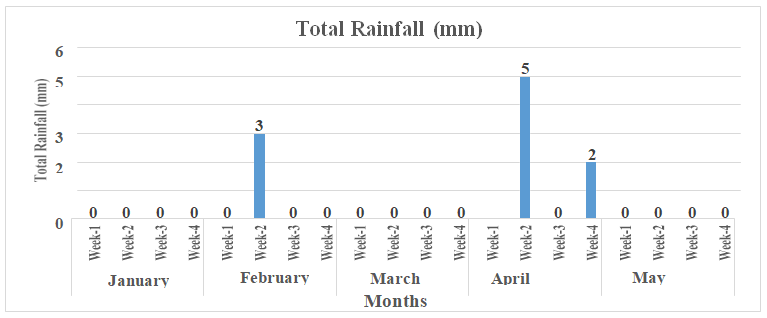
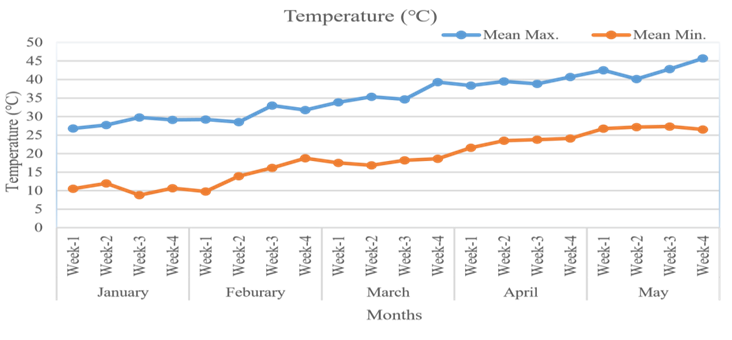
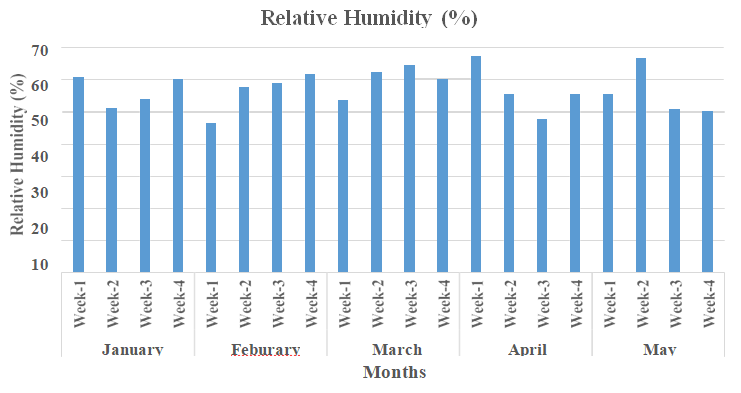
An experiment was designed in completely randomized design (CRD) having factorial arrangements with the four replications. The treatments were comprised two factors such as: Factor-A (T1 = Mid-January; 15th Jan, T2 = Early February; 1st Feb and T3 = Mid-February; 15th Feb and Factor-B: NARC-I (Rhizobium phaseoli), NARC-II (Rhizobium phaseoli) and Rawal (Rhizobium phaseol). To carryout experiment in pots, 7 seeds per pot were selected. Before sowing seeds were moisten in sugar solution for proper sticking of inoculant. Dissolved sugar served as initial food for the bacteria. 600 g of inoculants was spread over the dry seed and mixed in uniformly with the hands. Inoculation was done just before planting in shady area. Soybean seeds were obtained from the National Agricultural Research Council (NARC), Islamabad, Pakistan. Crop was sown during the month of Jan-Feb 2018 spring season using manual sowing method. Before sowing inoculation media were prepared using above mentioned standard procedure and seeds were inoculated with inoculant. Thirty-six (36) pots were used in the study. The pots made from the PVC material with 30.4 cm internal diameter, had capacities of 18 liters and having a height 42.6 cm. Soil was collected from the field and 2/3rd of each pot was filled at the rate of 15 kg pot-1 and recommended doses of fertilizer was added at the time of pots filling. The pots were irrigated with measured quantities of water. At field capacity already inoculated soybean seeds were sown as per treatment. According to size of pots, 3 seeds were planted in each pot. Remaining traditional practices were same for the experiment. The following parameters like of planting date on seed yield and quality traits of soybean was investigated during 2018 using three sowing dates (S1 = Mid-January, S2 = Early February and S3 = Mid- February) against three soybean varieties (V1=NARC-I, V2=NARC-II and V3=Rawal). The characters of economic importance measured in this study included: germination percentage, plant height at maturity, number of pods plant-1, pod length, yield per plant, biological yield, harvest index, number of nodules plant-1, root length, seed protein content and seed oil content were recorded and analysed statistically for different comparisons means [16]. The meteorological data viz; mean minimum and maximum temperature, rainfall and relative humidity of experimental site (Figures 1-3) during the cropping period of 2018 was provided by LUAWMS Metrological Observatory.
Results and Discussion
Seed Germination (%)
Seeds germination is crucial for achieving desired soybean crop stand and seed production. The results concerning to germination percentage of soybean under the effect of varied sowing time are presented in (Table 2). The varietal impact on soybean germination % was statistically significant (p<0.05), although sowing date and the interacting effect of varieties’ sowing dates on this parameter were non- significant (p>0.05).
Experimental outcome revealed that germination percentage of soybean sown in Mid February was relatively higher (81.35 %) than the pots sown in early February resulted in (80.33 %) germination; while the least germination of (79.79%) was recorded in Mid-January sown pots. The soybean variety ‘Rawal’ produced maximum seed germination of 85.35%, followed by variety NARC-II resulting in 82.75% germination; while the lowest seed germination of 73.37% was recorded in variety NARC-I. These results are similar to those of scientists etc. This indicates that the germination percentage was relatively lower in early (Mid- January) sowing, probably due to lower ambient temperature; while increased ambient temperature in early and Mid- February seemed to be favourable for seed germination and apart from soybean variety, the seed germination percentage was increased. However, the difference between sowing dates for seed germination was insignificant (p>0.05). However, the varietal response to seed germination varied significantly (p<0.05) seed of soybean varieties ‘Rawal’ and ‘NARC-II’ showed greater viability as compared to variety NARC-I’; however, varieties ‘Rawal’ and ‘NARC-II’ showed similarity (p>0.05) in seed germination percentage.
The treatment interaction showed that the interactive effect of variety ‘Rawal’ × Mid February sowing caused highest seed germination of 86.75 percent, followed by interactive effect of variety ‘Rawal’ × early February sowing causing average seed germination of 85.06 percent; while the least seed germination of 72.69 percent germination was recorded in the interactive effect of variety ‘NARC-I’ × Mid- January sowing.
Plant Height at Maturity (Cm)
Plant height is an important part seed yield and straw yield because it plays role in photosynthesis and translocation from bottom top of the plant. The morphology of plants is generally considered as genetic character that inherits from the parental material of varieties; however, size of the plant might be influenced by several inputs and crop management related factors. The impact of planting dates on the height of soybean varieties was ascertained and relative results are given in (Table 3). The height of soybean plants was significantly (p<0.05) influenced by varying planting time and varieties however, their interactive effect on this trait was non-significant (p>0.05). The maximum height of soybean plants (46.89 cm) were found in early February sowing, followed by 46.43 cm plant height observed in pots where the soybean seeds were sown in the Mid-February; while the minimum height of plants (45.97 cm) was observed in early (Mid-January) sowing. In case of varietal effect, variety ‘Rawal’ grew tallest among tested varieties (49.68 cm), followed by variety ‘NARC-I’ Plant height of average 46.43 cm; while the plants of minimum height (43.18) were recorded in pots sown with variety ‘NARC-II’. It is evident from the findings that Early February and Mid-February sowing of soybean maximally favoured plant development; while the early planting (Mid-January) produced relatively shorter plants. Hence, planting soybean too early (Mid- January) or too late (Mid-February) may not grow vigorously; while optimistic response was recorded for Early February sowing so far the plant height is concerned.
Pods Plant-1
The soybean yield is mainly associated with number of pods plant-1 that also reflects the effectiveness of treatments. The data in relation to number of pods plant-1 in soybean are given in (Table 4). Various planting dates and sowing varieties had significant effect on the number of pods plant -1 in soybean (p<0.05). Table 6 describes the number of pods plant-1 was the highest (74.79) when the soybean planting was done in early days of February and pods number declined to 71.23 plant-1 when the soybean planting was carried out late in Mid- February. However, soybean planting early in Mid-January caused a maximum decrease in the number of pods plant-1 (70.52). The varietal effect suggested that variety ‘NARC-II’ produced greater number of pods (82.07 plant-1) than varieties ‘NARC-I’ (68.96)- and ‘Rawal’ (65.52). It is evident from the results that first fortnight of February may be considered as the optimum planting time of the soybean so far the parameter pods plant-1 is concerned. Planting earlier than commencement of February or later in third week onwards of February caused reduction in the pods plant-1 over the described optimum planting period. This indicates that too early planting or too late planting could not compensate the loss due to environmental change due to adverse effects on the number of pods plant-1. The number of pods plant-1 showed similarity (p>0.05) when planting was done in mid-January or in Mid-February; while dissimilarity (p<0.05) was assessed in the count of pods plant-1 when compared with Early February sowing.
| Treatment | Soybean Varieties (with Rhizobium Phaseoli) | Mean (Sowing Dates) | |||
|---|---|---|---|---|---|
| NARC-I | NARC-II | Rawal | |||
| Sowing Dates | 15th January | 72.69 | 82.44 | 84.25 | 79.79c |
| 1st February | 73 | 82.94 | 85.06 | 80.33b | |
| 15thFebruary | 74.44 | 82.88 | 86.75 | 81.35a | |
| Mean (Varieties) | 73.37c | 82.75b | 85.35a | -- |
Table 2: Influence of different planting dates and soybean varieties on seed germination (%).
Any two congested value compared statistical and differ significantly at > 0.05 probability level. Table 2: Influence of different planting dates and soybean varieties on seed germination (%).
| Treatment | Soybean Varieties (with Rhizobium Phaseoli) | Mean (Sowing Dates) | |||
|---|---|---|---|---|---|
| NARC-I | NARC-II | Rawal | |||
| Sowing Dates | 15th January | 45.96 | 42.75 | 49.19 | 45.97c |
| 1st February | 46.89 | 43.6 | 50.17 | 46.89a | |
| 15thFebruary | 46.43 | 43.18 | 49.68 | 46.43b | |
| Mean (Varieties) | 46.43b | 43.18c | 49.68a | -- |
Table 3: Influence of different planting dates and soybean varieties on plant height (cm).
Any two value compared statistical and differ significantly at > 0.05 probability level. Table 3: Influence of different planting dates and soybean varieties on plant height (cm).
| NARC-I | Soybean Varieties (with Rhizobium Phaseoli) | Mean (Sowing Dates) | |||
|---|---|---|---|---|---|
| NARC-I | NARC-II | Rawal | |||
| Sowing Dates | 15th January | 67.38 | 80.18 | 64.01 | 70.52c |
| 1st February | 71.46 | 85.03 | 67.88 | 74.79a | |
| 15thFebruary | 68.05 | 80.98 | 64.65 | 71.23b | |
| Mean (Varieties) | 68.96b | 82.07a | 65.52c | -- |
Table 4: Influence of different planting dates and soybean varieties on number of pods plant-1.
Two value compare statistical and differ significantly at > 0.05 probability level. Table 4: Influence of different planting dates and soybean varieties on number of pods plant-1.
| Treatment | Soybean Varieties (with Rhizobium Phaseoli) | Mean (Sowing Dates) | |||
|---|---|---|---|---|---|
| NARC-I | NARC-II | Rawal | |||
| Sowing Dates | 15th January | 4.89 | 5.02 | 4.2 | 4.70c |
| 1st February | 5.09 | 5.21 | 4.36 | 4.89b | |
| 15thFebruary | 5.1 | 5.22 | 4.37 | 4.90a | |
| Mean (Varieties) | 5.03b | 5.25a | 4.31c | -- |
Table 5: Influence of different planting dates and soybean varieties on pod length (cm).
Any two congested value compared statistical and differ significantly at > 0.05 probability level. Table 5: Influence of different planting dates and soybean varieties on pod length (cm).
| Treatment | Soybean Varieties (with Rhizobium Phaseoli) | Mean (Sowing Dates) | |||
|---|---|---|---|---|---|
| NARC-I | NARC-II | Rawal | |||
| Sowing Dates | 15th January | 21.93 | 22.26 | 23.24 | 22.48b |
| 1st February | 22.35 | 22.68 | 23.69 | 22.91a | |
| 15thFebruary | 21.97 | 21.59 | 22.55 | 21.80c | |
| Mean (Varieties) | 21.85c | 22.18b | 23.16a | -- | |
| NARC-I | NARC-II | Rawal | |||
| Sowing Dates | 15th January | 26.93 | 27.59 | 23.12 | 25.88c |
| 1st February | 27.99 | 28.68 | 24.03 | 26.90b | |
| 15thFebruary | 28.04 | 28.73 | 24.07 | 26.95a | |
| Mean (Varieties) | 27.65b | 28.33a | 23.74c | -- |
Table 6: Influence of different planting dates and soybean varieties on biological yield plant-1 (kg).
Every two closed value compared statistical and differ significantly at > 0.05 probability level. Table 6: Influence of different planting dates and soybean varieties on biological yield plant-1 (kg).
Any two clogged value compared statistical and differ significantly at > 0.05 probability level. Table 7: Influence of different planting dates and soybean varieties on harvest index (%).
| Treatment | Soybean Varieties (with Rhizobium Phaseoli) | Mean (Sowing Dates) | |||
|---|---|---|---|---|---|
| NARC-I | NARC-II | Rawal | |||
| Sowing Dates | 15th January | 5.9 | 6.13 | 5.36 | 5.80b |
| 1st February | 6.26 | 6.5 | 5.69 | 6.15a | |
| 15thFebruary | 5.96 | 6.2 | 5.42 | 5.68c | |
| Mean (Varieties) | 6.04b | 6.27a | 5.49c | -- |
Table 7: Influence of different planting dates and soybean varieties on seed weight plant-1 (g).
Any two similar value compared statistical and differ significantly at > 0.05 probability level. Table 8: Influence of different planting dates and soybean varieties on seed weight plant-1 (g).
| Treatment | Soybean Varieties (with Rhizobium Phaseoli) | Mean (Sowing Dates) | |||
|---|---|---|---|---|---|
| NARC-I | NARC-II | Rawal | |||
| Sowing Dates | 15th January | 15.08 | 15.45 | 12.95 | 14.49c |
| 1st February | 15.68 | 16.06 | 13.46 | 15.06b | |
| 15thFebruary | 15.7 | 16.09 | 13.48 | 15.09a | |
| Mean (Varieties) | 15.49b | 15.87a | 13.29c | -- |
Table 8: Influence of different planting dates and soybean varieties on number of nodules plant -1.
Any two related value compared statistical and differ significantly at > 0.05 probability level. Table 9: Influence of different planting dates and soybean varieties on number of nodules plant -1.
| Treatment | Soybean Varieties (with Rhizobium Phaseoli) | Mean (Sowing Dates) | |||
|---|---|---|---|---|---|
| NARC-I | NARC-II | Rawal | |||
| Sowing Dates | 15th January | 8.9 | 9.12 | 7.64 | 8.55c |
| 1st February | 9.25 | 9.48 | 7.94 | 8.89b | |
| 15thFebruary | 9.48 9.36a | 7.96 7.85c | 8.90a -- |
Table 9: Influence of different planting dates and soybean varieties on root length (cm).
Any two related value compared statistical and differ significantly at > 0.05 probability level. Table 10: Influence of different planting dates and soybean varieties on root length (cm).
| Treatment | Soybean Varieties (with Rhizobium Phaseoli) | Mean (Sowing Dates) | |||
|---|---|---|---|---|---|
| NARC-I | NARC-II | Rawal | |||
| Sowing Dates | 15th January | 41.7 | 42.2 | 41.33 | 41.74c |
| 1st February | 42.77 | 43.28 | 42.39 | 42.82b | |
| 15thFebruary | 44.07 | 44.6 | 43.67 | 44.11a | |
| Mean (Varieties) | 42.85b | 43.36a | 42.46c | -- | |
| NARC-I | NARC-II | Rawal | |||
| Sowing Dates | 15th January | 22.52 | 23.65 | 22.97 | 23.05c |
| 1st February | 23.1 | 22.25 | 23.56 | 23.64a | |
| 15thFebruary | 22.92 | 24.06 | 23.77 | 23.45b | |
| Mean (Varieties) | 2284c | 23.99a | 23.30b | -- |
Table 10: Influence of different planting dates and soybean varieties on protein content (%).
Two resemble value compared statistical and differ significantly at > 0.05 probability level. Table 11: Influence of different planting dates and soybean varieties on protein content (%).
Two look like value compared statistical and differ significantly at > 0.05 probability level. Table 12: Influence of different planting dates and soybean varieties on oil content (%).
Seed Weight Plant-1 (G)
Seed weight per plant has linear effect on the soybean production in commercial sense. The impact of sowing time on seed weight plant-1 was investigated and relative data are given in (Table 8). The treatment effect indicates that seed weight plant-1 in soybean was significantly influenced varying planting time as well as by varieties (p<0.05).
The average seed weight plant-1 was highest (6.15 g) in soybean when planted early in February, followed by 6.86 g seed weight plant-1 in pots planted in Mid- February. However, the least seed weight plant-1 (5.80 g) was recorded in soybean pots sown in Mid-January. Mid-January and Mid- February sowing showed similarity (p>0.05) in seed weight plant-1, but differ significantly (p<0.05) when compared with soybean sowing in Early February. The varietal impact on this trait showed that soybean variety NARC-II produced maximum seed weight plant-1 (6.27 g); while reduced seed weight plant-1 was recorded in varieties NARC-I (6.04 g) and Rawal (5.49 g). Non-significant interactive effect was observed between sowing dates and sowing varieties. It can be assumed from the results that soybean planted in the first fortnight of February showed positive impact on the weight of seed plant-1; while there was negative effect on the seed weight plant-1 when planted in second fortnight of January or second fortnight of February. It can be seen that sowing of soybean in first fortnight of February resulted in optimistic results in relation to seed weight plant-1.
Pod Length (Cm)
In soybean, the pod size inherits from the parental material; but crop management and the applied inputs also influence its size. The effect of planting dates on the length of pods was investigated and the relative data are presented as (Table 5). Pod length in soybean was mpacted significantly (p<0.05) by varying planting time and varieties; while the treatment interaction was non-significant (p>0.05).
The average pod length was maximum (4.90 cm) in pots sown late in Mid-February, closely followed by pod length of 4.89 cm observed in pots sown in early February;
while a considerable reduction in pod length (4.70 cm) was seen when pots were sown early in Mid-January. In case of varieties, variety ‘NARC-II’ produced pods greater in size (5.15 cm) than varieties ‘NARC-II’ (5.03 cm) and ‘Rawal’ (4.31 cm).
It is evident from the findings that soybean planted in the first fortnight of February maximally favored pod development; while earliness in planting up to Mid-January resulted in an adverse effect on pod length of soybean. LSD test indicated that although, the length of pod differed significantly (p<0.05) among all the planting dates; but length of pod showed similarity (p>0.05) when the soybean was planted in pots in early February and Mid-February (p<0.05).
Biological Yield Plant-1 (Kg)
The plant biomass is generally associated with plant height and number of branches or leaves; generally, varieties have dominant effect on this trait but the use of inputs and crop management including sowing time is also recognized to affect this parameter. The influence of sowing time on the plant biomass weight of soybean varieties was examined and the data are shown in (Table 6). Sowing time and varieties has significant effect on plant biomass weight (p<0.05); while the interaction of sowing time × varieties did not show a significant impact on this trait (p>0.05).
Sowing time effect showed that the plants with maximum biomass weight (22.91g) were recorded in early February sown pots, followed by Mid-January sown pots with 22.48 g plant biomass weight; while the least plant biomass weight (21.80 g) was recorded in late sowing (Mid- February). The varietal effect suggested that variety ‘Rawal’ showed superiority for plant biomass weight (23.16 g), followed by variety ‘NARC-II’ with average plant biomass weight of 22.18 g; while the plants with lowest plant biomass weight were recorded in pots sown with variety ‘NARC-I’. It is apparent from the results that early February and sowing of soybean maximally favoured plant development; while the late planting (Mid-February) did not optimally favoured plant growth where least plant biomass weights was recorded. Hence, planting soybean too early (Mid-January) or too late (Mid -February) may not favour the plants to grow vigorously; while optimistic response was recorded for Early February (First fortnight of February) sowing so far the plant biomass weight is concerned.
Harvest Index (%)
Harvest index is one of the major traits that are taken into consideration while a crop variety or specific production technology is developed. It also determines how many photosynthates are transformed in to economic yield. In soybean, the harvest index describes the percentage of grain/ seed achieved from the total biomass weight. The effect of planting time on harvest index was assessed and the results are shown in the (Table 7). Trait of soybean was significantly (p<0.05) influenced by different sowing dates and varieties; while non-significant effect (p>0.05) of interaction between sowing dates and varieties was recorded.
It is obvious from the results that highest harvest index (26.95 %) was observed in pots sown late in Mid-February, closely followed by harvest index (26.90%) observed in pots sown in early February; while a considerable reduction in harvest index (25.88 %) was seen when pots were sown early in Mid-January. In case of varieties, the highest harvest index of 28.33 percent was calculated in variety ‘NARCII’ followed by variety ‘NARC-I’ (27.65 %); while the lowest harvest index (23.74%) was calculated in variety ‘Rawal’.
Number of Nodules Plant-1
The plants of soybean possess ability of forming symbiotic association with N-fixing Rhizobia bacteria, that develop small swellings on root system described as nodules. In rapid developing soybean plants, formation of nodules starts just after plant emergence. If plant have 6 inches (15 cm) height with first or second trifoliate leaf unfolded, nodules start N-fixing actively and fix N2 gas into plant available N. Increase in nodules continues until beginning of seed formation stage and sometimes slightly beyond this stage. The sowing time impact on number of nodules per plant was observed and relative results are given in (Table 9). The number of nodules plant-1 in soybean was significantly influenced by varying sowing time and varieties (p<0.05); while the interactive effect of sowing dates and varieties was non-significant (p>0.05). The average number of nodules plant-1 was highest (15.09) in soybean when planted late (Mid-February), closely followed by early February sowing causing 15.06 nodules plant-1; while the lowest number of nodules plant-1 (14.49) was counted in soybean pots sown early in mid-January. Early February and Mid-February sowing showed similarity (p>0.05) in number of nodules plant-1, but differed significantly (p<0.05) when matched with sowing early in mid-January. The effect of varieties showed that variety NARC-II possessed more nodules plant-1 (15.87) than varieties NARC-I (15.49) and Rawal (13.29). It is known from the findings that soybean planted in the month of February showed beneficial impact on nodules number; while there was negatively impacted on the number of nodules per plant when planted early in Mid-January. The LSD test suggested similarity (p>0.05) in nodules plant-1 when soybean was sown in early or mid-February.
Root Length (Cm)
Generally, the root morphology in soybean is influenced by the genetic makeup of varieties, but influence of crop management, particularly sowing time (environmental impact) and inputs application is also well recognized by the scientists. The effect of planting dates on the root length of soybean was investigated and the relative data are presented as Table 10. Root length in soybean was significantly (p<0.05) affected by varying planting time & varieties; while sowing dates × varieties had non significant effect on root length (p>0.05).
Root length of soybean on average was highest (8.90 cm) in pots sown late in mid February, closely followed by root length of 4.89 cm measured in pots sown in early February; while root length declined to 8.55 cm in pots sown early in mid-January. In varieties, the highest root length (9.36 cm) was noted in variety ‘NARC-II’ followed by ‘NARC-I’ (9.14 cm) and the least root length (7.85 cm) was recorded in variety ‘Rawal (4.31 cm). The findings revealed that the climate of whole month of February affected root development favourably; while earliness in planting in January proved to be disfavouring climate so far the root length of soybean is concerned. LSD test indicated that similarity in root length was seen (p>0.05) between pots sown in early February and Mid-February.
Protein Content (%)
The protein is a macronutrient essentially needed muscle building in living being; and it is normally found in meat based products, but other sources of protein are also well recognized which mainly include nuts and legumes. This study also examines the effect of planting time on protein content in seed of certain soybean varieties and the results are shown in Table 11. Treatment effect on protein content significantly impacted by different sowing dates and varieties; while interactive effect of sowing dates and varieties were non-significant (p>0.05) on protein content.
Results were depicted that protein content in soybean seed was highest (44.11 %) when the plants were sown late in Mid-February, closely followed by sowing in early February (42.82 %); while decline in seed protein content (41.74 %) was recorded when pots were sown early in mid-January. Among varieties, seeds of ‘NARC-II’ variety contained highest protein level (43.36 %), followed by variety ‘NARC-I’(42.85 %); while the lowest protein content (42.46 %) was determined in variety ‘Rawal’.
Oil Content (%)
There are five fatty acids that compose the soybean oil which included linoleic acid (55%), palmitic acid (10 %), oleic acid (18 %), stearic acid (4 %) and linoleic acid (13 %). The study also determined the effect of planting dates on oil content in seed of tested soybean varieties and the results are presented in (Table 12). Oil content data illustrated that treatment had marked influence (p<0.05) on oil content while the treatment interactive effect was not significant (p>0.05).
In soybean seed was maximum (23.64 %) when the plants were sown in Early February, followed by sowing in Mid-February (23.454 %); while seed oil content decreased to 23.05 percent in pots sown early in Mid-January. In case of varieties, seeds of ‘NARC- II’ variety contained highest oil content (23.99 %), followed by variety ‘Rawal’ (23.30 %); while the lowest oil content (22.84 %) was determined in variety ‘NARC-I’. It was observed that early February sowing of soybean in pots favoured all the varieties equally to produce highest oil content; while too early (MidJanuary) or too late (Mid- February) sowing resulted in a decreased oil content in all the soybean varieties tested in this study.
Conclusion
From study it was inferred that sowing dates and soybean varieties expressed statistically all of the studied parameters showed highly significant differences expect germination percentage impacted through planting dates, which was minimum. However, the interaction impact of varieties and sowing dates were noted statistically at par for all the parameters. Among the varieties, NARC-II best performed for nodules plant-1, pod length, pods plant-1, root length, protein contents and oil content when planted either on early February or mid-February. On the same planting dates Rawal expressed the higher biological yield. Consequently, it is suggested by results that the variety NARC-II can be successfully grown when planted on early to mid-February under the similar coastal environment.
References
-
Hatam M, Nazir S, Bashir E, Robyn B, Ghulam QA (2011) Oil Seed Crops. In: 5th (Edn.), Crop Production. National Book Foundation, Islamabad, Pakistan.
-
Chiu KY, Chen CL, Sung JM (2002) Effect of priming temperature on storability of primed sh‐2 sweet corn seed. Crop Science 42(6): 1996-2003.
-
Ajouri A, Asgedom H, Becker M (2004) Seed priming enhances germination and seedling growth of barley under conditions of P and Zn deficiency. Journal of Plant Nutrition and Soil Science 167(5): 630-636.
-
Nazir S, Bashir E, Robyn B, Ghulam QA (1994) Oil Seed Crops. In: 1st (Edn.), Crop Production. National Book Foundation, Islamabad, Pakistan.
-
Chen G, Wiatrak P (2010) Soybean development and yield are influenced by planting date and environmental conditions in the southeastern coastal plain, United States. Agronomy Journal 102(6): 1731-1737.
-
Heatherly LG (2005) Soybean development in the midsouthern USA related to date of planting and maturity classification. Crop Management 4(1): 1-7.
-
Andales AA, Batchelor WD, Anderson CE (2000) Modification of a soybean model to improve soil temperature and emergence date rediction. Transactions of the ASAE 43(1): 121-129.
-
Meyer DW, Badaruddin M (2001) Frost tolerance of ten seedling legume species at four growth stages. Crop Science 41(6): 1838-1842.
-
Lam WKF, Pedigo LP, Hinz PN (2001) Population dynamics of bean leaf beetles (Coleoptera: Chrysomelidae) in central Iowa. Environmental Entomology 30(3): 562- 567.
-
Khurshid HD, Jan BA (2017) Miracle Crop: The present and future of Soybean production in Pakistan. MOJ Biol Med 2(1): 189-191.
-
World Agricultural Production (2017) Circular Series WAP. Foreign Agricultural Service USDA USA, pp: 1-30.
-
Situation and Outlook Report OCS (2017) Economic Research Service 17th, USDA, USA.
-
PARC (2020) Soybean.
-
Toum G, Khalifa N, Ahmed AS, Idris H (2020) Effect of planting date and sowing method on yield and grain quality of soybean (Glycine max ) under North Sudan conditions. Techagro 1(2).
-
Awad M, Fouda O, El-Reheem S, Al-Gezawe A, Cottb M, et al. (2022) A new seed drill for planting peas on a raised- bed. INMATEH – Agricultural Engineering 68(3): 681- 692.
-
Steel RGD, Torrie JH, Dicky DA (1997) Principles and procedures of Statistics. A biometrical Approch 3rd (Edn.), McGraw Hill Book Cooperation International New York, USA, pp: 352-358.
- Enhancement of Vegetative Growth and Fruit Yield in Cucumber (Cucumis sativus L.) via Spiritual Blessing (Biofield) Energy Intervention
- Production of Açaí (Euterpe oleracea Mart.) under Different Agroforestry System Management Intensities in Amazonian Floodplain (Varzea) Forests
- Coffee and the Production Region: What is the Secret to the Expression "Quality"?
- Experiential Agripreneurship Training in Sub-Saharan Africa: Integrating a Business Incubator into Postgraduate Livestock Education at the University of Buea
- Advances in Agricultural High-Quality Development
- Linking Compost Residue to ABAGE in Plants - a Short Note