
Comparative Study of Perforated Sack Bag, Palm Basket, Plastic Can and Wooden Net Cage as Storage Structures for Okra
Okra (Abelmoschus esculentus L. Moench) is a vegetable crop that easily loses its nutritional quality if stored under poor environment and structure respectively after harvest. Okra is a good source of vitamins A, B and C. It also has good contents of protein, minerals and iodine. The aim of this research is to assess and compare the performance of perforated sack bag, basket, perforated plastic can and wooden net cage as storage structures for okra under tropical humid environmental condition. The four storage structures were analyzed to determine their effectiveness as storage structures for okra handling and preservation. Perforated sack bag and palm basket were purchased, while perforated plastic can and wooden net cage were constructed. The experiment was carried out in the laboratory of ABE department, MOUAU, Nigeria. The use of perforated sack bag (13 days) and wooden net cage (12 days) showed higher resistance to rottenness than palm basket and perforated plastic can (11 days) by one day difference. The weight loss of okra crops in perforated plastic can (46.02%) was lower than other structures. The results showed that perforated sack bag and wooden net cage are preferred for retaining the quality of okra crop for average of 12 days under humid tropical region.
Introduction
Okra is edible and greenish in colour vegetable. It belongs to the family of Malvaceae [1]. It is an acceptable vegetable with good nutritional and socioeconomic value [2]. The nutritional value of okra as fruits and vegetables with respect to vitamin contents is more than cereals and legumes [3]. According to Petropoulos S, et al. [4], okro is a medicinal ingredient that contains dietary fibre, vitamin B, carbohydrates, iron, mineral salts, and calcium and antioxidant substances. Okra originated from tropical region in Africa. It is utilized in fresh form, canned, dried or grounded to powdery form. Okra has high moisture content and respiratory rates that make it perishable at post-harvest condition [5]. As reported by BARI (Bangladesh Agricultural Research Institute) [6] and Mota WF, et al. [5], the content of okra is 86.1% water, 2.2% protein, 0.2% fat, 9.7% carbohydrates, 1% fibre and 0.8% ash.
Environmental condition of high temperature and low relative humidity contributes to dehydration of okra at post-harvest stage, making it to have a short life span. If not consumed within the period of harvest, okra has to be properly stored in a conducive environment because of their high rate of perishability [7]. The fibrous nature and inedibility of okra increases after two days of post-harvest if not properly stored [8, 9, 10]. In addition, harvesting timing has effect on size, flavor, tenderness, texture and colour Selvakumar R [11], but microbial activities will thrive in an okra environment that is not properly stored under room temperature; which can lead to discolouration [12]. According to NSPRI (Nigerian Stored Products Research Institute) [13], okra crop deteriorates very fast and large quantity is lost to high respiration rate, transpiration loss, bacterial and fungi attack. The structures used for the storage of okra crops are numerous. These structures are chosen by farmers based on tradition, acceptance, adaptability, suitability, financial capability, and quantity of crops to be stored. Basket and perforated sack bag are among the most popular structures used for the storage of okra. In addition to this research, perforated plastic can and wooden net cage were constructed for improving the information on effectiveness of okra storage structures. The research reported was undertaken to evaluate and compare the performances of these four structures for the storage of okra.
Research Methodology
Description of the Experimental Site
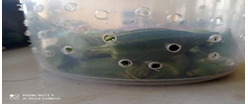
The experiment was conducted at the department of Agricultural and Bio-resources Engineering, Michael Okpara University of Agriculture, Umudike, Abia State, Nigeria. Abia state lies on the geographical coordinates of 5° 57’ 0” N, 8° 55’ 0” E. Materials Used for the Research: Okra Crop, Weighing Balance, Hygrometer, Color Analyzer, Native Basket, Perforated Plastic Can, Sack Bag, Thermometer, Hand drill machine, Plywood, Net, Hammer, Nails, Thumb tags, Measuring tape, Hack saw. Some of the storage structures were purchased from the market and used directly for storage without modifications while some was purchased and modified while others were built in the workshop, from scratch to finish. Perforated Palm Basket: The basket used as storage structure was purchased from the market as shown in Figure 1. Perforated Sack Bag: The sack bag was purchased from the market as shown in Figure 2. Perforated Plastic Can: The plastic can was purchased from the market and taken to the workshop. It was perforated using a hand drilling machine with a diameter of 1mm for each of the holes. It was perforated in 350 points on the wall of the plastic can to enable exchange of air and moisture between the inside and outside environment of the storage structure as shown in Figure 3.
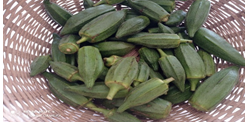
Figure1: Perforated Palm Basket with okra crops.
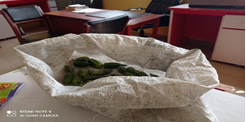
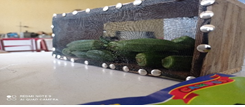
Wooden Cage: The materials for the construction of this storage structure were purchased from market. The wood for the wooden frames were carefully measured and cut into the required sizes. It was constructed in a rectangular form to enable stability during the period of storage. Net was used as the wall to control pest and insects from infecting the crop during the period of storage as shown in Figure 4.
Sample Collection
Okra crop was harvested from the farm in Enugu state, Nigeria and taken directly to the laboratory. The crops were carefully cleaned and sorted to remove damaged crops. Samples selected were at room temperature for at least an hour to allow for stabilization. Four storage structures (perforated sack bag, perforated can, locally made basket and constructed wooden cage) were used to preserve the crop for the period of 14 days to determine the effect of temperature and relative humidity on degree of rottenness, color change, appearance and weight loss with respect to time.
Experimental Procedure
The storage structures were put in laboratory and labelled according to the name of the structure. Each of the structures was weighed using a weighing balance and the values were recorded as W1. Twenty five (25) okra crops were put in each of the storage structure except for the basket that had an addition of 15crops making it 40 okra crops. Each of the structures with the okra crop were weighed and recorded as W2. The temperature of the environment was taken twice daily using a thermometer and recorded as T1 and T2 and the average temperature was taken, the relative humidity of the environment was ascertained using a hygrometer and recorded daily. The process was repeated daily for the period of 14 days and within 9 days of preservation the color analyzer was used to check for color change till the end of preservation, this process would be repeated until the crops get rotten. The weight loss was determined by analysis method AOAC (Association of Official Analytical Chemist) [14], using a meter balance with accuracy of 0.01g and the percentage weight loss was recorded using equation 1.
$$ P e r c e n t a g e w e i g h t l o s s = \frac {w _ {2} - w _ {1}}{w _ {2}} \times 1 0 0 $$
2 1
Method of Analysis
The research outcome was analyzed, discussed and concluded with recommendation.
Results and Discussion
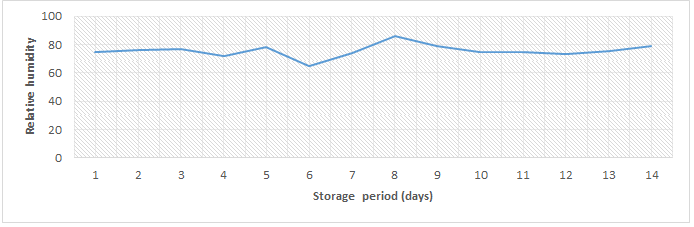
The results obtained after the preservation of okra crop for 14 days in the different storage structures are shown in Figures 5-8.
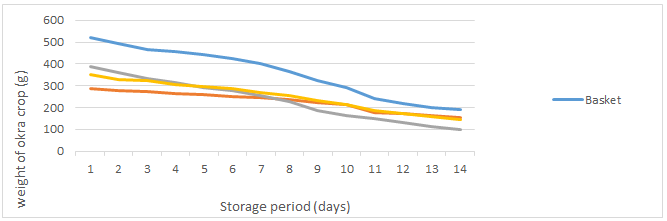
The daily rate of weight losses observed in the stored okra crop is presented in Figure 5. The use of basket with initial weight of 523g at day 1 dropped to 189g after 14th day of storage, resulted to a weight loss of 63.86%. The perforated plastic can had a weight loss of 46.02% after 14th day of storage. 74.87% was the weight loss observed in perforated sack bag after 14th day of storage, while the wooden net cage structure had a weight loss of 58.17% after 14th day of storage as reported in Figure 8. The values of the daily weight losses were highest in the perforated sack bag (74.87% moisture loss) than other storage structures and lowest by 46.02% in perforated plastic can. The weight loss is attributed to some storage factors like environmental temperature, relative humidity, rates of respiration and growth of microorganisms. The average temperature of the storage environment was 24.5oC, meanwhile the optimum temperature of storing okra crop is 7-10oC (45 – 50oF) to maintain very good quality. Storage at higher temperature leads to dehydration, yellowing, decay and loss of quality. The average relative humidity in the storage environment was 74.87%, meanwhile, relative humidity of 95 – 100% is required to retard or slow down dehydration, pod toughening, and loss of fresh appearance. The environmental factor was not conducive for storage, as it helped in increasing the rates of respiration of the okra crop. Rates of respiration increases with increase in temperature of storage environment. Increase in rates of respiration will increase the heat production in the environment [15].
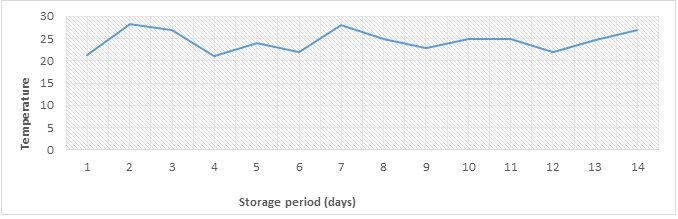
The average temperature maintained by the environment during the storage period was 24.5°C, which is considerate for okra preservation.
Relative Humidity
The average relative humidity maintained during this storage period was 74.87%.
Degree Rottenness
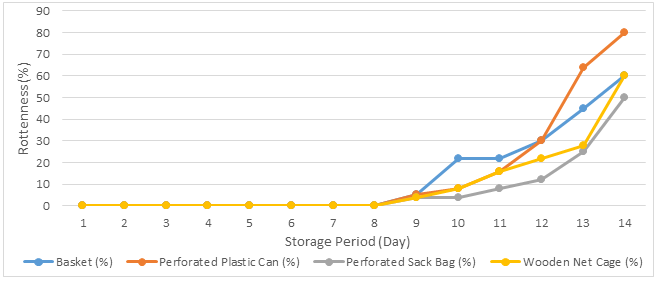
Figure 8: Percentage rottenness with variation to storage period in storage structures The observation of degree of rottenness as shown in fig. 4.0 showed that the quality of the okra in all the storage structures is intact till 8th day of storage. This indicated that the storage environment could resist the effects of fungi and bacterial action for eight days of storage. Low percentage of rottenness was discovered in the okra at day 9, which increased rapidly to 22% in basket and gradual increase to 8, 4 and 8% in perforated plastic can, perforated sack bag and wooden net cage respectively on the tenth (10th) day of storage. The rapid decay and loss of quality to 22% in basket showed that the environment is conducive for fungi and bacterial to thrive. The storage period at day 14 showed that 60, 80, 50 and 60% rottenness has occurred in basket, perforated plastic can, perforated sack bag and wooden net cage respectively. It is recommended that a lengthy period of 11 days is better for basket and perforated plastic can, while 13 day of storage is advisable using perforated sack bag and twelve days will be ideal storage of okra crop using wooden net cage structure.
Color Analysis
The results obtained after analyzing the color changes in okra crop for 7days in the different storage structures are shown in Figures 9-12.
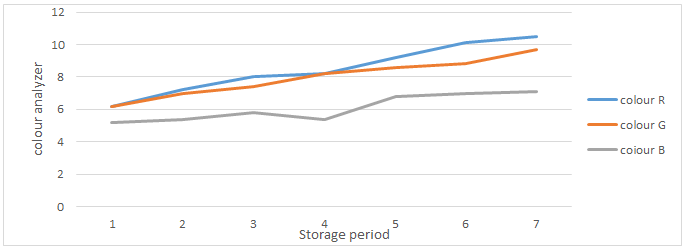
Colour Changes during Storage Period in Basket
During the period of storage of the crop in basket the physical characteristics (color) changed from green to dark green (almost blackish green) because of the action of temperature and relative humidity on the crop with respect to this period of time. The seeds changed from white (#FFFFFF) to moccasin (#FFE4B5) because of loss of moisture on both the crop itself and the seeds within the storage period.
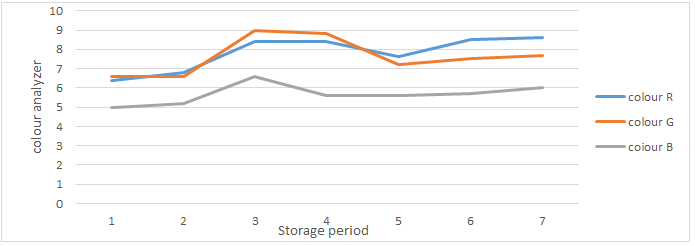
During the period of storage of the crop in perforated plastic can, the physical characteristics (color) changed from green to dark green (almost blackish green) because of the action of temperature and relative humidity on the crop with respect to this period of time. The seeds changed from white (#FFFFFF) to pale golden rod (#EEE8AA) because of loss of moisture on both the crop itself and the seeds within the storage period. The seeds were moist because evaporation was not effective on the structure, so the remains returns to the storage structure causing decay on the crop and affecting the action of temperature on the seeds.
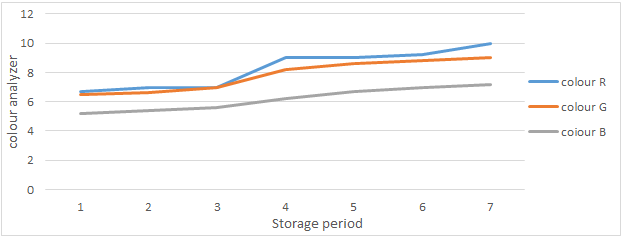
During the period of storage of the crop in perforated sack bag the physical characteristics (color) changed from green to dark green (almost blackish green) because of the action of temperature and relative humidity on the crop with respect to this period of time. The seeds changed from white (#FFFFFF) to moccasin (#FFE4B5) because of loss of moisture on both the crop itself and the seeds within the storage period.
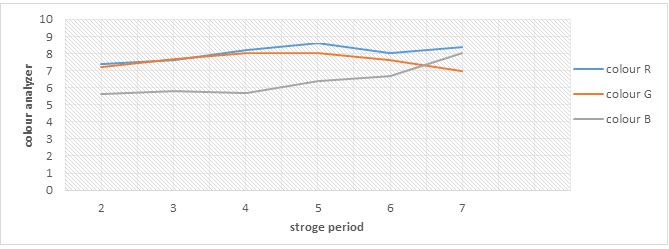
During the period of storage of the crop in wooden net, the physical characteristics (color) changed from green to dark green (almost blackish green) because of the action of temperature and relative humidity on the crop with respect to this period of time. The seeds changed from white (#FFFFFF) to khaki (#F0E68C) because of loss of moisture on both the crop itself and the seeds within the storage period. The moisture trapped in the storage structure was absorbed in structure because it is made of wood and with time wetting the structure leading to disruption on the drying process of the crop during preservation, thereby affecting the color change with time.
Conclusion and Recommendation
Okra crops were stored in basket, perforated plastic can, perforated sack bag and wooden net cage over a period of 14 days. The storage structures maintained an environmental temperature of 24.5°C and 74.87% relative humidity. The okra crops should not be stored beyond day 12 from observation with respect to the environmental conditions in the storage structures. The rottenness is highest in basket (30%) and perforated plastic can (30%) and lowest in perforated sack bag (12%) as this could be as a result of reduced rate of respiration and smaller porosity of storage wall in basket than other storage structures. Low level of rottenness is to the advantage of the farmers as okra market demand is based on freshness and appearance. Hence, perforated sack bag is preferred. The perforated plastic can is able to reduce weight loss, which is an indication of the ability to retain the moisture content of okra than other storage structures. Modified storage environment will increase the quantity and quality of okra for a long period of storage.
References
-
Kyriakopoulou OG, Arens P, Pelgrom KT, Karapanos I, Bebeli P, et al. (2014) Genetic and morphological diversity of okra (Abelmoschus esculentus L. Moench.) genotypes and their possible relationships, with particular reference to Greek landraces. Sci Hortic 171: 58-70.
-
Kumar S, Parekh MJ, Fougat RS, Patel SK, Patel CB, et al. (2017) Assessment of genetic diversity among okra genotypes using SSR markers. J Plant Biochem Biotechnol 26: 172-178.
-
FAO (2017) Food and Agricultural Organization Report: Use of Fertilizer in Nigeria. International Postharvest Symposium 1012: 1119-1124.
-
Petropoulos S, Fernandes Â, Barros L (2018) Chemical composition, nutritional value and antioxidant properties of Mediterranean okra genotypes in relation to harvest stage. Food Chem 242: 466-474.
-
Mota WF, Finger FL, Cecon PR (2010) Preservation and postharvest quality of okra under different temperatures and forms of storage. Hortic Bras 28: 12-18.
-
BARI (Bangladesh Agricultural Research Institute) (2010) Annual progress report of okra cultivation. Bangladesh.
-
Ramjan A, Mohammed K, Talha A (2018) Factors Affecting Fruits, Vegetables and its Quality. Journal of Medicinal Plants Studies 6(6): 16-18.
-
Yahaya SM, Mandiyya AY (2019) Review of Post-Harvest Losses of Fruits and Vegetables. Journal of Scientific and Technical Research 13(4).
-
Cheng Z, Gong X, Jing W, Peng Z, Li J (2018) Quality Change of Post-Harvest Okra at Different Storage Temperatures. Journal of Food Engineering and Technology 7(1): 43- 46.
-
Schippers RP (2000) African Indigenous Vegetables. An Overview of the Cultivated Species. Chatham, UK.
-
Selvakumar R (2018) A Textbook of Glaustus Olericulture. New Vishal Publications pp: 961-967.
-
Isiong NC (1997) Processing and Preservation of Fruits. Nigeria Institute of Food Science and Technology 1: 49- 55.
-
Nigerian Stored Products Research Institute (NSPRI) (2000) Storage and Processing of Fruits and Leafy Vegetables; Increasing Nigerians Agricultural Self- reliance through adequate post-harvest loss prevention.
-
Association of Official Analytical Chemist (AOAC) (2004) Official methods of Analysis. In: 15th (Edn.), Washington, USA, pp: 1018.
-
Huang H, Jiang Y (2012) Effect of plant growth regulators on banana fruit and broccoli during storage. Sci Hort 145: 62-67.
- Enhancement of Vegetative Growth and Fruit Yield in Cucumber (Cucumis sativus L.) via Spiritual Blessing (Biofield) Energy Intervention
- Production of Açaí (Euterpe oleracea Mart.) under Different Agroforestry System Management Intensities in Amazonian Floodplain (Varzea) Forests
- Coffee and the Production Region: What is the Secret to the Expression "Quality"?
- Experiential Agripreneurship Training in Sub-Saharan Africa: Integrating a Business Incubator into Postgraduate Livestock Education at the University of Buea
- Advances in Agricultural High-Quality Development
- Linking Compost Residue to ABAGE in Plants - a Short Note