
A Glance on Lemon Grass-Extraction, Applications and Uses
Lemongrass is widely available herb belonging to family Poaceae having biological souse leaf of plant Cymbopogon Citratus. The name Lemon originates from its typical odour, because of presence of citral a cyclic monoterpenes. It consists of many phytoconstituents like alkaloids, flavonoids, tannins, and essential oil. Many of active secondary metabolites are also available in these herbs which are used as pharmaceutical aid. This plant is of Indian origin mostly found in South India but widely spread in throughout world. Active ingredient is an essential oil which is extracted and isolated from fresh leaves of this plant by various extraction methods. Lemongrass oil is an essential oil having various pharmacological activity as well as used in various pharmaceutical formulations as a flouring agent, additives etc. Its fresh infusion is widely used in India to treat sore throat and runny nose. It shows many pharmacological actions such as Anti-Oxidant, Anti-Inflammatory, Anti-Bacterial and Anxiolytic. This article gives you and basic idea about Lemon Grass its sources, Chemical Constituents, Method of Extraction, Pharmacological Action, applications and future scope.
Introduction
Tall plants with large striped leaves that have an uneven edge are known as lemon grass. It is renowned for having a sweet, herbaceous, citrusy, and smokey scent. Cymbopogon Flexuosus is commonly used in soup, curry, and tea preparation. This herb has a soothing quality. Cymbopogan flexuosus, or lemon grass, is tall, sweet-smelling native sedge. It belongs to the Poaceae family. It is found growing in many regions of Africa and South East Asia, both tropical and subtropical. Cymbopogon citratus, or lemon grass, is a native of Sri Lanka, India, and Pakistan [1]. In Pakistan, it is in Nothern areas, Gilgit and Juglote cropping in seasons. In India Western Ghats (Kerala, Maharashtra), Karnataka and the Tamil Nadu states other than foot slopes of the Sikkim and Arunachal Pradesh [2]. The Cymbopogon essential oils are characterized by the monoterpene constituents like limonene, citral, elemol, citronellal, 1,8 cineole, citronellol, linalool, geraniol, methylheptenone, b-carophyllene, geranylformate and geranyl acetic acid derivation. Chemical characterization of essential oils is generally done with the use of GC-MS [3, 4]. A strong lemon fragrance, a predominant feature of this grass, is due to the high citral content of its oil. The redolence of the oil enables its use in soaps, detergents, etc. As a good source of citral, it finds an application in the perfumery as well as food industries. It is also the starting material for the manufacture of ionone’s, which produce Vitamin A [5].
History
Lemon grass, a perenbial plant commonly grown in the sub-tropics and tropics, designates two different species, West Indian, Cymbopogon citrates and East Indian, Cymbopogon flexuosus. Various species of the lemon grass are native to the South East Asia, South Asia and Australia. That is why it is called as the tropical Asia East Indian lemon grass. (Cymbopogon flexuosus) also known as the Cochin or Malabar grass and is native to Sri Lanka, India, Thailand and Burma and for the associated West Indian lemon grass (Cymbopogon citratus). Both these species are today cultivated throughout [6]. In Philippines, Lemon grass was being distilled for export as early as 17th century.
The first samples of closely related citernolla oil were displayed at world’s fair at London crystal place in 1951. It is favourite oil in India for many years and is known locally as “choomana polu” which refers to the plant red grass stem [7]. Indigenous Australians used citrus fruit to make a drink and use for washing of skin cuts and eyes [8]. The lemongrasses are commercially cultivated in the India, Guatemala, Paraguay, and the People’s Republic of China, Sri Lanka, England and the other parts of Africa, Indochina, South America and Central America. The plants are grown in the dense clumps up to 2m in diameter and up to 1m long leaves. This genus is native to the South Asia, Australia and the Southeast Asia.
Lemongrass is widely used in the herbal teas and other non-alcoholic beverages in baked food, and also in the confections. Essential oil from the lemongrass is commonly used as a fragrance in the perfumes and cosmetics, such as creams and soaps. Citral, extracted from the oil of lemon grass, is used in flavouring of soft drinks, in scenting detergents and soaps, as a fragrance in the perfumes and cosmetics, and as a mask for dis-agreeable odours in various industrial products. Citral also used in the formation of ion ones used in perfumery. Lemon grass a medicinal plant has been considered as an insect repellent and carminative. West Indian lemongrass is reported to have strong antimicrobial action. Essential oils of West Indian lemongrass are acts as a central nervous system depressant. Essential oils of East Indian lemongrass have strong antifungal action.
The volatile oils also have some mutagenic and pesticides action. Cymbopogon nardus is a source of citronella oil. Cymbopogon martinii is reportedly toxic to the fungi. Lemongrass has been generally accepted as safe plant extract/essential oil for the human consumption. One of the most versatile plants is Lemongrass. It produces delicious herbal tea, which is often used in cooking as an efficient antibiotic and a near impermeable barrier to weeds. Keep the outer leaves in a loop and prepare with meals for flavour. Before serving, be sure to remove it. Incredibly fast to become established and drought tolerant [9].
Taxonomical and Botanical Description
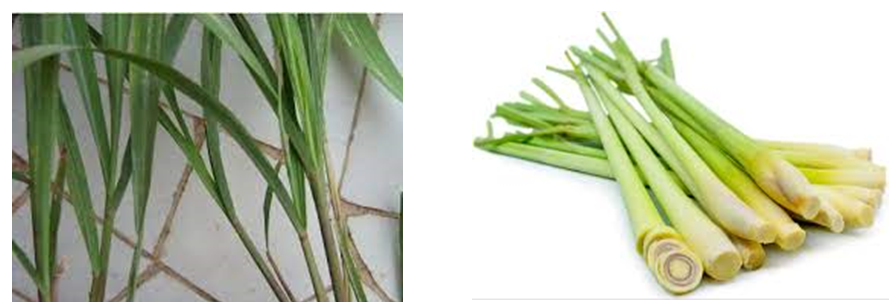
Lemon grass is a perennial monocotyledonous grass which can grow upto 6 feet in height and 4feet in width. It grows in clusters. It has long, slender, drooping bright green leaves that measures from 1.3-2.5cm in width and 3feet in length. Leaves are simple with entire margins. Flowers grow on spikes. It has a lengthy inflorescence ranging from 30- 60cm. The floral arrangement of this scented grass gives it the name ‘Cymbopogon’. Cymbopogoncitratus is common inhabitants of Southeast Asia [10] Taxonomic details of herbs are as follows: [11]
- Kingdom: Plantae
- Division: Mangolipophyta
- Class: Liliopsida
- Order: Poales
- Family: Poaceae
- Genus: Cymbopogon
- Species: Citrates
Chemical Constituent
The therapeutic potential of medicinal herbs could be associated to the presence of phytochemicals or secondary metabolites. These compounds are evenly spread in medicinal plants. The Important compounds such as phytosterols, anthocyanin, amino acids, organic acid, phenolic compounds, volatile components, fatty acids, fumesol, flavonoids, isovaleranic aldehyde, methylheptenone, valeric esters, L-linanool, furfurol, isopulegol, p-coumaric acid have been isolated and characterized from C. citratus. [12, 13].
Essential oil
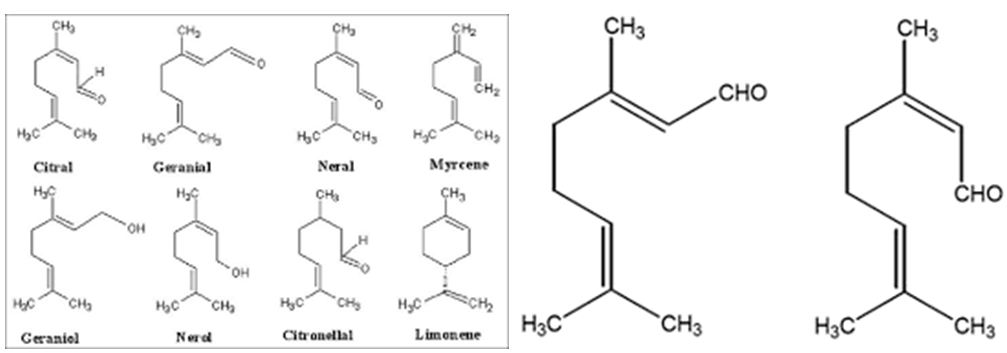
It contains citral (mixture of terpernoids and geranial), mycrene, genariol, citronellol (cymbopogonol and cymbopogone) and α-oxobisabolene. Their contents varies depending on plant species and geographical location (West Indian lemon grass has 12–15%, East Indian has 10–13%) [14]. Citral is important in flavor formation of the plant [14, 15] Major constituents such as neointermediol (7.2%), selina6-en-4-ol (27.8%), α-cadinol (8.2%), methyheptenone (1.2%), eudesma-7(11)-en-4-ol (5.3%), 3,7-dimethyl- 1,3,6-octatriene (0.58%), decanal (0.25%) and naphtalene (0.79%), have been reported [15, 16] Recent analyses revealed the presence of elemol (41%), β-eudesmol (45%), cubebol (4.7%), humulene (4%), citral acetate, citral diethylacetal, [17] citral acetate, citral diethylacetal, [18, 19] verbenone, sabinene, geranyl acetate, citronella, [20] mentha-1(7), limonene (19.33%), 8-dien-2-ol cis (17.34%), mentha-2,8- diene-1- oltrans-para (13.91%), mentha-1(7),8-dien-2-ol trans (13.95%) and mentha-2,8-diene-1-ol cis-para (8.10%) [21, 22].
Methods of Extraction of Essential Oil from Lemongrass
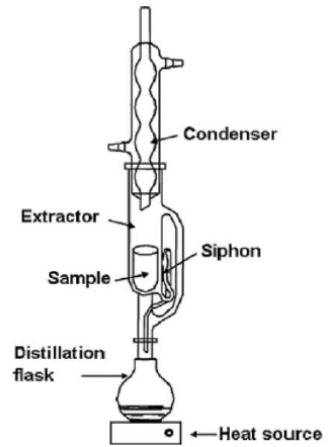
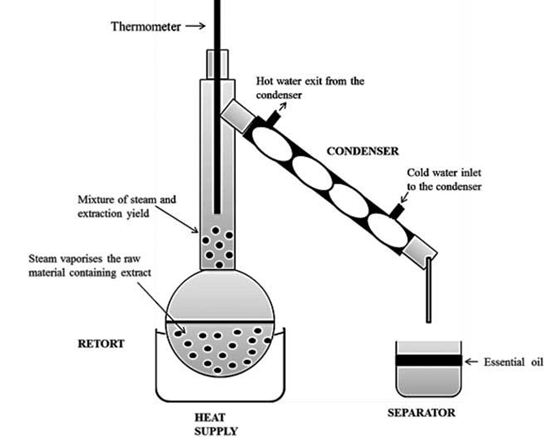
Soxhelation: Trees, flowers, herbs, and other plant materials are used to extract essential oils. These oils are composed of a variety of chemical substances. The main chemical component of these essential oils is terpenes, which are related to alcohols, ketones, and aldehydes. Citronella oil is utilised not only in the production of detergents, soaps, perfumes, and cosmetics, but also in the pharmaceutical sector. Clean technology is applied to the extraction of this essential oil. On a dry weight basis, lemon grass has between one and two percent essential oil. Citronella oil is another name for lemon grass oil. It is typically extracted using steam and hydro distillation. Still, these processes take a lot of time. In addition to cutting down on extraction time, the novel Microwave Assisted Hydrodistillation (MAHD) maintains oil quality. There have also been reports on the advantages of microwave radiation assisted oil extraction over hydrodistillation Pressurised liquid extraction with nitrogen gas is a new method that has been found to produce oil of higher quality than hydrodistillation and Soxhlet extraction. Research has also been done on the supercritical extraction of citronella oil under high pressure using CO2.
Steam Distillation: In this method we used fresh plant leaves or parts of plant. This method is widely used in many laboratories, in this method steam is released from steam boiler to extraction pot passing through plant material oil is removed from plant material by diffusion process. This is simple and easy method for many drugs.
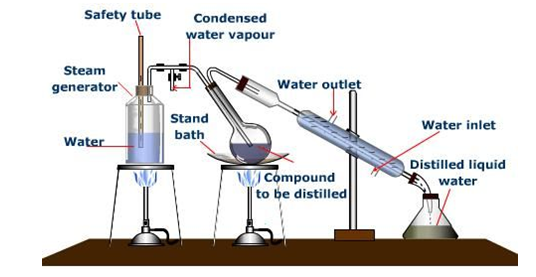
Hydro Distillation: This type of exaction is not suitable for all drugs because of water used as solvent. Some extract get soluble in water after heating. Plant material is in contact with hot water for long period of time changes its composition or gets degraded.
Supercritical Fluid Extraction Method: SFE can separate one component from other or simply separate mixture by using CO2. This method is very fast and gives bulk quantity in short duration of time. Recovery is easy and simple. Mostly CO2 is used as a solvent in this method.
Pharmacological Activity of Lemon Grass
Antioxidant properties: Lemongrass possess numerous antioxidants such as iso orientin, chlorogenic acid and swertiajaponin which aids in hunting free radicals that may cause disease [23]. Antimicrobial properties: Lemongrass extracts exhibits antimicrobial potency against Streptococcus mutans and thus used to prevent tooth decay. Anti-inflammatory properties: Anti-inflammatory property of Lemongrass is attributed to the presence of compounds citral and geranial which helps in preventing the release of certain inflammation-causing markers in our body [24]. Anticancer properties: Presence of bioactive citral in Lemongrass helps fight cancer either by apoptosis or boosting immune system [25]. Promotes healthy digestion: Lemongrass tea is reported to treat stomach discomforts, indigestion and gastric ulcers by protecting stomach lining. Reduce high cholesterol: Lemongrass extract assisted in lowering high cholesterol levels in humans. Treats obesity Lemongrass tea helps in losing excess of weight in obese patients. Skin treatment: Research indicated that lemongrass essential oil is used as a therapeutic agent for the treatment of inflammatory skin conditions [25]. Repellent Lemongrass extract is used in the preparation of insect repellents due to the presence of compounds citral and geraniol [26, 27] Controls dandruff Lemongrass oil is used in hair tonics to reduce dandruff through its antimicrobial and anti- inflammatory properties [27]. Treats oral issues Lemongrass extracts help fight inflammation of gums and cavities [28]. Anti-diarrhoeal activity: In practice, the whole stalk and the leaf of lemongrass are boiled and the decoction is drunk to relieve the diarrhoea. In view of its popular use in traditional medicine system, the anti-diarrheal efficacy of C. citrates stalk decoction and its main chemical constituent citral, was studied [29]. Anti-mutagenic activity: The ethanolic extract of lemongrass was found to possess anti-mutagenic properties towards chemical induced mutation in Salmonella typhimurium strains TA98 and TA100 [30]. Anti-malarial activity: In vivo antimalarial activity of essential oil obtained from Cymbopogoncitratus on mice infected with plasmodium berghei was studied [31]. Anti-nociceptive activity: Essential oil of C. citrates possesses a significant anti-nociceptive activity. Comparing the results Obtained with three different experimental models of nociception viz., hotplate, acetic acid-induced writhing in mice, and formalin test, essential oil acts both at the peripheral and central levels [32]. Anti-hepatotoxic activity: The aqueous leaf extracts of Cymbopogon citrates showed anti hepatotoxic action against cisplatin induced hepatic toxicity in rats. Hence the extracts have the potential to be used for the management of hepatopathies and as a therapeutic adjuvant in cisplatin toxicity [33].
Uses of Lemongrass
Lemongrass leaves contains good quantity of oil and this oil is used as antimicrobial carminative, fungicidal, analgesic, antiseptic, astringent, bactericidal and antidepressant properties. It is also used to cure ringworm and athlete’s foot disease, as it has ability to act as antibiotic as well as antiseptic properties. Lemongrass shows good inhibitory activity against methicillin-resistant Staphylococcus aureus (MRSA) infection. It is used on colitis indigestion and gastroenteritis ailments. It promotes to relieve the symptoms of headache, body ache, nervous exhaustion and stress-related condition. Infusion made up of lemongrass is useful in different infections such as sore-throats, laryngitis, bronchitis etc. [34] in some articles it is use for cure of gastrointestinal problems [35]. Lemongrass leaves decoction is used as diaphoretic in fever [36]. Many researchers shows Studies on lemongrass indicate to revitalize the body and enhances good health. Lemongrass basically stimulates digestion and stops chemical-induced carcinogenesis by means of modulating xenobiotic-metabolizing enzymes in the liver and intestine [37].
Applications in Various Fields
Agriculture: It is used as Bio fungicide in organic and conventional farming. Used in agricultural paste management in small scale farming. The inoculated seeds were combined with essential oil and powdered dry leaves of lemon grass at concentrations of 0.1 to 1% v/w and 1-10% (w/w), respectively. When melon seeds were inoculated with various fungi, the amount of deterioration was considerably less in the ground leaves as opposed to the untreated inoculated seeds. Shelled melon seeds inoculated with toxic bacteria showed a significant reduction in deterioration and aflatoxin production when treated with essential oil at 0.1 and 0.25% (v/w) and ground leaves at 10% (w/w). It is used as a pesticide active ingredient, basically used as anti-fungal agent in post-harvest management [38]. Packaging: Lemongrass oil is used in polylactic acid film to pack Pork Sausages. It is biodegradable film with antimicrobial activity of lemongrass gives protection to product from degradation. Study shows that 2% oil with film protect the product for more than 12 days [39]. Food Industry: One study shows that lemongrass stop spoilage by fungas in bread by adding cassava starch fibre. Fibres having 40% lemongrass shows good antifungal activity. The cassava starch-LEO fibers used as antifungal agent instead of synthetic additives applied to the food matrix and as smart packaging for bread [40]. Mosquito Repellent: The mosquito-repelling properties of lemongrass oil in liquid paraffin solution and ointment and cream formulations in various base classes have been tested topically. The effectiveness of mosquito repellent was evaluated by assessing the ability of product samples to deter bites from a two-day-starved culture of Aedes aegypti L. mosquitoes on the skin of an experimental bird. One of the main components of the oil, citral, may be the reason for the ≥50% repellency that the 1%v/v solution and 15%v/w cream and ointment preparations of the oil displayed for 2-3 hours. This action was similar to that of a commercial repellent for mosquitoes. The fundamental characteristics of the lemongrass oil mixtures affected how successful they were. The oil showed effectiveness with the different bases in the above order such as oleaginous, hydrophilic, emulsion base [41]. Food Preservative: Food must be free of harmful bacteria, fungi, and flavours or odours in order for consumers to not be put at risk for health problems. To reduce the needless chemical burden on health, the food industry is currently moving away from artificially produced preservatives and towards natural preservatives. Numerous emerging technologies are developing natural defences against food deterioration. One such natural preservative with strong antibacterial and antioxidant properties is lemongrass. These effects are attributed to a group of terpenes found in lemongrass essential oil. Lemongrass’s culinary industry acceptability and potential to satisfy consumer demands are attributed to these qualities. The function of lemongrass and its essential oil in food preservation is covered in detail in this article [42].
Conclusion
The review gives us an overall knowledge of Lemongrass, its sources, isolation of oil, its methods, its Pharmacological action, also its various applications. This plant is safe and widely useful in Pharmacy, food, and agriculture industry. It is found to be nontoxic and non-irritant product. It infusion is useful for various body parts and protect our body from many diseases and disorders. It is used as natural preservative in food and packaging industry. Hence overall lemongrass has wide scope in future for research and new formulation development.
References
-
Manzoor F, Naz N, Malik S, Arshad S, Siddiqui B (2013) Chemical Composition of Essential Oils Derived from Eucalyptus and Lemongrass and Their Antitermitic Activities Angainst Microtermes mycophagus (Desneux). Asian Journal of Chemistry 25(5): 2405-2408.
-
Tzortzaki NG, Economakis CD (2007) Antifungal activity of lemongrass (Cympopogon citratus L.) essential oil against key postharvest pathogens. Innovative Food Science & Emerging Technologies 8(2): 253-258.
-
Schaneberg BT, Khan IA (2002) Comparison of extraction methods for marker compounds in the essential oil of lemon grass by GC. J Agric Food Chem 50(6): 1345-1349.
-
Ahmad I, Hanif MA, Nadeem R, Jamil MS, Zafar MS (2008) Nutritive evaluation of medicinal plants being used as condiments in South Asian Region. Journal of the Chemical Society of Pakistan 30(3): 400-405.
-
Viabhav S, Subodh D, Ashish M (2013) A review on lemon grass: agricultural and medicinal aspect. International Research Journal of Pharmacy 4(8): 42-44.
-
Wannissorn B, Jarikasem S, Soontorntanasart T (1996) Antifungal activity of lemon grass oil and lemon grass oil cream. Phytotherapy Research 10(7): 551-554.
-
Shankar SS, Rai, Ahmad A, Sastry M (2005) Controlling the optical properties of lemongrass extract synthesized gold nanotriangles and potential application in infrared- absorbing optical coatings. Chemistry of Materials 17(3): 566-572.
-
Cheel J, Theoduloz C, Rodríguez J, Schmeda G (2005) Free radical scavengers and antioxidants from Lemongrass (Cymbopogon citratus (DC.) Stapf) Journal of agricultural and food chemistry 53(7): 2511-2517.
-
Kumar R, Krishan P, Swami G, Kaur P, Shah G, et al. (2010) Pharmacognostical investigation of Cymbopogoncitratus (DC.) Stapf Der Pharmacia Lettre 2(2): 181-189.
-
Shah G, Shri R, Panchal V, Sharma N, Singh B, et al. (2011) Scientific basis for the therapeutic use of Cymbopogon citratus, Stapf (Lemon grass). Journal of Advanced Pharmaceutical Technology & Research 2(1): 3-8.
-
Rahim SM, Taha EM, Mubark ZM, Aziz SS, Simon KD, et al. (2013) Protective effect of Cymbopogon citratus on hydrogen peroxide-inducedoxidative stress in the re- productive system of male rats systems. Biol Reproduct Med 59(6): 329-326.
-
Moore K, Gerber C, Patel J, Friedman M, Ravishankar S (2012) Anti-microbial activity of lemongrass oil against Salmonella enterica on organic leafy greens J Appl Microbiol 112(3): 485-492.
-
Ranitha M, Abdurahman H, Sulaiman Z, Nour A, Thana S (2014) Comparative study of lemongrass (Cymbopogon citratus) essential oil extracted by microwave- assisted hydrodistillation (MAHD) and conventional hydrodistillation (HD) method. Int J Chem Eng Appl 5(2): 104-108.
-
Costa AV, Pinheiro PF, Rondelli VM, Queiroz VT, Tuler AC, et al. (2013) Cymbopogon citratus (Poaceae) essential oil on Frankliniella schultzei (Thysanoptera: Thripidae) and Myzus persicae (Hemiptera: Aphididae). Biosci J 29(6): 1840-1847.
-
Vahid F, Jahanshir A, Taimoor J, Javad N, Asgar E (2013) Chemical composition and antifungal activity of essential oil of Cymbopogon citratus (DC.) Stapf. against three phytophthora species. Greener J Biol Sci 3(8): 292-298.
-
Halabi MF, Sheikh BY (2014) Anti-proliferative effect and phytochemical analysis of Cymbopogon citratus extract. BioMed Res Int 8: 906239.
-
Bharti SK, Kumar A, Prakash O, Krishnan S, Gupta AK (2013) Essential oil of Cymbopogon citratus against diabetes: validation by in-vivo experiments and computational studies. J Bioanal Biomed 5(5): 194-203.
-
Kumar P, Mishra S, Malik A, Satya S (2013) Housefly (Musca domestia L.) control potential of Cymbopogon citratus Stapf. (Poales: Poaceae) essential oil and monoterpenes (citral and 1,8-cineole). Parasitol Res 112(1): 69-76.
-
Soares MO, Alves RC, Pires C, Oliveira MB, Vinha AF (2013) Angolan Cymbopogon citratus used for therapeutic benefits: nutritional composition And influence of solvents in phytochemicals content and antioxidant activity of leaf extracts. Food and Chemical Toxicology 60: 413-418.
-
Nanon A, Suksombat W, Beauchemin K, Yang W (2014) Assessment of lemon grass oil supplementation in a dairy diet on in vitroruminal fermentation characteristics using the rumen simulation technique. Can J Anim Sci 94(4): 731-736.
-
Balakrishnan B, Paramasivam S, Arulkumar A (2014) Evaluation of the lemongrass plant (Cymbopogon citratus) extracted in diff erent solvents for antioxidant and antibacterial activity against human pathogens. Asian Pacific Journal of Tropical Disease 4(1): 134-139.
-
Olorunnisola SK, Hammed AM, Simsek S (2012) Biological properties of lemongrass: An overview. International Food Research Journal 21(2): 455-462.
-
Ghosh K (2013) Anticancer effect of lemongrass oil and citral on cervical cancer cell lines. Pharmacognosy Communications 3(4): 1-8.
-
Skaria BP, Joy PP, Mathew S, Mathew G (2006) Lemongrass. In Handbook of herbs and spices 1st (Edn.), Woodhead Publishing pp: 400-419.
-
Elson CE, Underbakke GL, Hanson P, Shrago E, Wainberg RH, et al. (1989) Impact of lemongrass oil, an essential oil, on serum cholesterol. Lipids 24(8): 677-679.
-
Khan NT (2020) Therapeutic benefits of lemongrass and tea tree. Ann Civil Environ Eng 4: 27-29.
-
Silva C, Guterres SS, Weisheimer V, Schapoval EE (2008) Antifungal activity of the lemongrass oil and citral against Candida Braz J Infect Dis 12(1): 63-66.
-
Oyedele AO, Gbolade AA, Sosan MB, Adewoyin FB, Soyelu OL (2002) Formulation of an eff ective mosquito- repellent topical product from lemongrass oil. Phytomedicine 9(3): 259-262.
-
Boukhatem MN, Ferhat MA, Kameli A, Saidi F, Kebir HT (2014) Lemon grass (Cymbopogon citratus) essential oil as a potent anti-infl ammatory and antifungal drugs. Libyan J Med 9(1): 25431.
-
Rajesvari R, Lakshmi T (2013) Lemon grass oil for improvement of oral health. Dental Hypotheses 4(4): 115-117.
-
Tangpu V, Yadav AK (2006) Antidiarrhoeal activity of Cymbopogon citrates and its main constituent, citral. Pharmacologyonline 2: 290-298.
-
Tchoumbougnang F, Zollo PH, Dagne E, Mekonnen Y (2005) In vivo antimalarial activity of essential oils from CymbopogoncitratusandOcimumgratissimum on mice infected with Plasmodium berghei. Planta Medica 71(1): 20-3.
-
Viana GB, Vale TG, Pinho RN, Matos FJ (2000) Antinociceptive effect of the essential oil from Cymbopogoncitratus in mice. Journal of Ethnopharmacol 70(3): 323-327.
-
Arhoghro EM, Kpomah DE, Uwakwe AA (2012) Curative Potential of Aqueous Extract of Lemon Grass (Cymbopogoncitratus) on Cisplatin Induced Hepatotoxicity in Albino Wistar Rats. J Phys Pharm Adv 2(8): 282-294.
-
Chopra RN, Chopra IH, Kapur LD (1958) Indigenous drugs of India UN Dhur and Sons. Private Ltd Calcutta 67: 502.
-
Nambiar VS, Matela H (2012) Potential Functions of Lemon Grass (Cymbopogoncitratus) in Health and Disease. International Journal of Pharmaceutical & Biological Archives 3(5): 1035-1043.
-
Fukumoto LR, Mazza G (2000) Assessing antioxidant and prooxidant activities of phenolic compounds. Journal of Agricultural and Food Chemistry 48(8): 3597-3604.
-
Samson O, Edeh I (2023) A Comprehensive review on Lemon Grass. EPRA International Journal of Research and Development 8(4): 258-273.
-
Deepak G, Ashish G (2022) Lemongrass (Cymbopogon flexuosus Steud) Wats Essential Oil: Overview and Biological Activities. RPMP Amity Institute of Biotechnology 37(2).
-
Kumar A, Lal RK, Gupta AK, Chanotiya CS (2023) Historical and Contemporary development of novel chemotype varities with high essential oil of lemongrass in India: A Review. Journal of Medicinal and Aromatic Plant Sciences 45(1): 17-27.
-
Sukriti D, Sunita M (2016) A Short Review on Chemical Composition Therapeutic Use and Enzyme Inhibition Activities of Cymbopogon Species. Indian Journal of Science and Technology 9(46): 1-9.
-
Ikhwan Y, Muhammad I, Csaba V, Dezso C, Millos T (2024) Exploring the Clinical Applications of Lemongrass Essential Oil: A Scoping Review. Pharmaceuticals 17(2): 159.
- Acido Labile or Gastro Irritant Apis and Enteric Release in Galenic Practice: An Overview
- A Study on Knowledge, Attitude and Practice of Hand Hygiene among Healthcare Professionals at a Tertiary Care Hospital, India
- Influence of Inoculum Concentration on In Vivo Incubation Period of Emmia lacerata, Pathogenesis and Management of Wilt in Pepper (Capsicum annuum L.)
- Vanilla’s Chemistry
- Marine Anti-Cancer Compounds and Adverse Effects of Global Warming on Oceans: An Overview
- Serological Investigation of Chikungunya Virus Antibody among Malaria-Suspected Febrile Patients in Some Healthcare Facilities in Rivers State