
A Review on The Impurity Profile of Pharmaceuticals
A collection of analytical procedures known collectively as “impurity profiling” are intended to detect, identify, clarify the structure of, and quantify both organic and inorganic impurities as well as residual solvents in pharmaceutical formulations and bulk pharmaceuticals. This is the main task of contemporary drug analysis since it is the most effective approach to describe the stability and quality of pharmaceutical formulations and bulk pharmaceuticals. To keep an eye on them, specific analytical techniques must be created. When modifications are made to the synthesis, formulation, or production processes, even if they are done to improve them, new purities could be seen. The identification of impurities in Active Pharmaceutical Ingredients (APIs) and the need for purity are being emphasised by a number of regulatory bodies, including the Canadian Drug and Health Agency (CDHA), the United States Food and Drug Administration (FDA), and the International Conference on Harmonisation (ICH). Pharmaceutical products can contain impurities from a variety of sources, including reagents, heavy metals, ligands, catalysts and other materials like charcoal, filter aids, and the like. Degraded end products from hydrolysis, photolytic cleavage, oxidative degradation, decarboxylation, and other processes can also contain impurities, as can enantiomeric impurities. The various pharmacopoeias, including the Indian, American, and British pharmacopoeias, are gradually adding restrictions to the permissible concentrations of contaminants found in APIs or formulations. Capillary electrophoresis, electron paramagnetic resonance, gas-liquid chromatography, gravimetric analysis, high performance liquid chromatography, solidphase extraction techniques, liquid-liquid extraction techniques, mass spectrometry, ultraviolet spectrometry, infrared spectroscopy, supercritical fluid extraction column chromatography, nuclear magnetic resonance (NMR) spectroscopy, and RAMAN spectroscopy are some of the techniques used to isolate and characterize impurities in pharmaceuticals. Liquid Chromatography (LC)-Mass Spectroscopy (MS), GC-MS, LC-NMR, LC- NMR-MS, and LC-MS are the most frequently used hyphenated techniques for drug impurity profiling. This demonstrates the importance and range of drug impurity profiling in pharmaceutical research.
Introduction
These impurities can arise from numerous sources such as raw materials, synthetic processes, degradation, or environmental factors. Understanding and controlling impurities are essential to ensure the safety, efficacy, and stability of pharmaceuticals [1]. Impurity profiling involves the identification, quantification, and characterization of these impurities through sophisticated analytical techniques such as chromatography, spectroscopy, and mass spectrometry.
Regulatory agencies like the U.S. Food and Drug Administration (FDA) and the European Medicines Agency (EMA) mandate stringent guidelines for assessing and managing impurities in pharmaceuticals to guarantee patient safety and product quality [2, 3]. Several factors influence the impurity profile of pharmaceuticals, including the drug’s chemical structure, manufacturing process, and storage conditions. Manufacturers employ various strategies to minimize impurities during drug development and manufacturing, including process optimization, purification techniques, and rigorous quality control measures [4].
Understanding the impurity profile is crucial throughout the drug development lifecycle, from early-stage research to commercialization and post-market surveillance. It facilitates risk assessment, determination of acceptable limits, and establishment of appropriate control strategies to ensure compliance with regulatory standards and meet patient needs [5].
Regulatory Guidelines on Impurities in API’S
Regulatory guidelines for impurities in Active Pharmaceutical Ingredients (APIs) are crucial for ensuring the safety, efficacy, and quality of pharmaceutical products. Here are some key points and sources you might find useful: International Conference on Harmonisation (ICH): The ICH provides guidelines that are widely accepted by regulatory authorities around the world. For impurities, particularly in APIs, ICH Q3A (Impurities in New Drug Substances) and ICH Q3B (Impurities in New Drug Products) are significant. United States Pharmacopeia (USP): The USP sets standards for the identity, strength, quality, and purity of medicines, food ingredients, and dietary supplements manufactured, distributed, and consumed worldwide. USP <1086> “Impurities in Drug Substances and Drug Products” provides guidance on the identification, qualification, and control of impurities. European Medicines Agency (EMA): The EMA provides guidelines on impurities in APIs as part of its regulatory framework for medicinal products in the European Union.
Specific guidelines may vary depending on the type of product and the stage of development. Pharmacopoeias: Many countries have their own pharmacopoeias, which include monographs detailing the specifications and testing procedures for impurities in APIs. Examples include the British Pharmacopoeia (BP), Japanese Pharmacopoeia (JP), and Indian Pharmacopoeia (IP). National Regulatory Authorities: Each country has its own regulatory agency responsible for overseeing the approval, manufacturing, and marketing of pharmaceuticals. These agencies often provide specific guidelines and requirements for impurities in APIs. ICH M7: For mutagenic impurities, ICH M7 provides guidance on assessment and control of DNA-reactive (mutagenic) impurities in pharmaceuticals to limit potential carcinogenic risk.
Risk Assessment
Many guidelines emphasize the importance of risk assessment in determining acceptable levels of impurities based on factors such as toxicity, potency, and patient exposure. When referencing specific guidelines, it’s essential to consult the most recent versions and consider the regulatory requirements applicable to the region where the API will be marketed [6, 7]. Significance: Impurity profiling is a crucial aspect of pharmaceutical analysis, particularly in drug development and manufacturing. Here’s why it’s significant: Safety: Impurities in drugs can pose serious risks to patients. They may cause adverse reactions, toxicity, or reduce the efficacy of the medication. By identifying and quantifying impurities, pharmaceutical companies can ensure that their products meet stringent safety standards. Regulatory Compliance: Regulatory agencies such as the FDA (Food and Drug Administration) and EMA (European Medicines Agency) require thorough impurity profiling as part of the drug approval process. Compliance with these regulations is essential for market approval and continued sales of pharmaceutical products. Quality Control: Impurity profiling is integral to quality control during drug manufacturing. By monitoring and controlling impurities at various stages of production, manufacturers can ensure consistency and quality in their products. Process Optimization: Understanding the sources and pathways of impurity formation can lead to process optimization. By modifying manufacturing processes, companies can reduce impurity levels, increase yields, and improve the overall efficiency of drug production. Stability Studies: Impurity profiling is essential in stability studies to assess the long-term stability and shelf-life of pharmaceutical products. By monitoring impurity levels over time under various storage conditions, companies can determine appropriate storage conditions and expiration dates. Batch-to-Batch Consistency: Consistency in impurity profiles across different batches of a drug is critical to ensure uniformity in product quality and safety. Impurity profiling helps identify any variations between batches, allowing manufacturers to take corrective actions as necessary. Patent Protection: Impurity profiling can also play a role in patent protection. By characterizing impurities and their formation pathways, pharmaceutical companies can establish the uniqueness of their manufacturing processes, potentially strengthening their patent claims. Overall, impurity profiling is essential for ensuring the safety, efficacy, and quality of pharmaceutical products, as well as for regulatory compliance and process optimization in drug development and manufacturing [8, 9].
Classification of Impurities
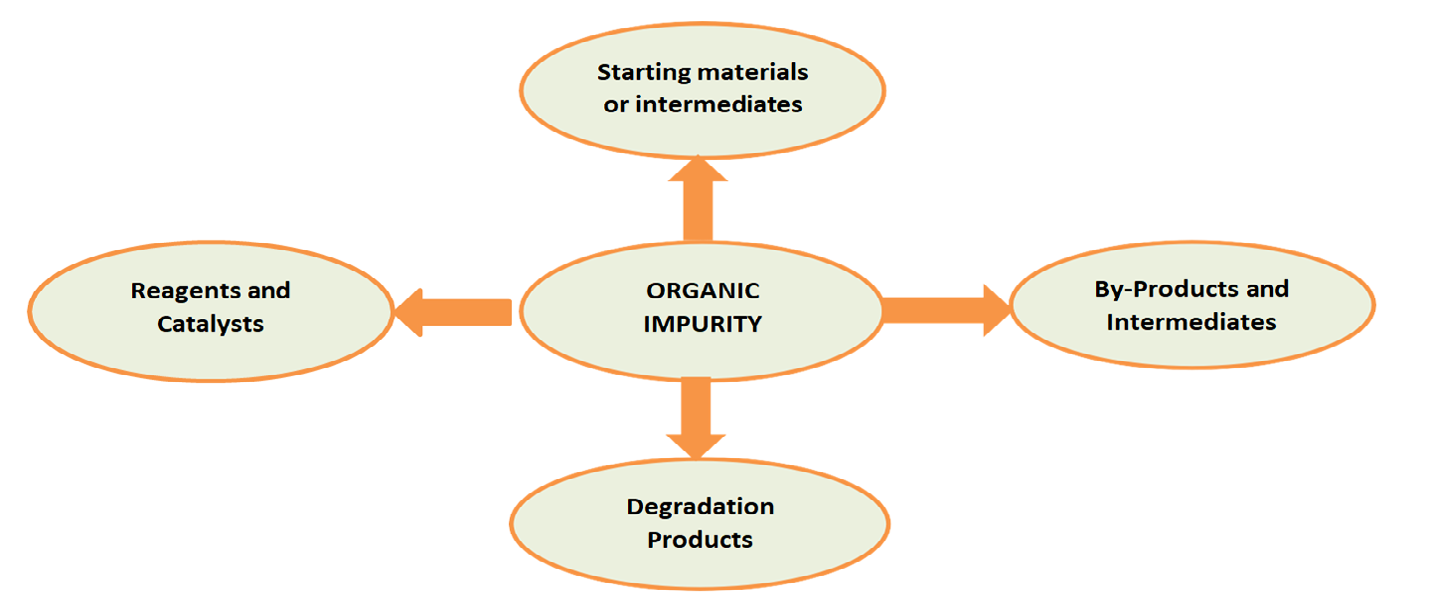
Impurities are broadly classified into: Organic Impurities, Inorganic impurities, Residual solvents Organic Impurities: Organic impurities in active pharmaceutical ingredients (APIs) can arise from various sources such as starting materials, intermediates, or by- products formed during the manufacturing process. These impurities can potentially impact the safety and efficacy of the final pharmaceutical product. Here are some common types of organic impurities found in APIs [10]. Starting materials or intermediates: These impurities originate from the raw materials used in the synthesis of the API. Even high- quality starting materials may contain trace amounts of impurities that can carry through to the final product [11]. By-Products: During the synthesis of the API, various intermediates are formed, and some of them might not be completely converted into the desired product. These unreacted intermediates or by- products can act as impurities in the final API. Degradation Products: APIs can degrade over time due to various factors such as exposure to light, heat, moisture, or reaction with other chemicals. These degradation products can be organic impurities that need to be monitored and controlled. Reagents and Catalysts: Residual reagents and catalysts used in the manufacturing process can also contribute to organic impurities in the API.
Inorganic Impurities
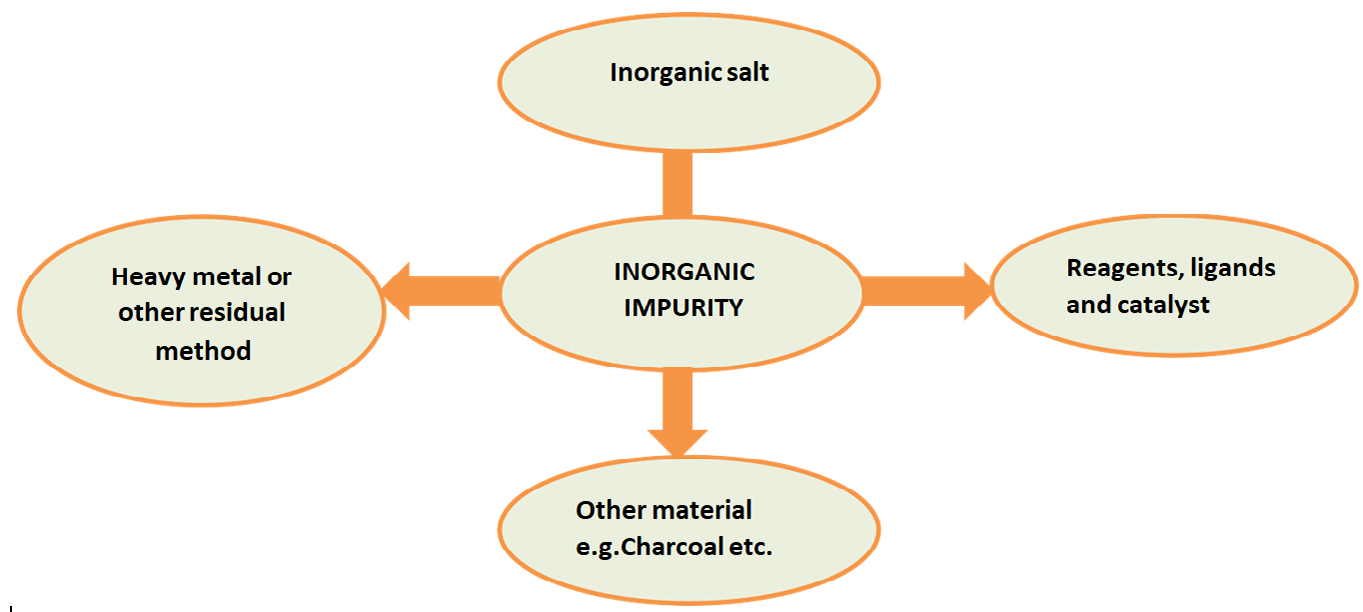
Inorganic impurities in active pharmaceutical ingredients (APIs) refer to any non-organic substances present in the drug substance that are not intentionally added but may be introduced during the manufacturing process or as contaminants from raw materials, equipment, or the environment. These impurities can arise from various sources such as catalysts, reagents, solvents, or interactions with processing equipment [12]. Reagent, Ligands and Catalysts: These contaminants are extremely rare in the production process, and if the right protocol isn’t followed, it could lead to serious issues. Heavy Metals: The primary solvent used in the production process is water, which can also contain a number of heavy metals, including lead, cadmium, and manganese. Reactors with glass linings or demineralized water are utilised to prevent it [13]. Other Materials: In the factories that produce bulk medications, filters or filtering aids like centrifuge bags are frequently utilised along with activated carbon. To prevent these contaminations, it is crucial to regularly check for fibres and black particles in the bulk medications. For instance, charcoal, filter helps Residual Solvents: In the context of chemistry and manufacturing, residual solvents refer to any volatile organic compounds (VOCs) that remain in a substance after the manufacturing process. These solvents can include things like: Water: Although water is not an organic solvent, it is often considered a residual solvent if it is present in significant quantities in a substance where its presence is unintended or undesirable.
Organic Solvents
These are volatile compounds that are used during the manufacturing process to dissolve other substances. Common examples include alcohols (methanol, ethanol), ketones (acetone), ethers (diethyl ether) and hydrocarbons (hexane, benzene).
In pharmaceuticals, for instance, residual solvents can pose significant risks to human health if present in the final product beyond acceptable limits. Regulatory bodies like the FDA (Food and Drug Administration) in the United States, the EMA (European Medicines Agency), and other similar agencies worldwide have established guidelines and limits for residual solvents in pharmaceuticals and other products [14].
Manufacturers typically employ various methods to remove residual solvents from their products, such as evaporation, vacuum drying, or purging with inert gases. Analytical techniques like gas chromatography are used to detect and quantify residual solvents in products to ensure compliance with regulatory standards [15].
Sources of Impurities
Impurities can arise from various sources depending on the context, such as in chemistry, manufacturing, or environmental studies. Here are some common sources of impurities:
- Raw Materials Impurities can be introduced during the extraction or sourcing of raw materials. Natural substances often contain impurities due to their origin or the processes involved in their formation.
- Synthesis or Production Process Chemical reactions or manufacturing processes can sometimes yield impurities as byproducts. This can occur due to side reactions, incomplete conversions, or contamination from equipment or reagents [16].
- Contaminants External substances can contaminate the product during handling, storage, or transportation. This could include dust, dirt, microbes, or other foreign particles.
- Reaction Intermediates In multi-step synthesis or complex reactions, intermediate compounds may form and persist as impurities in the final product.
- Solvents and Catalysts Residual solvents or catalysts used in the production process can remain in the final product as impurities if not completely removed.
- Environmental Sources Pollutants from the environment, such as air, water, or soil contaminants, can find their way into products or materials, especially in industries like agriculture, food processing, and pharmaceuticals [17].
- Packaging Materials Sometimes, impurities can leach into products from the materials used in packaging, such as plastics, coatings, or adhesives.
- Human Error Mistakes or oversight during handling, processing, or analysis can lead to impurities. For example, incorrect measurements, improper storage conditions, or inadequate cleaning of equipment.
- Degradation or Decomposition Products can degrade over time, leading to the formation of impurities. This can occur due to exposure to light, heat, air, or other environmental factors.
- Cross-Contamination In settings where multiple products or substances are processed or stored in close proximity, cross-contamination can occur, leading to the introduction of impurities from one material to another [18]
Understanding the sources of impurities is crucial for quality control and ensuring the purity of products in various industries.
Characterization of Impurities
It is crucial to evaluate a drug’s impurity as soon as it is discovered. If it is discovered that the sample contains more than 0.1% of an impurity, it must be described in accordance with FDA guidelines. It is necessary to characterise the raw material if impurities are anticipated, as these could result from degradation, the creation of intermediates, or complex formation with the excipient.
Reference Standard: The primary objective of this approach is to measure and regulate reference standards that are utilised in the creation and supervision of novel pharmaceuticals. We are aware that reference standards give us access to fundamental data for assessing and monitoring the performance of bulk drugs, as well as by-products, contaminants, degradation products, excipients, raw materials, and intermediates [19].
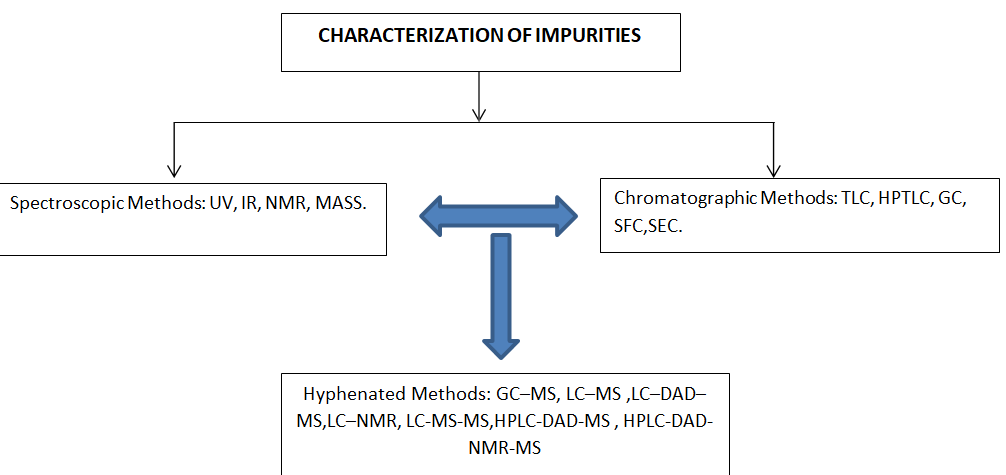
Spectroscopic Methods
Spectroscopic methods play a crucial role in detecting and analyzing impurities in various substances across different fields such as chemistry, pharmaceuticals, materials science, and environmental science. These methods involve the interaction of matter with electromagnetic radiation, enabling scientists to identify and quantify impurities based on their unique spectral signatures. Some common spectroscopic techniques used for impurity analysis include UV-Visible Spectroscopy: This method involves measuring the absorption of ultraviolet and visible light by a sample. Impurities can absorb light at specific wavelengths, allowing for their detection and quantification. UV-Visible spectroscopy is widely used for analyzing organic compounds, transition metal complexes, and determining the concentration of impurities in solutions [20]. Infrared (IR) Spectroscopy: IR spectroscopy measures the absorption of infrared radiation by molecules. Different functional groups within molecules absorb IR radiation at characteristic frequencies, providing information about the chemical structure of compounds. Impurities often exhibit distinct IR spectra compared to the pure substance, aiding in their identification [21]. Nuclear Magnetic Resonance (NMR) Spectroscopy: NMR spectroscopy analyzes the magnetic properties of atomic nuclei in a sample when subjected to a magnetic field and radiofrequency radiation. Impurities can cause shifts in the NMR signals of the main compound, allowing for their detection, identification, and quantification. NMR is especially useful for elucidating the structure of organic molecules and detecting impurities in complex mixtures [22]. Mass Spectrometry (MS): MS measures the mass-to-charge ratio of ions produced from a sample, providing information about its molecular composition. Impurities can be identified based on their unique mass spectra, fragmentation patterns, and isotopic signatures. MS is highly sensitive and is often coupled with other spectroscopic techniques for comprehensive impurity analysis [23]. X-ray Photoelectron Spectroscopy (XPS): XPS analyzes the energy of photoelectrons emitted from a sample when irradiated with X-rays. It provides information about the elemental composition and chemical state of surface impurities. XPS is commonly used for analyzing thin films, surfaces, and interfaces in materials science and semiconductor industry. Raman Spectroscopy: Raman spectroscopy measures the scattering of laser light by a sample, providing information about its molecular vibrations and rotational transitions.
Impurities can alter the Raman spectra of the main substance, enabling their detection and characterization. Raman spectroscopy is non-destructive and can be applied to solids, liquids, and gases. These spectroscopic methods offer complementary information and are often used in combination to achieve comprehensive impurity analysis, ensuring the quality and purity of substances in various industries.
Chromatographic Methods
Chromatographic techniques play a crucial role in analyzing and separating impurities in various substances. These techniques are widely used in pharmaceutical, environmental, food, and chemical industries to ensure product quality and safety. Here are some common chromatographic techniques used for impurity analysis: High-Performance Liquid Chromatography (HPLC): HPLC is one of the most widely used chromatographic techniques for impurity analysis. It offers high sensitivity and resolution, making it suitable for detecting and separating impurities in complex mixtures. Different modes of HPLC, such as reversed-phase, normal phase, ion-exchange, and size-exclusion chromatography, can be employed based on the nature of impurities and the analyte [24]. Gas Chromatography (GC): GC is mainly used for volatile compounds and is particularly useful for analyzing impurities in organic compounds. It separates compounds based on their volatility and interaction with the stationary phase. GC is often coupled with mass spectrometry (GC-MS) for accurate identification of impurities [25]. Thin-Layer Chromatography (TLC): TLC is a simple and cost-effective chromatographic technique used for qualitative analysis of impurities. It involves the separation of compounds on a thin layer of adsorbent material coated on a glass or plastic plate. TLC is often used as a preliminary screening method before employing more advanced chromatographic techniques [26]. Ion Chromatography (IC): IC is specifically used for analyzing ions and charged molecules. It is commonly employed for the analysis of inorganic impurities, such as metal ions and anions. IC is beneficial in industries where the presence of certain ions as impurities can affect product quality. Supercritical Fluid Chromatography (SFC): SFC utilizes supercritical fluids, such as carbon dioxide, as the mobile phase. It is suitable for separating non-volatile and thermally labile compounds, making it useful for impurity analysis in pharmaceuticals and natural products. Size-Exclusion Chromatography (SEC): SEC separates molecules based on their size. It is often used for the analysis of macromolecular impurities, such as proteins and polymers [27]. These chromatographic techniques can be further enhanced by coupling them with detectors like UV-Vis spectrophotometers, mass spectrometers, or refractive index detectors to improve sensitivity and selectivity in impurity analysis.
Hyphenated methods
The following hyphenated methods can be used effectively to monitor impurities [28, 29]. GC–MS LC–MS LC–DAD–MS LC–NMR LC-MS-MS HPLC-DAD-MS HPLC-DAD-NMR-MS
Applications
The fields of drug design and quality, stability, and safety monitoring of pharmaceutical compounds- whether synthesised, derived from natural materials, or created through recombinant methods have seen a great deal of use. Alkaloids, amines, amino acids, analgesics, antimicrobials, anticonvulsants, antidepressants, tranquillizers, antineoplastic drugs, macromolecules, steroids, and other various substances are among the applications [30].
Conclusion
Impurities can create undesirable side effects and prevent a medicine from having the desired or intended pharmacological action if they are included in the finished product. Maintaining the safety and efficacy of medications depends heavily on impurity profiling. The risk can be reduced by determining the security of drug goods and then quantifying and eliminating the contaminants in the drug components. Because many organic and inorganic impurities are typically found in APIs and finished products, it can therefore be a useful tool for determining their toxicity, safety, identification, and quantification. Having distinct requirements or criteria for impurities is crucial. Consequently, impurity identification and management are critical to preserving the efficacy and safety of medications, and impurity profiling is very essential.
References
-
Guideline IHT (2006) Impurities in new drug substances Q3A (R2). In Proceedings of the International Conference on Harmonization of Technical Requirements for Registration of Pharmaceuticals for Human Use.
-
FDA (2006) Guideline for industry Q3B (R2). In Proceedings of the International Conference on Harmonization of Technical Requirements for Registration of Pharmaceuticals for Human Use.
-
Guideline on the Specification Limits for Residues of Metal Catalysts or Metal Reagents (2007) European Medicines Agency
-
Miller JM, Miller JC (2012) Statistics and Chemometrics for Analytical Chemistry 6th (Edn.), Pearson Education Limited.
-
Rathore AS, Singh S (2014) Impurity filing: an essential quality assurance tool. Journal of Pharmaceutical Education and Research. 52-59.
-
Warad TA, Bhusnure OG, Gholve SB (2016) Impurity Profile of Pharmaceutical Ingredients: A Review. Journal of pharmacy research 10(7): 523-533.
-
Ahuja S (1998) Impurities evaluation of pharmaceuticals. 1st (Edn.), CRC Press.
-
Gupta R, Jain S, Gupta A (2014) A review on the impurity profile of pharmaceuticals. International Journal of Drug Formulation and Research 5(2): 53-79.
-
Tegeli VS, Gajeli GB, Chougule GK, Thorat YS, Shivsharan U, et al. (2011) Significance of impurity profiling: A Review. International Journal of Drug Formulation and Research 2(4): 174-195.
-
Deshmukh RS, Umarkar AR, Bavaskar SR, Narkhede PS, Chaudhari VG et al. (2011) Impurity profile in pharmaceutical substances-A comprehensive: A review. Int J Pharm Bio Sci 1(4): 382-389.
-
Chanda A, Ramalakshmi N, Nalini C, Mahabubi S (2015) Impurity profiling an emerging trend in Pharmaceuticals: A Review. PharmaTutor 3(11): 29-35.
-
Bari SB, Kadam BR, Jaiswal YS, Shirkhedkar AA (2007) Impurity profile: significance in active pharmaceutical ingredient. Eurasian J Anal Chem 2(1): 32-53.
-
Anand SD, Kalaskar SP (2017) Recent advances in impurity profiling of pharmaceuticals. IJPSR 8(8): 3206- 3217.
-
Nagpal S, Karan UA, Bhardwaj TR, Thakkar AA (2011) Review on need and importance of impurity profiling. Curr Pharmaceut Anal 7(1): 62-70.
-
Ahuja S, Alsante KM (2003) Handbook of isolation and characterization of impurities in pharmaceuticals. Academic press.
-
Pawale SS, Saley SP, Mundhada DR, Tilloo SK (2012) Impurity profile in bulk drugs and pharmaceutical preparation. International Journal of Pharmaceutical and Chemical Sciences 1(4): 1227-1237.
-
Follstaedt DM, Slichter CP (1977) NMR study of copper with vanadium impurities. Physical Review B 16(1): 21.
-
Jain A, Sharma S (2017) Recent trends in impurity profiling of pharmaceutical products. MIT Int J Pharm Sci 3:1-6.
-
Nath D, Sharma B (2019) Impurity profiling-a significant approach in pharmaceuticals. Current Pharmaceutical Analysis 15(7): 669-680.
-
Landge AK, Deshmukh VK, Chaudhari SR (2013) Impurities in pharmaceuticals-A review. Journal of Current Pharma Research 4(1): 1105-116.
-
Sherikar OD, Mehta PJ, Khatri DM (2011) Various approaches for impurity profiling of pharmaceuticals- An overview. J Pharm Res 4(6): 1937-1942.
-
Ingale SJ, Sahu CM, Paliwal RT, Vaidya S, Singhai AK (2011) Advance approaches for the impurity profiling of pharmaceutical drugs: A review. International Journal of Pharmacy & Life Sciences 2(7).
-
Fiori J, Grassigli G, Filippi P, Gotti R, Cavrini V (2005) HPLC-DAD and LC-ESI-MS analysis of doxycycline and related impurities in doxipan mix, a medicated premix for incorporation in medicated feedstuff. Journal of pharmaceutical and biomedical analysis 37(5): 979-985.
-
Munson JW (1984) Pharmaceutical analysis: modern methods 11(Drugs and the Pharmaceutical Sciences). CRC Press
-
Sharma R, Goyal A (2014) An overview on scientific approaches for impurity profiling in new pharmaceutical substances and products: a review article. International Journal of Advanced Research in Pharmaceutical & Bio Sciences 4(3): A1-A1.
-
Ayre A, Varpe D, Nayak R, Vasa N (2011) Impurity profiling of pharmaceuticals. Adv Res Pharm Biol, 1(2): 76-90.
-
Shah SR, Patel MA, Naik MV, Pradhan PK, Upadhyay UM (2012) Recent Approches of” Impurity Profiling” In Pharmaceutical Analysis: A Review. International Journal of pharmaceutical sciences and research 3(10): 3603.
-
Ravindra KY, Moses BJ, Sarma MP, Seshidhar B, Srinivasa RS, et al. (2003) Application of LC-MS/MS for the identification of a polar impurity in mosapride, a gastroprokinetic drug. Journal of pharmaceutical and biomedical analysis 32(2): 361-368.
-
Tzanavaras D (2010) Recent advances in the analysis of organic impurities of active pharmaceutical ingredients and formulations: a review. Current Organic Chemistry 14(19): 2348-2364.
-
Venkatesan P, Valliappan K (2014) Impurity profiling: theory and practice. Journal of pharmaceutical sciences and research 6(7): 254.
- Acido Labile or Gastro Irritant Apis and Enteric Release in Galenic Practice: An Overview
- A Study on Knowledge, Attitude and Practice of Hand Hygiene among Healthcare Professionals at a Tertiary Care Hospital, India
- Influence of Inoculum Concentration on In Vivo Incubation Period of Emmia lacerata, Pathogenesis and Management of Wilt in Pepper (Capsicum annuum L.)
- Vanilla’s Chemistry
- Marine Anti-Cancer Compounds and Adverse Effects of Global Warming on Oceans: An Overview
- Serological Investigation of Chikungunya Virus Antibody among Malaria-Suspected Febrile Patients in Some Healthcare Facilities in Rivers State