
Review on Various Aspects of 3-D Printing in Pharmacy
3D printing also known as additive manufacturing which involves manufacturing of three dimensional objects by layering.3D printing includes layering materials, like plastics, composites or bio-materials to create objects that variety in shape, length, tension and color. This 3D printing generation has intense flexibility in what may be published. 3D printing has the capability to revolutionize the pharmaceutical manufacturing enterprise. Technologies currently being evaluated for use within the 3D printing of prescribed drugs, and the paintings of key market gamers to increase and increase their programs from studies to commercial. Close up of a 3D printing head approximately to begin a print at the printing mattress. The healthcare desires of the populace, and the therapeutics we use to deal with them, are changing. Though generics are undeniably critical, there’s a significant shift towards personalization and customization of remedy – inspired by using the adoption and enhancement of omics technology in healthcare. 3D Printing makes use of software that slices the 3D version into layers (0.01mm thick or less in most cases). Each layer is then traced onto the build plate by the printer, as soon as the pattern is finished, the construct plate is diminished and the subsequent layer is introduced on pinnacle of the previous one. 3D printing generation will revolutionize the pharmaceutical production style and system strategies. However, there's still a enormous barrier to make sure that 3D printed medicines have the same efficacy, protection, and balance as the pharmaceuticals conventionally manufactured by the Pharmaceutical Industry. Regarding the established order of recommendations, laws, first-class systems and protection of use and intake of 3D published drug treatments, it’s miles a top notch assignment for the regulatory authorities entailing great barriers, given the traditional requirements by way of the pharmaceutical sector.
Introduction
by layering.3D printing includes layering materials, like plastics, composites or bio-materials to create objects that variety in shape, length, tension and color. This 3D printing generation has intense flexibility in what may be published [1]. 3D printing has the capability to revolutionize the pharmaceutical manufacturing enterprise. Technologies currently being evaluated for use within the 3D printing of prescribed drugs such as material extrusion techniques (fused deposition modelling (FDM), semisolid extrusion (SSE), vat photopolymerisation, MED in material, stereolithography, (SLA) etc [2]. The paintings of key market gamers to increase and increase their programs from studies to commercial. Close up of a 3D printing head approximately to begin a print at the printing mattress. The healthcare desires of the populace, and the therapeutics we use to deal with them, are changing. Though generics are undeniably critical, there’s a significant shift towards personalization and customization of remedy – inspired by using the adoption and enhancement of omics technology in healthcare [3]. 3D Printing makes use of software such as Fusion 360, SOLIDWORKS, Onshape, Tinkercad, SolidEdge, Blender, etc. That slices the 3D version into layers (0.01mm thick or less in most cases). Each layer is then traced onto the build plate by the printer, as soon as the pattern is finished, the construct plate is diminished and the subsequent layer is introduced on pinnacle of the previous one. 3D printing generation will revolutionize the pharmaceutical production style and system strategies. However, there’s still a enormous barrier to make sure that 3D printed medicines have the same efficacy, protection, and balance as the pharmaceuticals conventionally manufactured by the Pharmaceutical Industry. Regarding the established order of recommendations, laws, first-class systems and protection of use and intake of 3D published drug treatments, it’s miles a top notch assignment for the regulatory authorities entailing great barriers, given the traditional requirements by way of the pharmaceutical sector [4].
Yet another advancements that could full fill this same stipulation sure customized therapeutic interventions does seem to be(3D) printable, also called improver manufacturing, whom the tries to make use like a digitized prototype complete mechanical its layer-with it and aid of- layer establishment anyway a three – dimensional form. 3D printing is a complicated layer-by means of-layer machine which can create state-of-the-art, personalized gadgets on call for. Drug shipping systems’ 3D printing acts as an engaging method for the improvement of customized products. The concept of 3D revealed drug method has developed rapidly considering the fact that some years and changed into directed by using patient-centric remedy to enhance therapy. The first FDA approval of drug produced via 3-d printing technology ended in an exceedingly fast development of studies on oral, or mucosal and topical dosage forms. This promising technology offers flexibility in components, which with conventional technological procedures are hard to reap [5].
Review of Literature
Hideo Kodama of Nayoga Municipal Industrial Research Institute is usually considered to have issued the primary strong object from a virtual layout. Still, the credit score for the first 3D printer usually is moving to Charles Hull, who in 1984 designed it while running for the corporation he based, 3D technique Corp [7] In actual phrases, starting place of 3D printing may be traced again to 1986, whilst the primary patent became issued for stereo lithography equipment (SLA) belonged to Charles (Chuck) Hull. He is likewise considered as father of 3D printing generation [8]. In 1988, 3D Systems brought the primary commercially to be had 3D printer, the SLA-250 [9]. 3D printing may additionally provide an alternative mastering activity to help pharmacy college students apprehend the drug-target interplay [10]. In a recent study, perceptions of healthcare professionals on 3D pharmaceuticals for paediatrics were investigated, revealing numerous opportunities such as on-demand manufacture, customised doses, child-friendly shapes and the production of small sized dosage forms [11]. In clinical generation, imaging techniques, like X-rays, computed tomography (CT) scans, magnetic resonance imaging (MRI) scans and ultrasounds are used to provide the authentic digital model, which are get saved inside the 3D printing statistics collector [12].
Methodology
History of 3D Printing
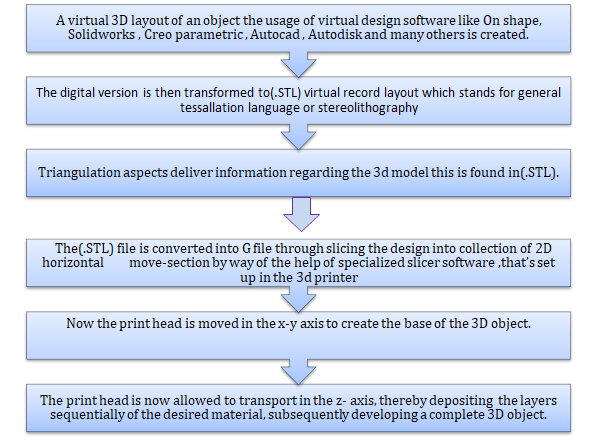
3D printing can create physical objects from a geometrical representation by successive addition of material. This 3D process had many experienced a phenomenal expansion in recent years. First commercialized of the 3Dprinting processes in year 1980 by Charles Hull. Currently, 3D printing primarily used for producing artificial heart pump, jewelry collections, 3D printed cornea, PGA rocket engine, steel bridge in Amsterdam and other products related to the aviation industry as well as the food industry.3D printing technology has originated from the layer by layer fabrication technology of three-dimensional (3D) structures directly from computer-aided design (CAD) drawing . 3D printing technology is a truly innovative and has emerged as a versatile technology stage. Nowadays, 3D printing is widely used in the world. 3D printing technology increasingly used for the mass customization, production of any types of open source designs in the field of agriculture, in healthcare, automotive industry, and aerospace industries .At the same time, there are several disadvantages the adoption of 3D printing technology in manufacturing industry. For instance, the effect of the use of 3D printing technology is will reduce the use of manufacturing labor so automatically will greatly affect the economy of countries that rely on a large number of low skill jobs. Furthermore, by using 3D printing technology, users can print many different types of objects such as knives, guns and dangerous items. Therefore, the use of 3D printing should be limited to only certain people to prevent terrorists and criminals bring guns without detected [13]. The want for human beings capable to develop answers for Problems of the modern-day technologically oriented global is constantly growing. It requires the incorporation of Technology education in excessive faculty curricula as an Inseparable detail of present-day schooling, and as Preparation for technological and medical careers .The instructional system in Israel gives research of different Technological disciplines, 4 of which are defined science wealthy subjects, such as mechanical engineering. Other Three are electronics, pc science, and science and Engineering. The era/mechanics song on the Tension Department of Education in Technology and Science is the only authorized university undergraduate program in Israel for Training instructors of the difficulty. The Tension has lately give you the Views Program which calls upon undergraduates and graduates from All schools to take a look at for a further B.Sc. In Science and Technology Education, and gives them full scholarships. Many Tension college students and graduates have joined the Program [14]. Three-dimensional (3D) printing – actually a subset of additive manufacturing – is, in short, the process of joining material, layer-by-layer, to make objects from 3D model data (usually created by a computer-aided design software or a scan of an existing object), in contrast to subtractive manufacturing technologies. This technological capability has been around for more than three decades and has been known as the ‘‘rapid prototyping machine’’. It was called ‘‘rapid’’ because one-offs could be made more easily and quickly than by the conventional Before printing a 3D version from .STL record, it need to be Processed with the aid of a piece of software program software known as a “slicer” which Converts the three-D model into a chain of skinny layers and Produces a G-code file from .STL report containing instructions to a printer [15]. There are several open supply slicer applications Exist, along with, Slicer, KISSlicer, and Cura. The 3D printer follows the G-code commands to place down successive layers of liquid, powder, or sheet fabric to construct a version from a Collection of go-sections of a version. These layers, which Correspond to the digital move sections from the CAD version, are joined or fused to create the very last shape of a model. The Essential benefit of this method is its functionality to create almost any shape or geometric version. Construction of a version with Present day strategies can take everywhere from numerous hours to Days, relying on the method used and the scale and Complexity of the model. Additive systems can usually reduce this time to only a few hours; it varies extensively Depending on the type of system used and the size and Amount of fashions being produced. Numerically-controlled machines and it was called ‘‘prototyping’’ because it was too slow and expensive to be used for production. For example, an architect could print in 3D the design of a building or an automobile engineer could print a prototype of a part from the car for further refinement of the design [16].
Evolution of 3D Printing in Pharmacy
In this approach, systems can be constructed from a 3D virtual file the usage of imaging techniques (consisting of magnetic resonance imaging (MRI)) or pc-aided layout (CAD) software program to instantly produce customized objects. Various 3DP technologies were evolved to create novel strong drug shipping systems, making them one of the most popular and particular products today. Direct printing of microscopic scaffolds of the desired form and other residences may be created using 3D printers. Their biodegradable nature, website online-specificity and potential for drug transport have made them beneficial for bone-tissue engineering. 3D bioprinters offer the capacity to create especially complicated 3D structures with living cells. This state-of-the-art generation has grown to be famous and applicable within the treatment of most cancers. The 3DP method gives many progressive techniques and techniques for the NDDS and for this reason a growing interest can be visible in the pharmaceutical industry. Considering all such salient factors mentioned above, this evaluate has been organized to spotlight the tendencies inside the pharmaceutical application of 3D printing era together with their high-quality potentialities over traditional methods. To create tablets, different sorts of 3D printing may be used [17, 18, 19].
![Figure 1: 3D printing Process [6].](/fulltextimages/10081/fig_1.png)
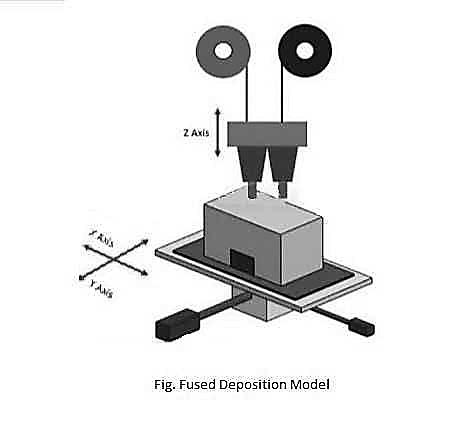
Fused Deposition Modeling (FDM): Different from different 3D printing strategies which includes selective laser sintering (SLS), stereolithography (SLA), three-dimensional printing (3DP), and laminated object manufacturing (LOM), the fused deposition modeling (FDM) generation is extensively utilized in aerospace, vehicle making, bio-medicals, clever domestic, stationery and education aids, and creative presents for its clean use, easy operation, and occasional cost. The polylactic acid (PLA) is a cloth most appreciably implemented in FDM technology for its low melting factor, non-poison, non- infection, and sound biocompatibility. The FDM 3Drevealed PLA parts are a studies hotspot inside the three-D printing area. The researches within the factors are of significance in enhancing whole properties, enhancing useful programs, and expanding and enriching the applications of FDM 3D-printed PLA elements. This paper is anticipated to provide a few facilitates and references to the researchers who’re specializing inside the 3D printing field (Figure 3) [20].
Thermal Inkjet Printing: The maximum recent advances in organ and tissue bio printing based totally at the thermal inkjet printing era (Figure 4).
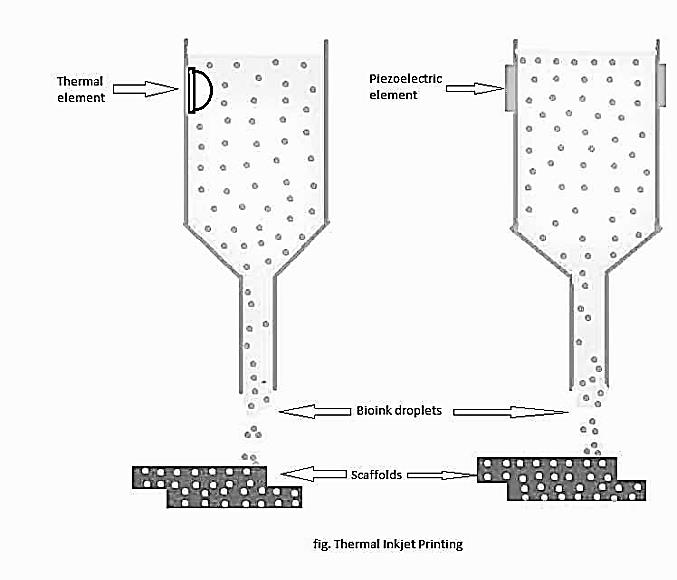
Bio printing has no or little side impact to the printed mammalian cells and it is able to with no trouble combine with gene transfection or drug shipping to the ejected residing systems all through an appropriate placement for tissue construction. With layer-via-layer assembly, 3D tissues with complicated structures can be published using scanned CT or MRI pics. Vascular or nerve structures can be enabled simultaneously at some point of the organ creation with digital manage. Therefore, bio printing is the simplest approach to remedy this essential problem in thick and complex tissues fabrication with vascular gadget. Collectively, bio printing primarily based on thermal inkjet has notable capability and huge applications in tissue engineering and regenerative medication [21].
Inject Printing: The binder jetting procedure is some other AM technique which employs inkjet head (IJH) technology for processing substances. In this machine, the head prints a liquid binder onto skinny layers of powders primarily based on object profiles which have been generated via software. Two varieties of drop-on call for (DOD) heads can be used in IJH systems: piezoelectric and thermal heads. The essential distinction between those two heads is their performances. In thermal structures there’s a heating element as a thin- film resistor. When an electrical pulse is carried out at the pinnacle, a high present day passes via this resistor and the fluid in touch with it is vaporized, forming a vapor bubble over the resistor. This vapor bubble expands within the fluid reservoir and the elevated pressure reasons a droplet to be ejected through the nozzle. In the piezoelectric head device, a volumetric alternate inside the fluid reservoir is brought on by the application of a voltage pulse to a piezoelectric cloth element this is coupled, without delay or in a roundabout way, to the fluid. This volumetric exchange reasons pressure/pace transients to occur inside the fluid, and these are directed to supply a drop that issues from the nozzle [22].
Vat Photopolymerization: Photo polymerization in 3D printing has been used for packages in fabricating speedy and practical prototypes, custom designed merchandise, and serial production. Over greater than 30 years of development on Photo polymerization has made tremendous development on improving the production techniques (SLA, DLP, CDLP/ CLIP), production pace, and nice of 3D revealed products for industrial and studies programs. Material-smart, efforts will in addition be paid to high-performance resins, specifically biocompatible resins, and bio ink. Applications of 3D printing and, particularly, Photopolymerization has spanned throughout all industries, e.g. in robotics, medicine, dental, engineering, automobile, aerospace, and water sources and related treatments. To finish, it may be said that the future of 3D printing is only confined by the creativity and technical contemplating designers [23].
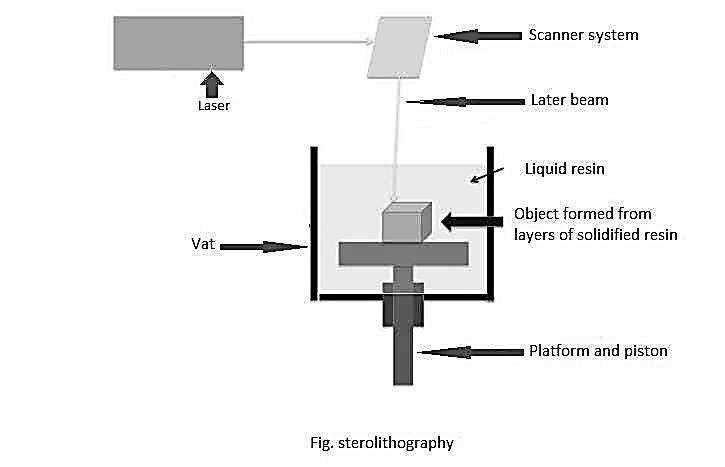
Stereolithography (SLA): Stereolithography become the sector’s first three-D printing technology, invented inside the Eighties, and remains one of the most famous technologies for specialists. SLAnters use a laser to remedy liquid resin into hardened plastic in a process referred to as Photo polymerization. SLA resin 3D printers have emerge as massively famous for his or her potential to supply excessive-accuracy, isotropic, and watertight prototypes and components in a variety of superior materials with quality features and clean floor finish. SLA resin formulations offer an extensive variety of optical, mechanical, and thermal homes to suit the ones of popular, engineering, and industrial thermoplastics. Resin 3D printing an amazing choice for distinctly particular prototypes requiring tight tolerances and clean surfaces, consisting of molds, styles, and purposeful parts. SLA 3D printers are broadly used in more than a few industries from engineering and product design to production, dentistry, jewelry, version making, and education.
Stereo lithography is right for: Rapid prototyping, Functional prototyping, Concept modeling, Short-run production, Dental applications (Figure 5).
Laser Sintering: Selective laser sintering (SLS) was developed and patented by way of Dr. Carl Deckard and educational adviser, Dr. Joe Bramante the University of Texas inside the mid-1980, underneath the sponsorship of DARPA. Deckard become involved in the ensuing start-up organization DTM, set up to layout and construct the selective laser sinter in machines. In the 12 months 2001, 3D Systems the most important competitor of DTM obtained DTM. The most recent patent regarding Deckard’s selective laser sintering technology become issued on January 1997 and expired on Jan 2014. Selective laser sintering is a 3D printing method that makes use of a laser because the energy source to sinter powdered fabric (usually steel), aiming the laser at points in area defined by using a 3D model, binding the material to create a strong structure. Selective laser melting uses a comparable concept, but in SLM the material is absolutely melted than sintered, allowing one of kind homes (crystal shape, porosity). SLS is relatively new technology that so far has mainly been used for additive production and for low-quantity production of elements. Production roles are expanding as the commercialization of additive production generation (Figure 6).
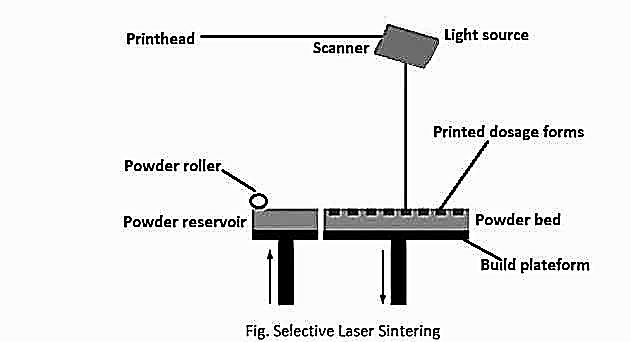
Figure 6: Selective Laser Sintering. 3D Printing in Pharmaceutical Industry
Three-dimensional (3D) printing technologies are production methods with enormous use in industry e.g.. Automobile, automobile, pharmaceutical industries). However, with the approval of the primary 3D published drug-product in 2015, a new angle has arisen, i.e. using this generation to provide stable oral dosage bureaucracy exhibiting complicated drug launch profiles and allowing for character dosing. 3D printing to thrive well in pharmaceutical quarter, various different issues need to be addressed. Some of the issues like satisfactory manage of published dosage bureaucracy, felony and regulatory topics, value-effectiveness, availability of substances and device had to produce medicinal drug of better first-rate, if solved in destiny, would confirm the achievement of the 3D printing in this area. As such, 3D printing may be one of the important contrivances to comprehend the idea of personalized medication at a realistic stage. Apart from the possibility of producing personalized scaffolds and organs, the chance of making ready dosage paperwork with precise release profile and dosing power is a firstrate milestone in the scope of 3D printing. Large scale production of prescribed drugs is probably an extended way from now, but personalized remedy is feasible soon [24, 25, 26, 27, 28, 29].
FDA Approves the First 3D Printed Drug Product
Aprecia Introduces its First Product Using the ZipDose® Formulation Platform for the Treatment of Epilepsy BLUE ASH, Ohio, August three, 2015 Aprecia Pharmaceuticals Company these days announced that the U.S. Food and Drug Administration (F.D.A) has approved SPRITAM® levetiracetam for oral use as a prescription adjunctive remedy inside the treatment of partial onset seizures, myoclonic seizures and number one generalized tonic-clonic seizures in adults and kids with epilepsy. 1 SPRITAM makes use of Aprecia’s proprietary ZipDose® Technology platform, a ground breaking boost that makes use of three dimensional printing (3DP) to supply a porous components that hastily disintegrates with a sip of liquid. While 3DP has been used formerly to fabricate scientific gadgets, this approval marks the primary time a drug product synthetic with this technology has been accepted by way of the F. D. A [31].
Interplay between 3D Printing and Conventional Manufacturing Techniques
Today we are entering an era many believe will be as disruptive to the manufacturing sector as the Industrial Revolution was the age of 3D printing. At a EuroMold fair in November 2012, 3D Systems used one of its 3D printers to print a hammer. The Economist (2012) used this example to compare the traditional supply chain design-build-deliver model with the emerging 3D printing model [32, 33]. In latest years, numerous companies have taken into consideration nearby pharmaceutical production however have did not make the funding, in stark contrast to the huge increase in pharmaceutical production in other BRICS nations. Major constraints recognized were the small nearby market, loss of abilities, and an export-averse lifestyle, which have averted regional manufacturers from attaining the economies of scale which can be vital to live on in a worldwide market. In evaluation, the pharmaceutical enterprise is present process a modern exchange in manufacturing, with the capacity to interchange from batch manufacturing to non- stop waft processing. The opportunity of applying this new pharmaceutical enterprise version in emerging markets will open the door for dramatic changes in regional business manufacturing. Advances in cloud computing, automation and system unification are paving the manner for continuous lively pharmaceutical component manufacturing with incorporated virtual connectivity Additive manufacturing (AM) techniques represent an actual venture to manufacture novel composites with coupled multifunctional houses. This work focuses on the mechanical, electric and thermal behaviors of 3D published polymeric composites of polylactic acid (PLA) filled with carbon black (CB) conductive debris [34].
Benefits of 3-d Printing in Medical Applications
The cutting-edge scientific uses of 3D printing can be prepared into numerous broad categories: tissue and organ fabrication; growing prosthetics, implants, and anatomical models; and pharmaceutical research concerning drug discovery, delivery, and dosage forms [35].
Tissue and Organ Fabrication: Over the beyond years, the fabrication of ok vascular networks has remained the principle undertaking in engineering tissues because of technical problems, whilst the closing goal of tissue engineering is to create completely useful and sustainable organs and tissues to transplant inside the human body. There were a number of studies finished to overcome this problem, and as a result, 3-d printing has emerge as an emerging method to serve in a number of programs in building vascular networks within tissues and organs [36]. Biglino, et al. Validated the fabrication of compliant arterial phantoms with PolyJet™ generation by means of Stratasys Ltd. (Eden Prairie, MN), an AM method that deposits a liquid photopolymer layer by means of layer via orifice jetting after which solidifies it by using UV exposure. A rubber-like cloth named Tango Plus changed into used on this take a look at for its mechanical properties, which are near the ones of actual tissue. Cloonan, et al. Conducted a comparative look at on the usage of not unusual tissue-mimicking materials and 3D printing materials, inclusive of Tango Plus, for abdominal aortic aneurysm phantoms. Their results advised that TangoPlus became a suitable cloth for modeling arteries in phrases of dispensability, and that its uniaxial tensile properties outperformed the ones of poly (dimethylsiloxane) (PDMS) SYLGARDelastomers, that are generally used in the investment casting process [37]. Growing Prosthetics: Low utilization costs of higher-limb prostheses may also end result from a lack of aesthetic design, weight, availability of coverage and fitness care, and high fees. Additionally, device popularity is complex on the consumer, provider, parental, and coverage levels. The mixture of form and feature inside the design of prostheses has emerged to offer a better degree of capability patterned after the organic 21 diploma of freedom human hand. Much of the design efforts had been prioritizing accomplishing a high degree of realism in assessment to the natural analog. Graham Pullin proposed in his e book, Design Meets Disability that prostheses should no longer be confined to practical design and that duality should exist among aesthetics and capability [38].
Implants: NIR fluorescence imaging implemented to 3D printing generation can play a sizeable position in monitoring the healing efficacy of 3-d systems for medical implants. To make an accurate estimate of clinical results the use of 3-d-printed implants, reliable preclinical research must be finished [39].
Pharmaceutical Research Concerning Drug Discovery, Delivery: 3D printing is an additive manufacturing process for creating three-dimensional objects from a digital file. 3D bioprinting has been recognized as a promising technology for creating tissue-based platforms with high reproducibility and versatility by accurately positioning biomaterials together with cells and biomolecules. These features of 3D bioprinting are directly associated with requirements of drug screening and drug delivery systems, enabling the design of more advanced pharmaceutical applications. To meticulously design a physiologically functioning model/ device, researchers should consider various aspects of 3D bio printing, such as suitable biomaterials, cell sources, and printing strategies [40]. In precise, the principle benefits of 3DP lie in the manufacturing of small batches of drugs, every with tailored dosages, shapes, sizes and release characteristics. The manufacture of drugs on this way may also in the end lead to the concept of customized drugs becoming a reality. In the shorter time period, 3DP could be prolonged at some stage in the drug improvement method, starting from preclinical improvement and Medical trials, thru to frontline medical care [41].
Advantages of 3D Printing
Lower Cost: In China they had been able to assemble 10 one storey houses at less than $5000 in line with house. Construction of a comparable house costs way extra than the stipulated rate [42, 43].
Time: Printing of the three-D item can be done immediately, differing from the traditional manufacturing wherein you needed to be a part of one of kind components to shape the very last product. Three-dimensional printing lets in groups to construct operating models in only hours as opposed to days or even weeks [44, 45].
Efficiency: Generating prototypes with 3D printers is tons less complicated and faster with 3D printing era. Flexible [46]. Different materials can be used within the 3D models. This makes it very smooth to create construction fashions or prototypes for a huge variety of projects inside many industries [47].
Products Produced: The items do no longer soak up moisture or warp over the years making them last for longer [48].
Quality: Products with a terrific surface end are produced.
Functional Models: Real live practical fashions may be produced as opposed to running with paper of virtual models. More realistic merchandise is produced [49].
Disadvantages of 3-D Printing There will constantly be downsides to the entirety! Despite many benefits, 3D printing has some hazards too. Here are the primary ones.
Restricted Build Size: The chamber size integrated into 3D printers is normally especially small, thereby restricting the component sizes that you could print. Therefore, any larger item desires to be revealed one after the other and later assembled after its production. Consequently, this will increase the time required to print due to the fact the 3D printer wishes to print extra elements before you could cross ahead and manually be part of the parts [50].
Part Structure: In 3D printing, elements are normally created one layer after every other, therefore why it’s also called additive manufacturing. This method that while the layers are firmly held collectively, they’re susceptible to splitting whilst uncovered to hundreds at specific orientations or stresses. It is an issue that is regularly experienced with items created the use of fused deposition modeling (FDM). Additionally, the Multijet and Polyjet elements are commonly greater fragile [51].
High Rate: An outstanding commercial-grade printer can cost you hundreds and heaps of greenbacks. And this is simply the initial fee! Materials might be very high-priced as well as your strength invoice. Many corporations can’t come up with the money for to apply this valuable device despite the fact that they advantage from it. You will need to use smaller merchandise to store money with your 3D printer. The bigger the products, the extra cash it will value you. Consumer 3D printers can be less expensive, but the price of substances and energy invoice might no longer make it well worth it. The TENLOG TL-D3 Pro Independent Dual Extruder 3D Printer is a fantastic instance of value-powerful, purchaser 3D printers.
Challenges of 3D Printing
- Absence of information
- Absence of enterprise unique
- 3D printing on implementation
- Administrative consistence
- Hardware and expensive to feature
- Changing of lengthy mounted manufacturing strategies and archetypally slower
- Numerous cloth printing the usage of equal tool leads to overtake
- Restricted to minor additives
- Current shortcomings involved in the exploration of excipients
- Insufficient mechanical properties
- Improvement in instrument overall performance for its all over use
- Optimization converts selections of applicable excipients
- Panel treatment method
Conclusion
In pharmaceutical discipline 3D printing era has end up a beneficial method for designing and development of personalized medicinal drug relies upon needs of the patient’s needs. 3D printing generation is a singular drug designing system in conjunction with constructed in flexibility of the product. This Era is most appropriate for the designing and developing a customized /custom designed medicine. The largest mission of numerous regulatory governments is solved with the aid of using the 3D printing generation especially due to its manufacturing style and system. In the recent years destiny 3D printing approach can be used in particular to formulate exceptional new dosage paperwork. The 3D printing of drug shipping systems and scientific devices serves as an attractive device to produce custom designed product. Since few years the concept of 3D-revealed drug formula advanced and was directed to enhance remedy by patient-centric remedy. The first FDA approval of drug manufactured by 3D printing era triggered an exceptionally fast development of studies on oral, oromucosaland topical dosage bureaucracy. The brought cost of the 3D printing is likewise opportunity to create multifunctional drug transport structures, multidrug devices and drug formulations for personalized therapy with extended launch feature. Current assessment paper concise approximately numerous novel marine pills that may be clinically beneficial and integrated for treatment of numerous neoplastic diseases. These tablets exert one of a kind mechanism of movement to treatment cancer by using either killing most cancers cells or through retarding their proliferation. Hence, those biomolecules can be beneficial as futuristic accessibility for combinational cancer chemotherapy of marine derived capsules. Also, those pills can be persevered for medicinal research to treatment different frame problems. This overview enlightens some antineoplastic agent that may be also evaluated for antineoplastic impact that is raising revolution in cancer chemotherapy.
Conflict of Interest
Nil
Acknowledgement
Nil
References
-
Gore DV, Shined P (2021) 3D Printing in Pharmaceutical Industry 6(3): 985-990.
-
Seoane-Viaño I, Trenfield SJ, Basit AW, Goyanes A (2021) Translating 3D printed pharmaceuticals: From hype to real-world clinical applications. Adv Drug Deliv Rev 174: 553-575.
-
Guyanese A, SeoaneVI, Trenfield S, Basit A (2021) Translating 3D printed pharmaceuticals: From hype to real-world clinical applications. Advanced Drug Delivery Reviews 174: 553-575.
-
Jose PA, Christopher PGV (2018) 3D printing of pharmaceuticals- A potential technology in developing personalized medicine. Asian journal ofresearch and development 6(3): 46-54.
-
Balfour H (2021) 3D printing – current pharmaceutical applications and future directions. European pharmaceutical review.
-
Samiei N (2020) Recent Trends on Applications of 3d Printing Technology on Design and Manufacture of Pharmaceutical Oral Formulation. Beni-Suef University Journal of Basic and Applied Sciences 9(1): 12.
-
Wasim SSA, Saifulla, Pradhan D (2019) Robust application of 3-D printing in Healthcare. International Advanced Research Journal in Science Engineering and Technology 6(8): 14-23.
-
Badhani DC, Raina RS Novel Concept of Drug Preparation by 3D Printing Technology 3(1): 55-60.
-
Hall S, Grant G, Arora D, Karaksha A, McFarland A, et al. (2017) A pilot study assessing the value of 3D printed molecular modelling tools for pharmacy student education. Curr Pharm Teach Learn 9(4): 723-728.
-
Januskaite P, Xu X, Ranmal SR, Gaisford S, Basit AW, et al. (2020) I Spy with My Little Eye: A Paediatric Visual preferences Survey of 3D Printed Tablets. Pharmaceutics 12(11): 1100.
-
Ghai R, Kapoor J, Nagarajan K (2019) 3D Printing: A Search towards revolutionizing Medical Sciences. International Journal of Research in Engineering 9: 385- 390.
-
Shahrubudina N, Leea TC, Ramlana RJ (2019) An Overview on 3D Printing Technology: Technological, Materials, and application. Procedia Manufacturing 35: 1286-1296.
-
Igor V, Amir M (2015) Digital Design and 3D Printing in Technology Teacher Education. Procedia CIRP 36: 182- 186.
-
Vasilis N, Christos G, Akadeemia T (2015) Open source 3D printing as a means of learning: An educational Experiment in two high schools in Greece. Telematics and Informatics 32(1): 118-128.
-
Vignesh AR, Keshav W (2018) A review paper on 3D-Printing and various aspects of various uses of 3-D printing, pp: 2394-3696.
-
Jamroz W, Szafraniec J, Jachowicz R, Kurek M (2018) 3D Printing in Pharmaceutical and Medical Applications – Recent Achievements and Challenges. Pharm Res 35(9): 1769.
-
Kulinowski P, Łasz M, Malczewskia P, Mendyk A, Pesta E, et al. (2021) Selective laser sintering (SLS) technique for pharmaceutical applications—Development of high dose controlled release printlets Selective laser sintering (SLS) technique for pharmaceutical applications. Additive Manufacturing 38: 101761.
-
Goal A, Kumar M, Meher K, Gulati K, Poluri M, et al. (2019) 3D Printing Technology in Nanomedicine 43-62.
-
Liu Z, Wang Y, Yan C, Guo Y, Cui C, et al. (2019) A critical review of fused deposition modeling 3D printing technology in manufacturing polylactic acid parts. Int J Adv Manuf Technol 102: 2877-2889.
-
Cui X, Boland T, D’Lima DD, Lotz MK (2012) Thermal inkjet printing in tissue engineering and regenerative medicine. Recent Pat Drug Deliv Formul 6(2): 149-155.
-
Shirazi SF, Gharehkhani S, Mehrali M, Yarmand H, Metselaar HS, et al. (2015) A review on powder-based additive manufacturing for tissue engineering: selective laser sintering and inkjet 3D printing. Sci Technol Adv Mater 16(3): 033502.
-
Pagac M, Hajnys J, Ma QP, Jancar L, Jansa J, et al. (2021) A Review of Vat Photopolymerization Technology: Materials, Applications, Challenges and Future Trends of 3D Printing. Polymers (Basel 13(4): 598.
-
Stereolithography. CustomPartNet
-
Ahart M (2019) Types of 3D Printing Technology. Protolabs.
-
SLS. Dream shapes.
-
https://www.hubs.com/knowledge-base/what-is-fdm- 3d-printing/Written
-
https://images.app.goo.gl/ie41XDQ8bZaqEdzJA
-
Lamichhane S, Bashyal S, Keum T, Noh G, Seo JE, et al. (2019) Complex formulations, simple techniques: Can 3D printing technology be the Midas touch in pharmaceutical industry. Asian J Pharm Sci 14(5): 465- 479.
-
Bhusnure OG, Gholve SV, Giram PS, Gore SA, Dongre RC, et al. (2015) 3D Printing & Pharmaceutical Manufacturing: Opportunities and Challenges. International Journal of Bioassays, pp: 4723-4738.
-
Petrick IJ, Simpson TW (2013) Point of View: 3D Printing Disrupts Manufacturing: How Economies of One Create New Rules of Competition. Research Technology Management 56(6): 12-16.
-
Chikwamba R, Courbin D, Dombrowski M, Kester A, Smith P, et al. Implementation of 3D Printing Technology turing in developing African economies 4: 467-489.
-
Gonzalez DG, Garcia IT, Hernandez SG, Rusinek A, Robles G, et al. (2021) Conductive 3D printed PLA composites: On the interplay of mechanical, electrical and thermal behaviours. Composite Structures 265: 113744
-
Ventola CL (2014) Medical Applications for 3D Printing: Current and Projected Uses. P T 39(10): 704-711.
-
Manero A, Smith P, Sparkman J, Dombrowski M, Courbin D, et al. (2019) Implementation of 3D Printing Technology in the Field of Prosthetics: Past, Present, and Future. Int J Environ Res Public Health 16(9): 1641.
-
Aris A, Gonzalez DG, Garcia T, Hernandez G, Tarifa JMM, et al. (2021) Conductive 3D printed PLA composites: On the interplay of mechanical, electrical and thermal behaviours. Composite Structures 265: 113744.
-
Ventola LC (2014) Medical Applications for 3D Printing: Current and Projected Uses. Pharmacy and Therapeutics 39(10): 704-711.
-
Cui H, Esworthy T, Fisher JP, Han SY, Lee SJ, et al. (2019) Recent advances in 3D printing: vascular network for tissue and organ regeneration. Translational Research 211: 46-63.
-
Ho CC, Wang B, Wang B, Zhang C (2017) A Review on the 3D Printing of Functional Structures for Medical Phantoms and Regenerated Tissue and Organ Applications. Engineering 3(5): 653-662.
-
Suh YJ, Lim TH, Choi HS, Kim MS, Lee SJ (2020) 3D Printing and NIR Fluorescence Imaging Techniques for the Fabrication of Implants. Materials (Basel) 13(21): 4819.
-
Thabiso PM, Cephas.M, Mukosera M (2014) The Impact and Application of 3D Printing Technology, International Journal of Science and Research 3(6): 2148- 2152.
-
Mellisa G (2014) Chinese company builds houses quickly with 3D printing.
-
http://www.3dprinter.net/reference/what-is-3d- printing.
-
https://images.app.goo.gl/ie41XDQ8bZaqEdzJA.
-
Shahrubudina N, Lee TC, Ramlan R (2019) An Overview on 3D Printing Technology: Technological, Materials, and application 35: 1286-1296.
-
IgorV, Amir M (2015) Digital design and 3D printing in technology. Procedia CIRP 36: 182-186.
-
Miller D (2020) My Thoughts on Acrylic Frame 3D Printers Knowledge base.
-
Dylan M (2021) Affordable & High-quality 3D Geometry Innovations Knowledge base.
-
https://43dprint.Org/risks-of-3d-printing.
-
Pharma Excipients. PE.
-
Bhusnure OG, Mali MR, Mule ST, Waghmare SS (2020) Recent Trends, Opportunities and Challenges in 3D Printing Technology for Personalize Medicine. Journal of Drug Delivery and Therapeutics 10(4): 242-225.
-
Cui, M Pan H, Su Y, Fang D, Qiao S, et al. (2021) Opportunities and challenges of three-dimensional printing technology in pharmaceutical formulation development. Acta Pharmaceutica Sinica B 11(8): 2488- 2504.
- Effects of 5-HTP and Melatonin on the Sleep Cycle of Medical Students
- Adsorption of Bisphenol A on NH4OH- Modified Rice Husk and Sugar Cane Bagasse Biochar
- Comparative Assessment of the Reinforcement Efficiency of Palm Fruit Fibre and Coconut Fibre in High Density Polyethylene (HDPE) Matrix Composite
- Importance of Bio Compounds Naturally Present in Food with Functionality in Animal Metabolism
- Sub-Acute Study on the Cardiotoxic Effects of Monosodium Glutamate Ingestion in Albino Rat
- Weight Management and Its Natural Solutions: A Review