
Enhancement of Bioavailability and Bioequivalence of Drug Delivery in Sensory Neural Hearing Loss
Sensory neural hearing loss (SNHL) is a pervasive audiological disorder characterized by damage to the inner ear's hair cells or auditory nerve. Despite extensive research efforts, SNHL treatment remains a challenge due to various barriers, including limited drug penetration into the inner ear and the risk of systemic side effects. This abstract explores the innovative use of nanoparticles in intratympanic drug delivery as a promising solution to overcome these hurdles. Nanoparticles offer a unique platform for drug delivery to the inner ear, enhancing bioavailability and ensuring bioequivalence of therapeutic agents. Through targeted delivery, controlled release, and drug protection, nanoparticles address critical limitations in traditional SNHL treatments. These abstract reviews the barriers to SNHL treatment, the advantages of nanoparticle-based delivery systems, and their potential to revolutionize the management of SNHL. Further research in this field promises to unlock new opportunities for more effective and accessible treatments for SNHL patients.
Introduction
One of the most prevalent impairments that lower quality of life is hearing loss. Longer life expectancies have changed people’s lifestyles, and hearing loss is more common and severe now than ever before [1, 2]. According to the World Health Organization (WHO), profound hearing loss affects more than 5% of the world’s population, including 34 million children. It is also common among older people [3]. Three types of hearing loss are distinguished: conductive, sensitive, and mixed. Otitis media, cholesteatoma, earwax embolism, and otosclerosis are a few examples of common causes of conductive hearing loss [3]. The majority of cases of sensorineural hearing loss (SNHL) are caused on by issues with sensory nerve transmission at or behind the cochlea, such as presbycusis, inner ear infections [4], Meniere’s disease [5], noise-induced hearing loss [6], autoimmune hearing loss [7], genetic diseases [8], age-related hearing loss [4] and ototoxicity [9, 10]. Presbycusis is the most prevalent type of hearing impairment in Europe, affecting one in three persons over the age of 65 and becoming more common as people become older. Having a hearing disability has a significant negative impact on one’s physical, social, and mental health as well as their ability to learn and find work [11]. Additionally, just 15% of seniors wear hearing aids, despite the fact that hearing loss affects approximately two-thirds of American adults aged 70 and older [12].
Current Strategies for Inner Ear Drug Delivery
The current standard of care for hearing loss includes medication, hearing aids, and cochlear implants (CI). Clinical treatments for hearing loss restoration that are more often used include systemic administration and intratympanic (IT) steroid injection [13]. In addition to the retro cochlear routes from the spiral ganglion cells to the brain being disrupted, damage to the inner ear cells also contributes to the development of SNHL. Treatment for this illness is quite difficult. The loss of hearing is irreversible because the sensory-neural transducer epithelium cells and nerve cells of the inner ear can never recover from being damaged. Due to anatomical and physiological limitations, treating inner ear problems is still challenging. Oval and round windows in the inner ear block the entry of bigger molecules into the cochlea [14] (Figure 1).
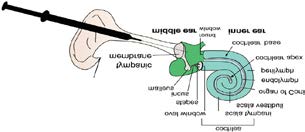
Anatomical Obstacles of the Inner Ear in Drug Delivery
Because of the blood-labyrinth barrier (BLB), it is difficult for active substances to exert their therapeutic impact at the level of the inner ear. This is because the BLB prevents the systemic distribution of chemicals to the cells of the inner ear. A blood-labyrinth barrier (BLB) prevents the systemic distribution of chemicals to the cells of the inner ear, which makes it challenging for active compounds to manifest their therapeutic impact at the level of the inner ear. As a result, the drug’s local concentration is below therapeutic levels, necessitating higher systemic doses to bring it into the therapeutic range. It intensifies the numerous negative side effects of medications with systemic delivery, including corticosteroids, which are frequently used to treat disorders of the inner ear. The first line of treatment for inner ear problems including idiopathic sudden sensorineural hearing loss (ISSNHL), which includes noise-induced hearing loss, vertigo, and Meniere’s disease, is currently systemic medication delivery. The key benefit of systemic medication delivery is its ease of use, particularly when pills are taken orally [15, 16, 17].
Intratympanic Drug Route
Injecting liquid medication formulations intratympanically is the current preferred method for treating inner ear diseases. Drugs are often delivered to the inner ear via intratympanic injection, but other techniques, such as intracochlear delivery, are also possible for severe instances. IT injections enable for drug diffusion over the RWM and into the inner ear by delivering medication to the middle ear area. IT injections considerably increase medication concentrations in inner ear fluids, perilymph, and endolymph as compared to oral or parenteral drug treatment. Medication concentrations with IT injections frequently remain sub-therapeutic even though they provide a more direct way of middle ear medication administration. Because of this, many kinds of targeted local drug delivery techniques have recently been developed in response to growing understanding of the pathophysiology of inner ear illnesses. With the help of nanotechnology, SNHL may be treated by delivering active molecules to particular inner ear structures in a non-invasive and targeted manner [14].
Nanoparticle Based Drug Delivery
Local drug delivery assistance to the inner ear is greatly aided by nanoparticles. Solid particles having a diameter of less than 100 nm and molecular structures made of different organic or inorganic components are considered to be them. For functionalization, to help with drug administration, and to particularly target cells or organs that are controlled by structural and signaling molecules, compounds can be added to the nanoparticles. Customizing the properties of nanoparticles enables non-invasive application, drug stabilization, controlled release, and surface modification for targeted targeting. The charge and hydrophobicity of nanoparticle surfaces can be changed to lengthen the period that a medicine circulates in the body, penetrates tissues, and enters cells. With the help of nanotechnology, it is possible to modify the properties of designer nanoparticles to improve medication absorption and stability as well as to transport therapies to the targeted tissue in a cell-specific manner [15] (Figure 2).
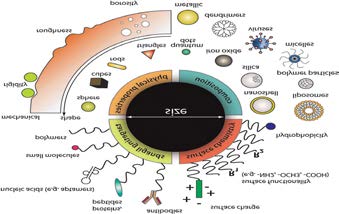
Figure 2: The functional properties of nanoparticles, including drug loading and release kinetics, fluorescence, cell targeting, diffusion, cellular uptake, and many more, can all be controlled by adjusting the material composition, surface characteristics, and functional groups. Nanoparticles’ modular design makes them suitable for enhancing the delivery of molecules for certain bio applications.
Drug’s ability to cross the BLB can be improved by NP-based DDS, offering the potential for the treatment of hearing loss. The inner ear’s limited accessibility, diminutive size, and high fragility restrict the options. For this reason, such delivery systems must to have a high drug loading capacity, predictable release kinetics at the target place in the acceptable time frame, ought to be nontoxic, and ought to be removed quickly after the release of the drug’s active component [18, 19].
The efficacy and kinetics of drug administration are both greatly improved by nanoparticles and hydrogels, but combining the two materials allows for synergistically greater control of drug delivery to the inner ear. While nanoparticles slow down degradation and enable cell-specific distribution to the inner ear, hydrogels prolong exposure and increase the residence duration of loaded medicines. In order to prevent drug loss from the middle ear, numerous types of hydrogels were created. The hydrogels employed are temperature- sensitive. They change from a liquid to a solid state in response to the rising middle ear temperature, stopping the active ingredient from escaping the middle ear through the Eustachian tube. Such a hydrogel is the poloxamer 407 solution, in which the molecules group together to form micelles that turn into gels when the temperature rises [20].
In this case, hydrogel nanomaterials deliver poloxamer 407 loaded with micronized dexamethasone (mDex) to guinea pig round windows, resulting in sustained drug release, a 1.6-fold increase in total peripheral blood lymphocyte concentration, and a 24-fold increase in drug residence time. The mDex hydrogel sustained release for 10 days, but the initial peak concentration of dexamethasone injection was cleared from the lymphatic capillaries within 12 hours. This study also shows that the distribution of dexamethasone over the length of the cochlea was more evenly distributed when mDex was administered using poloxamer 407.
A chitosan-glycerophosphate thermosensitive hydrogel and liposomal nanoparticles serve as an example of another drug delivery system based on nanoparticles and hydrogels. Both in vitro and in vivo research was done on the release pattern of this nano hydrogel. According to the in vitro research, the nanoparticles remained stable under physiological settings for more than two weeks (release rate: 1%/day). The controlled release of unaltered liposomes was made possible by the nano hydrogel. The mice were put to death in a mouse model 24 hours after the hydrogel containing nanoparticles was applied to the round window membrane. The Corti’s organ was examined using fluorescence microscopy to identify intact liposomes [21, 22].
| Nanoparticle | Size Range (nm) |
|---|---|
| Mesoporous silica | 50-200 |
| Hyperbranched polymer (poly lysine) | 03-10 |
| Micelle | 30-120 |
| Lipoplex | 80-200 |
| Lipid core | 30-200 |
| Chitosan hydrogel | 80-200 |
| Nanogel | 45-250 |
| Polyethylene glycol (PLLA) & Polylactide co-glycolide (PLGA) | 100-1000 |
| Superparamagnetic iron oxide nanoparticles (SPION) | - |
| Gold | <10 |
| Polymersome | 40-200 |
| Magnetic iron oxide nanoparticles | 100-300 |
| Cationic polymers | - |
| PHEA- coated nanoparticles | 20-150 |
| Carbon quantum dots | - |
Table 1: Various Types of Np-for-Drug Delivery System in Inner Ear.
Limitations
The application of NP administration to the inner ear has limitations, primarily because of inadequate therapy absorption into the inner ear cells and restricted access to the inner ear. Additionally, steps must be taken to overcome these obstacles, which range from lack of cost-effectiveness to the creation of poisonous products and the employment of dangerous substances. For intracochlear drug delivery, it is crucial to reach therapeutic drug levels in the inner ear while reducing toxicity and systemic side effects [23].
Conclusion
In conclusion, this mini review helps to know that sensory neural hearing loss (SNHL) is a complex condition characterized by damage to the hair cells or the auditory nerve in the inner ear. The treatment of SNHL poses several challenges, including barriers related to drug delivery to the inner ear. However, recent advancements in the use of nanoparticles for intratympanic drug delivery hold great promise in overcoming these barriers and enhancing the bioavailability and bioequivalence of therapeutic agents.
Barriers to SNHL Treatment: SNHL treatment faces several barriers, including limited drug penetration into the inner ear, potential systemic side effects, and the need for repeated administrations. These challenges often limit the effectiveness of traditional treatment methods.
Nanoparticles in Intratympanic Drug Delivery: Nanoparticles, due to their unique properties, offer an innovative solution to improve drug delivery to the inner ear. These tiny carriers can encapsulate drugs, protect them from degradation, and facilitate controlled release, making them ideal for targeting the affected tissues.
- Enhanced Bioavailability: The use of nanoparticles in intratympanic drug delivery enhances bioavailability by:
- Targeted Delivery: Nanoparticles can be engineered to target specific cells or tissues within the inner ear, ensuring that the drug reaches the intended site of action.
- Prolonged Release: Nanoparticles can release drugs slowly and steadily, prolonging their therapeutic effect and reducing the need for frequent dosing.
Protection of Drug: Nanoparticles shield drugs from degradation, thereby preserving their efficacy during transport to the inner ear. Improved Bioequivalence: The precise control over drug release achieved through nanoparticle-based delivery systems helps maintain consistent drug levels in the inner ear, improving bioequivalence between different doses and reducing fluctuations in therapeutic effects.
Future Prospects: The development of nanoparticle- based drug delivery systems for SNHL represents a promising avenue for research and innovation. Ongoing studies aim to optimize nanoparticle formulations, improve targeting strategies, and ensure the safety and long-term efficacy of these treatments.
In conclusion, the treatment of SNHL is challenged by the complexities of the inner ear and traditional drug delivery limitations. However, the application of nanoparticles in intratympanic drug delivery holds significant potential to overcome these barriers, enhance bioavailability, and improve bioequivalence, ultimately offering hope for more effective therapies for individuals suffering from sensory neural hearing loss. Further research and clinical trials are essential to realize the full potential of this innovative approach to hearing loss treatment.
Conflicts of Interest
Authors do not have any conflict of interest.
References
-
Cruickshanks KJ, Tweed TS, Wiley TL, Klein BE, Klein R, et al. (2003) The 5-year incidence and progression of hearing loss: the epidemiology of hearing loss study. Arch Otolaryngol Head Neck Surg 129(10): 1041-1046.
-
Isaacson B (2010) Hearing loss. The Medical Clinics of North America 94(5): 973-988.
-
Chadha S, Cieza A (2017) Promoting global action on hearing loss: World hearing day. International Journal of Audiology 56(3): 145-147.
-
He ZH, Li M, Fang QJ, Liao FL, Zou SY, et al. (2021) FOXG1 promotes aging inner ear hair cell survival through activation of the autophagy pathway. Autophagy 17(12): 4341-4362.
-
Wang T, Chai R, Kim GS, Pham N, Jansson L, et al. (2015) Lgr5+ cells regenerate hair cells via proliferation and direct transdifferentiation in damaged neonatal mouse utricle. Nature Communications 6: 6613.
-
Varela-Nieto I, Murillo-Cuesta S, Calvino M, Cediel R, Lassaletta L, et al. (2020) Drug development for noise- induced hearing loss. Expert Opinion on Drug Discovery 15(12): 1457-1471.
-
Fan K-Q, Li Y-Y, Wang H-L, Mao X-T, Guo J-X, et al. (2019) Stress-Induced Metabolic Disorder in Peripheral CD4+ T Cells Leads to Anxiety-like Behavior. Cell 179(4): 864- 879.
-
Cheng C, Hou Y, Zhang Z, Wang Y, Lu L, et al. (2021) Disruption of the autism-related gene Pak1 causes stereocilia disorganization, hair cell loss, and deafness in mice. Journal of Genetics and Genomics 48(4): 324-332.
-
Liu L, Chen Y, Qi J, Zhang Y, He Y, et al. (2016) Wnt activation protects against neomycin-induced hair cell damage in the mouse cochlea. Cell Death & Disease 7(3): e2136.
-
Liu W, Xu L, Wang X, Zhang D, Sun G, et al. (2021) PRDX1 activates autophagy via the PTEN-AKT signaling pathway to protect against cisplatin-induced spiral ganglion neuron damage. Autophagy 17(12): 4159-4181.
-
Cui Q, Chen N, Wen C, Xi J, Huang L, et al. (2022) Research trends and hotspot analysis of age-related hearing loss from a bibliographic perspective. Frontiers in Psychology 13: 921117.
-
Mamo SK, Nieman CL, Lin FR (2016) Prevalence of Untreated Hearing Loss by Income among Older Adults in the United States. Journal of Health Care for the Poor and Underserved 27(4): 1812-1818.
-
Mirian C, Ovesen T (2020) Intratympanic vs Systemic Corticosteroids in First-line Treatment of Idiopathic Sudden Sensorineural Hearing Loss. JAMA Otolaryngology-- Head & Neck Surgery 146(5): 421-428.
-
Li L, Chao T, Brant J, O’Malley B Jr, Tsourkas A, et al. (2017) Advances in Nano-based Inner Ear Delivery Systems for the Treatment of Sensorineural Hearing Loss. Advanced Drug Delivery Reviews 108: 2-12.
-
Anderson CR, Xie C, Su MP, Garcia M, Blackshaw H, et al. (2019) Local Delivery of Therapeutics to the Inner Ear: The State of the Science. Frontiers in Cellular Neuroscience 13: 418.
-
Kil J, Lobarinas E, Spankovich C, Griffiths SK, Antonelli PJ, et al. (2017) Safety and efficacy of ebselen for the prevention of noise-induced hearing loss: A randomised, double-blind, placebo-controlled, phase 2 trial. Lancet (London, England) 390(10098): 969-979.
-
Chen WT, Lee JW, Yuan CH, Chen RF (2015) Oral steroid treatment for idiopathic sudden sensorineural hearing loss. Saudi Medical Journal 36(3): 291-296.
-
An X, Zha D (2020) Development of nanoparticle drug- delivery systems for the inner ear. Nanomedicine15(20): 1981-1993.
-
Mäder K, Lehner E, Liebau A, Plontke SK (2018) Controlled drug release to the inner ear: Concepts, materials, mechanisms, and performance. Hearing Research 368: 49-66.
-
Dumortier G, Grossiord JL, Agnely F, Chaumeil JC (2006) A review of poloxamer 407 pharmaceutical and pharmacological characteristics. Pharmaceutical Research 23(12): 2709-2728.
-
Rathnam C, Chueng STD, Ying YLM, Lee KB, Kwan K (2019) Developments in Bio-Inspired Nanomaterials for Therapeutic Delivery to Treat Hearing Loss. Frontiers in Cellular Neuroscience 13: 493.
-
Lajud SA, Nagda DA, Qiao P, Tanaka N, Civantos A, et al. (2015) A Novel Chitosan-Hydrogel-Based Nanoparticle Delivery System for Local Inner Ear Application. Otology & Neurotology 36(2): 341-347.
-
Kahru A, Savolainen K (2010) Potential hazard of nanoparticles: From properties to biological and environmental effects. Toxicology 269(2-3): 89-91.
- Effects of 5-HTP and Melatonin on the Sleep Cycle of Medical Students
- Adsorption of Bisphenol A on NH4OH- Modified Rice Husk and Sugar Cane Bagasse Biochar
- Comparative Assessment of the Reinforcement Efficiency of Palm Fruit Fibre and Coconut Fibre in High Density Polyethylene (HDPE) Matrix Composite
- Importance of Bio Compounds Naturally Present in Food with Functionality in Animal Metabolism
- Sub-Acute Study on the Cardiotoxic Effects of Monosodium Glutamate Ingestion in Albino Rat
- Weight Management and Its Natural Solutions: A Review