
Unveiling Revealing Nature's Bounty: A Comprehensive Exploration of Bioavailability in Natural Products
Researchers are increasingly investigating marketing assertions related to natural products and supplements. In the modern era, the study of bioavailability has gained prominence as a burgeoning scientific discipline. This comprehensive review explores the bioavailability of natural products in pharmaceutical applications, shedding light on their intrinsic challenges and innovative strategies for improvement. The assessment encompasses the limitations including poor aqueous solubility, low permeability, and instability, which collectively impede the effective absorption of natural products in the human body hinder the effective utilization of these compounds, and underscores the critical need for enhanced bioavailability to unlock their full therapeutic potential. Such challenges have spurred research into innovative approaches to overcome these limitations and optimize bioavailability. In response to these challenges, this review highlights cutting-edge strategies, including nanoparticle formulations, lipid-based delivery systems, and prodrug design, as effective means to enhance bioavailability. These approaches aim to improve solubility, stability, and overall absorption, thereby maximizing the therapeutic efficacy of natural products in pharmaceutical formulations. Moreover, the review emphasizes the importance of understanding the interplay between formulation techniques and the physicochemical properties of natural products. By integrating these innovative approaches, researchers can tailor solutions to specific compounds, providing a roadmap for overcoming bioavailability limitations and advancing the integration of natural products into mainstream pharmaceutical practice.
Introduction
The use of herbal remedies for treating various ailments could be traced back to prehistorical civilizations. In the last few decades, significant global calls for returning back to nature have emerged with a tremendous demand for using herbal medicines as crude extracts or phytochemicals reflecting the increasing belief that natural medicines are more safe than synthetic drugs and the usefulness of natural products as multipurpose healing agents as an holistic approach for treatment strategy; this increasing belief was clearly demonstrated through COVID-19 pandemic as evidenced by the significant growth of the market share of herbal medicines to reach about 166 billion USD and forecasted to reach 348 billion USD by 2028 [1]. In the 20th century, natural products (NPs) derived from natural sources (microbes, plants, and animals) have contributed to increasing human longevity, reducing pain and suffering, and transforming the field of medicine [2], NPs have served as precursors for various drugs, such as the potent analgesic morphine, the potent antimalarial drug Artemisinin, isolated from Artemisia annua [3]. Additionally, Paclitaxel, isolated from Taxus brevifolia, as an antimitotic has proven effective against ovarian and breast cancers [4]. Calanolide A, derived from Calophyllum lanigerum, is an additional example of natural products inhibiting AZT-resistant strains of HIV [5].
Renowned for its widespread utilization of natural substances, Traditional Chinese Medicine (TCM) is well- known for incorporating natural products. The earliest Chinese medicinal book, Prescriptions for Fifty-Two Diseases (Wu Shi Er Bing Fang), dating back to around 350 BC [6, 7]. Moreover, Marine ecosystems had gained much interest in the last few decades as a recent potential source of natural products with nine of the at least 13 compounds undergoing advanced clinical trials have been given approval to be used as medications [8, 9, 10].
However, multiple challenges are emerging related to the rationale beyond the extensive use of herbal medicines, where evidence-based medicine can rationalize the clinical effectiveness of herbal drugs, still, there are interesting questions regarding the bioavailability and pharmacokinetics of herbal medicines including the study of the relevant parameters as absorption, distribution, metabolism, and elimination of herbal medicines, answers of these questions can fill the gap between the pharmacodynamic assays and the clinical effects of herbal products [11]. Hence, overcoming these challenges necessitates implementing inventive drug delivery systems, serving as a crucial solution to enhance the bioavailability and pharmacokinetics of phytomolecules.
The major obstacle was the complex nature of herbal extracts and the presence of multiple active ingredients with the difficulty to determine which can relate directly to the clinical effect [12]. The additional challenge related to the extensive metabolism of the natural products which may result in a metabolic derivative that can relate directly to the clinical effect, In other words, the body’s metabolism can transform natural products into different substances, and some of these metabolites may contribute directly to the therapeutic or clinical effects of the original natural product [13]. Moreover, the need of extremely sensitive and selective analytical tools is required for the assessment of the µg/L or pg/L plasma concentrations of the active ingredients. However, recent advances in bioassay and analytical techniques are providing continuous solutions to the emerging challenges [14].
Bioavailability remains one of the major determinants for the clinical effect of the herbal medicines; lack of significant bioavailability can provide the rationale for the lack of in vivo effect of many herbal extracts/products in contrast to their significant potency when tested in vitro GIT absorption of oral herbal drugs represents the major determent for its bioavailability, herbal products with poor solubility profile will demonstrate poor absorption and hence bioavailability profile with direct reflection on the clinical effectiveness of the herbal product [12]. Other factors that can negatively affect the bioavailability of herbal products include the affinity to efflux pumps such as P-glycoprotien (P-gp) returning back significant portion of the absorbed drug to the GIT, also metabolizing enzymes such as CYP450 play a significant role in decreasing the plasma concentration of the target product [15, 16, 17, 18, 19].
Currently, there is significant interest and a medical necessity to enhance the bioavailability of numerous drugs that face challenges such as poor absorption, extended administration periods, toxicity, and high costs [20, 21]. Insufficient bioavailability often results in sub-therapeutic effects unless large doses are administered, leading to potentially serious side effects. Improving bioavailability is crucial for reducing dosage or frequency, and addressing issues like poor dissolution, low aqueous solubility, membrane permeation, lower lipophilicity, degradation in gastrointestinal fluids, and pre-systemic metabolism [20, 22, 23].
Various strategies, including the use of bioenhancers, aim to overcome these challenges by increasing penetration through membranes and addressing issues of poor absorption and bioavailability associated with molecules with inadequate lipid solubility or improper molecular size [24].
Different research strategies have been directed to improve the bioavailability of herbal medicines through the modification of the absorption profile and using of bioavailability enhancers via inhibition of efflux pumps or modulation of the enzymatic activities of the metabolizing enzymes. Interestingly, many of these strategies underlie the use of other herbal products as bioavailability enhancers. Several innovative formulations have been developed to improve bioavailability of herbal products and improving the solubility of herbal medicines implies the development of innovative formulations that can modulate the poor solubility profile of the herbal medicine including for example: preparation of nanoparticles with higher surface area as in the case of Naringin loaded nanoparticles to enhance the physicochemical properties of naringin and its neuroprotective and antioxidant effects as well as anticancer activity [25, 26, 27]. Radix salvia miltiorrhiza nanoparticles to improve its bioavailability, as R. salvia miltiorrhiza famously used in traditional Chinese medicine (TCM) for blood-nourishing, mind-calming, blood-cooling, carbuncle- relieving, and coronary heart disease treatment (especially myocardial infarction and angina pectoris), considering The larger particles in the original TCM makes it difficult to ingest, which also reduces its bioavailability [28, 29, 30, 31]. Moreover, The sesquiterpene artemisinin has a distinct peroxide bridge that contributes significantly to its active biological mode of action and its derivatives including dihydroartemisinin, artemether, and artesunate are recommended for clinical use, however artemisinin suffers from limitation its poor bioavailability, Furthermore, artemisinin and its derivatives pharmacological properties can be boosted by encapsulating them into designed nanocarriers and enhance their delivery [32, 33, 34, 35] such as nanoparticles, nanomicelles [36, 37], nanocapsules dendrimers, nanomicelles, polymer- drug conjugates, nanogels, hydrogels nanocapsules , and nanoliposomes [38, 39, 40].
In most countries there is no universal regulatory system insuring the safety and efficacy of herbal medicines. Evidence-based scientific verification of effectiveness of nutraceutical based natural products is still lacking. The discovery of huge number of bioactive compounds and extracts based on pharmacological studies and advanced analytical techniques encourage the interest to shed the light of the importance of bioavailability assessment of natural products as a future candidates as potential medicines.
Factors and Challenges Influencing Bioavailability
Solubility and Permeability
Despite high permeability of lipophilic drugs and ease of incorporation into epithelial cell membranes, many of them have low water solubility. Chemical modification (prodrugs) or lipid-based delivery systems are two methods that can be used to improve the solubility in gastrointestinal fluids and hence boost the bioavailability of this type of drugs that have low water solubility and high permeability [41, 42]. However, some compounds have low permeability through epithelial cell membranes and low solubility in gastrointestinal fluids. Because of their weak permeability and solubility properties, this kind of compounds usually has a poor oral bioavailability. A drug’s oral bioavailability is mostly determined by its solubility and/or permeability characteristics, which are dependent on its molecular and physicochemical qualities [42, 43]. On the other hands, some compounds that exhibit low permeability through epithelial cell membranes yet high solubility in digestive fluids. such as many highly hydrophilic drugs, which are easily carried across epithelial cell membranes despite being readily soluble in water solutions. Chemical modification (prodrugs) or coadministration with chemicals that improve permeability of cell membranes can boost the bioavailability of these compounds [44, 45]. However, there are additional substances that are innately highly permeable across the membranes of epithelial cells and highly soluble in gastrointestinal fluids. Therefore, the solubility or permeability of these kind of substances does not limit their oral bioavailability; instead, other factors including liberation, interactions, chemical transformations, metabolism, or efflux inside the GIT may limit it [43].
Food Matrix Effects
The physical disposition of the food matrix is a major factor in defining the food’s overall qualities, such as its flavor, texture, nutritional value, and nutrient bioavailability. It is related to how molecules, particles, and phases are arranged spatially within the meal, which affects things like solubility, stability, and how various components interact. Compared to processed foods and supplements, less phytochemicals are effectively absorbed from fresh fruits and vegetables. Therefore, only 25% of the veggies ingested contain sufficient amounts of phytochemicals to produce desired effects; this percentage rises to 50% when fruits are included [46].
Food matrix is one of the main factors limiting the availability of xanthophylls [47.48]. When flavonoids are co- consumed with the food matrix, they need to be liberated from the matrix and transformed into a form that can be absorbed (bioaccessibility) before they can enter the small intestine and ultimately reach the bloodstream (bioavailability) to perform their biological function. However, a great deal of research has focused on the more intricate yet shared interactions found in the diet, revealing the biological roles of individual flavonoid compounds in various experimental paradigms. Furthermore, it is well known that the gut microbiota is essential for the metabolism of dietary substrates and flavonoids, which in turn affects how the two interact [49]. Anthocyanin absorption from blackcurrant juice was found to be higher than that from an aqueous citric acid solution containing pure anthocyanins, according to a rabbit study, on the other hand, oral administration of oatmeal to rats in citric acid water decreased the absorption of anthocyanins from blackcurrant, most likely because the overall amount of anthocyanins absorbed from the gut was lowered . The two investigations imply that the intestinal absorption of blackcurrant anthocyanins may be hampered by citric acid or certain elements of oatmeal, such as fiber [50, 51]. The total amount of pelargonidin-3-O-glucoside and its associated metabolites recovered in the urine of pigs was eight times higher than that of cyanidin-3-O-glucoside. This finding could help to explain why anthocyanins from strawberries are more bioavailable than those from blackberries [52, 53]. Humans absorbed pelar gonadoside-3-O-glucoside from strawberries more easily than other anthocyanin forms, as demonstrated by urine containing smaller amounts of other metabolites and primarily higher concentrations of pelargonidin-3-O- glucuronide, the corresponding metabolite [54, 55].
Methods for Assessing Bioavailability
Assessing bioavailability is essential to understand how effectively a substance can be absorbed and utilized by living organisms, especially in the context of pharmaceuticals, nutrients, and environmental contaminants. Bioanalytical techniques performance liquid chromatography (HPLC), mass spectrometry (MS), and immunoassays incorporated to various methods to determine bioavailability, and those methods can be broadly categorized into in vitro, ex vivo, and in vivo models.
In vitro models involve simulated gastrointestinal digestion, artificial membranes, and Caco-2 cell cultures, providing insights into the initial stages of absorption and interaction with biological barriers. Ex vivo models, including isolated/reconstituted cell membranes and Ussing chambers, bridge the gap between in vitro and in vivo assessments, offering a more realistic representation of physiological conditions. In situ models, such as gastrointestinal organs in laboratory conditions and intestinal perfusion in animals, enable researchers to examine bioavailability within a controlled environment. In vivo models, involving animal studies and human trials, remain pivotal for comprehensively evaluating the behavior and effectiveness of natural products in complex biological systems, providing valuable data for translational approaches [56]. However, in vivo studies only yield precise values [57].
For instance, the evaluation of polyphenolic bioavailability has been conducted via in situ studies. In order to ascertain flavonoid metabolism, Wang and colleagues studied total extracts of flavonoid while incorporating liver perfusion [58]. Fong and colleagues also utilized this method and employed rats’ intestines to investigate the metabolism and absorption of flavones derived from plants [59]. In this method, they discovered that acetaminophen, (-)-epicatechin, piperine, and primarily curcumin could markedly inhibit the intestinal metabolism of the flavone baicalein and boost its absorption [56].
The evaluation of vitamin E bioavailability has also been done using in vivo investigations. Nagy, et al. conducted a human study with healthy individuals under maldigestion conditions [60], as well as a long-term human study was performed by Novotny and others [61], and it was discovered that the acetylated form of α-tocopherol displayed the same bioavailability as free α-tocopherol and found that consuming diary 9.2 mmol (4 mg) of α-tocopherol kept plasma concentrations of α-tocopherol at 23 mmol/L, indicating that the recommended dietary intake for vitamin E might be lower than currently advised. Additionally, Johnson, et al. identified new urinary metabolites using in vivo assays in both mouse and human. These novel metabolites include α-carboxyethyl hydroxychroman (α-CEHC) glycine, α-CEHC glycine glucuronide, as well as α-CEHC taurine [62].
Additionally, Caco-2 uptake method simulated static gastrointestinal digestion, dynamic gastrointestinal digestion, transport assays, and in vivo studies involving both animals and humans have been employed to screen glucosinolate bioaccessibility and bioavailability. Nevertheless, it is crucial to consider colonic fermentation as it plays a vital role in the absorption of isothiocyanates [56] .
Lai, et al. also conducted an ex vivo investigation employing rat cecal microbiota and an in situ rat cecum assay, as well as an in vitro simulation of glucoraphanin digestion in the upper gastrointestinal tract. The in vitro investigation verified that glucoraphanin did not undergo degradation by upper GI digestive enzymes, and as a result, it was able to enter the rat cecum undamaged. Concurrently, in both in situ and ex vivo protocols, the F344 rat cecal microbiota degraded glucoraphanin to sulforaphane, which was then able to pass through the cecal enterocyte and be absorbed systemically [63].
Bioavailability of Specific Natural Products
The chemical properties of NPs determine their biological effects [64]. The chemical structure of NPs influences their rate and to what extent they are absorbed in the intestines as well as the nature of the metabolites circulating in the bloodstream [64]. Human bioavailability studies reveal varying amounts of intact phytochemicals in urine, indicating differences among compounds. For instance, quercetin and rutin exhibit low bioavailability (0.3e1.4%), whereas catechin in green tea, genistein and daidzein in soy, and anthocyanidins in red wine show relatively higher bioavailability (3e26%). Notably, a significant portion of ingested polyphenols (75e99%) is not excreted in urine. In other words, they have either not crossed the intestinal barrier, or they may have crossed it but were eliminated in the bile or were broken down by our own tissues or the microorganisms in our colon [65].
Alkaloids
The effectiveness of alkaloids is limited by how efficiently they are absorbed and carried to the intended tissues as fully active metabolites. Hence, their bioavailability becomes a significant consideration when employed as therapeutic agents for severe diseases. Alkaloids often undergo absorption and biotransformation when taken orally, leading to reduced bioavailability in crucial target tissues like the liver, kidney, brain, lung, heart, and spleen [66, 67].
The pharmacokinetics of alkaloids in lotus have been extensively studied in various animal models such as mice, rats, mice, rabbits, dogs, and humans. Research indicates that nuciferine is swiftly taken up into the bloodstream, achieving an average peak concentration (Cmax) of 1.71 μg/ mL approximately 0.9 hours after oral intake (at a dose of 50 mg/kg) [68].
Wei, et al. reported that the bioavailability of liensinine in vivo is relatively poor, as evidenced by the significantly reduced AUC0-∞ (81.92 vs. 1369.09 ng h/mL) and Cmax values (6.70 vs. 668.4 ng/mL) observed after liensinine intragastric injection are significantly lower than those seen with intravenous administration, additionally, Tong, et al.’s research in the same year confirmed the lower bioavailability of liensinine [69, 70].
Furthermore, when rats were treated with lotus leaf extract, specific pharmacokinetic observations were made regarding certain compounds (namely nunciferine, O-nornuciferin, liriodenine, armepavine, and pronuciferine). In particular, the absorption and elimination of armepavine occurred rapidly. Additionally, nunciferine and pronuciferine exhibited elevated plasma levels, with respective AUC0–24h values of 2069 and 2031 ng/ml, following oral administration [68]. Nevertheless, the time-to-maximum (Tmax=3.50 h) and terminal half-life (T1/2=6.18 h) of nunciferine in the Zou, et al. study exceeded the values reported (0.9 and 1.65 h, respectively) in the Ye, et al. study, according to comparison analysis. This discrepancy might be attributed to the potential synergistic effects of mixed components, leading to enhanced pharmacokinetics [68]. The pharmacokinetic parameters of assessment of liensinine, isoliensinine, and neferine were assessed using ultra-HPLC-MS/MS following intravenous (IV.) administration (5.0 mg/kg) that revealed AUC0→∞ values in rat plasma of 1164.09, 1695.52, and 3540.90 ng/mL•h, respectively, suggesting significant plasma levels, contrary to findings in Hu, et al. study, liensinine exhibited T1/2 and AUC0→∞ values of 8.2 hours and 1802.9 ng/ml•h, respectively, in rat plasma following intravenous administration at 5.0 mg/kg [68].
Another pharmacokinetic study on O-demethyl nuciferine revealed a 6.4% bioavailability after gavage and being injected sublingually. Generally, alkaloids in lotus, such as neferine, higenamine, nunciferine, and N-nunciferine, exhibit limited in vivo bioavailability due to their poor solubility. This limitation hinders their potential for further clinical application [68].
Glucosinolates
Glucosinolates represent a diverse category of plant secondary metabolites that exert nutritional benefits and contain biologically active compounds. These compounds are predominantly present in cruciferous plants, particularly within the Brassicaceae family. Commonly consumed edible plants like cabbage, cauliflower, broccoli, rapeseed, horseradish, and mustard are rich sources of glucosinolates [71]. Epidemiological research supports the health benefits of consuming cruciferous foods in lowering the risk of obesity-related metabolic disorders, degenerative diseases [72], and cancer [73]. Myrosinase enzyme will hydrolyze glucosinolates in cruciferous plants to produce a variety of metabolites, including isothiocyanates, nitriles, oxazolidine- 2-thiones, and indole-3-carbinols, if the plants are consumed unprocessed. However, myrosinase enzyme is inactivated and glucosinolates may be partially absorbed in their intact state through the gastrointestinal mucosa when cruciferous plants undergo cooking before consuming [71] Deactivating the plant myrosinase, for instance, through cooking, coupled with administering antibiotics leads to a reduction in bioavailability and this is evident in the observation that bioavailability is higher when consuming preparations containing myrosinase compared to those lacking it [74].
New findings indicate that specific Lactobacillus species, specifically L. mesenteroides and L. plantarum, have the ability to break down glucosinolates in vitro [75]. Consequently, human studies have shown significant variability in the degradation of glucosinolates to isothiocyanates due to variations in colonic microflora among individuals. It’s noteworthy that the excretion of urinary isothiocyanate metabolite (dithiocarbamate) diminishes substantially, from 47% to a negligible level, when bowel microflora is reduced through mechanical and antibiotic means [76].
Polyphenols
The past several decades have seen a rise in interest in the research of the absorption, transportation, bioavailability, and bioactivity of polyphenols and associated metabolites following food consumption [77]. Drawing upon numerous studies involving cell cultures, animals, and humans, it is widely recognized that the predominant hurdle in harnessing polyphenolics for their potential as chemo- preventive or anti-diabetic agents lies in their notably low oral bioavailability [77]. This limitation is presumed to be a primary factor contributing to the indistinct therapeutic effects and significant inter-individual variations observed in clinical trials [77]. Following the intake of polyphenolics, some undergoes initial absorption in the stomach. However, the entry of certain compounds like catechins, flavanols, and flavones into the bloodstream predominantly takes place in the small intestine, rather than in the stomach [77].
In most cases, the cleavage and release of the aglycone are associated with the absorption of phenolics and their corresponding glycosides, partially due to the activity of digestive enzymes and microbial metabolism [77]. The small intestine’s epithelial cells contain lactase phloridzin hydrolase (LPH), which has a specific substrate preference for flavonoid-O-β-glycosides [78]. The released aglycone can then passively diffuse into the epithelial cells due to its increased lipophilicity and close proximity to the cellular membrane [79]. Conversely, cytosolic β-glucosidase (CBG), an additional digesting enzyme found in epithelial cells, can also hydrolyze some phenolic glycosides following their passage through the epithelium [80].
The development of the bioavailability data for flavanones in humans used the administration of 250 mL of orange juice that contained 168 μmol of hesperidin and 12 μmol of naringenin-glycoside. The dose of hesperidin was comparable to that of tomato juice containing rutin taken by healthy people. Actis-Goretta, et al. thoroughly examined the intestinal absorption and metabolism of hesperetin- 7-O-rutinoside, which lowers blood pressure in healthy individuals.
Both compounds, hesperetin-7-O-glucoside as well as Hesperetin-7-O-rutinoside directly push through the human body’s proximal jejunum , and brush border enzymes rapidly hydrolyze the glycoside , but no hesperetin metabolites were found in blood and just a tiny amount was eliminated in urine. Individuals that consumed orange juice containing hesperetin-7-O-glycoside experienced a 4-fold higher Cmax and a much earlier Tmax for the emergence of hesperetin metabolites than the subjects consuming conventional orange juice [81]. Likewise, increased overall absorption, higher peak concentration (Cmax), and earlier time to reach peak concentration (Tmax) were observed when consuming orange juice treated with α-rhamnosidase, containing naringenin- 7-O glucoside, compared to the initially presented narirutin [82]. It was found that the bioavailability of anthocyanins was generally lower than that of other flavonoids, based on a number of animal and human studies that used anthocyanin-rich food and measured the anthocyanins’ plasma concentrations and urinary excretion [83, 84]. It was discovered that less than 0.1% of human individuals’ urine had intact anthocyanins [85]. When intravenous doses were utilized for comparisons, it was discovered that the anthocyanins’ absolute bioavailability in animal experiments ranged from 0.26% to 1.8% [86, 87]. Anthocyanin absorption is deemed to be inefficient, however some of their glycosides may be effectively absorbed through the gastrointestinal mucosa. As an instance, 30 and 56% of cyanidin 3-glucoside and pelargonidin 3-glucoside were examined as protocatechuic acid and 4-hydroxybenzoic acid, respectively, in plasma that follows oral intake in humans [88]. Unlike the substantial concentrations of phenolic acid metabolites, it appears that there are minimal levels of anthocyanins present in the plasma [77].
Following the consumption of flavonol-containing tomato juice, the absorption of metabolites began at 4 hours, indicating absorption in the large instead of the small intestine [89]. The plasma of healthy subjects showed the presence of sorhamnetin-3-glucuronide (Cmax=4.3 nM) and quercetin-3-glucuronide (Cmax = 12 nM) [89]. This outcome was consistent with a research by Day, et al. that found that LPH did not cleave the flavonol disaccharide in the small intestine’s epithelial cells [90]. In vivo, Quercetin- rutinoside typically crosses the small intestine and reaches the colon, where colonic enzymes cleave the sugar moiety. The liberated aglycone then experiences mild methylation and glucuronidation before being absorbed into the portal vein [80, 91]. On the other hand, consumption of quercetin, for instance, readily undergoes its ring fission, generating catabolites such as 3-hydroxyhippuric acid, dihydroferulic acid, 3-hydroxyl-phenylacetic acid, and 3-methoxy-4- hydroxy-phenylhydracrylic acid [92]. It’s interesting to note that quercetin produced in the colon from quercetin- rutinoside is metabolized into glucuronide and methylation derivatives; however, it is not to sulfate metabolites [93]. In contrast, the quercetin released in the small intestine, through the cleavage of its glycoside, has the potential to be transformed into quercetin-glucuronide, sulfate, as well as methylated forms [94], indicating that the sulfation of flavonols is a metabolic process primarily carried out by enzymes within the lining of the small intestine, contrasting with its occurrence in neither the colon nor the liver [77].
Moreover, in Asian diets, soy products constitute the main source of isoflavones, which are typically represented as the two major forms of genistein and daidzein [77]. Glycoside hydrolysis results in the constant presence of isoflavones in their aglycone forms in fermented soybean [95]. on the other hand, throughout processing of products, such as the production of soy milk and tofu, isoflavones content may decreased as they mostly converted into isoflavone glucosides, which results in the degradation of malonyl- ordacetyl-glucosides [96]. More precisely, isoflavones are specially categorized as β-estrogen receptors due to their structural resemblance to human female hormone; as a result, they can function as estrogen agonists and antagonists which compete at the receptor complex with estradiol [97]. The 2-hydroxyisoflavanone synthase enzyme initiates the isoflavone biosynthesis pathway in legume plants. Through the hydroxylation of position C-2 and the transfer of the aromatic B-ring from C-2 to C-3, this enzyme is capable of converting flavanone to 2-hydroxyisoflavanone. Furthermore, isoflavone can be converted to isoflavanone by microbial metabolism [77]. The synthesis of 2-(4’-hydroxyphenyl) propionic acid from 6’-hydroxy-O-desmethylangolensin was indicated by in vitro results through incubations with human fecal and rat cecal microbiota, confirming C-ring fission [77]. Genistein undergoes a reduction to form dihydrogenistein, and this compound can be further metabolized into 6’-hydroxy-O-desmethylangolensin [77].
In traditional medicine, Silymarin, that is derived from the milk thistle plant, is used to treat a variety of liver and biliary tract ailments [98]. This standardized extract composed up seven flavonolignans and flavonoids, with silybin A and B identified as the main and most potent constituents. When orally administered, silymarin (silybin) is quickly absorbed, resulting in Tmax within 2–4 hours and having a half-life (t1/2) of 6 hours. However, only 20%–50% of orally ingested silymarin is absorbed in the gastrointestinal tract, as it experiences significant enterohepatic circulation [98]. Consequently, the absorption of silymarin in the gastrointestinal tract is limited, leading to poor bioavailability [98] The absorption of silymarin or silybin following oral administration was studied in vivo, and the results showed a very high degree of variability in the Cmax and Tmax values [98]. The observed outcome could perhaps be attributed to variations in the isomer (silybin A and B) concentrations between the extract and dose delivered [98]. According to Wu, et al. investigation, there was minimal absorption of silymarin isomers following oral administration of the plain extract, as evidenced by the oral bioavailability of silymarin (silybin) in rat plasma, which was 0.73% [98].
Innovative Approaches to Improve the Bioavailability of Orally Delivered Natural Products
Improving bioavailability of NPs could be via traditional strategies and novel ones. Novel herbal formulations, including liposomes, transfersomes, ethosomes, niosomes, phytosomes, dendrimers, micro/nanoparticles, micro/ nanoemulsions, and micelles, have effectively improved the delivery of phytopharmaceuticals. These new formulations offer significant advantages over conventional ones, such as enhanced solubility and stability, increased bioavailability and membrane permeability, enhanced pharmacological activity with sustained-release profiles, and decreased toxicity [65]. Lipid-based formulations, such as liposomes, micelles, and lipid nanoparticles, are incorporated to improve drug solubility and absorption. Absorption enhancers, substances that temporarily increase the permeability of the intestinal mucosa, are introduced to facilitate drug absorption [99, 100]. Additionally, optimizing drug absorption by co- administering it with food, particularly for drugs with food- dependent pharmacokinetics, is another viable strategy [101, 102]. Enzyme modulation, achieved through enzyme inhibition or induction, influences the activity of enzymes involved in drug metabolism [103, 104]. Employing sustained or controlled-release systems helps maintain therapeutic drug levels, minimizing fluctuations and improving overall bioavailability [105, 106]. Conjugating drugs with carrier molecules is explored to enhance pharmacokinetic properties and oral absorption. Furthermore, the incorporation of excipients in formulations is implemented to enhance drug stability, solubility, and absorption. These diverse approaches collectively aim to address challenges associated with drug solubility, degradation, and absorption, ultimately optimizing bioavailability for more effective therapeutic outcomes.
Formulation Strategies: Nanotechnology and Liposomal Delivery
Several strategies are employed to boost the bioavailability of orally administered drugs. One such approach involves nanoformulations, where nanotechnology is utilized to create drug formulations at the nanoscale, thereby improving solubility and absorption in the gastrointestinal tract [107], neurodegenerative disorders (NDs) such as multiple Sclerosis, Alzheimer’s, Parkinson’s, Huntington’s, and diseases in addition to its effect on the food industry, such as improving high-quality, healthier and safer nutritional quality of food [108]. Many drug formulations could be greatly improved in terms of efficacy, stability, and pharmacokinetics by utilizing a variety of nanostructures, such as polymer nanoparticles, lipid nanoparticles, nanoliposomes, nano-micelles, and carbon nanotubes (CNTs), in addition to various vehicle systems like lactoferrin, polylactic-co-glycolic acid, and polybutylcyanoacrylate [108].
For instance, in 2013, a formulation using nanodroplets of pomegranate seed oil demonstrated positive effects on Creutzfeldt-Jakob disease (CJD). The study revealed that there were no significant changes in the accumulation of the scrapie isoform of the prion protein (PrPSc). However, there was a relative decrease in neuronal loss and lipid oxidation, suggesting a neuroprotective function of pomegranate seed oil. Additionally, in a mouse model of multiple sclerosis (MS), the nanodroplet formulation of pomegranate seed oil exhibited a greater reduction in the disease burden compared to free pomegranate seed oil [109, 110]. In rats subjected to a high-fat cholesterol diet, the administration of a nanoemulsion containing a rich fraction of thymoquinone (TQRF) and thymoquinone (TQ) not only ameliorated memory deficits but also elevated the overall antioxidant status. Simultaneously, there was a notable reduction in the expression of amyloid-beta (Aβ) [111]. Under comparable circumstances, the nanoemulsions of TQRF and TQ exerted an influence on the activity of γ- and β-secretase enzymes. This, in turn, led to an augmentation in the degradation of Aβ and its removal from the brain [112].
It was reported that the nanosized particles of Ginkgo biloba extract facilitated the release of acetylcholine neurotransmitter from specific brain regions when compared to animals in the control group and these nanosized particles demonstrated improved bioavailability and enhanced absorption characteristics [113]. In addition to, the use of a niosome formulation for G. biloba extract resulted in prolonged release of flavonoid glycosides, leading to enhanced oral bioavailability, and improved pharmacokinetic properties, indicating that the niosome formulation serves as an effective delivery system for G. biloba extract to reach the brain [114]. Nanoencapsulated quercetin was formulated and tested on a neuronal model of oxidative stress injury. The neuroprotective effects of the encapsulated QC were more pronounced when compared to animals treated with free quercetin [115]. Furthermore, Intranasal piperine-loaded chitosan nanoparticles exhibited enhanced efficacy with a reduced dosage of a piperine than piperine alone in Alzheimer’s disease model [116].
Within the realm of nanotechnology, polymeric micelles have emerged as a highly successful approach for the site-specific delivery of various drugs. They have proven successful in precisely delivering diverse drugs to specific sites and their stability upon dilution surpasses that of surfactant micelles, primarily attributed to a lower critical micelle concentration (CMC) [117, 118]. Serving as effective nanocarriers, polymeric micelles utilize their hydrophobic core to encapsulate poorly water-soluble drugs, thereby enhancing solubility and stability [117]. This capability is instrumental in delivering therapeutic agents precisely to targeted locations within the body, thereby improving bioavailability it is particularly valuable for enhancing the effectiveness of medications with limited solubility in aqueous environments [117, 118]. Are a part of a class of copolymers that are amphiphilic, which combine to form assemblies at the nanoscale (1-200 nm). Polymeric micelle, like Polyethylene Glycol, has been utilized as a hydrophilic block for the delivery of many anticancer medicines, including doxorubicin (DOX) [119, 120, 121], paclitaxel (PTX) [122, 123, 124] camptothecin (CPT) [125], and β lapachone [126, 127].
Many other examples of innovative formulations are continuously added to the market including phytosomes, micro-emulsions, niosomes, solid lipid nanoparticles (SLNs) among others. Within the realm of biological interventions, solid lipid nanoparticles encapsulating curcumin (CSLNs) demonstrated a positive impact on 3-nitropropionic acid (3-NP)-induced Huntington’s disease in rats. Animals treated with CSLNs exhibited a noteworthy improvement in the activities of antioxidant enzymes such as SOD and glutathione. Simultaneously, there was a notable reduction in mitochondrial swelling, reactive oxygen species (ROS), protein carbonyls, and lipid peroxidation [128].
Polymeric and lipid-based nanoparticles (lipid nano capsules (LNCs), nanostructured lipid carriers (NLCs), nanoemulsions (NE) and self-emulsifying drug delivery systems (SEDDS), ethosomes, and cyclodextrins are examples of nano-formulation systems designed to get around the delivery constraints of native phytocannabinoids [17].
Designing Prodrugs
Prodrugs are bioreversible versions of drug molecules that undergo enzymatic and/or chemical changes in the body to release the active parent drug after administration, ultimately enhancing absorption and allowing it to produce the intended pharmacological effect [129]. To put it another way, Prodrug design is another technique, involving the modification of a drug’s chemical structure to create a prodrug and solve the obstacle of poor bioavailability of some NPs. Prodrugs play a crucial role in drug discovery and development, serving as a recognized strategy to enhance the physicochemical, biopharmaceutical, or pharmacokinetic characteristics of active pharmaceutical agents [129]. Approximately 5–7% of globally approved drugs fall under the category of prodrugs, and there is an increasing trend in incorporating the prodrug approach during the early stages of drug discovery [129].
For example, the standard method for curcumin involves the attachment of promoieties to the phenolic hydroxyl groups through a biodegradable linkage [130]. A lipidic prodrug of curcumin, di-O-decanoyl curcumin, was prepared by Singh, et al. [131], and Han, et al. examined the pharmacokinetics of the prepared prodrug in intravenous administration to male Wistar rats at a dose equivalent to 1 mg/kg of curcumin and after administration the concentration of the prepared prodrug and curcumin released by the prepared prodrug decreased gradually [132].
Enhancing Bioavailability (Bioavailability Enhancers)
The term “biopotentiation,” also referred to as “Yogvahi,” indicates the use of herbs to raise a drug’s plasma concentration and is employed in Ayurvedic medicine [23, 133]. In 1979, the use of bioenhancer terms or bioavailability enhancers can be traced to ancient medical documents, of course with no scientific rationale or scientific intention. Prof. C.K. Atal (a pioneer pharmacologist) noticed the prevalence of Piper longum among a wide range of Ayurvedic preparations targeting different diseases [134].
Piperine has the potential to impact the bioavailability of co-administered drugs allowing for increased absorption and potentially enhancing their therapeutic effects. Piperine acts as an inhibitor for both the transporter protein human P-glycoprotein (P-gp) and the metabolic enzyme CYP3A4 [135]. Piperine has been found to enhance the bioavailability of various substances, including barbiturates, beta- carotene, coenzyme Q10 (CoQ10), dapsone, ethambutol, isoniazid, nalorphine, phenytoin, propranolol, pyrazinamide, rifampicin, sulfadiazene, theophylline, vitamin B-6 (pyridoxine), selenium (from selenomethionine), curcumin (extracted from turmeric), amino acids (with increased absorption) and glucose (with increased absorption) [134]. Moreover, The effect of piperine on the bioavailability of curcumin was studied by Shoba, et al. in rats at doses of 20 mg/kg and in healthy human volunteers at doses of 2 g. When piperine was given concurrently, the Tmax increased but the elimination half-life and clearance significantly decreased, and the bioavailability increased by 154%. On the other hand, bioavailability increased by 2000% in humans. The study found that piperine has no adverse effects on rats or humans and raises the serum levels, degree of absorption, and bioavailability of curcumin [136]. Additionally, in a study conducted by Pattanaik and colleagues, the impact of piperine (20 mg orally) on the pharmacokinetics of carbamazepine was investigated in epilepsy patients receiving either a 300 mg or 500 mg dose. The examination of pharmacokinetic parameters from blood samples obtained at regular times following the administration of carbamazepine alone and in combination with piperine indicated a significant increase in the mean plasma concentrations of carbamazepine in both dose groups. Notably, there was a statistically significant elevation in AUC (area under the curve), average C(ss) (steady-state concentration), and a decrease in K(el) (elimination rate constant) in both dosing groups. Moreover, in the 500 mg dosage group, the injection of piperine led to a substantial increase in both Cmax (peak concentration) and Tmax (time to reach peak concentration). The study concluded that piperine could markedly enhance the oral bioavailability of carbamazepine, potentially by lowering its excretion and/ or enhancing its absorption [137]. Another study conducted by Janakiraman, et al. aimed to incorporate piperine, a bioenhancer, into oral formulations of ampicillin trihydrate. The physical compatibility and stability of a combination of Ampicillin Trihydrate and Piperine (1:1) were assessed. In the context of oral formulations containing ampicillin trihydrate, the conducted investigations revealed that piperine has the potential to serve as a formulation additive, leading to a bioavailability enhancing effect [138].
According to C.K. Atal, most Ayurvedic formulations included Trikatu or one of its constituents, particularly Piper longum (P. longum) (210 formulations out of 370 evaluated), which is used to treat a wide range of diseases. Atal hypothesized that the inclusion of Trikatu improved formulational efficacy. Three components make up Trikatu: ginger (Zingiber officinale), black pepper (Piper nigrum) and long pepper (Piper longum). Subsequent investigation based on this hypothesis revealed that one of these components, namely “P. longum,” or “Piper,” one of them, enhanced the bioavailability of numerous drugs [139].
Numerous studies have shown that natural flavonoids have the potential to improve health by treating diabetes mellitus and obesity. They also reveal that these flavonoids have improved bioavailability and act on multiple molecular targets [140]. Genistein, an isoflavone molecule, is well- recognized as a phytoestrogen [141]. When genistein and paclitaxel were administered together, the intestinal absorption of paclitaxel, a substrate for efflux transports like MRP2 [142], P-gp [143], and BCRP [144], and was increased significantly due to the discovery that genistein might inhibit P-gp, BCRP, and MRP2 efflux function. The enhancement of paclitaxel systemic exposure was also facilitated by genistein’s inhibition of the efflux transporters [145]. After oral paclitaxel treatment at a dose of 30 mg/kg in rats, a dose of genistein (10 mg/kg) resulted in a rise in AUC (54.7%) and a decline in the total plasma clearance (35.2%) [145, 146].
Additionally, the rabbits treated with quercetin had substantially higher plasma concentrations, an area under the plasma concentration-time curve (AUC), and a peak concentration (Cmax) of diltiazem than the group that was not treated since diltiazem was found to be metabolized by CYP3A4 in the small intestine and liver [147, 148], and the P-gp efflux pump prevented diltiazem from being absorbed through the intestinal mucosa [149]. The suppression of the P-gp efflux pump and the metabolizing enzyme CYP3A4 in the intestinal mucosa may have contributed to the elevated AUCs and Cmax of diltiazem by quercetin pretreatment, in addition to reports on its capacity to inhibit the P-gp efflux pump [150, 151], and to limit the CYP3A4 metabolizing enzyme [152, 153].
Another bioenhancer in grapefruits is naringin, a flavonoid glycoside that provides grapefruit juice with its bitter flavor [154]. Naringin exhibits diverse pharmacological effects, including antioxidant properties [155, 156] the reduction of blood lipid levels [156], and anticarcinogenic activities [157, 158]. Additionally, studies have indicated that naringin can inhibit P-gp [153], and CYP3A1/2 [159] in rats. When orally administered in pretreatment (10 and 3.3mg/ kg) 30 minutes before intravenous paclitaxel administration, naringin significantly enhanced the area under the curve (AUC) of paclitaxel. The improvements were notable, with AUC increases of 49.1% and 40.8% for naringin doses of 10 and 3.3 mg/kg, respectively [160].
A research study that used an in vivo mice model examined the impact of co-ingestion of grape extract and blueberry extract. Targeted metabolomic profiling of mice’s plasma and feces given either a grape extract (266.4 mg/kg), a blueberry extract (31.1 mg/kg), or both showed that the combination of the two extracts increased the concentrations of blueberry phenolic metabolites in plasma by 3-5 times, and this led to a corresponding reduction in thier reduction in the feces [161]. Also in a recent study, the influence of flavonol- rich foods (onion peel and Dendropanax morbifera) on the bioavailability of green tea catechins was investigated using both in vitro (gastrointestinal digestion/Caco-2 cells) and in vivo (Sprague Dawley rats) models. The ingestion of green tea catechins with onion peel and Dendropanax morbifera led to a notable increase in cellular uptakes of epicatechins, reaching up to 188%. Moreover, rats supplemented with green tea containing 5% onion peel exhibited an almost twofold higher plasma concentration of total epicatechins compared to those receiving green tea alone. This observed effect is likely attributable to the flavonols’ role in enhancing digestive stability and influencing the biotransformations of epicatechin [162].
Recently, the bioavailability enchancing capability of pirperine the active principle of P. longum, had been justified. Onion juice (rich with quercetin) had positively affected the bioavailability of epigallocatechin gallate, inhibition of P-gp by quercetin may be an underlying reason. Genstien (an isoflavonoid present in soya beans) demonstrated increased bioavilability of paclitaxel through inhibition of P-gp, BCRP and MRP2 efflux pumps. Aloe gel and Aloe leaves had shown significant effect in improving the bioavilability of vitamin C and vitamin E. Grape juice (rich with Naringin flavonoid) had demonstrated significant increase in plasma concentration of paclitaxel mainly through the inhibitory effect of naringin on CYP3A1/2, one of paclitaxel metabolizing enzymes. The alkaloid sinomenine act as a bioavailability enhancer and showed increased oral bioavilability of the monoterpene glucoside paeoniflorin through inhibition of P-gp [1].
Herbal Processing Methods
One of the most widely used adjuvants in processing is wine. Rats’ pharmacokinetic responses to crude and wine- processed Dipsacus asper (DA) were examined by Tao, et al. [163]. Following processing, the amount of phenolic acids in DA was substantially lower than in the raw herb, but the amount of saponins and iridoids was much higher. The administration of wine-processed DA aqueous extracts resulted in a significant increase in the area under the plasma concentration-time from zero to the last quantifiable time- point (AUC0-t) values and the Cmax values of most components when compared to the rats in the crude herb administration group. These variations may be related to wine’s facilitating impact, which made it easier for nutrients to enter the bloodstream. Another explanation for this phenomenon could be that wine-processed herb had more loose tissues, more small pores, a larger total surface area, and a smaller fractal dimension than crude herb. This allows the solvent to penetrate the loose tissue and alter its internal structure, which in turn increases the dissolution of herb-containing components [164]. Rhizoma Coptidis and Schisandra Chinensis fructus treated with wine showed comparable outcomes [165, 166].
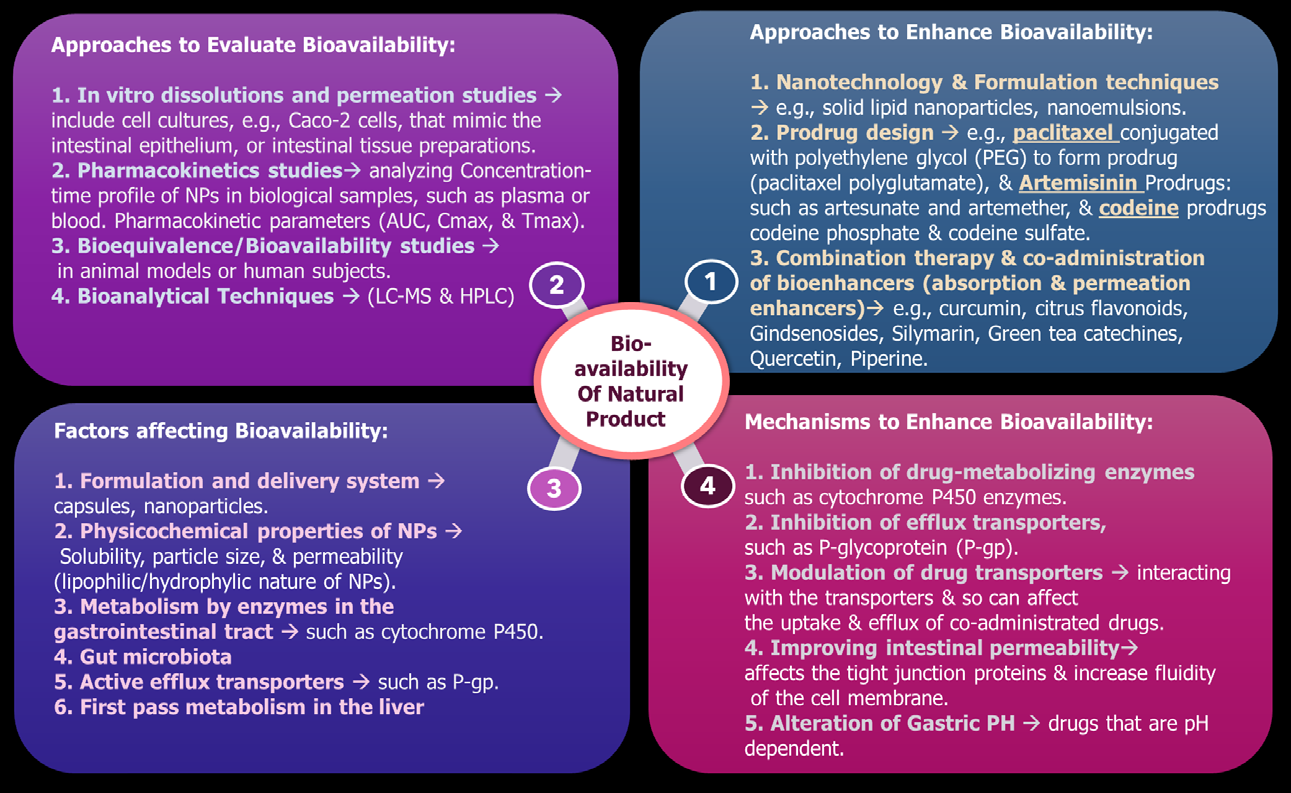
For many years, the traditional Chinese herbal medication Dipsacus asper has been used in China to treat bone ailments, including rheumatoid arthritis, osteoporosis, and bone fractures, as well as traumatic hematomas, uterine hemorrhage, and liver and kidney deficiencies [167]. Figure 1 demonstrates an integrated framework to assess and enhance the bioavailability of natural products.
Implications for Future Research and Applications
Addressing gaps in current research, adopting emerging technologies, and taking regulatory considerations into account are all necessary for navigating future issues.
The findings underscore the need for further research aimed at enhancing the bioavailability of natural products to harness their full therapeutic potential in modern medicine. Subsequent research endeavors ought to concentrate on inventive approaches to surmount the challenges presented by inadequate solubility, extended metabolism, and restricted absorption. Prodrug design, formulation optimization, and nanotechnology have all emerged as potential strategies for boosting the bioavailability of natural compounds. Comprehensive investigations into the metabolic pathways and the detection of bioactive metabolites should be included in the research agenda as well. This deeper understanding will facilitate the development of more targeted, efficacious, and successful interventions. Future research should delve into the identification of bioactive metabolites and their roles in clinical outcomes.
Conclusion
In conclusion, Natural products play a pivotal role in modern medicine, offering a vast reservoir of bioactive compounds with diverse therapeutic applications. Extracted from plants, microbes, and marine organisms, these compounds have contributed significantly to drug discovery and development. For instance, the anti-cancer drug paclitaxel derived from the Pacific yew tree, the antimalarial artemisinin isolated from Artemisia annua, and the analgesic morphine extracted from the opium poppy exemplify the profound impact of natural products on medical treatments. Their chemical diversity and biological activities make them valuable candidates for drug development. However, the bioavailability of these compounds poses a critical challenge, influencing their efficacy in clinical settings. Challenges such as poor aqueous solubility, extensive first-pass metabolism, and limited gastrointestinal absorption contribute to suboptimal bioavailability. Overcoming these obstacles requires innovative strategies, including nanotechnology, prodrug design, and formulation optimization. Addressing this issue is paramount to fully exploit, propel and unlock the therapeutic potential of natural products into the forefront of modern medical interventions. By leveraging cutting-edge technologies and gaining a nuanced understanding of their metabolic fate, researchers can pave the way for enhanced therapeutic outcomes, bringing the rich potential of natural products to the forefront of medical innovation.
References
-
Kaur H, Singh S, Kanagala SG, Gupta V, Patel MA, et al. (2023) Herbal Medicine-A Friend or a Foe of Cardiovascular Disease. Cardiovascular & Hematological Agents in Medicinal Chemistry.
-
Demain AL (2006) From natural products discovery to commercialization: a success story. Journal of Industrial Microbiology and Biotechnology 33(7): 486-495.
-
Phillipson JD (2001) Phytochemistry and medicinal plants. Phytochemistry 56(3): 237-243.
-
Atanasov AG, Waltenberger B, Pferschy-Wenzig E-M, Linder T, Wawrosch C, et al. (2015) Discovery and resupply of pharmacologically active plant-derived natural products: A review. Biotechnology advances 33(8): 1582-1614.
-
Kumar N, Karambir, Kumar R (2012) A comparative analysis of pmx, cx and ox crossover operators for solving traveling salesman problem. International journal of Latest Research in science and technology 1(2): 98-101.
-
Wan F, Zhong G (1990) A medication comparison between Prescriptions for Fifty-two Diseases and Ten Thousands Things. Acta Med Sin 5: 55-58.
-
Jiao Y, Wang F (2005) On the usage of Astragalus membranaceus and Ampelopsis japonica in Prescriptions for Fifty-two Diseases. Jiangxi J TCM 36: 58-59.
-
Cheer CJ, Pickles FJ (1980) The crystal and molecular structure of 1, 3-bis (thiocarbamoyl)-2-NN- dimethylaminopropane hydrochloride (Cartap). Journal of the Chemical Society, Perkin Transactions 12: 1805- 1808.
-
Donia M, Hamann MT (2003) Marine natural products and their potential applications as anti-infective agents. The Lancet infectious diseases 3(6): 338-348.
-
Tziveleka L-A, Vagias C, Roussis V (2003) Natural products with anti-HIV activity from marine organisms. Current topics in medicinal chemistry 3(13): 1512-1535.
-
Rombola L, Scuteri D, Marilisa S, Watanabe C, Morrone LA, et al. (2020) Pharmacokinetic interactions between herbal medicines and drugs: their mechanisms and clinical relevance. Life 10(7): 106.
-
Sun S, Zhou X, Li Z, Zhuang P (2019) In vitro and in vivo testing to determine Cd bioaccessibility and bioavailability in contaminated rice in relation to mouse chow. International Journal of Environmental Research and Public Health 16(5): 871.
-
Zhou SF, Xue CC, Yu X, Wang G (2007) Metabolic activation of herbal and dietary constituents and its clinical and toxicological implications: an update. Current drug metabolism 8(6): 526-553.
-
Zhang Y, Noji H (2017) Digital bioassays: theory, applications, and perspectives. Analytical chemistry 89(1): 92-101.
-
Nguyen TTL, Duong VA, Maeng HJ (2021) Pharmaceutical formulations with P-glycoprotein inhibitory effect as promising approaches for enhancing oral drug absorption and bioavailability. Pharmaceutics 13(7): 1103.
-
Liu Y, Hu M (2000) P-glycoprotein and bioavailability- implication of polymorphism. De Gruyter 38(9).
-
Reddy TS, Zomer R, Mantri N (2023) Nanoformulations as a strategy to overcome the delivery limitations of cannabinoids. Phytotherapy Research 37(4): 1526-1538.
-
Cha YJ, Lee H, Gu N, Kim TE, Lim KS, et al. (2013) Sustained Increase in the Oral Bioavailability of Loperamide after a Single Oral Dose of HM 30181, a P‐glycoprotein Inhibitor, in Healthy Male Participants. Basic & clinical pharmacology & toxicology 113(6): 419-424.
-
Ondieki G, Nyagblordzro M, Kikete S, Liang R, Wang L, et al. (2017) Cytochrome P450 and P-glycoprotein- mediated interactions involving African herbs indicated for common noncommunicable diseases. Evidence- Based Complementary and Alternative Medicine.
-
Ara N, Sultana T, Bolleddu R, Venkatesh S, Kiran AR (2021) A strategy to enhance bioavailability of drug candidates: Natural Bioenhancers. International Journal of Pharmaceutical and Bio Medical Science 1(1): 10-14.
-
Muttepawar S, Jadhav S, Kankudate A, Sanghai S, Usturge D, et al. (2014) A review on bioavailability enhancers of herbal origin. World Journal of Pharmacy and Pharmaceutical Sciences 3(3): 667-677.
-
Junginger H (1996) Drug absorption enhancement, concepts, possibilities, limitations and trends. Journal of Drug Targeting 4(1): 51-52.
-
Majumdar S, Kulkarni A, Kumbhar S (2018) Yogvahi (bioenhancer): an Ayurvedic concept used in modern medicines. Int Res J Pharm Med Sci 1(1): 20-25.
-
Grace XF, Seethalaxmi S, Chamundeshwari D, Manna P, Shanthi S, et al. (2013) Bioenhancers- A new approach in modern medicine. Indo American Journal of Pharmaceutical Research 3(12): 1576-1580.
-
Md S, Alhakamy NA, Aldawsari HM, Asfour HZ (2019) Neuroprotective and antioxidant effect of naringenin- loaded nanoparticles for nose-to-brain delivery. Brain sciences 9(10): 275.
-
Yen FL, Wu TH, Lin LT, Cham TM, Lin CC (2009) Naringenin-loaded nanoparticles improve the physicochemical properties and the hepatoprotective effects of naringenin in orally-administered rats with CCl 4-induced acute liver failure. Pharmaceutical research 26: 893-902.
-
Krishnakumar N, Sulfikkarali N, RajendraPrasad N, Karthikeyan S (2011) Enhanced anticancer activity of naringenin-loaded nanoparticles in human cervical (HeLa) cancer cells. Biomedicine & preventive nutrition 1(4): 223-231.
-
Su Y, Fu Z, Zhang J, Wang W, Wang H, et al. (2008) Microencapsulation of Radix salvia miltiorrhiza nanoparticles by spray-drying. Powder Technology 184(1): 114-121.
-
Su Y, Fu ZY, Wang WM, Wang H, Wang YC, et al. (2007) Ultrafine grinding of Radix salvia miltiorrhiza particles and the physicochemical properties by high speed centrifugal sheering. Key Engineering Materials 330- 332: 215-218.
-
Li J, Wang G, Li P, Hao H (2005) Simultaneous determination of tanshinone IIA and cryptotanshinone in rat plasma by liquid chromatography-electrospray ionisation-mass spectrometry. Journal of Chromatography B 826(1-2): 26-30.
-
Shi Z, He J, Yao T, Chang W, Zhao M (2005) Simultaneous determination of cryptotanshinone, tanshinone I and tanshinone IIA in traditional Chinese medicinal preparations containing Radix salvia miltiorrhiza by HPLC. Journal of Pharmaceutical and Biomedical Analysis 37(3): 481-486.
-
Alven S, Aderibigbe BA (2020) Nanoparticles formulations of artemisinin and derivatives as potential therapeutics for the treatment of cancer, leishmaniasis and malaria. Pharmaceutics 12(8): 748.
-
Want MY, Islamuddin M, Chouhan G, Ozbak HA, Hemeg HA, et al. (2015) Therapeutic efficacy of artemisinin-loaded nanoparticles in experimental visceral leishmaniasis. Colloids and Surfaces B: Biointerfaces 130: 215-221.
-
Natesan S, Ponnusamy C, Sugumaran A, Chelladurai S, Palaniappan SS, et al. (2017) Artemisinin loaded chitosan magnetic nanoparticles for the efficient targeting to the breast cancer. International journal of biological macromolecules 104: 1853-1859.
-
Ibrahim N, Ibrahim H, Sabater AM, Mazier D, Valentin A, et al. (2015) Artemisinin nanoformulation suitable for intravenous injection: preparation, characterization and antimalarial activities. International journal of pharmaceutics 495(2): 671-679.
-
Nasr M, Awadallah A, Al-Karaki R, Madanat F, Alsunna L, et al. (2019) Exploring the unique anticancer properties of curcumin nanoparticles. Clin Oncol Res 2: 2-5.
-
Chen Y, Lin X, Park H, Greever R (2009) Study of artemisinin nanocapsules as anticancer drug delivery systems. Nanomedicine: nanotechnology, biology and medicine 5(3): 316-322.
-
Dragojevic S, Ryu JS, Raucher D (2015) Polymer-based prodrugs: improving tumor targeting and the solubility of small molecule drugs in cancer therapy. Molecules 20(12): 21750-21769.
-
Hoare TR, Kohane DS (2008) Hydrogels in drug delivery: Progress and challenges. Polymer 49(8): 1993-2007.
-
Marques J, Moles E, Urbán P, Prohens R, Busquets MA, et al. (2014) Application of heparin as a dual agent with antimalarial and liposome targeting activities toward Plasmodium-infected red blood cells. Nanomedicine: Nanotechnology, Biology and Medicine 10(8): 1719- 1728.
-
Porter CJ, Wasan KM, Constantinides P (2008) Lipid- based systems for the enhanced delivery of poorly water soluble drugs. Advanced drug delivery reviews 6(60): 615-616.
-
Williams HD, Trevaskis NL, Charman SA, Shanker RM, Charman WN, et al. (2013) Strategies to address low drug solubility in discovery and development. Pharmacological reviews 65(1): 315-499.
-
McClements DJ, Li F, Xiao H (2015) The nutraceutical bioavailability classification scheme: classifying nutraceuticals according to factors limiting their oral bioavailability. Annual review of food science and technology 6: 299-327.
-
Lennernäs H, Abrahamsson B, Persson E, Knutson L (2007) Oral drug absorption and the biopharmaceutics classification system. Journal of drug delivery science and technology 17(4): 237-244.
-
Saaber D, Wollenhaupt S, Baumann K, Reichl S (2014) Recent progress in tight junction modulation for improving bioavailability. Expert Opinion on Drug Discovery 9(4): 367-381.
-
Johnston CS, Taylor CA, Hampl JS (2000) More Americans are eating “5 a day” but intakes of dark green and cruciferous vegetables remain low. The Journal of nutrition 130(12): 3063-3067.
-
Zaripheh S, Erdman JW (2002) Factors that influence the bioavailablity of xanthophylls. The Journal of nutrition 132(3): 531S-534S.
-
Castenmiller JJ, West CE (1998) Bioavailability and bioconversion of carotenoids. Annual review of nutrition 18(1): 19-38.
-
Zhang J, Wang H, Ai C, Lu R, Chen L, et al. (2023) Food matrix-flavonoid interactions and their effect on bioavailability. Critical Reviews in Food Science and Nutrition pp: 1-22.
-
Rossi M, Garavello W, Talamini R, Negri E, Bosetti C, et al. (2007) Flavonoids and the risk of oral and pharyngeal cancer: a case-control study from Italy. Cancer Epidemiology Biomarkers & Prevention 16(8): 1621- 1625.
-
Nielsen ILF, Dragsted LO, Ravn-Haren G, Freese R, Rasmussen SE (2003) Absorption and excretion of black currant anthocyanins in humans and watanabe heritable hyperlipidemic rabbits. Journal of agricultural and food chemistry 51(9): 2813-2820.
-
Wu X, Pittman III HE, Prior RL (2004) Pelargonidin is absorbed and metabolized differently than cyanidin after marionberry consumption in pigs. The Journal of nutrition 134(10): 2603-2610.
-
Prior RL, Wu X (2006) Anthocyanins: structural characteristics that result in unique metabolic patterns and biological activities. Free radical research 40(10): 1014-1028.
-
Felgines C, Talavera S, Gonthier MP, Texier O, Scalbert A, et al. (2003) Strawberry anthocyanins are recovered in urine as glucuro-and sulfoconjugates in humans. The Journal of nutrition 133(5): 1296-1301.
-
Mullen W, Edwards CA, Serafini M, Crozier A (2008) Bioavailability of pelargonidin-3-O-glucoside and its metabolites in humans following the ingestion of strawberries with and without cream. Journal of agricultural and food chemistry 56(3): 713-719.
-
Carbonell‐Capella JM, Buniowska M, Barba FJ, Esteve MJ, Frígola A (2014) Analytical methods for determining bioavailability and bioaccessibility of bioactive compounds from fruits and vegetables: A review. Comprehensive Reviews in Food Science and Food Safety 13(2): 155-171.
-
Oomen AG, Hack A, Minekus M, Zeijdner E, Cornelis C, et al. (2002) Comparison of five in vitro digestion models to study the bioaccessibility of soil contaminants. Environmental science & technology 36(15): 3326-3334.
-
Wang S, Ruan J, Zhang Z, Zhang Y, Yu N, et al. (2011) In vivo bioactive substance study of Xiao Bu Xin Tang total flavonoids extracts by in situ perfused rat intestine-liver model. Chinese Pharmacol Bull 27(6): 885-886.
-
Fong YK, Li CR, Wo SK, Wang S, Zhou L, et al. (2012) In vitro and in situ evaluation of herb–drug interactions during intestinal metabolism and absorption of baicalein. Journal of ethnopharmacology 141(2): 742-753.
-
Nagy K, Ramos L, Courtet-Compondu M, Braga-Lagache S, Redeuil K, et al. (2013) Double-balloon jejunal perfusion to compare absorption of vitamin E and vitamin E acetate in healthy volunteers under maldigestion conditions. European journal of clinical nutrition 67(2): 202-206.
-
Novotny JA, Fadel JG, Holstege DM, Furr HC, Clifford AJ (2012) This kinetic, bioavailability, and metabolism study of RRR-α-tocopherol in healthy adults suggests lower intake requirements than previous estimates. The Journal of nutrition 142(12): 2105-2111.
-
Johnson CH, Slanař O, Krausz KW, Kang DW, Patterson AD, et al (2012) Novel metabolites and roles for α-tocopherol in humans and mice discovered by mass spectrometry- based metabolomics. The American journal of clinical nutrition 96(4): 818-830.
-
Lai RH, Miller MJ, Jeffery E (2010) Glucoraphanin hydrolysis by microbiota in the rat cecum results in sulforaphane absorption. Food & function 1(2): 161-166.
-
Aqil F, Munagala R, Jeyabalan J, Vadhanam MV (2013) Bioavailability of phytochemicals and its enhancement by drug delivery systems. Cancer letters 334(1): 133- 141.
-
Mukherjee PK, Harwansh RK, Bhattacharyya S (2015) Bioavailability of herbal products: approach toward improved pharmacokinetics, in Evidence-based validation of herbal medicine. Evidence-Based Validation of Herbal Medicine, pp: 217-245.
-
Wang F, Cao J, Hou X, Li Z, Qu X (2018) Pharmacokinetics, tissue distribution, bioavailability, and excretion of nuciferine, an alkaloid from lotus, in rats by LC/MS/ MS. Drug development and industrial pharmacy 44(9): 1557-1562.
-
Zou S, Wang C, Li J, He J, Gao X, et al (2020) Microwave assisted solid phase microextraction for extraction and selective enrichment of four alkaloids in lotus leaf. Sustainable Chemistry and Pharmacy 18: 100345.
-
Wang Z, Li Y, Ma D, Zeng M, Wang Z, et al (2023) Alkaloids from lotus (Nelumbo nucifera): Recent advances in biosynthesis, pharmacokinetics, bioactivity, safety, and industrial applications. Critical Reviews in Food Science and Nutrition 63(21): 4867-4900.
-
Wei F, Gou X, Xu X, Wang S, Bao T (2021) Sensitive quantification of liensinine alkaloid using a HPLC-MS/ MS method and its application in microvolume rat plasma. Journal of Analytical Methods in Chemistry 2021: 6629579.
-
Tong S, Zeng Y, Ma J, Wen C (2021) Pharmacokinetics and bioavailability of liensinine in mouse blood by UPLC-MS/ MS. Acta Chromatographica 33(4): 333-337.
-
Prieto M, López CJ, Gandara JS (2019) Glucosinolates: Molecular structure, breakdown, genetic, bioavailability, properties and healthy and adverse effects. Advances in food and Nutrition Research 90: 305-350.
-
Baenas N, Martínez CS, Viguera CG, Moreno DA (2017) Bioavailability and new biomarkers of cruciferous sprouts consumption. Food research international 100(1): 497-503.
-
Higdon JV, Delage B, Williams DE, Dashwood RH (2007) Cruciferous vegetables and human cancer risk: epidemiologic evidence and mechanistic basis. Pharmacological research 55(3): 224-236.
-
Kostova ATD, Kostov RV (2012) Glucosinolates and isothiocyanates in health and disease. Trends in molecular medicine 18(6): 337-347.
-
Peñas E, Pihlava JM, Valverde CV, Frías J (2012) Influence of fermentation conditions of Brassica oleracea L. var. capitata on the volatile glucosinolate hydrolysis compounds of sauerkrauts. LWT-Food Science and Technology 48(1): 16-23.
-
Rungapamestry V, Duncan AJ, Fuller Z, Ratcliffe B (2007) Effect of meal composition and cooking duration on the fate of sulforaphane following consumption of broccoli by healthy human subjects. British journal of nutrition 97(4): 644-652.
-
Teng H, Chen L (2019) Polyphenols and bioavailability: An update. Critical reviews in food science and nutrition 59(13): 2040-2051.
-
Danielsen ET, Danielsen EM (2017) Glycol chitosan: A stabilizer of lipid rafts in the intestinal brush border. Biochimica et Biophysica Acta (BBA)-Biomembranes 1859(3): 360-367.
-
Kay CD, Caro GP, Ludwig IA, Clifford MN, Crozier A (2017) Anthocyanins and flavanones are more bioavailable than previously perceived: A review of recent evidence. Annual Review of Food Science and Technology 8: 155- 180.
-
Dudonné SP, Dubé P, Pilon GV, Marette A, Weisnagel J, et al (2014) Modulation of strawberry/cranberry phenolic compounds glucuronidation by co-supplementation with onion: Characterization of phenolic metabolites in rat plasma using an optimized μSPE-UHPLC-MS/ MS method. Journal of agricultural and food chemistry 62(14): 3244-3256.
-
Nielsen ILF, Chee WS, Poulsen L, Cavin EO, Rasmussen SE, et al (2006) Bioavailability is improved by enzymatic modification of the citrus flavonoid hesperidin in humans: a randomized, double-blind, crossover trial. The Journal of nutrition 136(2): 404-408.
-
Bredsdorff L, Nielsen ILF, Rasmussen SE, Cornett C, Barron D, et al (2010) Absorption, conjugation and excretion of the flavanones, naringenin and hesperetin from α-rhamnosidase-treated orange juice in human subjects. British Journal of Nutrition 103(11): 1602- 1609.
-
Dreiseitel A, Oosterhuis B, Vukman K, Schreier P, Oehme A, et al (2009) Berry anthocyanins and anthocyanidins exhibit distinct affinities for the efflux transporters BCRP and MDR1. British journal of pharmacology 158(8): 1942-1950.
-
Manach C, Williamson G, Morand C, Scalbert A, Rémésy C (2005) Bioavailability and bioefficacy of polyphenols in humans. I. Review of 97 bioavailability studies. The American journal of clinical nutrition 81(1): 230S-242S.
-
Ludwig IA, Mena P, Calani L, Borges G, Caro GP, et al. (2015) New insights into the bioavailability of red raspberry anthocyanins and ellagitannins. Free Radical Biology and Medicine 89: 758-769.
-
Chen TY, Kritchevsky J, Hargett K, Feller K, Klobusnik R, et al. (2015) Plasma bioavailability and regional brain distribution of polyphenols from apple/grape seed and bilberry extracts in a young swine model. Molecular nutrition & food research 59(12): 2432-2447.
-
Norberto S, Silva S, Meireles M, Faria A, Pintado M, et al. (2013) Blueberry anthocyanins in health promotion: A metabolic overview. Journal of Functional Foods 5(4): 1518-1528.
-
Fang J (2014) Some anthocyanins could be efficiently absorbed across the gastrointestinal mucosa: Extensive presystemic metabolism reduces apparent bioavailability. Journal of Agricultural and Food Chemistry 62(18): 3904-3911.
-
Jaganath IB, Mullen W, Edwards CA, Crozier A (2006) The relative contribution of the small and large intestine to the absorption and metabolism of rutin in man. Free radical research 40(10): 1035-1046.
-
Day AJ, Cañada FJ, Dı́az JC, Kroon PA, Mclauchlan R, et al. (2000) Dietary flavonoid and isoflavone glycosides are hydrolysed by the lactase site of lactase phlorizin hydrolase. FEBS letters 468(2-3): 166-170.
-
Mullen W, Rouanet JM, Auger C, Teissedre PL, Caldwell ST, et al. (2008) Bioavailability of [2-14C] quercetin- 4′-glucoside in rats. Journal of agricultural and food chemistry 56(24): 12127-12137.
-
Del Rio D, Calani L, Cordero C, Salvatore S, Pellegrini N, et al. (2010) Bioavailability and catabolism of green tea flavan-3-ols in humans. Nutrition 26(11-12): 1110- 1116.
-
Thilakarathna SH, Rupasinghe HV (2013) Flavonoid bioavailability and attempts for bioavailability enhancement. Nutrients 5(9): 3367-3387.
-
Biasutto L, Zoratti M (2014) Prodrugs of quercetin and resveratrol: A strategy under development. Current drug metabolism 15(1): 77-95.
-
Szeja W, Grynkiewicz G, Rusin A (2017) Isoflavones, their glycosides and glycoconjugates. Synthesis and biological activity. Current Organic Chemistry 21(3): 218-235.
-
Yonemoto-Yano H, Maebuchi M, Fukui K, Tsuzaki K, Takamatsu (2014) Malonyl isoflavone glucosides are chiefly hydrolyzed and absorbed in the colon. Journal of agricultural and food chemistry 62(10): 2264-2270.
-
Shimazu T, Inoue M, Sasazuki S, Iwasaki M, Sawada N, et al. (2010) Isoflavone intake and risk of lung cancer: a prospective cohort study in Japan. The American journal of clinical nutrition 91(3): 722-728.
-
Javed S, Kohli K (2022) Ahsan W Bioavailability augmentation of silymarin using natural bioenhancers: An in vivo pharmacokinetic study. Brazilian Journal of Pharmaceutical Sciences, pp: 58.
-
Kumar R (2019) Lipid-based nanoparticles for drug- delivery systems, in Nanocarriers for drug delivery. Elsevier, pp: 249-284.
-
Patel V, Lalani R, Bardoliwala D, Ghosh S, Misra (2018) A Lipid-based oral formulation strategies for lipophilic drugs. Aaps Pharmscitech 19: 3609-3630.
-
Li, Wang S, Quan K, Ma D, Zhang H, et al. ( 2022) Co-administering yeast polypeptide and the probiotic, Lacticaseibacillus casei Zhang, significantly improves exercise performance. Journal of Functional Foods 95: 105161.
-
Libinaki R, Gavin PD (2017) Changes in bioavailability of omega-3 (DHA) through Alpha-Tocopheryl Phosphate Mixture (TPM) after oral administration in rats. Nutrients 9(9): 1042.
-
Hakkola J, Hukkanen J, Turpeinen M (2020) Pelkonen O Inhibition and induction of CYP enzymes in humans: an update. Archives of Toxicology 94: 3671-3722.
-
Rodrigo R, Miranda A, Vergara L (2011) Modulation of endogenous antioxidant system by wine polyphenols in human disease. Clinica Chimica Acta 412(5-6): 410- 424.
-
Shen Y, Zhang N, Tian J, Xin G, Liu L, et al. (2022) Advanced approaches for improving bioavailability and controlled release of anthocyanins. Journal of Controlled Release 341: 285-299.
-
Salústio OJ, Pontes P, Conduto C, Sanches I, Carvalho C, et al. (2011) Advanced technologies for oral controlled release: cyclodextrins for oral controlled release. Aaps Pharmscitech 12: 1276-1292.
-
Ayala-Fuentes CJ, Santoscoy C (2021) Nanotechnology as a Key to Enhance the Benefits and Improve the Bioavailability of Flavonoids in the Food Industry. Foods 10(11): 2701.
-
Moradi SZ, Momtaz S, Bayrami Z, Farzaei MH, Abdollahi M (2020) Nanoformulations of herbal extracts in treatment of neurodegenerative disorders. Frontiers in bioengineering and biotechnology 8: 238.
-
Mizrahi M, Friedman-Levi Y, Larush L, Frid K, Binyamin O, et al. (2014) Pomegranate seed oil nanoemulsions for the prevention and treatment of neurodegenerative diseases: the case of genetic CJD. Nanomedicine: Nanotechnology, Biology and Medicine10(6): 1353-1363.
-
Binyamin O, Larush L, Frid K, Keller G, Friedman-Levi Y, et al. (2015) Treatment of a multiple sclerosis animal model by a novel nanodrop formulation of a natural antioxidant. International Journal of Nanomedicine, pp: 7165-7174.
-
Ismail N, Ismail M, Azmi NH, Bakar MFA, Yida Z, et al. (2017) Beneficial effects of TQRF and TQ nano- and conventional emulsions on memory deficit, lipid peroxidation, total antioxidant status, antioxidants genes expression and soluble Aβ levels in high fat-cholesterol diet-induced rats. Chemico-biological interactions 275: 61-73.
-
Ismail N, Ismail M, Azmi NH, Bakar MFA, Yida Z, et al. (2017)Thymoquinone-rich fraction nanoemulsion (TQRFNE) decreases Aβ40 and Aβ42 levels by modulating APP processing, up-regulating IDE and LRP1, and down-regulating BACE1 and RAGE in response to high fat/cholesterol diet-induced rats. Biomedicine & Pharmacotherapy 95: 780-788.
-
Shinji S, Yasukazu T, Hatsue W, Kazuo K, Machiko I, et al. (2011) Analysis of brain cell activation by nanosized particles of Ginkgo biloba extract. International Journal of Plant Physiology and Biochemistry 3(3): 28-33.
-
Jin Y, Wen J, Garg S, Liu D, Zhou Y, et al. (2013) Development of a novel niosomal system for oral delivery of Ginkgo biloba extract. International journal of nanomedicine pp: 421-430.
-
Aluani D, Tzankova V, Yordanov Y, Kondeva-Burdina M, Yoncheva K (2017) In vitro protective effects of encapsulated quercetin in neuronal models of oxidative stress injury. Biotechnology & Biotechnological Equipment 31(5): 1055-1063.
-
Elnaggar YS, Etman SM, Abdelmonsif DA, Abdallah OY(2015) Intranasal piperine-loaded chitosan nanoparticles as brain-targeted therapy in Alzheimer’s disease: optimization, biological efficacy, and potential toxicity. Journal of pharmaceutical sciences 104(10): 3544-3556.
-
Gothwal, Khan I, Gupta U (2016) Polymeric micelles: recent advancements in the delivery of anticancer drugs. Pharmaceutical research 33: 18-39.
-
Li N, Zhao L, Qi L, Li Z, Luan Y (2016) Polymer assembly: Promising carriers as co-delivery systems for cancer therapy. Progress in Polymer Science 58: 1-26.
-
Nakanishi T, Fukushima S, Okamoto K, Suzuki M, Matsumura (2001) Development of the polymer micelle carrier system for doxorubicin. Journal of Controlled Release74(1-3): 295-302.
-
Yoo HS, Lee EA, Park TG (2002) Doxorubicin- conjugated biodegradable polymeric micelles having acid-cleavable linkages. Journal of controlled release 82(1): 17-27.
-
Han M, Diao YY, Jiang HL, Ying YH, Chen DW, et al. (2011) Molecular mechanism study of chemosensitization of doxorubicin-resistant human myelogenous leukemia cells induced by a composite polymer micelle. International journal of pharmaceutics 420(2): 404-411.
-
Kim SC, Kim DW, Shim HY, Bang JS, Oh HS, et al. (2001) In vivo evaluation of polymeric micellar paclitaxel formulation: toxicity and efficacy. Journal of controlled release 72(1-3): 191-202.
-
Soga O, van Nostrum CF, Fens M, Rijcken CJ, Schiffelers RM (2005) Thermosensitive and biodegradable polymeric micelles for paclitaxel delivery. Journal of Controlled Release 103(2): 341-353.
-
Huh KM, Min HS, Lee SC, Lee HJ, Kim S, et al. (2008) A new hydrotropic block copolymer micelle system for aqueous solubilization of paclitaxel. Journal of Controlled Release 126(2): 122-129.
-
Opanasopit P, Yokoyama M, Watanabe M, Kawano K, Maitani Y, et al. (2004) Block copolymer design for camptothecin incorporation into polymeric micelles for passive tumor targeting. Pharmaceutical research 21: 2001-2008.
-
Blanco E, Bey EA, Dong Y, Weinberg BD, Sutton DM (2007) β-Lapachone-containing PEG–PLA polymer micelles as novel nanotherapeutics against NQO1- overexpressing tumor cells. Journal of controlled release 122(3): 365-374.
-
Park EK, Kim SY, Lee SB, Lee YM (2005) Folate- conjugated methoxy poly (ethylene glycol)/poly (ɛ-caprolactone) amphiphilic block copolymeric micelles for tumor-targeted drug delivery. Journal of Controlled Release 109(1-3): 158-168.
-
Sandhir R, Yadav A, Mehrotra A, Sunkaria A, Singh A (2014) Curcumin nanoparticles attenuate neurochemical and neurobehavioral deficits in experimental model of Huntington’s disease. Neuromolecular medicine 16: 106-118.
-
Rautio J, Kumpulainen H, Heimbach T, Oliyai R, Oh D (2008) Prodrugs: design and clinical applications. Nature reviews Drug discovery 7(3): 255-270.
-
Ratnatilaka PNB, El-Magboub A, Haworth IS, Rojsitthisak P (2017) Enhancement of curcumin bioavailability via the prodrug approach: Challenges and prospects. European journal of drug metabolism and pharmacokinetics 42: 341-353.
-
Singh RK, Rai D, Yadav D, Bhargava A, Balzarini J, et al. (2010) Synthesis, antibacterial and antiviral properties of curcumin bioconjugates bearing dipeptide, fatty acids and folic acid. European journal of medicinal chemistry 45(3): 1078-1086.
-
Han YR, Zhu JJ, Wang YR, Wang XS, Liao YH (2011) A simple RP‐HPLC method for the simultaneous determination of curcumin and its prodrug, curcumin didecanoate, in rat plasma and the application to pharmacokinetic study. Biomedical Chromatography 25(10): 1144-1149.
-
Randhawa GK, Kullar JS (2011) Bioenhancers from mother nature and their applicability in modern medicine. International journal of applied and basic medical research 1(1): 5-10.
-
Chaudhri SK, Jain S (2023) A Systematic Review of Piperine as a Bioavailability Enhancer. Journal of Drug Delivery and Therapeutics 13(4): 133-136.
-
Bhardwaj RK, Glaeser H, Becquemont L, Klotz U, Gupta SK, et al. (2002) Piperine, a major constituent of black pepper, inhibits human P-glycoprotein and CYP3A4. Journal of Pharmacology and Experimental Therapeutics 302(2): 645-650.
-
Shoba G, Joy D, Joseph T, Majeed M, Rajendran R, et al. (1998) Influence of piperine on the pharmacokinetics of curcumin in animals and human volunteers. Planta medica 64(4): 353-356.
-
Pattanaik S, Hota D, Prabhakar S, Kharbanda P, Pandhi P (2009) Pharmacokinetic interaction of single dose of piperine with steady‐state carbamazepine in epilepsy patients. Phytotherapy Research: An International Journal Devoted to Pharmacological and Toxicological Evaluation of Natural Product Derivatives 23(9): 1281-1286.
-
Janakiraman K, Manavalan R (2011) Compatibility and stability studies of ampicillin trihydrate and piperine mixture. International Journal of Pharmaceutical Sciences and Research 2(5): 1176-1181.
-
Johri R, Zutshi U (1992) An Ayurvedic formulation ‘Trikatu’and its constituents. Journal of Ethnopharmacology 37(2): 85-91.
-
Hossain MK, Dayem AA, Han J, Yin Y, Kim K, et al. (2016) Molecular mechanisms of the anti-obesity and anti-diabetic properties of flavonoids. International journal of molecular sciences 17(4): 569.
-
Kurzer MS, Xu X (1997) Dietary phytoestrogens. Annual review of nutrition 17(1): 353-381.
-
Huisman MT, Chhatta AA, Tellingen OV, Beijnen JH, Schinkel AH (2005) MRP2 (ABCC2) transports taxanes and confers paclitaxel resistance and both processes are stimulated by probenecid. International journal of cancer 116(5): 824-829.
-
Sparreboom A, Asperen JV, Mayer U, Schinkel AH, Smit JW, et al. (1997) Limited oral bioavailability and active epithelial excretion of paclitaxel (Taxol) caused by P-glycoprotein in the intestine. Proceedings of the National Academy of Sciences 94(5): 2031-2035.
-
Doyle LA, Ross DD (2003) Multidrug resistance mediated by the breast cancer resistance protein BCRP (ABCG2). Oncogene 22(47): 7340-7358.
-
Li X, Choi JS (2007) Effect of genistein on the pharmacokinetics of paclitaxel administered orally or intravenously in rats. International Journal of Pharmaceutics 337(1-2): 188-193.
-
Kang MJ, Cho JY, Shim B, Kim DK, Lee J (2009) Bioavailability enhancing activities of natural compounds from medicinal plants. J Med Plants Res 3(13): 1204- 1211.
-
Pichard L, Gillet G, Fabre I, Beluche ID, Bonfils C, et al. (1990) Identification of the rabbit and human cytochromes P-450IIIA as the major enzymes involved in the N-demethylation of diltiazem. Drug Metabolism and Disposition 18(5): 711-719.
-
Molden E, Åsberg A, Christensen H (2002) Desacetyl-diltiazem displays severalfold higher affinity to CYP2D6 compared with CYP3A4. Drug metabolism and disposition 30(1): 1-3.
-
Saeki T, Ueda K, Tanigawara Y, Hori R, Komano T (1993) P‐glycoprotein‐mediated transcellular transport of MDR‐reversing agents. FEBS letters 324(1): 99-102.
-
Scambia G, Ranelletti FO, Panici PB, Vincenzo RD, Bonanno G, et al. (1994) Quercetin potentiates the effect of adriamycin in a multidrug-resistant MCF-7 human breast-cancer cell line: P-glycoprotein as a possible target. Cancer chemotherapy and pharmacology 34: 459-464.
-
Shapiro AB, Ling V (1997) Effect of quercetin on Hoechst 33342 transport by purified and reconstituted P-glycoprotein. Biochemical pharmacology 53(4): 587- 596.
-
Dupuy J, Larrieu G, Sutra JF, Lespine A, Alvinerie M (2003) Enhancement of moxidectin bioavailability in lamb by a natural flavonoid: quercetin. Veterinary parasitology 112(4): 337-347.
-
Miniscalco A, Lundahl J, Regårdh CG, Edgar B, Eriksson UG (1992) Inhibition of dihydropyridine metabolism in rat and human liver microsomes by flavonoids found in grapefruit juice. Journal of Pharmacology and Experimental Therapeutics 261(3): 1195-1199.
-
Ribeiro IA, Ribeiro MH (2008) Naringin and naringenin determination and control in grapefruit juice by a validated HPLC method. Food Control 19(4): 432- 438.
-
Cavia‐Saiz M, Busto MD, Pilar‐Izquierdo MC, Ortega N, Perez‐Mateos M, et al. (2010) Antioxidant properties, radical scavenging activity and biomolecule protection capacity of flavonoid naringenin and its glycoside naringin: a comparative study. Journal of the Science of Food and Agriculture 90(7): 1238-1244.
-
Jung U, Kim HJ, Lee JS, Lee MK, Kim HK, et al. (2003) Naringin supplementation lowers plasma lipids and enhances erythrocyte antioxidant enzyme activities in hypercholesterolemic subjects. Clinical Nutrition 22(6): 561-568.
-
Stabrauskiene J, Kopustinskiene DM, Lazauskas R, Bernatoniene J (2022) Naringin and naringenin: Their mechanisms of action and the potential anticancer activities. Biomedicines 10(7): 1686.
-
Benavente-Garcia O, Castillo J (2008) Update on uses and properties of citrus flavonoids: New findings in anticancer, cardiovascular, and anti-inflammatory activity. Journal of agricultural and food chemistry 56(15): 6185-6205.
-
Zhang H, Wong CW, Coville PF, Wanwimolruk S (2000) Effect of the grapefruit flavonoid naringin on pharmacokinetics of quinine in rats. Drug Metabolism and Drug Interactions 17(1-4): 351-363.
-
Lim SCJ, Choi JS (2006) Effects of naringin on the pharmacokinetics of intravenous paclitaxel in rats. Biopharmaceutics & drug disposition 27(9): 443-447.
-
Dudonné S, Dal-Pan A, Dubé P, Varin TV, Calon F, et al. (2016) Potentiation of the bioavailability of blueberry phenolic compounds by co-ingested grape phenolic compounds in mice, revealed by targeted metabolomic profiling in plasma and feces. Food & function 7(8): 3421-3430.
-
Choi EH, Lee DY, Kim S, Chung JO, Choi JK, et al. (2017) Influence of flavonol-rich excipient food (onion peel and Dendropanax morbifera) on the bioavailability of green tea epicatechins in vitro and in vivo. Food & function 8(10): 3664-3674.
-
Tao Y, Ren Y, Li W, Cai B, Di L, et al. (2016) Comparative pharmacokinetic analysis of extracts of crude and wine- processed Dipsacus asper in rats by a sensitive ultra performance liquid chromatography–tandem mass spectrometry approach. Journal of Chromatography B 1036: 33-41.
-
Cui CL, He X, Dong CL, Song ZJ, Ji J, et al. (2017) The enhancement mechanism of wine-processed Radix Scutellaria on NTG-induced migraine rats. Biomedicine & Pharmacotherapy 91: 138-146.
-
Qian XC, Zhang L, Tao Y, Huang P, Li JS, et al. (2015) Simultaneous determination of ten alkaloids of crude and wine-processed Rhizoma Coptidis aqueous extracts in rat plasma by UHPLC–ESI–MS/MS and its application to a comparative pharmacokinetic study. Journal of Pharmaceutical and Biomedical Analysis 105: 64-73.
-
Liu K, Song Y, Liu Y, Peng M, Li H, et al. (2017) An integrated strategy using UPLC–QTOF-MSE and UPLC– QTOF-MRM (enhanced target) for pharmacokinetics study of wine processed Schisandra Chinensis fructus in rats. Journal of pharmaceutical and biomedical analysis 139: 165-178.
-
Tao Y, Chen L, Yan J (2020) Traditional uses, processing methods, phytochemistry, pharmacology and quality control of Dipsacus asper Wall. ex CB Clarke: a review. Journal of ethnopharmacology 258: 112912.
- Effects of 5-HTP and Melatonin on the Sleep Cycle of Medical Students
- Adsorption of Bisphenol A on NH4OH- Modified Rice Husk and Sugar Cane Bagasse Biochar
- Comparative Assessment of the Reinforcement Efficiency of Palm Fruit Fibre and Coconut Fibre in High Density Polyethylene (HDPE) Matrix Composite
- Importance of Bio Compounds Naturally Present in Food with Functionality in Animal Metabolism
- Sub-Acute Study on the Cardiotoxic Effects of Monosodium Glutamate Ingestion in Albino Rat
- Weight Management and Its Natural Solutions: A Review