
Assessment of Knowledge, Attitude, and Practice of Dog Owners towards Rabies in Dilla Town, Gedeo Zone, Southern Ethiopia
Rabies is a fatal animal disease of significant public health importance. Domestic dogs are the main reservoir and transmitter of this disease particularly in developing countries. Even though rabies is a highly fatal disease, it is a preventable disease. Dog owners’ awareness about rabies is one of the key components for prevention. Thus, study to determine the level of knowledge, attitudes, and practices (KAP) with respect to rabies in Dilla town, Gedeo zone, Southern, Ethiopia. A cross-sectional study was conducted from May to August 2023 to assess the knowledge, attitude, and practice of dog owners towards rabies in Dilla town, Gedeo zone, Sothern Ethiopia. A structured closed-ended questionnaire was used to collect the data through face-to-face interviews with 384 respondents. The data were then analyzed using SPSS statistical software version 20. This study showed that almost all (84.6%) surveyed individuals were aware of rabies. Bite was known as a mode of rabies transmission by the majority of the respondents (67.7%) with considerable means of transmission through wound contact with the saliva of diseased animals. A sudden change of behavior was described as a major clinical sign of rabies in animals by the majority of the respondents (28.1%) Most participants (87.8%) responded that they would seek treatment from a doctor or health center after first aid and that they would go immediately following exposure and the majority of the respondents (72.2%) indicated crossing a river before 40 days after a dog bite increases severity of the disease. In total, knowledge, attitude, and practice related to rabies 83.9%, 84.4%, and 71.8% of participants had good knowledge, positive attitude, and good practice towards rabies respectively. In conclusion rabies was found to be well-known by dog owners of Dilla town. However, knowledge, attitude, and practices in the prevention and control of rabies were limited. Education and training of on rabies about possible sources of infection, mode of transmission, and measures to be taken after exposure is very important in the study area.
Introduction
Background
Rabies is an acute, progressive, fatal encephalitis caused by viruses in the family Rhabdoviridae, genus Lyssavirus that is considered a reemerging zoonosis throughout much of the world. The main reservoir of rabies are dogs and other animals belonging to the Canidae family, but all mammalian animals in endemic areas are capable of contracting and transmitting the disease [1].
Human Rabies is usually transmitted in saliva from a rabid animal bite or scratch. Following the bite, the virus replicates in the muscle and travels up the central nervous system which causes infection of the brain (encephalitis). In domestic animals, the incubation period is generally 3-12 weeks but can range from several days to months, rarely exceeding 6 months [2, 3]. Clinical signs of this disease appear following the migration of the virus from the bite site to the central nervous system, the duration of which is highly variable depending on several factors including the distance of the bite site to the brain [4].
Although human rabies encephalitis is 100% fatal, it is also 100% preventable if post-exposure prophylaxis (PEP) is taken timely [5]. Exposure to rabid animals can be eliminated at the source through sustained mass vaccination of reservoir populations [6]. Globally, rabies causes more than 61,000 human deaths annually, and around 15 million dog bite victims receive post-exposure prophylaxis every year [7]. Asia and Africa are the countries where more than 95% of rabies-mediated human deaths occur and 43% of the death occurred in Africa [8, 9]. Estimates of human mortality due to endemic canine rabies in Asia and Africa annually exceed 31,000 and 24,000 respectively [10]. In Ethiopia, rabies is highly endemic, with an estimated 10,000 deaths annually [11]. The magnitude of the problem is higher in big cities like Addis Ababa linked to the presence of a large population of stray dogs and associated factors [12].
In public health knowledge, attitude, and practice (KAP) studies have been widely used based on the principle that increasing knowledge will result in changing attitudes and practices to minimize disease burden [13]. In Ethiopia, there are a number of home and street dogs. Many households owned dogs mainly for security purposes particularly in the rural areas but also in the urban areas of the country.
Despite this, regular vaccination and follow-up to the dogs are not being given [14]. In addition to this, there is no study conducted on KAP of rabies prevention and control in Dilla Town and this, study helps to fill the gap in the availability of data regarding the status of KAP towards rabies among dog owners’ heads in Dilla Town, Gedeo zone of Southern, Ethiopia. These data will be useful for designing a rabies prevention and control program in the future targeting both the animal source and the human population at risk.
General Objective
To determine the level of knowledge, attitudes, and practices (KAP) with respect to rabies in Dilla Town, Gedeo zone of Southern Ethiopia.
Specific objectives
- To assess level Knowledge of Dog owners towards rabies.
- To assess attitude of dog owners to wards rabies.
- To assess practice of dog owners to wards rabies.
Methods
Study Area
The study was conducted in Dilla town, the capital of Gedeo zone, Southern, Ethiopia. The town is located at a distance of 359 KM from Addis Ababa, the capital city of Ethiopia, and 90 KM from Hawassa, the capital city of Sidama, Ethiopia, and on the way from Addis Ababa to Moyale. Geographically, Dilla town is located at 6°24′30′′N Longitude and 38°18′30′′E Latitude with an average elevation of 1570 meters above sea level. The town covers 1123.47 hectares of land which lies in the eastern escarpment of the Ethiopian rift valley. Dilla is the administrative and major trade center of the Gedeo zone, having a total population of 84,952 the area receives an annual maximum, medium, and minimum rainfall of 1400, 1150, and 900 mm, respectively. The mean maximum and minimum daily temperatures are 25.40 and 13.40 -degree centigrade, respectively [15].
Source and Study Population
The target groups for the interview were dog owners who lived in Dilla town of Gedeo zone Southern, Ethiopia.
Study Design and Study Period
A cross-sectional study was be conducted from May, 2023 to Augusts 2023 assess the knowledge, attitude, and practice of dog owners to canine rabies in Dilla town, Sothern, Ethiopia.
Sampling Procedures and Sample Size
Out of 5 kebeles, three kebele (Harorressa, Bareda, and Weldena) were randomly selected using the lottery method from the list of districts in Dilla town, followed by the selection of 128 dog owner’s household heads from each kebele using systematic random sampling method from the list of dog’s owner’s household that registered before. Whenever the selected dog owner’s household was found locked, the next dog owner’s household (on the right side) was substituted automatically for the interview. To reduce the risk of households being locked, we prefer Sunday, which is a religiously respected day and people stay at home. A pretested structured questionnaire consisting of closed- ended questions was used for this study.
The required sample size for this study was estimated by considering 50% of the population knowing about rabies since there is no awareness study on rabies in the area before. Thus, the sample size was calculated according to Thursfield M, et al [16] using a 95% confidence interval and 0.05 absolute precision. Then the required sample size of 384 was computed.
Data Collection
The data was collected via interview. The questionnaire was first developed in English and then translate into Amharic and Gedeuffa language (native language) for appropriateness and easiness in approaching the study participants.
Data management and Analysis
After collection, the data was cleaned and checked for its completeness. Those incomplete and inconsistent were corrected when possible and removed otherwise. After a complete check-, the data was coded and entered into Microsoft Excel and transported to SPSS version 20.0 statistical packages windows, and analysis was made. The frequency distribution of both dependent and independent variables was worked out by using descriptive statistic (frequencies, mean, SD, and percentage). The association between independent variables and KAP scores on rabies was calculated using Pearson’s Chi-square.
Results
Socio-Demographic Characteristics
A total of 384 respondents were interviewed. Socio- demographic characteristics of respondents showed that the majority of respondents (61.7%) were males. Regarding the age group, 199 (51.8%) of the study participants were between 18-34 years old, and 188 (49.0%) respondents were Protestant followed by Orthodox 103 (26.8%). Concerning educational level, 155 (40.4%) of the participants had completed college studies. Of the total respondents, about 210 (54.7%) were merchants followed by Housewife 57 (19.0%) presented in Table 1.
| Variable | Frequency | Percent | |
|---|---|---|---|
| Sex | Male | 237 | 61.70% |
| Female | 147 | 38.30% | |
| Age | 18-34 | 199 | 51.80% |
| 35-55 | 121 | 31.50% | |
| 56 | 64 | 16.70% | |
| Family size | ≤3 | 193 | 50.30% |
| 6-Apr | 48 | 12.50% | |
| ≥7 | 143 | 37.30% | |
| Religion | Muslim | 44 | 11.50% |
| Orthodox | 103 | 26.80% | |
| Protestant | 188 | 49.00% | |
| Others | 49 | 12.80% | |
| Education level | Primary school (1-8) | 92 | 24.00% |
| Secondary school (9-10 | 54 | 14.10% | |
| College | 155 | 40.40% | |
| First-degree and above | 38 | 9.90% | |
| Only read and write | 22 | 5.70% | |
| Cannot read and write | 23 | 6.00% | |
| Occupation | Employed | 54 | 14.10% |
| Marchant | 210 | 54.70% | |
| Jopless | 47 | 12.20% | |
| House wife | 73 | 19.00% |
Table 1: Demographic characteristics of respondents in Dilla Town, Sothern Ethiopia.
Knowledge of Participants towards Rabies
This study revealed that the majority of respondents (84.6%) had previously heard about rabies and. 53.4% of respondents obtained information about rabies from formal and the other half of respondents from several sources of informal mass media, family, teachers, traditional healers, professionals, and friends were the main sources of information for them about rabies and they hadn’t ever got training from government-authorized institutions. The majority of study participants (75.8%), knew that it can affect all warm-blooded animals including human beings, dogs and other domestic animals are the major vector for rabies. Moreover, 81.5% of respondents recognize that it affects all human races regardless of age.
Most respondents 241(62.0%), described the virus as the causative agent of rabies and transmitted through dog bite and saliva contact with an open wound. About 25.3% of respondents identify symptoms salivation, 28.1% as sudden change in behavior correctly, 19.5% as water phobia, and 27.1% as paralysis. The majority of the population (83.3%) was aware that rabies was not easily treated after the onset of clinical signs, 73.7% knew about post-exposure prophylaxis, 77.3% that rabies could be prevented by vaccination, 19.5% only know about vaccination interval for pets, 83.6% respondents know about the importance of vaccination and willing to vaccinate their own dog as shown in Table 2.
| Variables/ Characteristics | Frequency | Percent |
|---|---|---|
| Do have awareness about rabies? | ||
| Yes | 325 | 84.60% |
| No | 59 | 15.40% |
| Which of the following species are affected by rabies Dog | ||
| Dog and human | 32 | 8.30% |
| Human | 45 | 11.70% |
| other domestic animals | 9 | 2.30% |
| Wild animals | 7 | 1.80% |
| All | 291 | 75.80% |
| Which source of information are used? | ||
| Formal | 205 | 53.40% |
| Informal | 169 | 44.00% |
| Mixed | 10 | 2.60% |
| What is causes of rabies? | ||
| Virus | 241 | 62.00% |
| Bacteria | 50 | 13.00% |
| Psychological problem | 77 | 20.10% |
| I don’t know | 16 | 4.20% |
| Which one of the following are modes of transmission of rabies? | ||
| Bite only | 100 | 26.00% |
| Contact with saliva only | 5 | 1.30% |
| Bite and saliva contact with an open wound Infected meat and others | 260 | 67.70% |
| Infected meat and others | 19 | 4.90% |
| The species that are transmitting rabies to human Dog | ||
| Dog | 157 | 40.90% |
| Dog and cat | 195 | 50.80% |
| Dog and wild animals | 32 | 8.30% |
| The clinical signs of rabies | ||
| Salivation | 97 | 25.30% |
| Sudden change in behavior | 108 | 28.10% |
| Water phobia | 75 | 19.5 |
| Paralysis | 104 | 27.10% |
| Which age groups of populations are at risk | ||
| Children | 37 | 9.60% |
| Old | 20 | 5.20% |
| All | 327 | 85.20% |
| Have you ever got training? | ||
| Yes | 0 | 0.00% |
| No | 384 | 100.00% |
| Is rabies easily treated after the onset of clinical sign | ||
| Yes | 64 | 16.70% |
| No | 320 | 83.30% |
| Do you know about post-exposure prophylaxis? | ||
| Yes | 283 | 73.70% |
| No | 101 | 26.30% |
| Can we prevent rabies by vaccination? | ||
| Yes | 297 | 77.30% |
| No | 87 | 22.70% |
| Do you know the vaccination interval for pets? | ||
| Yes | 75 | 19.50% |
| No | 309 | 80.50% |
| Do you think the rabies vaccine is important? | ||
| Yes | 321 | 83.60% |
| No | 63 | 16.40% |
| Are you willing to vaccinate your pet? | ||
| Yes | 321 | 83.60% |
| No | 63 | 16.40% |
Table 2: Assessment of Attitude of respondents towards rabies in Dilla Town, Sothern, Ethiopia.
Attitude of Participants towards Rabies
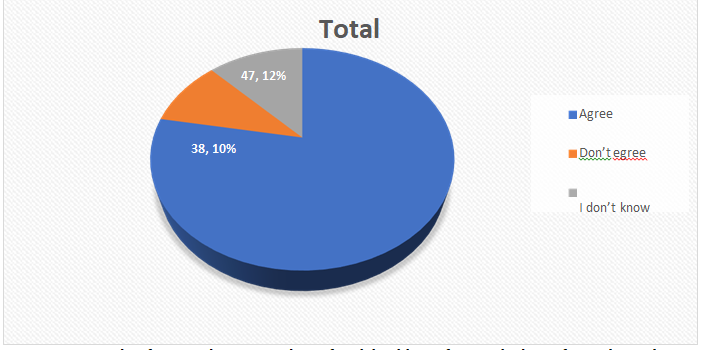
Few of the respondents (10.2%) believed consumption of a rabid animal’s meat could be a medicine for rabies and (5.5%) of respondents burning the rabid animal and inhalation of the smoke could be a medicine for rabies. About
70.8% of respondents preferred traditional healers could be a solution for rabies. The majority of the respondents (72.2%) indicated crossing a river before 40 days after a dog bite increases the severity of the disease. Most of the respondents (77.9%) agreed to seek health professional advice if were bitten by a rabid animal (Figure 1, Table 3).
| Variables/ Characteristics | Frequency | Percent |
|---|---|---|
| Consumption of rabid animal meat could be a medicine for rabies? | ||
| Agree | 39 | 10.20% |
| I don’t agree | 135 | 35.20% |
| I don’t know | 210 | 54.70% |
| Burning the rabid animal and inhalation of the smoke could be a | ||
| medicine for rabies? | ||
| Agree | 21 | 5.50% |
| I don’t agree | 148 | 38.50% |
| I don’t know | 215 | 56.00% |
| Traditional healers could be a solution for rabies | ||
| Agree | 272 | 70.80% |
| I don’t agree | 112 | 29.20% |
| Crossing a river before 40 days could increase disease development Agree | ||
| I don’t agree | 279 | 72.20% |
| I don’t know | 48 | 12.50% |
| 57 | 14.80% |
Table 3: Assessment of Attitude of respondents towards rabies in Dilla Town, Sothern, Ethiopia.
Practice of Participants towards Rabies
Most respondents (68.5%) manage their dogs housed in cages whereas other respondents allowed their dogs to roam freely. Above half of the respondents, 56.8% treat their own animals after being bitten by a rabid dog and 217(56.5%) of respondents took immediate action by tying their rabid animals. About 264(68.8%) vaccinate their dog against rabies and 31.2% of the respondents did not vaccinate their dogs due to a lack of knowledge on vaccine availability. Most participants (87.8%) responded that they would seek treatment from a doctor or health center after first aid and that they would go immediately following exposure. Few of the respondents 1.8% expose to rabies infection and Practices regarding immediate action taken after the bite of humans by rabid animals were generally good, 171(44.5%) were washed with soap and water, 128(33.3) they don’t know, 64(16.7%) applying herbal extract and 21(5.5%) ties wound with cloth. The majority of the respondents indicated (66.7%) depopulation or killing of stray dogs is an effective measure for controlling the disease. All respondents (99.7%) do not castrate or spayed of dogs and maintaining adequate fencing to contain dogs were issues that could be improved. The majority of respondents (80.5%) don’t believe that castration decreases the incidence of disease as shown in Table 4.
| Variables/ Characteristics | Frequency | Percent |
|---|---|---|
| How is managing your dog? | ||
| Indoor | 263 | 68.50% |
| Be free | 121 | 31.50% |
| Actions to be taken on animals bitten by rabid dog Treatment | ||
| Killing | 218 | 56.80% |
| Nothing | 52 | 13.50% |
| 114 | 29.70% | |
| Which of the following immediate action to be taken after bite of humans by rabid animals? | ||
| Washing with soap and water Applying herbal extract | 171 | 44.50% |
| Tie wound with cloth | 64 | 16.70% |
| I don’t know | 128 | 33.30% |
| 21 | 5.50% | |
| What immediate action would be taken on rabid animals? | ||
| Tie | 217 | 56.50% |
| Killing | 70 | 18.20% |
| Nothing | 97 | 25.30% |
| Actions to be taken after first aid Health center | ||
| Traditional healer | 337 | 87.80% |
| Holly water | 46 | 31.30% |
| 1 | 0.30% | |
| Have you vaccinated your dog for rabies? | ||
| Yes | 264 | 68.80% |
| No | 120 | 31.20% |
| Does your family expose to rabies infection? | ||
| Yes | 7 | 1.80% |
| No | 377 | 98.20% |
| Which measures would be applied to control stray dogs? | ||
| Aware the owner | 71 | 18.50% |
| Animal birth control | 57 | 14.80% |
| Killing | 256 | 66.70% |
| Was your dog castrated /spayed/? | ||
| Yes | 1 | 0.30% |
| No | 383 | 99.70% |
| Does castration decrease incidence? | ||
| Yes | 75 | 19.50% |
| No | 309 | 80.50% |
Table 4: Assessment of practice of respondents towards rabies in Dilla Town, Sothern, Ethiopia.
Dog Owners KAP about Rabies in Dilla Town, Sothern Ethiopia
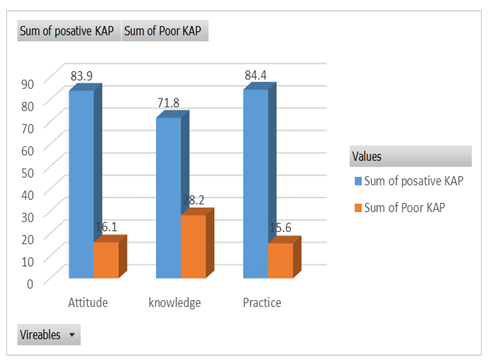
Thirty questions were asked for each respondent regarding cause, sources, and mode of transmission, clinical singes and prevention practices and treatment measures of rabies. The results were in a response of either, choosing the correct answer (had got one mark) or the wrong answer (had got zero mark) for each question. The number of questions for which the respondent gave correct responses was counted and scored. This score was then pooled together and the mean score was computed to determine the overall KAP of respondents, Respondents who score greater than or equal to the mean value (Mean=14.224, SD=1.29) grouped to good KAP and less than the mean value Poor KAP level. The data show that about 308 (80%) of the study participants were found to have good KAP about rabies and 76(20%) were found to have poor KAP level. Knowledge, attitude and practice related to rabies 71.8%, 83.9% and 84.4% of participants had good knowledge, positive attitude and good practice towards rabies respectively, as shown in Figure 2.
Discussions
This study describes the assessment of Knowledge, Attitude, and Practice of Dog owners to Rabies in Dilla Town of Sothern Ethiopia. The study revealed that the total mean score for Knowledge, attitude, and practice was 71.8%, 83.9% and 84.4% respectively. Socio-demographic characteristics of respondents showed that the majority of respondents (61.7%) were males. Regarding the age group, 199(51.8%) of the study participants were between 18-34 years old. Sex and age were not significantly associated with KAP towards rabies. There was a statistically significant association between occupation, educational level, religion and level of knowledge of respondents, with civil servants, and those with secondary and tertiary education having higher knowledge scores. This may be because they have higher educational backgrounds than those in other occupational categories in this study. The possible explanation could be educated person would have better information access and can easily understand the disease.
Dog owners in this study showed an acceptable level of knowledge, attitude, and practice on awareness, cause of rabies, mode of transmission of rabies, clinical signs of the disease, post- exposure prophylaxis, the importance of vaccination, and willingness to vaccinate own dog, but had poor knowledge on vaccination interval. Among all the respondents, there was a high level of awareness (84.6%) that rabies affects all worm blood animals and dogs are the most common rabies reservoir, that the disease is fatal, and that rabies can be prevented by vaccination. Which was slightly in agreement with the research findings that were conducted in and Around South Gondar, North West Ethiopia [17]. However, the current investigation is higher than other reports from Wukari Metropolis, Taraba State Nigeria [18].
Moreover, dog owners had special attention than those non dog owners because they are highly aware of the disease. Those dog owners have got good awareness about actions to be token after first aid, care of dogs, and this may help them to have good practice about rabies prevention and control [19]. The study participants were aware of rabies from different sources, half of the respondents (53.4%) obtained information about rabies from formal and the other half of respondents from several sources of informal mass media, family, teachers, traditional healers, professionals and friends were the main sources of information for them about rabies and they hadn’t ever got training from government- authorized institutions.
Most respondents 241(62.0%), described the virus as the causative agent of rabies and transmitted through dog bite and saliva contact with an open wound [20]. About 25.3% of respondents identify symptoms was salivation
28.1% Sudden change in behavior correctly, 19.5%Water phobia and 27.1% paralysis. The majority of the sample population 83.3% rabies was not easily treated after the onset of clinical sign, 73.7% knew about post-exposure prophylaxis, 77.3% that rabies could be prevented by vaccination, 19.5% only know about vaccination interval for pets, 83.6% of respondents know about the importance of vaccination and willing to vaccinate their own dog. Less than one-half of the total number of dogs are kept in cages and the others are roam freely. The practice of allowing dogs to roam freely would facilitate the spread of rabies in the animal population and would make rabies a continuing zoonotic threat to humans.
Above half of the respondents 56.8% Treat their own animals after being bitten by rabid dog and 217(56.5% of respondents took immediate action by tying their rabid animals. about 264(68.8%) vaccinate their dog against rabies and 31.2% of the respondents did not vaccinate their dogs due to a lack of knowledge and low vaccine availability [21]. Those dogs are not routinely vaccinated in these areas, increasing the risk of transmission of rabies from animals to humans. Most participants (87.8%) responded that they would seek treatment from a doctor or health center after first aid and that they would go immediately following exposure. Few of the respondents 1.8% expose to rabies infection, dog owners were comparatively at greater risk for contracting rabies due to high rate of man to dog contact, their lack of knowledge and awareness of the various clinical signs of rabies in animals. Practices regarding immediate action taken after bite of humans by rabid animals were generally good, and 171(45.5%) were washed with soap and water, 128(33.3) they don’t know, 64(16.7%) applying herbal extract and 21(5.5%) ties wound with cloth. The majority of the respondents indicated their willingness to vaccinate their dog and believe that mass vaccination programs and depopulation of stray dogs are effective measures for controlling the disease in Dilla town. The majority of respondents (80.5%) don’t believe that castration decreases the incidence of disease [22].
Limitation
some of the dog owners were not interested in giving information, because they feel that whatever input they are giving in the questionnaire is true and will benefit the survey taker. In questionnaires, some respondents ignore certain questions. But data collected using participatory epidemiology was completed.
Conclusion and Recommendations
In conclusion, this study has shown that the KAP of dog owners about rabies is good in Dilla town. The majority of the dog owners having their dogs vaccinated against rabies, knew that virus as the causative agent of rabies and is transmitted through dog bite and saliva contact with an open wound, seek treatment from a doctor or health center after first aid, crossing a river before 40 days after dog bite increases the severity of the disease and that rabies could be prevented by vaccination. Despite this fact, still, there were some KAP gaps in dog owners regarding the modes of rabies transmission, clinical signs of rabies, prevention methods after a suspected animal bite, the first action taken in the home after being bitten by a suspected animal (wound washing with soap and water) and attitude to anti- rabies vaccine and vaccination interval. Educational status, occupational status and household size of the respondents were the variables found to be significantly associated with KAP on rabies. Sex and age were doesn’t significantly associated with KAP on rabies. There are improved data accesses from participatory engagement as compared with questionnaire-based interviews with individual dog owners.
Therefore, based on the above conclusion the following recommendations are forwarded: Provide periodic education and training to raise dog owners’ knowledge on rabies and provide accurate information targeted to people who have lower educational levels. Design accurate and urgent dog owner Community- based rabies education programs with an emphasis on the mode of transmission, clinical signs, and immediate benefits of wound management and the need for Anti-rabies vaccine following dog bite. Increase the availability and distribution of dog rabies vaccines in different districts.
Acknowledgement
Praise is to Almighty God, who helps and enables me to finish my duties. I would like to extend many thanks to my mentors Dr. Haileleul Negussie for his constructive comments and support. I also want to express my appreciation to my supervisor Mr. Belayneh Obisie Director of Gedeo Zone animal health, for his encouragement and invaluable provision of materials, and thanks to Dilla town agricultural office, that assisted me during data collection.
References
-
Rupprecht C, Hanlon A, Slate D (2004) Oral vaccination of wildlife against rabies: opportunities and challenges in prevention and control 119: 173-84.
-
Alan JC (2005) Prevention and Therapy of Virus Infection. (ed.), In: Principles of Molecular Virology. Elsevier Academic Press, Burlingtonpp, United States, pp: 1-20.
-
Cleaveland S, Fevre EM, Kaare M (2002) Estimating human rabies mortalities in the United Republic of Tanzania from dog bites injuries. Bulletin of World Health Organization 80(4): 304-310.
-
Parry E, Godfrey R, Mabey D, Gill G (2004) Principles of medicine in Africa. In: 3rd (Edn.), Textbook of Tropical Surgery, Cambridge University press, Singapore, pp: 714-721.
-
Hampson K, Coudeville L, Lembo T, Sambo M, Kieffer A, et al. (2015) Estimating the global burden of endemic canine rabies. PLoS Negl Trop Dis 9(5).
-
Serabe SG, Tadesse KA, Yizengaw HA, Tamrat SM (2014) Study on community knowledge, attitude and practice of rabies in and nearby Gondar town, North West Ethiopia. J Public Health Epidemiol 6(12): 429-435.
-
World Health Organization (2013) WHO Expert Consultation on Rabies: second report, Switzerland, WHO Geneva.
-
Jibat T, Hogeveen H, Mourits MCM (2015) Review on dog rabies vaccination coverage in Africa: a question of dog accessibility or cost recovery? PLoS Negl Trop Dis.
-
Ali A, Ahmed EY, Sifer D (2013) A study on knowledge, attitude, and practice of rabies among residents in Addis Ababa, Ethiopia. Ethiop Vet J 17(2): 19-35.
-
Alie A, Assefa A, Derso S, Ayele B (2015) Assessment of knowledge, attitude and practice on rabies in and around Debretabor, South Gondar, Northwest Ethiopia. Intl J Basic Appl Virol 4(1): 28-34.
-
Guadu T, Shite A, Chanie M, Bogale B, Fentahun T (2014) Assessment of knowledge, attitude and practices about rabies and associated factors: in the case of Bahir Dar town. Global Veterinaria 13(3): 348-54.
-
Yimer E, Newayeselassie B, Tefera T, Mekonnen Y, Bogale, Y, et al (2002) The situation of Rabies in Ethiopia: A retrospective study 1990-2000. Ethiop J Hlth Dev 16(1): 105-112.
-
Sambo M, Lembo T, Cleaveland S, et al (2014) Knowledge, attitudes and practices (KAP) about rabies prevention and control: a community survey in Tanzania. PLoS Negl Trop Dis 8(12).
-
Bureau TRH(2015) Tigray region health profile report. Ethiopia.
-
Central Statistical Authority (CSA) (2008) Population size and characteristics, SNNP statistics, Central Statistical Authority, Addis Ababa, Ethiopia, pp: 8-285.
-
Thursfield M, (2005) Survey in Veterinary Perspectives and Issues, 26: 154-161. Epidemiology, (edn.), Blackwell Science Limited, Cambridge, US pp: 297-302.
-
Amare B, Desalegn M, Abraham T (2020) Rabies: Knowledge, Attitude and Practices in and Around South Gondar, North West Ethiopia Diseases 8(1): 5.
-
Gino C, Yoshihide O, Koji K, Hiroko Y, Bandula R, et al. (2009) A pilot study on the usefulness of information and education campaign materials in enhancing the knowledge, attitude and practice on rabies in rural Sri Lanka. Journal Infect Developing Countries 3(1): 55-64.
-
World Health Organization (2002) Strategies for the control and elimination of rabies in Asia. a. Geneva: The Organization Report of a WHO interregional consultation.
-
Tadesse G, Anmaw Sh, Mersha Ch, Basazinew B Tewodros F (2014) Assessment of Knowledge, Attitude and Practices about Rabies and Associated Factors: In the Case of Bahir Dar Town Global Veterinaria 13 (3): 348-354.
-
Eshetu Y, Betelhem N, Girma T, Yared M, Yosef, et al. (2002) Situation of rabies in Ethiopia, a retrospective study1990-2000. Ethiopian Journal of Health Development 16(1): 105-112.
-
Deressa A, Ali A, Beyene M, Newaye B, Yimer E (2010) The status of rabies in Ethiopia: A retrospective record review. Ethiopian J ournal of Health Development 24: 127-132.
- Epidemiological Surveillance and Rumors on Social Media
- Awareness and Treatment of Uncontrolled Hypertension in US Overweight/Obese Youths Aged 16–24 Years, NHANES 2021–2023
- Strengthening EPI Through Parental Engagement: Lessons from Dhaka Slums for IA-2030
- Mothers Knowledge of the Prevalence, Causes, Effects, Prevention and Control of Diarrhoea among Children in Ife East Local Government Area, Ile Ife, Osun State, Nigeria
- Covid-19 Reinfections Case Series from October 2023 to October 2024 in A General Medicine Office in Toledo (Spain)
- Water Contact! One Risk Too Many: Risk Factors Associated with Schistosoma haematobium infection in Osun State, Nigeria