
Back from the FutureHow to Deal with Technological Excitement
The advent of new tools always provokes an uncontrolled and irrational enthusiasm that often leads, initially, towards pointless outcomes and immature solutions. Although is undeniable the value of experimentation, design education specifically should teach how to channel that enthusiasm into an optimized exploratory process. Looking at the present, where desktop manufacturing, electronics or digital tools are fully accessible to the masses, we observe an increase of poor creative material populating the web; this phenomenon could be explained by the fact that nowadays the spread of a newly accessible resource is usually faster than the time needed to understand its real meaning. The topic of this research paper focuses on how deconstruction and oversimplification could represent methods to help students transitioning from enthusiasm to awareness.
Premise
Do you remember the movie “Back to the Future” featuring Michael J Fox running back and forth between past and future to change the course of the events and fix the present? Well, now more than ever, a time machine would be a most needed tool to keep progress free to advance but, simultaneously, have the opportunity to reflect and digest the value of certain innovations. The advent of new tools always provokes an uncontrolled and irrational enthusiasm that often leads, initially, towards pointless outcomes and immature solutions. Although is undeniable the value of experimentation, design education specifically should teach how to channel that enthusiasm into an optimized exploratory process. Looking at the present, where desktop manufacturing, electronics or digital tools are fully accessible to the masses, we observe an increase of poor creative material populating the web; this phenomenon could be explained by the fact that nowadays the spread of a new accessible resource is usually faster than the time needed to understand its real meaning. The topic of this research paper focuses on how deconstruction and oversimplification could represent methods to help students transitioning from enthusiasm to awareness.
About Enthusiasm
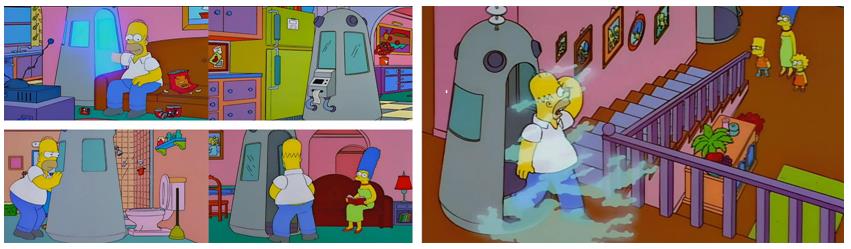
Neuropsychology defines arousal a particular psychological and physiological state of being reactive and respondent to excitement. A little kid compulsively attracted by his or her new toy or a person shopping impulsively, both behaviors are driven by excitement, a thrilling push to experience something new without any particular plan or rationale. As we know per our own childhood or per our attentive observation as parents, the enchantment and fascination for a new doll or toy car rarely last for a very long time. People who tend to purchase impulsively, for example, are moved by the excitement for a new product or price and that feeling takes around 20 minutes to cool off. Paloma Vasquez, in her book The Psychology of Social Shopping, explains: “In a state of excitement or arousal, people think and behave very differently. Emotional states trump rational thinking”. Excitement can be identified then as a powerful and temporary factor that causes people to live in the moment without evaluating any past experiences or considering future possibilities. People’s reaction to new tools and innovative technologies is following similar trajectories [1]. The Newbie Syndrome, theorized in 2001, tells us that “Internet users intrigued by-or enamored of- the new technology, develop an intense infatuation with the online world during the early period of their usage. When users initially discover the Internet, they react like children with a new toy. At first, they devote an inordinate amount of time and energy exploring the myriad aspects of the Internet. They dive in, perhaps ignoring other activities or responsibilities, but this initial enthusiasm wanes over time as newcomers become more familiar and experienced with cyberspace”. During an episode of the animated sitcom “The Simpsons”, Homer buys a matter teleporter from Professor Frink’s garage sale. The series of ways he uses the machine are hilarious (Figure 1) and the silly enthusiasm for the newly purchased item functions as the effective cynic mirror of our present approach to technology.
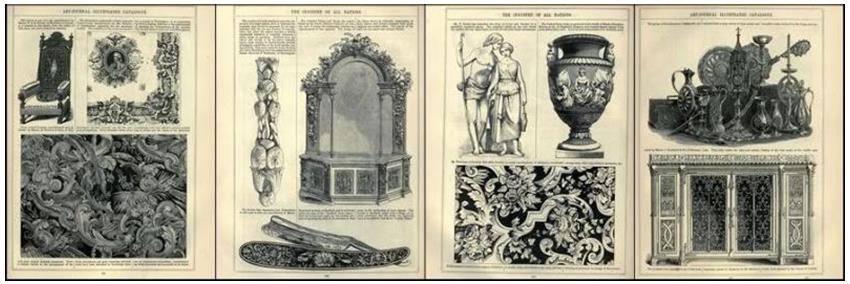
wants to attribute those consequences to the initial enthusiasm provoked by the new tool and the inability to digest the new potential without a structured approach. Heading back at the Industrial revolution, time in history globally recognized as the cradle of modern design, we can also recognize some elements that confirm our thesis. Looking at the Catalogue of 1851 London’s Great Exhibition, we can observe that the vibrant interest in manufacturing and the uncontrolled desire to be a page of that chapter, made the passage from Victorian ornamentalism to Industrialization quite drastic. We are here analyzing something different from the Arts and Craft movement rejection and hard acceptance of new technologies; we are on the contrary pointing the opposite, an excessive vigor and passion for pursuing and following the new wave. Most of the products depicted in the catalogue (Figure 2) were a clear mix between past and future, not entirely rooted in tradition to be identified as historic mementos neither enough aesthetically advanced to represent projections of the tomorrow.
Oversimplification and Deconstruction
This research paper is proposing the adoption of deconstruction and oversimplification as methods to critically debate about technological innovation and to frame the above-mentioned enthusiastic initial phase. Through the presentation of different case studies, we want to illustrate how deconstructing and oversimplifying technologies we can reestablish a proper relation between a certain innovation and its understanding.
About Oversimplification
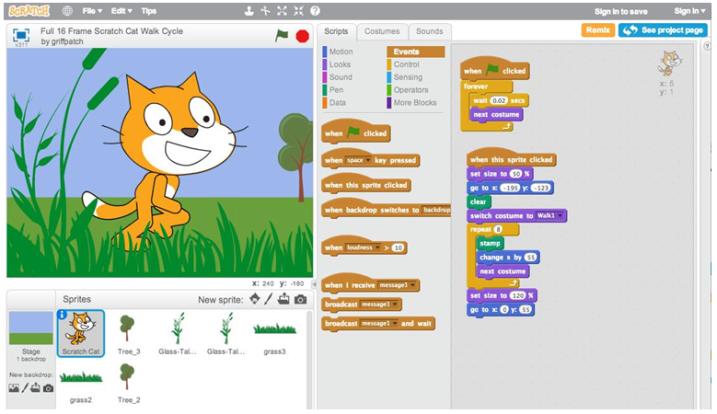
Part of the work done in this direction of oversimplification is based on the challenge to read a particular technology through its reduction to basic elements or modules. The online platform Scratch (Figure 3), developed by the MIT Media Lab’s Lifelong Kindergarten Group, looks at computer programming focusing on the easiest way to explain and utilize coding to create interactive digital environments. Their philosophy is not advancing the state of the art toward more high-performance versions but rather reconfigure the existent to better understand its nature. For this investigation is quite relevant what Ives Behar said referring to the One Laptop Per Child project: “human experience oriented design rejects unnecessary features while technophiles are driven by the mere excitement for the technology itself”. The idea to downgrade what is available and, even if on a temporary level, to renounce to the luxury of technology is not an easy step and entail a pragmatic take on our natural inclination towards excitement [2].
In 2012, the TED talk “Forget Multitasking, Try Mono tasking” questioned about our capability to focus on individual tasks. The project presented was a series of mobile phone covers that, differently from the rest of the covers on the market, were placed on the front of the phone, limiting the possibilities offered by our smart devices (Figure 4). In this case, the downgrade is happening through an analog external element that interferes with the normal use of the phone but without totally denying the potential of a multitasking reality. Differently from similar approaches, like the “Punkt.” Phone by Jasper Morrison (Figure 5), the covers did not remove the desire for hyper-tasking but they just offer an opportunity to occasionally step back into a mono-mode and reflect on the potential of our technologies and the importance of single tasks and behavior.

Analyzing these case studies we can deduct that they describe two different ways to look at oversimplification. “Scratch” makes technology understandable by reducing its elements to the minimal significant unit using, therefore, reduction as main oversimplification filter. The “Mono-Covers” project uses limitation instead, limiting our choices to a limited number of possibilities.
About Deconstruction
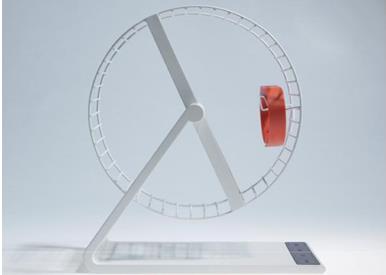
Deconstruction is another option for the understanding and discovery of new technologies. Considering, in this context, deconstruction as a critical outlook on the relation between matter and meaning, we will analyze in this section two case studies able to expand and clarify this concept. Mariya Sitnova, RISD’s Industrial Design former graduate student, in her project “Seamful Systems, Outsmarting your smart things”, created a set of interventions that hack into the "seams" in supposedly seamless experiences of "smart" and "connected" objects (Figures 6 & 7).


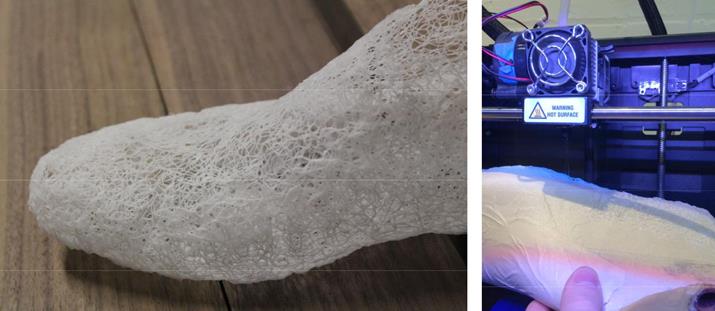
Two of the artifacts part of this thesis project are a hamster wheel for Fit Bit watches to cheat on community–based workout tracking systems and a pair of muting mittens to freely cheer your sports team without messing with home hand gesture controlled devices. These solutions are based on the isolation of the significance of a certain technology from its own technicality. Following critical and speculative design theories these objects, fully physical, are counter posed to our daily digital environment opening a discourse about the current nature of technology and how it fits in with human needs and values, to eventually arrive at the conversation about what this emerging technology should and should not be. In the experimental investigation conducted by Daniel Morgan, current RISD Industrial Design Graduate student, the relative complex system of a 3d printer has been reduced to the only extruder and the rest is managed by the user who, moving his/her hands underneath, is in charge of modeling the soft plastic filament (Figure 8). The 3d printer is used in this case as mere pouring system deconstructing its mechanical structure and focusing on the matter rather than meaning. The will to hack existing technologies is a way to discover, learn and deeply understand them. Moreover, during this last case study, is significant how a deconstruction process is helping to recalibrate values and meanings of production. John Ruskin, blaming mass production, defined the value of an object by the time spent on its creation and the ability to read on the object’s surface the sign of the human activity.
Conclusions
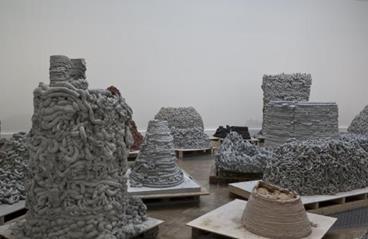
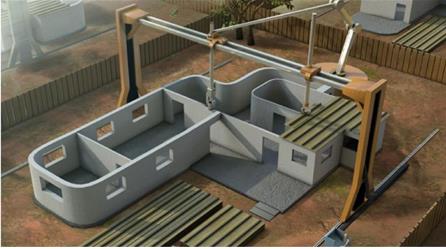
The sociologist Michel Maffesoli affirms, “society procures tools, appropriates them, uses them, tweaks them and diverts them”. Translating this idea using different parameters, we can say that an invention becomes innovation when it hits the masses and in that specific moment the excitement factor plays a crucial role. The rising of desktop 3d printing, and the consequent diffusion of machines and resources, represents an ideal example to describe and summarize the entire phenomenon mentioned so far. More than six years have passed since the first commercial desktop 3d printer appeared on the market. Everyone seems involved in the debate about the future of personal manufacturing and the enthusiasm around the topic was still very recently at its pick. However the majority of the projects displayed on the web is still very immature and there is a general lacking in quality of the artifacts and in the depth of contents. Is significant how, within this spectrum, the investigations that involved deconstruction and oversimplification have demonstrated the ability to expand the perspective around the new technology, endorsing its understanding and increase its potential. Just at the beginning of the 3d printing boom, in 2010, the sculptor Anish Kapoor presented in his work “Unconformity and Entropy” different concrete sculptures created by the layering of extruded concrete (Figure 9) [3]. The technic was shaped on the way additive 3d printers works, creating abstract forms by extruding a filament in a layer-by-layer process. Kapoor’s piece was a clear deconstruction of the 3d printing technology, remixing its addendum and providing a new vision for future applications. Few years later, the first experiments on large-scale printers appeared and the oversimplification of architectural elements gave birth to the first 3d printed houses (Figure 10). From art, design, coding and architecture, the concepts of oversimplifying and deconstruct new technologies seem working creating room for debate and understanding.
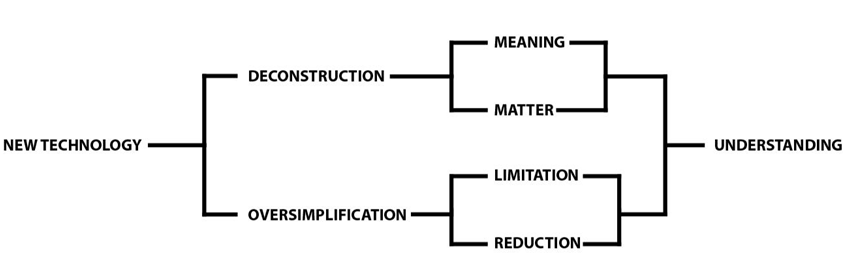
In conclusion, the use of deconstruction and oversimplification are methods that should help students dealing with the excitement for new technologies and foster a deeper awareness of their potential and their meaning (Figure 11).
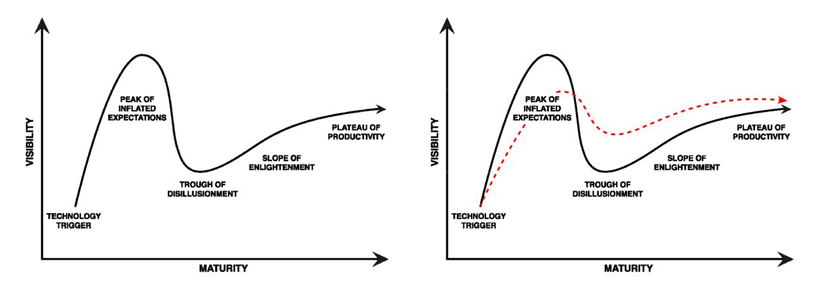
At the same time, a better understanding and a careful analysis of a new technological context could open up a dialogue on the socio-economical position of the technology itself. On the one hand, in fact, an excessive enthusiasm could provoke and favorite a sort of technological determinism and, therefore, see society's technology as the element that drives the development of its social structure and cultural values. On the other hand, following Gartner’s Hype Cycle for emerging technologies (Figure 12), a better management of the initial enthusiastic phase could improve new technologies’ survival rate operating directly between the “peak of inflated expectations and the “trough of disillusionment” and helping to proceed smoother towards the “slope of enlightenment” [4, 5, 6, 7].
References
-
Zak Elana (2014) The Psychology Behind Impulse Shopping. The Wall Street Journal.
-
Mirande Yves, Nicolas Henchoz (2014) Design for Innovative Technology: From Disruption to Acceptance.
-
Kapoor Anish (2009) Unconformity and Entropy. Turner, Madrid.
-
Gartner Inc. Hype Cycle methodology.
-
Alter Norbert (2005) L'innovation Ordinaire. Presses Universitaires De France, Paris.
-
Careaga Andrew (2002) Hooked on the Net: How to Say "good Night" When the Party Never Ends. Kregel Publications, Grand Rapids, MI.
-
Ronald T Labaco (2013) Out of Hand: Materializing the Post digital. Black Dog, London.
- The Expanding Landscape of Road Rage: A Systematic Review of Conflicts Involving Drivers, Pedestrians, and Micromobility
- Validating Cognitive Models of Royal Navy Performance on Control Systems
- Comparing Standard and State-of-the-art Firefighter Coats on Postural Balance and Gait in a Live Burn Environment
- Investigating the Integration of Telemedicine into Clinicians Workflow: A Review of Methods
- Risk Assessment of Ergonomic Factors in a Textile Firm by RULA, REBA and Fine Kinney Methods
- Impact of Self-Esteem Training on Individuals with Disabilities Aged 17-30