
Effects of Heavy Toxic Metals on Human Health and Methods of Determining their Content in Tea Sheets and Vegetables Grown in the Lankaran-Astara Region of the Republic of Azerbaijan
This paper examines the impact of heavy toxic metals on human health. It has been shown that the long-term accumulation of heavy metals in the body can lead to a slowdown in the development of physical, muscle and neurological degenerative processes that mimic certain diseases, such as Parkinson’s disease and Alzheimer’s disease. The transfer of heavy metals from ecosystem to human is also analyzed. It is noted that some heavy metals generate free radicals, which can lead to oxidative stress and cause other cellular damage, a carcinogenic effect, affecting a number of proteins. As a result of the measurement of mass concentrations of zinc, cadmium, lead and copper by inversion voltammetry after preliminary preparation of samples by wet mineralization, it was found that the content of concentrations of Zn, Cd, Pb, Cu in tea flashes was 3.50 ± 1.40 mg/kg, 0.03 ± 0.038 mg/kg, 0.370 ± 0.130 mg/kg, 3.20 ± 1.10 mg/kg, respectively Low Zn and Cd 0.56 ± 0.22 mg/kg and 0,0012 ± 0,0048 mg/kg, respectively, were found in fresh tomatoes, and Pb and Cu 0,013 ± 0,0045 mg/kg and 0.57 ± 0.21 mg/kg, were found in fresh cucumbers respectively. The content of mass concentrations of toxic metals Cd, Pb in all analysed samples of tea leaves and vegetables (tomatoes and cucumbers) is less than their permissible levels specified in regulatory documents in force in the Republic of Azerbaijan.
Introduction
The importance of food safety issues increases every year, since ensuring the proper quality of food raw materials and foods is one of the main factors determining the absence of danger to human health when eating them. The hygienic food safety management is one of the priorities of the state policy in the field of healthy nutrition and is a prerequisite for ensuring the sanitary and epidemiological well-being of the population [1, 2, 3].
In modern conditions, food products contain different amounts of contaminants, in some cases, mainly below the level of established hygienic standards [4]. However, some contaminants in specific types of foodstuffs, even within acceptable levels, exert a strain on the human body [5]. Long-term chemical loads of low intensity are one of the most significant health risk factors that reduce the body’s resistance to other adverse environmental and social factors [1, 6, 7, 8, 9, 10].
Metals are natural components that exist in the ecosystem. These are substances with high electrical conductivity that voluntarily lose their electrons, forming cations. Metals are found throughout the earth, including the atmosphere, Earth’s crust, water bodies, and can also accumulate in biological organisms, including plants and animals. Out of 35 existing natural metals, 23 have a high specific gravity greater than 5 g/cm3 with an atomic weight greater than 40.04 and are commonly referred to as heavy metals [11, 12]. These metals, commonly referred to as heavy metals, include antimony, tellurium, bismuth, tin, thallium, gold, arsenic, cerium, gallium, cadmium, chromium, cobalt, copper, iron, lead, mercury, manganese, nickel, platinum, silver, uranium, vanadium and zinc [1, 12]. This category of metals, called heavy metals, is known not only for their high density, but most importantly for their harmful effects on the ecosystem and living organisms [13]. Some of these heavy metals, such as cobalt, chromium, copper, magnesium, iron, molybdenum, manganese, selenium, nickel and zinc, are important nutrients that are necessary for various physiological and biochemical functions in the body and can lead to deficient diseases or syndromes, in case of deficiency [1, 14], however, at high doses they can cause acute or chronic toxicity. These heavy metals spread in the environment through several natural processes, such as volcanic eruptions, spring waters, erosion and bacterial activity, as well as through anthropogenic activities that include fossil fuel combustion, industrial processes, agricultural activities, and feeding [15]. These heavy metals accumulate in living organisms and the human body as a result of various processes that cause adverse effects. In the human body, these heavy metals are transported and separated into cells and tissues of the body, binding to proteins, nucleic acids destroy these macromolecules and disrupt their cellular functions. Thus, the toxicity of heavy metals can have several consequences for the human body. This can affect the function of the central nervous system, leading to mental disorders, damage blood components and can damage the lungs, liver, kidneys and other vital organs, contributing to the development of a number of diseases [1, 2, 16]. In addition, the long-term accumulation of heavy metals in the body can lead to a slowdown in the development of physical, muscle and neurological degenerative processes that mimic certain diseases, such as Parkinson’s disease and Alzheimer’s disease [16]. Moreover, repeated prolonged contact with some heavy metals or their compounds can even damage nucleic acids, cause a mutation, mimic hormones, thereby disrupting the endocrine and reproductive system and ultimately leading to cancer [1, 9, 17].
Heavy metals are naturally present in our environment. They are present in the atmosphere, lithosphere, hydrosphere and biosphere [9, 18, 19]. Although these heavy metals are present in the ecosystem, their human impact is due to various human anthropogenic activities. In the earth’s crust, these heavy metals are present in ores that are extracted during mining. In most ores, heavy metals such as arsenic, iron, lead, zinc, gold, nickel, silver and cobalt exist as sulfides, while others such as manganese, aluminum, selenium, gold and antimony exist as oxides. Some heavy metals, such as copper, iron and cobalt, may exist in the form of both sulfide and oxide ores. Some sulfides may contain two or more heavy metals together, such as chalcopyrite, (CuFeS2) which contains both copper and iron. During these mining operations, heavy metals are released from ore and dispersed in the open environment; left in the soil, transported by air and water to other areas [1, 9, 10]. In addition, when these heavy metals are used in industry for various industrial purposes, some of these elements are released into the air during combustion or into soil or water bodies in the form of effluents. Moreover, industrial products such as paints, cosmetics, pesticides and herbicides also serve as sources of heavy metals. Heavy metals can be transported by erosion, runoff or acid rain to different locations on soils and reservoirs.
People can directly contact heavy metals by consuming contaminated food, marine animals and drinking water, inhaling contaminated air in the form of dust vapors or as a result of occupational exposure at the workplace [20]. The chain of heavy metal contamination almost always follows this cyclic order: from industry to the atmosphere, soil, water and food, and then humans [18]. These heavy metals can be received through several routes. Some heavy metals, such as lead, cadmium, manganese, arsenic, can enter the body through the gastrointestinal tract; that is, through the mouth when eating food, fruits, vegetables or drinking water or other beverages. Others can enter the body by inhalation, while others, such as lead, can penetrate the skin.
Most heavy metals are distributed in the body through the blood to tissues [21]. Lead is transferred by erythrocytes to the liver and kidney, and then redistributed into teeth, bones and hair mainly in the form of phosphate salt [20]. Initially, cadmium binds to blood cells and albumin, and then binds to metallothionein in kidney and liver tissues. After it spreads from the blood to the lungs, manganese vapors diffuse through the lung membrane into the central nervous system (CNS). Organic manganese salts, which are fat soluble, are distributed in the intestine for fecal excretion, and inorganic manganese salts, which are water soluble, are distributed in the plasma and kidneys for kidney elimination. Arsenic is distributed in the blood and accumulates in the heart, lungs, liver, kidneys, muscles and nerve tissues, as well as in the skin, nails and hair.
It is known that some heavy metals generate free radicals, which can lead to oxidative stress and cause other cellular damage [22]. The mechanism of free radical formation depends on the type of heavy metal.
It is also known that some heavy metals have carcinogenic effects. Several signaling proteins or cellular regulatory proteins that are involved in apoptosis, cell cycle regulation, DNA repair, DNA methylation, cell growth and differentiation are targets for heavy metals [23]. Thus, heavy metals can cause a carcinogenic effect by affecting a number of these proteins. Moreover, the carcinogenic effects of some heavy metals have been associated with the activation of redox-sensitive transcription factors such as AP-1, NF-, and p53 through electron recycling by an antioxidant network. These transcription factors control the expression of protective genes that cause apoptosis, delay the proliferation of damaged cells, repair damaged DNA and strengthen the immune system [22]. Metal signaling of transcription factor AP-1 and NF-kB is observed in mitogen-activated protein kinase (MAP) pathways, where nuclear transcription factor NF-οB is involved in the control of inflammatory reactions, while AP-1 is involved in cell growth and differentiation [22]. The p53 protein is an important protein in cellular division because it protects the checkpoint of the cell cycle and controls cellular division [24]. Inactivation of p53 provides uncontrolled cell division, and thus disruption of the p53 gene is associated with most human cancers. In addition, transcription factors of the AP-1 family and NF-¼ B are involved in both cell proliferation and apoptosis, and also regulate p53. The free radicals produced by heavy metals within the cell selectively activate these transcription factors and may therefore indicate that cell proliferation or death may be associated with exposure to carcinogenic metals. There are various mechanisms of carcinogenesis caused by heavy metals. Some heavy metals, such as lead and manganese, can affect the brain and cause neurological toxicity, as shown in Table 1 [25].
When heavy metals enter the body through food or water, they acidify with the acidic environment of the stomach. In this acidic environment, they are oxidized to various oxidative states (Zn 2+ , Cd 2+ , Pb 2+ , As 2+ , As 3+ , Ag +, Hg 2+, etc.), which can easily bind to biological molecules, such as proteins and enzymes, to form stable and strong bonds. The most common functional group that binds heavy metals are thio groups (cysteine SH group and methionine SCH3 group). Cadmium has been shown to inhibit human thiol transferases such as thioredoxin reductase, glutathione reductase, thioredoxin in vitro binding to cysteine residues in their active sites [26].
In addition, the toxicity of heavy metals can be caused by replacing the metalloenzyme with another metal ion of similar size. Cadmium displaces zinc and calcium ions from zinc finger proteins and metalloproteins [27, 28]. For example, cadmium may replace zinc in some dehydrogenating enzymes, resulting in cadmium toxicity. Such a substitution can transform the enzyme structurally into an inactive form and completely alter its activity. These heavy metals in their ionic components, such as Pb 2+, Cd 2+, Ag + Hg 2+ and As 3+, form very stable biotoxic compounds with proteins and enzymes and are difficult to dissociate.
Heavy metals can also inhibit protein folding. This was first observed when heavy metals such as cadmium, lead, mercury and arsene were shown to effectively inhibit refolding of chemically denatured proteins [29]. It has also been noted that when the protein is incorrectly folded in the presence of heavy metals, the incorrectly folded protein cannot be salvaged in the presence of reduced glutathione or EDTA chelator. Order of heavy metals in terms of their efficiency in folding inhibition is mercury > cadmium > lead and correlates with relative stability of their monodentate complexes with imidazole, thiol and carboxylate groups in proteins [30].
Heavy metal can cause aggregation of proteins, since protein aggregation caused by arsenite is observed, and it is shown to depend on concentration. In addition, the aggregates contained a wide range of proteins enriched with functions related to metabolism, protein stacking, protein synthesis and stabilization [30]. It was shown that Saccharomyces cerevisiae cells (budding yeast) accumulate aggregated proteins after exposure to equal toxic concentrations of cadmium, arsenite and chromium (Cr (VI)), and the effect of protein aggregation is influenced by heavy metals in the following order: arsenic > cadmium > chromium [31]. Under natural conditions, the ability of these agents to initiate protein aggregation is likely to depend on the effectiveness of their cellular uptake/export and on their various methods of biological action.
The toxicity of heavy metals can have several health consequences in the body. Heavy metals can damage and alter the functioning of organs such as the brain, kidneys, lungs, liver and blood. The toxicity of heavy metals can be both acute and chronic. Prolonged exposure to heavy metals can gradually lead to muscle, physical and neurological degenerative processes similar to diseases such as Parkinson’s disease, multiple sclerosis, muscular dystrophy and Alzheimer’s disease. In addition, chronic long-term exposure to some heavy metals can cause cancer [1, 9, 17].
As shown in Table 1 [1, 2, 9], human exposure to heavy metals is associated with various forms of food and water consumption, inhalation of contaminated air, skin exposure and, most importantly, occupational exposure in the workplace. Although some heavy metals, such as iron and manganese, are necessary for certain biochemical and physiological processes in the body, increased levels in the body can have delusional health consequences. Most other heavy metals are generally toxic to the body at a very low level. The main mechanism of heavy metal toxicity involves the formation of free radicals that cause oxidative stress, damage to biological molecules such as enzymes, proteins, lipids and nucleic acids, DNA damage, which is the key to carcinogenesis, as well as neurotoxicity.
Despite the fact that in recent years the Republic of Azerbaijan has carried out tremendous efforts to ensure the food security of the population and to strengthen control over the safety of food and raw materials [1, 19, 32, 33, 34, 35], however, the issue of food safety remains urgent. Since according to the State Committee on Statistics for 2010- 2014 years from a disease of the endocrine system and nutrition, 3817 people died from metabolic disorders, an average of 954 people per year. And in 2015- 2019, only 7427 people died due to these diseases, that is, an average of 1485 people per year. Statistical data [36] show that in comparison with 2010- 2014, death from these diseases in 2015-2019 has increased on average 1.5 times. At the same time, the dynamics of the number of deaths from these diseases shows that as a result of preventive measures taken in Azerbaijan since 2017, their number is reduced annually by about 5.0- 10.0%.
Therefore, the need to monitor the safety of products, to study the possible negative impact of small doses of foreign substances on human health are considered as important scientific and practical tasks of hygiene. However, the vast majority of such studies are carried out mainly on models of large industrial cities and centers [8], while similar problems do not lose their relevance in regions with a relatively smaller population, such as the Lankaran-Astara region of Azerbaijan. From the point of view of specialization, a large part of such regions performs an agricultural function, while, as a rule, the level of satisfaction of food needs by local products increases among the population. This is particularly relevant as the region is mainly specialized in tea, vegetable and subtropical crops. as a result, the priority of the coming years is the intensive development of the domestic food and processing industry, quality control and safety of the final products.
However, the safety of food produced in different localities in the same region remains little understood in comparison to date. There are no scientific publications on the study of levels of contamination of local food products and raw materials, doses of toxic substances entering the body of the population living in certain regions of Azerbaijan.
Objects and Methods of Research
The subjects of the study were: • Green tea sheets grown, zoned and introduced in farms of the Lankaran-Astara region, which entered the Lankaran “MMS” for the production and processing of tea in the period May-September 2018-2019. Tea sheet varieties: Kolkhida, Azerbaijan-1, Azerbaijan-2, Azerbaijan-4, Farmanchay, as well as the local population formed as a result of prolonged natural pollination of various varieties and their products.
• Vegetables grown in the territories of the educational and experimental bases of Lankaran State University and the Lankaran experimental station of the Scientific Research Institute of Vegetable growing.
To determine heavy metals in food products, modern instrumental analytical methods are widely used, including inversion-voltammetric, atomic absorption, atomic emission and other methods, which are characterized by high sensitivity, but require specialized expensive equipment, qualified personnel and long-term sample preparation [37]. At the same time, in recent years, along with these methods, enzymatic, based on the inhibitory effect of toxic elements on the activity of enzymes [38] are being developed and introduced, the advantages of which are selectivity and sensitivity, which leads to the prospect of their use for the purposes of chemical-ecological monitoring and technological control. For example, peroxidases for Hg determination are already used in environmental monitoring of water, air and soils. (II), Cd (II), Bi (III), dehydrogenases - Ag (I) and Hg (II), ureases - Hg, Pb, Cd, Zn, Ag [37], however, enzymatic methods for assessing the content of toxic elements in agricultural raw materials and food products remain practically undeveloped, due primarily to analytical difficulties in determining metals in multicomponent matrices.
Taking into account simplicity and availability, we used the method of measuring the mass concentration of zinc, cadmium, lead and copper in all groups of food products and food raw materials and their processing products. Measurements of mass concentrations of zinc, cadmium, lead and copper are performed by method of inversion voltammetry after preliminary preparation of samples by “wet” mineralization [39]. The method of inversion voltammetry is based on the ability of the elements accumulated on the working electrode from the analyzed solution to dissolve electrochemically at a certain potential characteristic of each element. The maximum anode current of the cell to be recorded depends linearly on the concentration of the cell to be detected. The electroaccumulation process (electrolysis) on the working electrode takes place at a certain electrolysis potential for a given time. The process of electro-dissolving the elements from the electrode surface and recording analytical signals (in the form of peaks on a voltammeter is carried out at a changing potential).
The potentials of the maxima of the recorded anode peaks (analytical signals Zn, Cd, Pb against the background of formic acid are respectively: (-0.9 ± 0.10) V, (-0.6 ± 10) V, (-0.4 ± 0.10) V and (-0.1 ± 0.10) V. Repetition of experiments-3. The voltammetric TA analyzer complete with an IBM compatible computer is used for the measurements. The analyser package includes:- working electrode - mercury-film or silver modified; reference electrodes and auxiliary electrodes - silver chloride; cups of optically transparent quartz with a capacity of 20-25 cm3. Measurement range, values of accuracy, correctness, repeatability and reproducibility of the procedure at confidence probability P = 0.95.
Chemical interference affecting element determination results is eliminated during sample preparation. Processing of measurement results and obtaining of analysis result under conditions of repeatability are performed according to procedures specified in Table 1 [39]. Simultaneous determination of Zn, Cd, Pb, Cu is carried out at proportionate concentrations of elements. 10-12 cm3 of bidistilled water is added to cups and 0.2 cm3 of concentrated formic acid is added. Cups with the obtained background solution and electrodes are installed in the analyzer and two or three reproducible voltammerograms are recorded. Voltamperograms are treated.
Each cup is supplied with an aliquot of the sample prepared as per item 7.5 with volume of 0.1-1.0 cm3. The volume of the aliquot depends on the concentration of the determined elements, the first aliquot is made minimal. Preparation time is set to 30 seconds, sample parameters values: volume of aliquot - volume of sample added to each cup (0.1-1.0 cm3); mineralisate volume-1 cm3 and weight of the suspension - mass of the sample taken for combustion (0.1-1.5 g).
The work was carried out in the laboratory of ecology and food safety of the Department of Technology and Technical Disciplines of Lankaran State University and in the educational and research laboratory of the Department of Food Technology of Azerbaijan State Economic University.
Discussion of Results
The results of the analyses of toxic metals (Zn, Cd, Pb, Cu) in tea leaves and vegetables for 2018- 2019 years are shown in Table 1 and Figures 1 & 2.
| Name of raw materials and products | Content of mass concentrations, mg/kg | |||
|---|---|---|---|---|
| Zn | Cd | Pb | Cu | |
| Tea flashes (young shoots) | 3,50±1,40 | 0,03±0,038 | 0,370±0,130 | 3,20±1,10 |
| Chopped tea sheets | 2,90±1,10 | 0,029±0,029 | 0,110±0,040 | 3,10±1,10 |
| Fresh tomatoes | 0,56 ±0,22 | 0,0012±0,0048 | 0,017 ±0,0062 | 0,73 ±0,26 |
| tomato juice | 0,54±0,18 | 0,0013±0,0039 | 0,016 ±0,0039 | 0,74 ±0,18 |
| Marinated tomatoes | 0,32±0,05 | 0,0038 ±0,0015 | 0,024 ±0,0087 | 0,30 ±0,11 |
| Tomato paste, 30% | 2,90 ±1,10 | 0,014 ±0,0056 | 0,023 ±0,0084 | 1,40 ±0,50 |
| Fresh cucumbers | 0,68 ±0,27 | 0,00±0,0 | 0,013 ±0,0045 | 0,57 ±0,21 |
Table 1: Content of mass concentrations of toxic metals in tea sheets and vegetables.
As can be seen from the table, relatively high concentrations of Zn, Cd, Pb, Cu 3.50 ± 1.40 mg/kg, 0.03 ± 0.038 mg/kg, 0.370 ± 0.130 mg/kg, 3.20 ± 1.10 mg/ kg, respectively, were found in tea flashes, and the lowest content of Zn and Cd 0.56 ± 0.22 mg/kg and 0.0012 ± 0.0048 mg/kg, respectively.
In fresh cucumbers, Cd is not found at all. Differences in the content of toxic metal concentrations in processed tomatoes are due to the use of technological techniques. So in the production of pickled tomatoes, metals migrate from the raw material to the liquid medium, and at the same time the content of toxic metals increases with the concentration of tomato paste.
The content of Zn and Pb concentrations in young shoots (flashes) formed on tea bushes in the May-June months is 17.14% and 70.27%, respectively, more than in chopped sheets formed on tea bushes in the August-September months of the year. In our opinion, this is due to the physiological features of tea plants during the growing season. As for the content of Cd and Cu in young shoots (flashes) and chopped leaves, no particular differences are observed here.
The results of the analyses in Table 1 and Figures 1 & 2 show that the total concentrations of all tested toxic metals in tea leaves are slightly higher in order than in vegetables growing on soil.
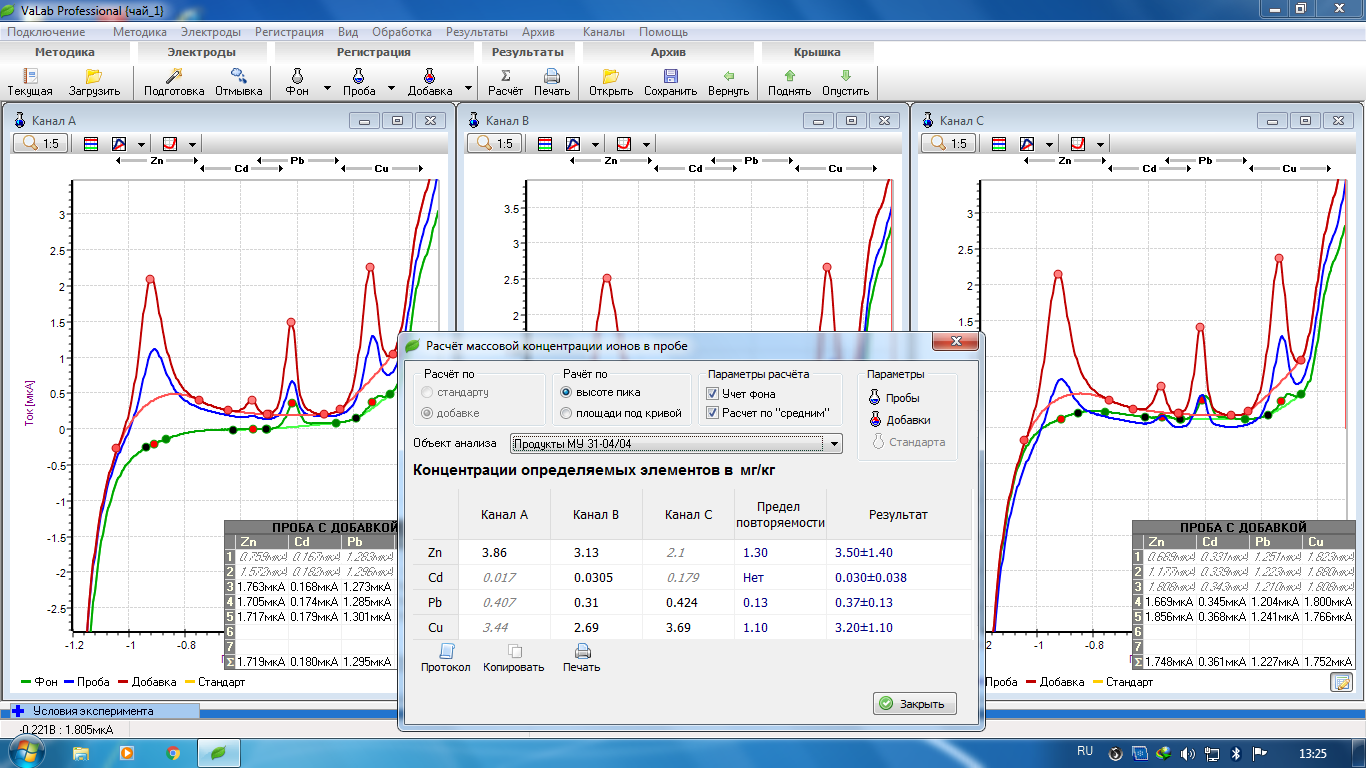
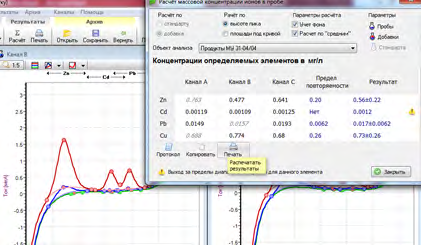
Voltamperogram content of mass concentrations of toxic metals Figures 1 & 2 also show that the processing of the mass concentration measurement results of each element in the analyzed sample is calculated automatically. In the course of performing measurements in three analyzer cells for each of the determined elements, three results of a single analysis of Х1, Х2 and Х3 are simultaneously obtained under repeatability conditions. The result of the analysis is taken as the average value of two single analysis results, the discrepancy between which does not exceed the repeatability limit. All this shows the reliability of the obtained results of the measurements of the mass concentration of each element in the analyzed sample and the acceptability of this technique.
According to the Sanitary and Epidemiological Rules and Norms of the Republic of Azerbaijan “Hygienic Requirements for Food Safety and Nutritional Value” [40], the permissible level of Cd, Pb in tea products and fruit and vegetable preserves is not more than 1.0 mg/kg and 10.0 mg/kg, respectively, and in fresh vegetables, not more than 0.03 mg/ kg and 0.5 mg/kg, respectively.
As the results of our studies show, the content of mass concentrations of toxic metals Cd, Pb in all analysed samples of tea leaves and vegetables (tomatoes and cucumbers) is less than their permissible levels specified in Figure 2 [40]. The content of mass concentrations of toxic metals Zn, Cu in fresh tomatoes and tea leaves is not regulated by these standards.
Conclusion
Partial analysis of existing literature and patent sources of information shows that some contaminants in specific types of food products, even within acceptable levels, put a strain on the human body. Heavy metals accumulate in living organisms and the human body as a result of various processes that cause adverse effects. In the human body, these heavy metals are transported and separated into cells and tissues of the body, binding to proteins, nucleic acids destroy these macromolecules and disrupt their cellular functions.
As a result of the studies, it was found that relatively high concentrations of Zn, Cd, Pb, Cu 3.50 ± 1.40 mg/kg, 0.03 ± 0.038 mg/kg, 0.370 ± 0.130 mg/kg, 3.20 ± 1.10 mg/kg, respectively, were found in tea flashes, and the lowest content of Zn and Cd 0.56 ± 0.22 mg/kg and 0.0012 ± 0.0048 mg/kg respectively, fresh tomatoes, Pb and Cu 0.013 ± 0.0045 mg/ kg and 0.57 ± 0.21 mg/kg respectively were found in fresh cucumbers.
References
-
Мaharramov МA, Maharramova SI, Kazimova IH (2019) Safety of raw materials and food products. Textbook. Baku, University of Economics Publishing House, pp: 270.
-
Pavlov NN (2014) Risks to the health of children and adolescents due to contamination of food products and raw materials of local production. Dissertation for the degree of candidate of medical sciences. Specialty: 14.02.01. Volgograd, pp: 150.
-
Khotimchenko SA (2007) Using the concept of risk analysis in the food safety monitoring system. Khotimchenko SA, et al. Congress of hygienists and sanitary doctors, Prince I, pp: 1054-1055.
-
Vasilovsky AM (2012) Hygienic assessment of the safety of food raw materials in Central. Siberia AM, et al. Congress of hygienists and sanitary doctors 3: 57-60.
-
Frolova OA (2012) Hygienic assessment of the health risk of the population formed under the influence of contaminants polluting food products (on the example of the Republic of Tatarstan). Frolova OA, et al. Preventive medicine 3: 34-36.
-
Boev VM (2002) Chemical carcinogens of the habitat and malignant formations. Boev VM, et al. Medicine, pp: 344
-
Dolan SP, Nortrup DA, Bolger PM, Capar SG (2003) Analysis of dietary supplements for arsenic, cadmium, mercury and lead using inductively coupled plasma mass spectrometry. J Agric Food Chem 51(5): 1307-1312.
-
Litvinova OS (2013) Development of approaches to determining priority contaminants of chemical nature in food products in real time in order to optimize sanitary and epidemiological supervision. Litvinova OS: Autoref. dis.... edging. honey. Sciences, pp: 23.
-
Godwill AE, Paschaline UF, Friday NN, Marian NU (2018) Mechanism and Health Effects of Heavy Metal Toxicity in Humans.
-
FAO, IFAD, UNICEF, WFP, WHO (2017) The state of food security and nutrition in the world - 2017. Building resilience for peace and food security. Rome, FAO, pp: 120.
-
Duffus JH (2002) Heavy metals-A meaningless term? Pure and Applied Chemistry 74(5): 793-807.
-
Li F, Qiu ZZ, Zhang JD (2017) Investigation, pollution mapping and simulative leakage health risk assessment for heavy metals and metalloids in groundwater from a typical brownfield, middle China. International Journal of Environmental Research and Public Health 14(7): 768.
-
Bradl H (2002) Heavy Metals in the Environment: Origin, Interaction and Remediation. Vol. 6. London: Academic Press.
-
WHO, FAO, IAEA (1996) Trace Elements in Human Nutrition and Health. Switzerland: Geneva: World Health Organization.
-
Florea AM, Dopp E, Obe G, Rettenmeier AW (2004) Genotoxicity of organometallic species. In: Hirner AV, et al. (Eds.), Organic Metal and Metalloid Species in the Environment: Analysis, Distribution, Processes and Toxicological Evaluation. Heidelberg: Springer-Verlag, pp: 205-219.
-
Monisha J, Tenzin T, Naresh A, Blessy BM, Krishnamurthy NB (2014) Toxicity, mechanism and health effects of some heavy metals. Interdisciplinary Toxicology 7(2): 60-72.
-
Jarup L (2003) Hazards of heavy metal contamination. British Medical Bulletin 68(1): 167-182.
-
Krishna AK, Mohan KR (2016) Distribution, correlation, ecological and health risk assessment of heavy metal contamination in surface soils around an industrial area, Hyderabad, India. Environment and Earth Science 75: 411.
-
Maharramov MA (2017) Some aspects of ensuring the safety of food raw materials and food products. Collection of scientific news. Azerbaijan University of Technology, Ganja 1(23): 61-65.
-
Ming-Ho Y (2005) Environmental Toxicology: Biological and Health Effects of Pollutants, Chapter12. 2nd (Edn.), Boca Raton, USA: CRC Press LLC.
-
Florea AM, Busselberg D (2006) Occurrence, use and potential toxic effects of metals and metal compounds. Biometals 19: 419-427.
-
Valko M, Morris H, MTD C (2005) Metals, toxicity and oxidative stress. Current Medicinal Chemistry 12(10): 1161-1208.
-
Valko M, Izakovic M, Mazur M, Rhodes CJ, Telser J (2004) Role of oxygen radicals in DNA damage and cancer incidence. Molecular and Cellular Biochemistry 266(1- 2): 37-56.
-
Chen J (2016) The cell-cycle arrest and apoptotic functions of p53 in tumor initiation and progression. Cold Spring Harbor Perspectives in Medicine 6(3).
-
Neal AP, Guilarte TR (2012) Mechanisms of heavy metal neurotoxicity: Lead and manganese. Journal of Drug Metabolism and Toxicology, pp: 1-13.
-
Chrestensen CA, Starke DW, Mieyal JJ (2000) Acute cadmium exposure inactivates thioltransferase (Glutaredoxin), inhibits intracellular reduction of protein-glutathionyl-mixed disulfides, and initiates apoptosis. The Journal of Biological Chemistry 275(34): 26556-26565.
-
Hartwig A (2001) Zinc finger proteins as potential targets for toxic metal ions: Differential effects on structure and function. Antioxidant Redox Signal 3(4): 625-634.
-
Faller P, Kienzler K, Krieger-Liszkay A (2005) Mechanism of Cd2+ toxicity: Cd2+ inhibits photoactivation of photosystem II by competitive binding to the essential Ca2+ site. Biochemical Biophysics Acta 1706(1-2): 158- 164.
-
Sharma SK, Goloubinoff P, Christen P (2008) Heavy metal ions are potent inhibitors of protein folding. Biochemical and Biophysics Research Communication 372(2): 341- 345.
-
Tamas MJ, Sharma SK, Ibstedt S, Jacobson T, Christen P (2014) Heavy metals and metalloids As a cause for protein misfolding and aggregation. Biomolecules 4(1): 252-267.
-
Jacobson T, Navarrete C, Sharma SK, Sideri TC, Ibstedt S, et al. (2012) Arsenite interferes with protein folding and triggers formation of protein aggregates in yeast. Journal of Cell Science 125(21): 5073-5083.
-
(2017) Additional measures to improve food security in the Republic of Azerbaijan. Decree of the President of the Republic of Azerbaijan of February 10, 2017 Baku, pp: 4.
-
(2017) On ensuring the activities of the Food Safety Agency of the Republic of Azerbaijan. Decree of the President of the Republic of Azerbaijan of November 13, 2017 Baku, pp: 8.
-
(1999) The Food Act of the Republic of Azerbaijan. Decree of the President of the Republic of Azerbaijan of November 18, Baku.
-
(2019) The State programme for the socio-economic development of the regions of the Republic of Azerbaijan for 2019-2023 years. Decree of the President of the Republic of Azerbaijan of January 29, Baku.
-
(2020) Demographic and social statistics. Health, social protection, sports. Azerbaijan State Statistics Committee. Baku.
-
Demchenko Yu A (2018) Inhibition of lipase activity as a bioanalytic signal for determining the level of toxic elements in sunflower seeds and vegetable oils. Abstract of the dissertation for the degree of candidate of technical sciences. Specialty: 05.18.07. Voronezh, pp: 24.
-
Yablotsky KV, Shekhovtsova TN (2010) Determination of anions by enzymatic method. Journal of Analytical Chemistry 65(7): 5676-690.
-
(2009) MU 08-47/242. Writing products, food raw materials, feed and food products, dietary supplements, alcoholic beverages, soft drinks. Procedure for measurement of mass concentration of zinc, cadmium, lead and copper by inversion voltammetry using TA type analyzers. Tomsk, pp: 16.
-
(2010) Sanitary-epidemiological rules and regulations “Hygienic requirements for food safety and nutritional value”. Order No. 25 of the Ministry of Health of the Republic of Azerbaijan dated 30.04.2010. Baku.
- Pattern of Gonadal Hormones in Oral Testosterone-Supplimented Male Wistar Rats with Diabetes-Induced Hypogonadism
- Re-Evaluation of the Genotoxicity of Currently Used Food Dyes in Mouse Multiple Organs Via Continuous Administration by Drinking Using the Comet Assay
- Pharmacogenetics of Type 2 Diabetes Mellitus: Linking Genetic Variability to Drug Efficacy and its Cardiovascular Outcomes
- Exploratory Proteomic Profiling of SARS-CoV-2 Infected THP-1 Macrophages Reveals Alterations in Inflammatory Response and Cellular Metabolism
- Study of Genotoxicity of Hepatocarcinogens in Multiple Organs in Mice by Feeding and Drinking Using the Comet Assay
- Spirulina Polypeptides Inhibit the Growth of Human Lung Tumor (H460) Cells