
Nano Transfersomes Vesicles of Raloxifene HCl with Sorbitan 80: Formulation and Characterization
Lipid vesicles in the nano range with ionic and nonionic surfactants are known as transfersomes. The presence of surfactant in the bilayer structure makes the vesicles very flexible in nature and helps them to permeate through the stratum corneum. The purpose of this research was to develop and characterize a transfersomal formulation of raloxifene HCl to deliver it into systemic circulation through the transdermal route. The transfersomal formulation was prepared by the rotary evaporation method with phospholipon 90G and sorbitan 80. The particle size, zeta potential and polydispersity index (PDI) of the formulation were measured. The drug entrapment efficiency (EE%) of the vesicles was determined by an indirect ultracentrifugation method. Differential scanning calorimetry (DSC), ex-vivo skin permeation study, field emission scanning electron microscope (FESEM), high resolution transmission electron microscope (HRTEM) and confocal laser scanning microscopy (CLSM) study were carried out as parts of advanced characterization of the developed formulation. The vesicles were found to have an average particle size of 95.1±1.05nm with a PDI value of 0.162±0.01 and zeta potential of +17.62±0.29 mV. EE% was recorded up to 90.9±1.15. Transdermal flux (J = 4.66±0.79 μg/cm2hr) of the developed formulation showed a favorable value required for the formulation efficacy. FESEM and TEM study results proved the spherical and round structures of the vesicles. DSC showed that the raloxifene was in the non-crystal form and was enclosed in the lipid bilayer. CLSM study proved the distribution of the drug in the stratum corneum, viable epidermis and dermis with high fluorescence intensity. The developed nano transfersomes of raloxifene HCl with sorbitan 80 showed encouraging results and can be further investigated for in vivo efficacy.
Introduction
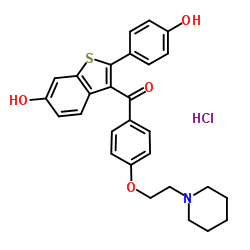
Raloxifene HCl (Figure 1) is widely used in hormone replacement therapy (HRT) for the post-menopausal women, as it plays an important role in reducing the risk of breast cancer while acting on estrogenic receptors of bone and liver [1]. It belongs to selective estrogen receptor modulator (SERM) class. It comes under class II of BCS. It belongs to benzothiophene class and its molecular mass is 510.05. It is selected as a potential alternative to HRT in postmenopausal patients and for treatment of osteoporosis and heart related disease while controlling the growth rate of breast cancer [2, 3]. The pharmacokinetic pathway of raloxifene encounters a hostile environment of the gastrointestinal tract and hepatic metabolism, due to which the bioavailability of this compound is reduced to 2% only [4, 5]. In modern day drug therapy, much more attention is paid to patient compliance while minimizing the intake of extra dose, reducing side effects and maximizing the therapeutic effect. The side effects associated with long term HRT are breast pain, uterine bleeding and chances of breast cancer [6]. The daily dosing of raloxifene HCl is 60mg to achieve its therapeutic plasma concentration. With the concern of reducing its side effects and to improve its bioavailability, a transfersomal system of raloxifene HCl was developed with sorbitan 80 as an edge activator. Transdermal drug delivery (TDD) system was selected as the delivery mode as this system has achieved huge attention in this aspect. Elastic liposome or transfersome as a novel transdermal drug delivery carrier has been reported to deliver drugs into systemic circulation while maintaining the patient compliance. Transfersomes consists of phospholipids (vesicle forming component) and a surfactant as an edge activator (EA) to impart flexibility and ultra-deformability within the vesicular structures [7]. In this work, we prepared transfersomes from phospholipid 90G and sorbitan 80 as an edge activator. Sorbitan-80, commercially also known as span-80, is a non-ionic surfactant with non-toxic profile and widely used in pharmaceutical industries. It has also transdermal potential to deliver the active pharmaceutical ingredients. There are various concepts behind the selection of non- ionic surfactants for the drug delivery, especially for transdermal applications. The hydrophilic-lipophilic balance of span 80 is between 4-8 which is compatible for the formation of the vesicles as reported by Uchegbu and group [8]. Lipid vesicles with non-ionic surfactants were firstly reported in cosmetic industries in the seventies [9]. Their use in drug delivery was studied over the time by many authors, drug targeting in the liver and spleen also have been reported for anticancer therapy [10].
Materials
Phospholipon 90G was purchased from Lipoid, Ludwigshafen GMBH, Germany. Raloxifene HCl was purchased from Binzhou Neophar Pharmaceutical Co. Ltd., China. Sorbitan 80 was purchased from Merck (Germany). All other reagents used in this study were of analytical grade. Ultrapure distilled water was used throughout the experiment.
Methods
Preparation of Non-Ionic Transfersomes
The transfersomal formulation (TS-80) was prepared by rotary evaporation method [11]. Briefly PC90G, sorbitan 80 (85:15 w/w ratio of PC90G and sorbitan 80) and raloxifene HCl were taken in a round bottom flask and dissolved in 2:1 (v/v) ratio of chloroform and methanol. The solution was subjected to a rotary evaporation at 40-44 0C (above the transition temperature of PC90G) at 60 RP under a reduced pressure. After the solvent evaporation, a thin film was formed, kept it overnight for drying, and then hydrated with water in an orbital shaker for one hour at 42 °C. The vesicles obtained were multilamellar in nature with large diameter; they were reduced in size by sonication (ULTRA sonic 28X, Yucaipa, CA, USA). The resulted vesicles were further reduced in size by subsequent passing through the nylon sandwich membrane filters of 0.45um and 0.22um. Similarly for confocal laser scanning microscopy study, 0.005% of 6-coumarin dye was added at the time of mixing with all the excipients and prepared in the same way as transfersomes formulation was prepared. The prepared vesicles were subjected to further characterization. Conventional liposomes were prepared with the same amount of PC-90G and raloxifene for the comparison with TS-80 formulation.
Particle Size, Distribution and Zeta Potential
The prepared transfersomes (TS-80) formulation was then subjected to size with size distribution and zeta- potential evaluation by DLS (Zetamaster ZEM 5002 and Zetasizer Nano-Z; Malvern Instruments, Malvern, UK). All the tests were performed in triplicates and reported in the form of (mean ± S.D).
Vesicular Morphology and Size
The vesicle morphology was analyzed by FESEM (JSM- 7800F, JEOL). The vesicles were uniformly spread on the glass cover slip, air dried and the specimen was coated with platinum by 208HR High Resolution Sputter Coater and examined at 3.0-5.0 kV with a magnification ranging from 500x to 10,000x. To confirm the size of the vesicles, the TS-80 formulation was subjected to a high resolution transmission electron microscope (HRTEM) (Tecnai G2 20, FEI). Few small drops of the prepared vesicles were placed on a copper film coated grid, with a diameter of 3.05 mm and 400 mesh size (Ted Pella, PELCO® 400 Mesh Grids). Phosphotungustic acid (PTA) was used for the staining, the concentration of PTA used was 1%, and pH was maintained at 7.1. After drying the specimen on the grid, it was viewed with 50,000x to 200,000x enlargements at an accelerating voltage of 200 kV respectively [12].
Drug Entrapment Efficiency (EE%)
Entrapment efficiency is defined as the drug entrapped in the bilayer of the vesicles. This was performed by an indirect method as described by Jain, et al. [11]. TS-80 formulations were centrifuged at 22,000 RPM for 30 minutes at 4 ͦC to separate the vesicles from the unloaded drug. After an appropriate dilution, the supernatant was analyzed by an HPLC method. All the measurement was performed in triplicate as reported in form of mean±SD.
Ex vivo Permeation and Deposition Study
Ex vivo release and permeation of raloxifene from the TS-80 formulations were measured by locally fabricated Franz diffusion cell. It’s having a receptor volume of 11 ml and a permeation area of 1.50 cm2. Rat abdominal skin was used as a permeation barrier. The receptor chamber was filled with a mixture of PBS 7.4 and ethanol in 60:40 (v/v) as a receptor medium maintained at 37 ± 10C and set at a stirring rate of 100 RPM. The skin samples used for permeation studies were carefully viewed to ensure for any irregularity or damage such as cervices or tiny shacks. On the day of the experiment, skin samples thawed at room temperature. Before starting the experiment skin samples were equilibrated for 30 min at
0.9% NaCl solution. Skin was placed over the Franz cell in such a manner by placing stratum corneum facing to the donor compartment while dermis layer faced the receptor compartment. A transdermal dose containing 1.2 mg of raloxifene which is entrapped in vesicles was taken, which is also a required therapeutic dose (Td) for the permeation study was placed in the donor compartment. As the study starts samples of volume 0.2ml was sampled out from the sample port from the receptor compartments from the diffusion cell at different time points 2, 4, 6 hours and immediately replenished with the same amount of receptor medium. After the experiment the skin was washed carefully and cut into small pieces, and deposited drug in the skin layer was taken out after the centrifugation [13].
Amorphous State of Raloxifene
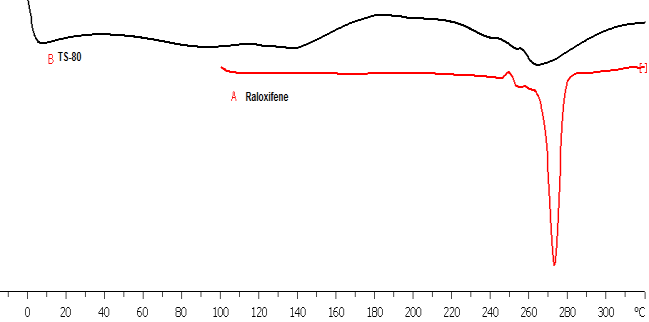
To confirm the amorphous state of raloxifene in the lipid bilayer, differential scanning calorimetry (DSC) R-1 system (Mettler Toledo, U.S.A) was used. Raloxifene crude sample and its formulation (TS-80 where the drug was entrapped) was scanned. The scanning was done up to 300°c at 10°c scanning rate. A blank alumina crucible was taken as the reference [14].
Confocal Laser Scanning Microscopy (CLSM) Study
The vesicles were loaded with coumarin-6 dye and subjected to 8 hours ex vivo skin permeation study. The skin samples were removed, washed and viewed on the z- axis for vesicular permeation in the dermis and epidermis of the skin. A conventional liposome and ethanolic solution of the drug were used in the above mentioned characterization studies for a comparative analysis. The treated area of the skin samples was cut vertically with sections b/w 8-12 μm thickness and confocal microscopy was utilized to scan optically and analyze the penetration of vesicles in different skin layer through Z-axis of a Leica TCS SPE Confocal Microscope (Germany) while using an argon (AR) beam using the green filter which showed emission at 502 nm and excitation at 488 nm. Relative fluorescence intensity and depth of penetration of the particles with coumarin-6 dye in the skin layers were detected and analyzed by CLSM with Leica (Advanced Fluorescence) LAS SF software [15].
Results and Discussion
Preparation Method of Transfersomes
The thin layer film method was selected to formulate the transfersomes (TS-80) because this technique is easy and results in high entrapment efficiency as compared to the other reported methods [16]. The formulation of interest had the composition of 350mg PC90G, 62mg sorbitan 80 and 15mg raloxifene HCl. This was finalized after conducting an optimization test with formulation compositions as independent variables and particle size, PDI, and transdermal flux (J) as response variables (data are not included here). The multilamellar vesicles obtained after the hydration were further reduced to unilamellar vesicles by probe sonication at controlled amplification and finally extruding through the sandwich membrane of 0.45 and 0.22 μm. Transfersomes known to have self-optimizing and flexible nature which penetrate the skin pore much smaller than the size of vesicles [17].
Size, PDI and Charge
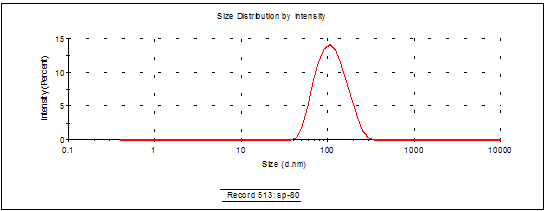
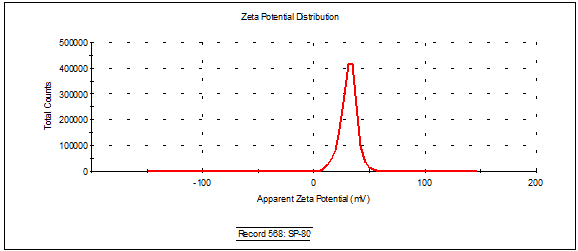
The size, charge, and PDI of the transfersome vesicles (TS- 80) were found to be 95.1±1.04 nm, +17.26±0.29 mV, and 0.162±0.01, respectively. These results were in good agreement with many reported literatures for transdermal drug delivery [13, 18]. The size range with 120nm is considered an optimized size of lipid vesicles required for effective transdermal delivery of many drugs [18]. The lower PDI value of the formulation shows the homogenous population of the particles, which also results in sufficient transdermal delivery. The zeta- potential of the non-ionic surfactant was dominated by drug and phospholipid PC-90G which is neutral. The ionic charge with higher negative or positive value of zeta potential is considered as optimum for creating enough dispersion in the formulation which can keep them stable. The pH of the formulation was recorded around 5.65. Size and zeta-potential of the formulation are shown in (Figure 2) and (Figure 3) respectively.
Vesicle Morphology and Particle Size
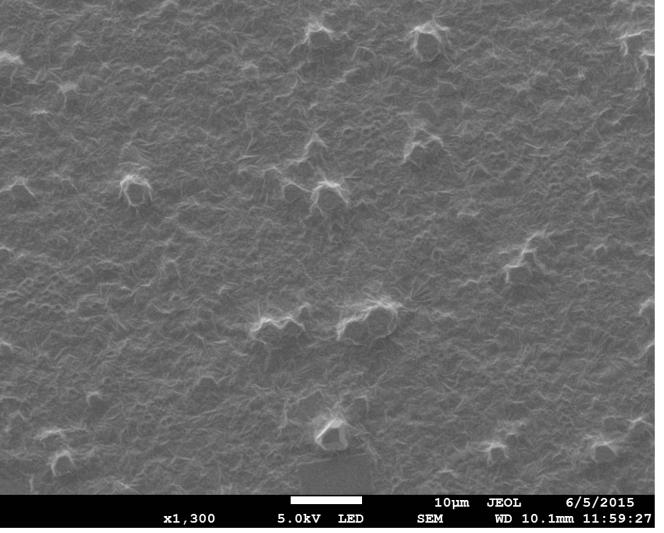
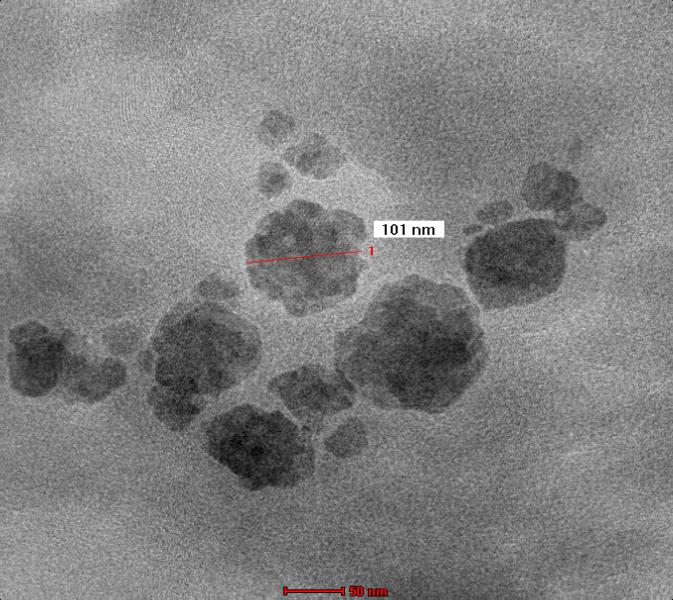
Their morphological structure and size of TS-80 formulation were further verified by FESEM (Figure 4) and HRTEM (Figure 5), respectively. The size of the vesicles was in the nano range with a narrow PDI (0.162±0.01) due to the presence of edge activator and the technique used for their preparation [19]. The shape was found to be spherical as shown by FESEM. HRTEM shows the unilamellar structure and size with the actual diameter.
Entrapment Efficiency
The average entrapment efficiency 0f TS-80 formulation was found to be 90.9±1.13%, which is optimum for effective drug permeation through the skin. The higher the entrapment the more chance of drug can be delivered through the skin [20].
Ex vivo Drug Permeation Study
The transdermal flux (J) of TS-80 formulation was 4.66±0.79 μg/cm2hour which was more as compared to the conventional liposomes (1.0±0.3 μg/cm2.hour). This enhanced permeation of transfersomes vesicles through the skin pores, much smaller than their own diameter, was due to their flexibility and ability to retain their integrity while, they undergo a dramatic change in shape compared to the conventional liposomes [7, 21].
DSC Measurements
The melting point of raloxifene was found to be 271.32°C, the peak of raloxifene was broadened when TS- 80 formulation was freeze dried and scanned as shown in (Figure 6). The amorphous state of the raloxifene was maintained even in the freeze dried form which confirms that raloxifene is entrapped within the lipid bilayer and remains in soluble state [22].
Confocal Laser Scanning Microscopy (CLSM)
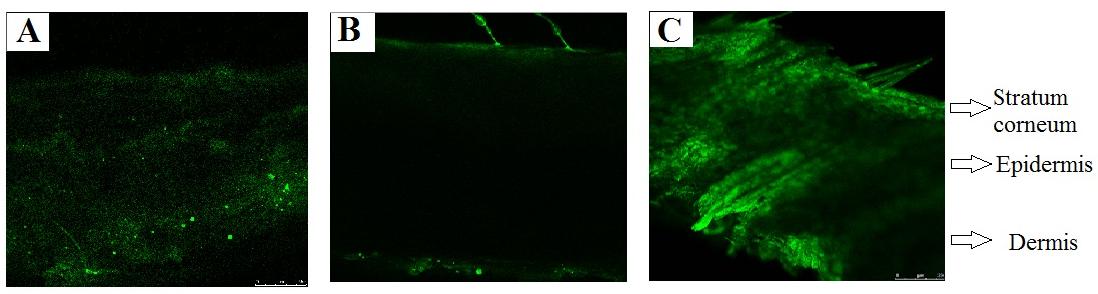
The penetration ability of the formulation (TS-80) tagged with coumarin-6 dye, showed that the vesicles were evenly distributed throughout the stratum corneum, viable epidermis and dermis with high fluorescence intensity (Figure 7). CLSM studies depicted an increase in both the depth of penetration and amount of fluorescence intensity as compared to the conventional liposomes (Figure 7B) and ethanolic solution (Figure 7C).
Conclusion
The rotary evaporation method utilized for the preparation of drug loaded transfersomes was found to provide the lipid vesicles with the desired range of particle size, PDI, zeta potential and ex vivo flux (J) for essential transdermal permeation and stability of the formulation. Advanced characterization of the developed formulation with DSC, SEM, HRTEM, CLSM confirmed transfersome vesicles with desired properties in agreement with the reported results for their transdermal efficacy [13, 23]. With these interesting in vitro results, the developed transfersomal formulation of raloxifene HCl with sorbitan 80 might be promising carriers for transdermal applications.
Acknowledgements
Authors are thankful to the Ministry of Education (MOE), Malaysia for providing the financial support through the Fundamental Research Grant Scheme (No. FRGS-13-091-0332).
References
-
Fabian CJ, Kimler BF (2005) Selective estrogen- receptor modulators for primary prevention of breast cancer. J Clin Oncol 23(8):1644-1655.
-
Cummings SR, Eckert S, Krueger KA, Grady D, Powles TJ, et al. (1999) The effect of raloxifene on risk of breast cancer in postmenopausal women: results from the MORE randomized trial multiple outcomes of raloxifene Evaluation. JAMA 281(23): 2189-2197.
-
Lufkin EG, Whitaker MD, Nickelsen T, Argueta R, Caplan RH, et al. (1998) Treatment of established postmenopausal osteoporosis with raloxifene: a randomized trial. J Bone Miner Res 13(11): 1747- 1754.
-
Hochner-Celnikier D (1999) Pharmacokinetics of raloxifene and its clinical application. Eur J Obstet Gynecol Reprod Biol 85(1): 23-29.
-
Moen MD, Keating GM (2008) Raloxifene: a review of its use in the prevention of invasive breast cancer Raloxifene. Drugs 68(14): 2059-2083.
-
Bergkvist L, Adami HO, Persson I, Bergstrom R, Krrusema BU (1989) Prognosis after breast cancer diagnosis in women exposed to estrogen and estrogen-progestogen replacement therapy. Am J Epidemiol 130(2): 221-228.
-
Cevc G, Schätzlein A, Richardsen H (2002) Ultradeformable lipid vesicles can penetrate the skin and other semi-permeable barriers unfragmented. Evidence from double label CLSM experiments and direct size measurements. Biochim Biophys Acta Biomembranes 1564 (1): 21-30.
-
Uchegbu IF, Florence AT (1995) Non-ionic surfactant vesicles (niosomes): Physical and pharmaceutical chemistry. Adv Colloid Interface Sci 58(1): 1-55.
-
Vanlerberghe G, Handjani-Vila RM, Berthelot C, Sebag H (1972) Chemistry, physical chemistry and application technology of surface-active substances. Reports from the VI. International congress for interfacial substances. Carl Hanser Verlag, Zurich, pp: 925.
-
Uchegbu IF, Vyas SP (1998) Non-ionic surfactant based vesicles (niosomes) in drug delivery. Int J pharm 172(1-2): 33-70.
-
Jain SK, Gupta Y, Jain A, Rai K (2008) Enhanced transdermal delivery of acyclovir sodium via elastic liposomes. Drug deliv 15(3): 141-147.
-
Mao X, Wo Y, He R, Qian Y, Zhang Y, et al. (2010) Preparation and characterization of different sizes of ethosomes encapsulated with 5-fluorouracil and its experimental study of permeability in hypertrophic scar. J Nanosci Nanotechnol 10(7): 4178-4183.
-
Mahmood S, Taher M, Mandal UK (2014) Experimental design and optimization of raloxifene hydrochloride loaded nanotransfersomes for transdermal application. Int J Nanomedicine 9(1): 4331-4346.
-
Gupta H, Aqil M, Khar RK, Ali A, Bhatnagar A, et al. (2010) Sparfloxacin-loaded PLGA nanoparticles for sustained ocular drug delivery. Nanomed Nanotech Biol Med 6(2): 324-333.
-
Zhang W, Gao J, Zhu Q, Zhang M, Ding X, et al. (2010) Penetration and distribution of PLGA nanoparticles in the human skin treated with microneedles. Int J Pharm 402(1-2): 205-212.
-
El Zaafarany GM, Awad GA, Holayel SM, Mortada ND (2010) Role of edge activators and surface charge in developing ultradeformable vesicles with enhanced skin delivery. Int J Pharm 397(1-2): 164-172.
-
Cevc G, Schätzlein A, Blume G (1995) Transdermal drug carriers: basic properties, optimization and transfer efficiency in the case of epicutaneously applied peptides. J Control Release 36(1-2): 3-16.
-
Verma D, Verma S, Blume G, Fahr A (2003) Particle size of liposomes influences dermal delivery of substances into skin. Int J Pharm 258(1-2): 141-151.
-
Agrawal AK, Harde H, Thanki K, Jain S (2013) Improved stability and antidiabetic potential of insulin containing folic acid functionalized polymer stabilized multilayered liposomes following oral administration. Biomacromolecules 15(1): 350-360.
-
Ahmed TA (2015) Preparation of transfersomes encapsulating sildenafil aimed for transdermal drug delivery: Plackett–Burman design and characterization. J liposome Res 25(1): 1-10.
-
Ahmed TA, Khalid M, Aljaeid BM, Fahmy UA, Abd- Allah FI (2016) Transdermal glimepiride delivery system based on optimized ethosomal nano-vesicles: Preparation, characterization, in vitro, ex vivo and clinical evaluation. Int J Pharm 500(1): 245-254.
-
Müller T, Schiewe J, Smal R, Weiler C, Wolkenhauer M, et al. (2015) Measurement of low amounts of amorphous content in hydrophobic active pharmaceutical ingredients with dynamic organic vapor sorption. Eur J Pharm Biopharm 92: 102-111.
-
Subongkot T, Wonglertnirant N, Songprakhon P, Rojanarata T, Opanasopit P, et al. (2013) Visualization of ultradeformable liposomes penetration pathways and their skin interaction by confocal laser scanning microscopy. Int J Pharm 441(1-2): 151-161.
- Effects of 5-HTP and Melatonin on the Sleep Cycle of Medical Students
- Adsorption of Bisphenol A on NH4OH- Modified Rice Husk and Sugar Cane Bagasse Biochar
- Comparative Assessment of the Reinforcement Efficiency of Palm Fruit Fibre and Coconut Fibre in High Density Polyethylene (HDPE) Matrix Composite
- Importance of Bio Compounds Naturally Present in Food with Functionality in Animal Metabolism
- Sub-Acute Study on the Cardiotoxic Effects of Monosodium Glutamate Ingestion in Albino Rat
- Weight Management and Its Natural Solutions: A Review