
Effect of Aqueous Extract of Bitter Leaf (Vernonia Amygdalina) Against Acetaminophen-Induced Liver Damage in Rats
Objective: The hepatoprotective effect of aqueous extract of Vernonia amygdalina on acetaminophen-induced liver damage in abino wistar rats was evaluated. Method: Twenty five (25) albino rats weighing (120±20g) were randomly divided into five (5) groups with five (5) rats per group. Group A served as normal control and received no treatment. Group B received only a single dose of acetaminophen (750mg/kg, i.p) and served as negative control. Group C served as positive control and received Vitamin C (200mg/kg, oral) for 2 weeks, while Group D and E served as the test groups and received aqueous bitter leaf extract; high dose (500mg/kg,oral) and low dose (250mg/kg, oral) separately for 2 weeks following acetaminophen challenge. Results: The administration of single dose of acetaminophen (750mg/kg, i.p) resulted in liver damage with AST, ALT and ALP levels: 48.33±10.14U/L, 60.00±13.23U/L and 229.67±23.38U/L respectively. The treatment with bitter leaf resulted in a reversal of the acetaminophen-induced liver damage with AST, ALT and ALP levels: 20.67±1.76U/L (P
Introduction
The liver is the largest visceral organ in the body. It is located majorly in the upper right region of the abdomen. It plays a pivotal role in the metabolism of drugs and other foreign substances that find their way into the body. This it does mainly through the cytochrome P450 group of isoenzymes; therefore the liver is mostly affected by toxic levels of drugs in the body which results in liver damage. There are more than 100 known types of liver damage caused by different factors. According to a study carried out in Gujarat (India), 75% of liver damage was as a result of non-alcoholic liver disease while only 25% was caused by alcoholic liver disease [1]. More than 50% of cases of acute liver failure in the US are due to drug- induced liver injury. It has also been the highest reason for drug withdrawal from the market [2]. Different drugs have been implicated in drug-induced liver injury and acetaminophen is one of them. Acetaminophen, popularly known as paracetamol, is an over-the-counter and non-prescription analgesic and antipyretic drug used in the treatment of pain and fever.
Acetaminophen toxicity depends on an over-dosage administration as antipyretic drug that can result in hepatic damage [3]. Paracetamol is a highly abused drug. Most individuals on feeling any slight pain prescribe paracetamol for themselves instead of going for diagnosis to identify the true cause of the symptoms and effectively treat it. Most people are quite aware of the fact that every orthodox medicine has side effects that are more evident than of natural remedies, with bitter leaf being inclusive. Bitter leaf (Vernonia amygdalina) is a green leafy vegetable and contains nutrients which are important to the body as protective and regulatory agents [4]. Results of study of Vernonia amygdalina showed that it contains phosphorus, ascorbic acid, iron, B-carotene, Calcium, fibre, water and other nutrients [5]. It also contains phytochemicals: alkaloids, saponins, tannins, steroid, glucosides, flavonoids, glycosides [5]. Some studies have shown that antioxidant-rich foods or food products have potential bioactive substances that exhibit protective properties [6, 7, 8, 9, 10, 11, 12, 13]. The antioxidants in Vernonia amygdalina may as well help to scavenge this free-radical, offering health benefit.
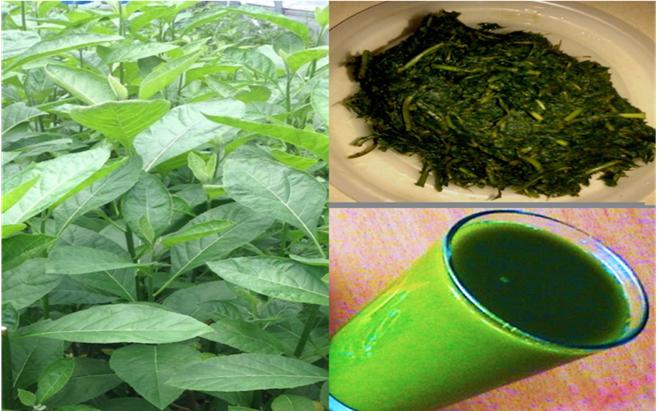
used; none of these studies induced hepatotoxicity with a single dose of acetaminophen (750mg/kg, i.p). Furthermore, none of these researches treated the experimental rats with doses over 300mg/kg of Vernonia amygdalina extract. The aims of this research were to evaluate the phytochemical constituents in Vernonia
amygdalina and to assess the hepatoprotective effects of aqueous extract of bitter leaf (Vernonia amygdalina) on acetaminophen-induced liver damage in albino wistar rats.
Materials And Methods
Experimental Animals and maintenance
A total of twenty-five (25) albino rats (120±20g) were obtained from the Animal House of the University of Nigeria Teaching Hospital (UNTH) Old Site. The animals were housed in metallic cages in the animal house under ambient temperature (25±3° C) and 12-hour light and dark periodicity. They were adequately fed with commercial rat pellets (Neimeth Livestock Feeds Ltd., Ikeja) and water; and allowed to acclimatize for 2 weeks. All the animals were handled in this study according to Institutional guidelines describing the use of rats and in accordance with the American Physiological Society guiding principles for research involving animals and human beings [17]. In addition, proper care was taken as per the ethical rule and regulation of the concerned committee of the University of Nigeria, Nsukka, Enugu State, Nigeria.
Ethical Approval
Ethical approval was obtained from Animal Welfare and Ethics Committee Department of Animal Science, University of Nigeria, Nsukka, Enugu State, Nigeria.
Collection of Plant
Fresh samples of Vernonia amygdalina leaves were purchased from Akwata, Ogbete Main market Enugu, Enugu State Nigeria.
Processing of the Bitter Leaf
The leaves were removed from their stalk. 500g of the bitter leaf were weighed using a weighing balance. The bitter leaf was macerated with 1 liter of water to obtain the extract. The extract obtained was sieved using 52mm pore size sieve. The extract was then preserved in the refrigerator until when needed.
Determination of Extractive Value for Vernonia amygdalina Extract
The concentration of the extract was determined by measuring out 1ml of the extract and then allowed to dry completely by gentle heating, using an oven. The dry residue was then weighed to obtain the concentration which is expressed in g/ml. The yield afforded crude extract of 100mg/ml. The appropriate concentration was then calculated for the study.
Phytochemical Analysis of Vernonia amygdalina
Preliminary phytochemical screening for the presence of glycosides, flavonoids, saponins, steroids, tannins, carbohydrates, proteins and terpenoids was carried out at Department of Pharmacognosy, Faculty of Pharmaceutical Science, University of Nigeria Nsukka. Procedures outlined by Trease and Evans [18], were employed for the analyses.
Reagents and Solutions
Preparation of Vitamin C solution
One hundred (100) tablets of 100 mg that is (10,000 mg) vitamin C obtained from Emzor Pharmaceuticals Inc, Nigeria were grinded to powder, dissolved in distilled water and made up to 200ml in a measuring cylinder to give a stock concentration of 50mg/ml.
Induction of Hepatotoxicity
Average weight of the rats was 120±20g and a calculated dosage of 90mg was required to induce hepatotoxicity. About 90mg was contained in 0.6ml of 150mg/ml of paracetamol. A single dose of 0.6ml paracetamol (i.e. 750mg/kg body weight) was injected intraperitonally to induce hepatotoxicity in each experimental rat.
Experimental Design
A total of 25 apparently healthy albino wistar rats were used for the study. The rats were randomly allocated to five (5) groups (A−E) of five (5) animals per group in well ventilated cages. The experimental animals received the following treatments for three weeks period together with stipulated feed and water. • Group A (Normal Control): No treatment was administered to this group.
- Group B (Negative Control): received a single dose of acetaminophen (750 mg/kg, i.p) alone
- Group C (Positive control): received a single dose of acetaminophen (750 mg/kg, i.p) before treatment with Vitamin C (200mg/kg, oral) for 14 consecutive days.
• Group D (Test group): received a single dose of acetaminophen (750 mg/kg, i.p) before treatment with high dose of aqueous extract of bitter leaf (500mg/kg, oral) for 14 consecutive days.
• Group E (Test group): received a single dose of acetaminophen (750 mg/kg, i.p) before treatment with low dose of aqueous extract of bitter leaf (250mg/kg, oral) for 14 consecutive days.
Sacrificing of Animals and Sample Collection
Blood samples for biochemical analysis were taken by cardiac puncture of the left ventricle of heart under chloroform anaesthesia. The blood samples were put in plain tubes to enable clotting so as to separate sera to be used for the tests. The liver was excised for histopathological studies. The liver was isolated immediately after sacrificing the animal and washed with saline and then processed.
Biochemical Analysis
Assessment of liver function: Serum was used for the assay of liver enzymes [aspartate aminotransferase (AST), alanine aminotransferase (ALT), alkaline phosphatase (ALP)], conjugated bilirubin and total bilirubin concentrations using Rx Monza Analyzer, and standard laboratory kits from Randox Laboratories Ltd. Measurement of bilirubin (Total and Direct): Colorimetric method as described by Jendrassik and Grof [19]. Measurement of ALT and AST: Determination of ALT and AST were by colorimetric method as described by Reitman and Frankel [20]. Measurement of ALP: Determination of ALP was by colorimetric method as described by Kind and King [21].
Histopathological Analysis
The excised liver tissues were fixed in 10% formal saline for 24 hr and further processed using the conventional paraffin wax embedding technique for light microscopic examination. The paraffin-embedded liver tissues were sectioned at 5 microns using the rotary microtome (Leitz 1520 Rotary Microtome, Leica Biosystems, Nussloch Germany). The tissue sections were stained using the hematoxylin and eosin technique as described by Baker and Silverton [22]. The histological sections were examined using an Olympus TM light microscope.
Statistical Analysis
The statistical analysis was done using Graph pad prism 6.0. The results were reported as mean ± SEM (standard error of mean). Statistical significance p<0.05 (*), p<0.01 (), or p<0.001 (*) was determined by using ANOVA.
Results
Phytochemical Results
The result of the preliminary phytochemical analysis of V. amygdalina is represented in table 1.
| Constituent | Indication | ||||
|---|---|---|---|---|---|
| Carbohydrate | ++ | ||||
| Reducing Sugar | − | ||||
| Alkaloids | +++ | ||||
| Glycosides | ++ | ||||
| Saponins | ++ | ||||
| Tannins | ++ | ||||
| Flavonoids | + | ||||
| Resins | + | ||||
| Proteins | − | ||||
| Oils | − | ||||
| Acidic Compounds | − | ||||
| Terpenoids | − | ||||
| Steroids | − |
Table 1: Preliminary Phytochemical Analysis
Key: +++ = More intensely present ++ = Present + = Present (in trace amount) − = Absent Table 1: Preliminary Phytochemical Analysis
Biochemical Results
Figures 2 and 3 show the results of liver biochemical parameters in five (5) groups of five (5) animals that received Vitamin C or Vernonia amygdalina extract for 2weeks following the administration of single dose of acetaminophen (750 mg/kg, i.p). The administration of single dose of acetaminophen (750mg/kg, i.p) resulted in liver damage with AST, ALT and ALP levels: 48.33±10.14U/L, 60.00±13.23U/L and 229.67±23.38U/L respectively. The treatment with bitter leaf resulted in a reversal of the acetaminophen-induced liver damage with AST, ALT and ALP levels: 20.67±1.76U/L (P<0.05), 16.67±3.52U/L (P<0.01) and 131.67±7.27U/L (P<0.01) respectively when compared to acetaminophen alone. From the results, Vernonia amygdalina extract showed similar strong Hepatoprotection as vitamin C (a drug widely known for its anti-oxidant property). Furthermore, it is worthy of note that Vernonia amygdalina extract also significantly decreased serum total bilirubin and serum conjugated bilirubin levels in the animals when compared with negative control (P˂0.01 and P˂0.05), respectively.
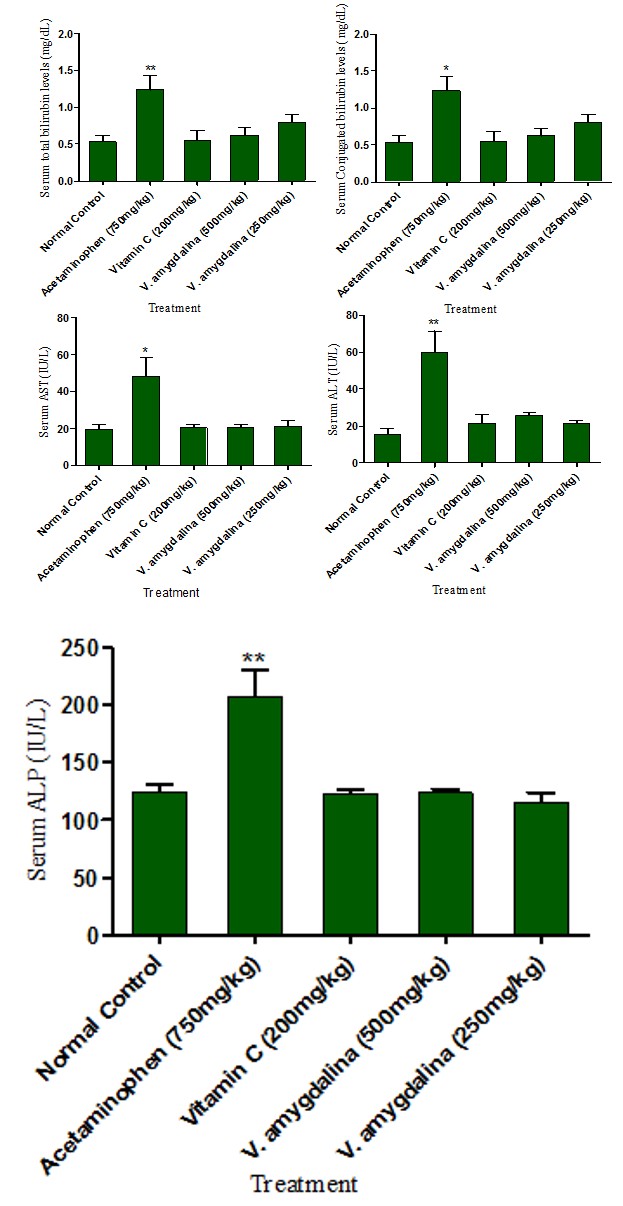
Figure 2B: Comparison of ALP levels in different experimental groups.
Histogram showing serum ALP levels following experimental treatments. The preliminary data shows that Vernonia amygdalina significantly reduced the elevated ALP levels induced by the hepatotoxicity, acetaminophen. The data are presented as mean ± SEM of ALP levels for individual treatment. See Materials and Methods for experimental details. Statistical analyses were performed using ANOVA (**P˂0.01).
Histopathological Result
Microscopical examination of the liver isolated from the rat at sacrifice revealed no histopathological
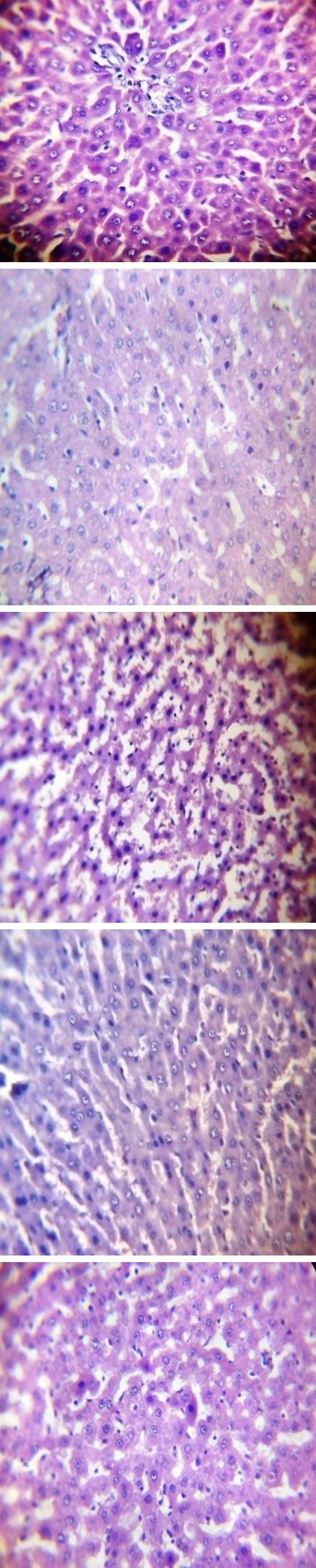
alteration in the control rats (Figure 3A). Presence of severe cell necrosis and severe hepatocellular parenchyma degeneration were observed in the liver of rats treated with intraperitoneal injection of acetaminophen (Figure 3B); however mild or no significant degenerations were observed in rats with co- administration of vitamin C, high and low dose Vernonia amygdalina extract separately (Figure 3C, D and E, respectively). The livers of rats in group C, D and E showed no significant histological alterations when compared with the control group.
(A) (B) (C)
(D) (E) Figure 3(A-E): Histopathology and photomicrograph of liver from (A) normal control, (B) acetaminophen treatment only, (C) vitamin C-treated rats, (D) high dose vernonia amygdalina extract-treated rats and (E) low dose vernonia amygdalina extract-treated rats [Stain: H and E; ×40].
Discussion
Despite improvement in health management, the prevalence of liver pathology is still on the increase. Liver is central to the metabolism of drug for health management and thus is faced with great risk of damage by drugs. Acetaminophen, a known hepatotoxicity at high dose, was used in this study.
Several researches have been done on food with medicinal value, with the aim of alleviating the health burden or damage caused by hepatotoxic drugs. The aim of this study was to investigate the hepatoprotective effect of aqueous extract of bitter leaf (Vernonia amygdalina) on acetaminophen-induced liver damage in rats. Phytochemical analysis of the aqueous extract of V. amygadlina showed the presence of good quantity of alkaloids, tannins, saponins and flavonoids without oils, steroids and terpenoids, which disagrees with the findings of Okafor and Anichie [23], which reported the presence of oils, steroids and terpenoids. This could be as a result of the difference in the solvent used for extraction. They extracted with methanol in which oils are soluble but are not soluble in water. Phytochemicals are plant chemicals that are non-nutritive but could possess disease-preventing potentials. Recent research has demonstrated that in as much as plants produce these chemicals to protect themselves, they can also protect humans and other living forms from diseases. Alkaloids have been extensively studied because of their bioactive and pharmacologic properties. Alkaloids have been known to possess antioxidant activity by their ability to quench superoxide anions and singlet oxygen [24]. A number of studies have also shown flavonoids to be effective antioxidant that can remove superoxide anion, hydroxyl radicals and lipid peroxy radicals [25]. From the present study, the negative controls, which received acetaminophen alone, showed significant increase in liver biochemical markers, indicating hepatic injury in the rats. This is attributed to the mechanism of action of acetaminophen. Acetaminophen at doses above therapeutic level, subsequently results in GSH (glutathione) depletion and generation of reactive O2- species leading to hepatocytes death [26]. Histopathological result was concomitant, showing significant hepatocellular damage when compared with normal control (Figure 3B). It was observed that Vitamin C-treated group showed a significant decrease in the level of serum liver enzyme makers (AST, ALT and ALP) as well as on total and conjugated bilirubin levels. Vitamin C (ascorbic acid) is a standard antioxidant that is able to neutralize free radicals. It cooperates with glutathione especially in endothelial cells to increase their capacity to survive under oxidative stress [26]. Ascorbic acid performs its function by protecting double bonds and scavenging oxygen as well as by lowering of the oxidation state of many metals and valence which may thus affect oxidation catalysis [25]. Histopathological result was concomitant showing minor or no significant hepatocellular damage when compared with negative control (Figure 3C). A significant reduction in serum liver enzymes and bilirubin was also observed in the test groups that were treated with the V. amygdalina extract, the histopathological findings in this groups (figure 3D and 3E) also showed minor hepatocellular degeneration. It could be that Vernonia amygdalina possesses antioxidant capability, to reverse acetaminophen-induced alterations, suppression of lipid per oxidation and oxidative stress [27]. This antioxidant action may be attributed to the high content of the phytochemical, alkaloids and flavonoid as observed in the phytochemical result and as reported by Igile et al_. [28], the result showed a dose-dependent reversal, which is in agreement with the study by Iwalokun et al. [16]. The antioxidant mechanism of _V.amygdalina as suggested by Farombi and Owoeye, is by inducing antioxidant and phase 2 enzymes [23].
Conclusion
Oral administration of bitter-leaf (V. amygdalina) extracts under acetaminophen challenge significantly protected the liver of albino rats from severe hepatic damage. The attenuating or protective action of bitter-leaf (V. amygdalina) extract against hepatotoxicity by acetaminophen was evident in the extract’s ability to prevent further biochemical changes which are indicators of severe hepatotoxicity. Bitter-leaf (V. amygdalina) consumption may possibly be the safest treatment or management against any toxicity by drugs with similar mechanism of action as acetaminophen. Therefore, natural antioxidants in bitter-leaf (V. amygdalina) possess the capacity of reducing the toxic effects of drug on liver hepatocytes.
Acknowledgement
The author expresses deep sense of gratitude to Mr. Chris Ireoba, The head of department of the Laboratory Division at Eastern Nigeria Medical Centre, Enugu, and all the technical staff for their kind cooperation.
References
-
Namrata A, Desai K, Kotak O, Shehal S, Patel SS (2015) Investigation of epidemiology and etiology of liver diseases and characterization of its association with various factors. Asian Journal of Pharmaceutical and Clinical Research 8(2): 346-349.
-
William M Lee (2003) Review article: Drug-Induced hepatotoxicity The New England Journal of Medicine 349: 474-485.
-
Rajkapoor B, Venugopal Y, Anbu J, Harikrishnan N, Gobinath M, et al. (2008) Protective effect of Phyllanthus polyphyllus on acetaminophen induced hepatotoxicity in rats. Parkistan Journal of Pharmaceutical Sciences 21(1): 57-62.
-
Agumuo JK, Akajiaku LO, Alaka II, Taiwo M (2016) Mineral and ant nutrients of fresh and squeeze – washed bitter leaf (_Vernonia amygdalina)_ as affected by traditional de-bittering methods: European Journal of Food Sciences and Technology 4(2): 21-30.
-
Oshodi AA (1992) Comparison of proteins, minerals and vitamin C content of some dried leafy vegetables. Parkistan Journal of Science and Industrial research 35: 267-269.
-
Shivashankara AR, Azmidah A, Haniadka R, Rai MP, Arora R, et al. (2012) Dietary agents in the prevention of alcohol-induced hepatotoxicty: preclinical observations, Food & Function 3(2): 101-109.
-
Ikenna KU, Okechukwu SO, Chidozie EA, Oliver, CO, Blessing EC, et al. (2016) Hypolipidaemic and renoprotective effects of G_lycine max_ (soy bean) against lipid profile and renal biochemical alterations in hypercholesterolemia rat. Int J Biomed Res 7(12): 822-828.
-
Kingsley UI, Steven OO, Agu CE, Orji OC, Chekwube BE, et al. (2017) Anti-hyperlipidemic effect of crude methanolic extracts of Glycine max (soy bean) on high cholesterol diet-fed albino rats. J Med Allied Sci 7(1): 34-40.
-
Ikenna KU, Chidozie EA, Oliver CO, Eluke BC, Ikechukwu JC, et al. (2017) Effect of Soy (Glycine max) Against Alcohol-Induced Biochemical Alteration in Liver of Male Albino Rat. Der Pharma Chemica 9(16):115–119.
-
Uchendu IK, Orji OC, Agu CE (2017) Attenuation of glycerol-induced acute renal failure in albino rats by soy beans (Glycine max). International Journal of ChemTech Research 10(12): 165-172.
-
Orji OC, Agu CE, Uchendu IK, Nsonwu AC, Offor JS (2016) Anti-diabetic and renal protective effect of the fruit juice of Citrus X Paradisi on alloxan induced diabetic male albino wistar rats. Der Pharmacia Lettre 8(19): 32-38.
-
Uchendu IK, Agu CE, Orji OC, Nnedu EB, Arinze C, et al. (2018) Effect of Tomato (Lycopersicon Esculentum) Extract on Acetaminophen - Induced Acute Hepatotoxicity in Albino Wistar Rat. Bioequivalence and Bioavailability International Journal 2(1): 000119.
-
Anioke I, Okwuosa C, Uchendu I, Chijioke O, Dozie- Nwakile O, et al. (2017) Investigation into Hypoglycemic, Antihyperlipidemic, and Renoprotective Potentials of _Dennettia tripetala_ (Pepper Fruit) Seed in a Rat Model of Diabetes. Hindawi BioMed Research International, Article ID6923629, pp: 11.
-
Momoh J, Longe AO, Damazio OA, Eleyowo OO (2015) Hepatoprotective Effect of Ethanol Leaf Extract of _Vernonia amygdalina_ and _Azadirachta indica_ against Acetaminophen-induced Hepatotoxicity in Sprague- Dawley Male Albino Rats. American Journal Pharmacological Sciences 3(3): 79-86.
-
Arhoghro EM, Ekpo KE, Anosike EO, Ibeh GO (2009) Effect of Aqueous Extract of Bitter Leaf (_Vernonia_ _amygdalina_) on Carbon Tetrachloride (CCl4)-induced Liver Damage in Albino Wistar Rats. European Journal of Scientific Research 26(1): 122-130.
-
Iwalokun BA, Efedede BU, Alabi-Sofunde JA, Oduala T, Magbagbeola OA, et al. (2006) Hepatoprotective and antioxidant activities of Vernonia amygdalina on acetaminophen-induced hepatic damage in mice. J Med Food 9(4): 524-530.
-
American Physiological Society (2002) Guiding principles for research involving animals and Human beings. American Journal Physiology Regut Integr Comp Physio 283(2): R281-R283.
-
Trease GE, Evans WC (1989) _Pharmacognosy_. 13th ed. Philadelphia: Bailliere Tindall.
-
Malloy HT, Evelyn KA (1937) The determination of bilirubin with the photoelectric colorimetric method. J Biol Chem 119: 481-490.
-
Reitman S, Frankel SA (1957) A colorimetric method for the determination of serum glutamic oxalacetic and glutamic pyruvic transaminases. Am. Journal of Clinical Pathology 28(1): 56-63.
-
Kind PRH, King EJ (1954) Colorimetric method for determination of serum alkaline phosphatise. J Clin Path 7: 322.
-
Baker FJ, Silverton RE, Pallister CJ (1998) _Baker and_ _Sylverton’s Introduction to Laboratory Technology._ 7th (Edn.), Butterworth-Heinemann, Woburn, MA, USA. ISBN- 13:978075621908, pp: 448.
-
Okafor N, Anichie, GN (1983) West African Hop Substitutes for Sorghum lager beer. Dist. Int 13(1): 20-23.
-
Mariana R, Hello M, Germano F (2013) In vitro antioxidant activity of alkaloids from Southern Brazillian Psychotria: A Comprehensive analysis: 5th Congress of Brazilian Biotechnology Society Brazil 8(4): 237.
-
Cort WC (2009) Antioxidant properties of ascorbic acid in Foods. Advances in chemistry 200(22): 533- 550.
-
Katzung BG, Trevor AJ (2015) Basic and Clinical Pharmacology 13th Edition, McGraw Hill Education pp: 63.
-
Farombi EO, Owoeye O (2011) Antioxidative and Chemo protective properties of Vernonia amygdalina and Garcinia flavonoid. Int J Environ Res Public Health 8(6): 2533-2555.
-
Igile GO, Oleszek W, Jurzysta M, Burda S, Fasunso M, et al. (1994) Flavonoids from _Vernonia amygdalina_ and their antioxidant activities. J Agric Food Chem 42(11): 2445-2448.
-
Miller AL (1996) Antioxidant flavonoids: Structure, Function and Clinical Usage. Alter Med Rev 1(2): 103- 111.
- Effects of 5-HTP and Melatonin on the Sleep Cycle of Medical Students
- Adsorption of Bisphenol A on NH4OH- Modified Rice Husk and Sugar Cane Bagasse Biochar
- Comparative Assessment of the Reinforcement Efficiency of Palm Fruit Fibre and Coconut Fibre in High Density Polyethylene (HDPE) Matrix Composite
- Importance of Bio Compounds Naturally Present in Food with Functionality in Animal Metabolism
- Sub-Acute Study on the Cardiotoxic Effects of Monosodium Glutamate Ingestion in Albino Rat
- Weight Management and Its Natural Solutions: A Review