
Formulation and Evaluation of Polymeric Bilayer Matrix Tablet Containing Glipizide and Metformin Hydrochloride
The objective of the present study was to develop Bilayer tablets of Glipizide and metformin hydrochloride from polymeric matrices of HPMC K4M and Eudragit L-100. Drugs Glipizide and metformin hydrochloride are frontline anti-diabetic drugs prescribed in combination. Tablets were prepared by wet granulation method using different ratios of HPMC K4M and Eudragit L-100 and evaluated for its physicochemical properties, in vitro release profile and stability studies. The prepared granules physiochemical property results were within the limits and the formulated tablets hardness, friability and content uniformity was found to be between 5.1±0.1 and 5.9±0.3; 0.21 ±0.02 and 0.49±0.02%; 98.99 ±1.06 and 100.45±0.52 %w/w respectively. The invitro release was found to be observed for 12 hours in phosphate buffer pH 6.8 and compared with market formulation. The dissolution release of formulation was comparable with market formulation and the difference factor and similarity factor f1 and f2 were found to be 3.75 and 79.46 for metformin hydrochloride; 8.74 and 65.78 for glipizide respectively. Stability studies were carried out as per ICH guidelines and tested for its physicochemical properties and in vitro release studies. The stability study result reveals that the prepared formulation was stable.
Introduction
Diabetes is one of the major causes of death and disability in the world. The prevalence of diabetes mellitus has increased sharply over the past 25 years from 3.3/1000 persons in 1980 to 7.4/1000 persons in 2005 [1]. World Health Organization estimate for the number of people with diabetes worldwide in 2000 was 171 million, which is likely to be at least 366 million by 2030 [2]. Diabetes is currently the fourth leading cause of death by disease in the World. Non‐ insulin dependent Type 2 diabetes mellitus (formerly called non-insulin-dependent or adult-onset) is a heterogeneous disorder characterized by an underlying insufficiency and ineffective use of insulin. This insufficiency and ineffective utilization of insulin can be corrected by administration of one or more oral hypoglycemic agents [3].
Type 2 diabetes comprises 90% of people with diabetes around the world, and is largely the result of excess body weight and physical inactivity. Type 2 diabetic represents about 98% of all diabetes cases among persons older than 45 years of age [4], approximately 18% of persons 65 to 75 years of age and 40% of those older than 80 years of age [5].
Type 2 diabetic is a progressive illness and most patients will eventually need more than two oral agents to maintain adequate glucose control. Metformin is now regarded as first-line treatment [6, 7, 8, 9] to improve insulin sensitivity and suppress hepatic glucose output [10].
Development of oral controlled release systems has been a challenge to formulation scientists because of the difficulty in localizing the system in target areas. Controlled/sustained release preparations using alternating routes have also been formulated but oral route still remains preferable [11].
Patients switching from one drug to another will produce poorly controlled glycemia. Medication from different groups will provide more effective glycemic control. Combination of oral diabetics showed improved glycemic control when compare to the monotherapy. Combination therapy have various advantages over monotherapy such as problem of dose-dependent side effects is minimized, a low dose combination of two different agents reduces the dose related risk, the addition of one agent may counteract some deleterious effects of the other, using low dosage of two different agents minimize the clinical and metabolic effects that occur with maximal dosage of individual components of combined dosage form [12, 13].
Metformin HCl and glipizide tablets simultaneously targets insulin resistance and insulin deficiency of type 2 diabetic, which may account for the greater effects on glycemia. Glipizide maintains a more physiologic regulation of insulin secretion and the risk of hypoglycemia is less than with other sulfonylureas [14, 15].
Bilayer tablet have some key advantages compared to conventional monolayered tablets; which avoids chemical incompatibility between the two drug substances in a single tablet. Bilayered tablets have enabled the development of controlled delivery of active pharmaceutical ingredients with predetermined release profiles by causing layers with various release patterns. Bilayer tablet is suitable for sequential release of two drugs in combination in which one layer is immediate release as initial dose and second layer is maintenance dose [16, 17].
The major benefits of controlled release metformin hydrochloride tablets over conventional metformin HCl tablets include reduced dosing frequency and decreased incidence of gastro-intestinal side effects. It will improve patient compliances and also highly acceptable by the patients.
The present work was to develop a combination drug therapy as bilayered tablet formulation containing metformin HCl and glipizide which having different mechanism of action to complement each other and together effectively to control the blood glucose level to provide better therapeutic effect to the diabetic patients.
Materials and Methods
Materials
Metformin Hydrochloride was obtained as gift sample from Pharma Fabricon, Madurai, Tamil Nadu, India. Glipizide was obtained as gift sample from Fourts India, Chennai, Tamil Nadu, India. HPMC K4M was purchased from Hi Media Laboratory Ltd., Mumbai, India. Eurdragit L 100 was obtained as gift sample from Pharma Fabricon, Madurai, Tamil Nadu, India. Starch, Magnesium stearate, Talc, Lactose and methanol were purchased from Nice Chemicals Pvt. Ltd., Chennai, India. Potassim dihydrogen ortho phosphate was purchased from Scientific Chemicals, Chennai, India. Sodium hydroxide was obtained from Hi Pure Fine Chem Industries, Chennai, India.
Calibration Curve for Metformin Hcl
A stock solution of the drug was prepared by dissolving 100 mg of metformin hydrochloride in a 100 ml volumetric flask containing 25 ml of distilled water, sonicated for about 10 min and then made up to the volume with same. Aliquots of these stock solutions were suitably diluted with distilled water to get the working standard solution of drug in the concentration range between 2 and 14 µg/ml.
Calibration Curve for Glipizide
A stock solution of the drug was prepared by dissolving 100 mg of glipizide in a 100 ml volumetric flask containing 10 ml of 0.1N sodium hydroxide, sonicated for about 10 min and then made up to the volume with phosphate buffer pH 6.8. Aliquots of these stock solutions were suitably diluted with phosphate buffer pH 6.8 to get the working standard solution of drug in the concentration range between 5 and 45 µg/ml.
Formulation and preparation of matrix tablets
Seventeen batches of metformin hydrochloride matrix tablets were prepared by using methocel K4M and eudragit L 100 as polymeric matrix forming material in the drug: polymer ratio range between 1:0.7 and 1:1.5. Formulations were made by wet granulation technique using starch mucilage paste as granulating agent.
Nine batches of glipizide matrix tablets were prepared by using methocel K4M and eudragit L 100 as polymeric matrix forming material in the drug: polymer ratio between 1:9 and 1:12. Formulations were made by wet granulation technique using starch mucilage paste as granulating agent. The compositions of the formulations are shown in Tables 1
and 2.
| Ingredients | Formulation Ratios (Amount per tablet in mg) | ||||||||||||||||
|---|---|---|---|---|---|---|---|---|---|---|---|---|---|---|---|---|---|
| M 1 | M 2 | M 3 | M 4 | M 5 | M 6 | M 7 | M 8 | M 9 | M 10 | M 11 | M 12 | M 13 | M 14 | M 15 | M 16 | M 17 | |
| Metformin HCl | 250 | 250 | 250 | 250 | 250 | 250 | 250 | 250 | 250 | 250 | 250 | 250 | 250 | 250 | 250 | 250 | 250 |
| HPMC K4M | 175 | 150 | 125 | 100 | 75 | 50 | 25 | - | 250 | 375 | - | - | 312.5 | 250 | 187.5 | 125 | 62.5 |
| Eudragit L-100 | - | 25 | 50 | 75 | 100 | 125 | 150 | 175 | - | - | 375 | 250 | 62.5 | 125 | 187.5 | 250 | 312.5 |
| Starch Mucilage | q.s | q.s | q.s | q.s | q.s | q.s | q.s | q.s | q.s | q.s | q.s | q.s | q.s | q.s | q.s | q.s | q.s |
| Lactose | 65 | 65 | 65 | 65 | 65 | 65 | 65 | 65 | 137 | 12 | 12 | 137 | 12 | 12 | 12 | 12 | 12 |
| Talc | 5 | 5 | 5 | 5 | 5 | 5 | 5 | 5 | 6.5 | 6.5 | 6.5 | 6.5 | 6.5 | 6.5 | 6.5 | 6.5 | 6.5 |
| Magnesium Stearate | 5 | 5 | 5 | 5 | 5 | 5 | 5 | 5 | 6.5 | 6.5 | 6.5 | 6.5 | 6.5 | 6.5 | 6.5 | 6.5 | 6.5 |
Table 1: Composition of Metformin HCl Matrix Layer.
| Ingredients | Formulation Ratios (Amount per tablet in mg) | ||||||||
|---|---|---|---|---|---|---|---|---|---|
| G 1 | G 2 | G 3 | G 4 | G 5 | G 6 | G 7 | G 8 | G 9 | |
| Glipizide | 6 | 6 | 6 | 6 | 6 | 6 | 6 | 6 | 6 |
| HPMC K4M | 90 | 120 | - | - | 90 | 75 | 60 | 45 | 30 |
| Eudragit L-100 | - | - | 120 | 90 | 30 | 45 | 60 | 75 | 90 |
| Starch Mucilage | q.s | q.s | q.s | q.s | q.s | q.s | q.s | q.s | q.s |
| Lactose | 51 | 21 | 21 | 51 | 21 | 21 | 21 | 21 | 21 |
| Talc | 1.5 | 1.5 | 1.5 | 1.5 | 1.5 | 1.5 | 1.5 | 1.5 | 1.5 |
| Magnesium Stearate | 1.5 | 1.5 | 1.5 | 1.5 | 1.5 | 1.5 | 1.5 | 1.5 | 1.5 |
Table 2: Composition of Glipizide Matrix Layer.
Drug-Excipients Interaction Studies
Pre-formulation studies are very important for the successful formulation of any dosage form. Fourier Transform Infrared Spectroscopy (FTIR) was used for the evaluation of physicochemical compatibility and interactions, which helps in the prediction of interaction of the drug with polymers, diluents and lubricants used in the tablet formulations. The earlier investigations recommended that 1:1 ratio of drug excipients maximizes the possibility of interaction and helps in easier detection of incompatibilities [18]. Therefore, in the present study 1:1 ratio was used for the preparation of physical mixtures and analyzed for compatibility studies.
Fourier Transform Infrared (FTIR) Spectroscopy
FTIR studies are very helpful in the evaluation of drug– polymer interaction studies. Incompatibility between the drugs and excipients can be predicted based on their characteristic wave numbers. Drug and various polymers were thoroughly mixed with 300 mg of potassium bromide, compressed and the IR spectrum was obtained between 450 and 4000 cm-1 by placing the thin pellet in light path.
Evaluation of Tablet Formulations [19]
Evaluation of Characteristics of Powder Blend and Tablets: The various characteristics of powder blend like angle of repose, bulk density, tapped density, compressibility index, Hausner’s ratio and drug content were studied. The formulated tablets were evaluated for hardness, friability, uniformity of weight and drug content.
Drug Content of Formulated Tablets
Drug Content for Metformin Hydrochloride: Twenty tablets from each formulation were randomly chosen, pulverized and weight equivalent to 100 mg of metformin hydrochloride was extracted with 70 ml distilled water and made up to the mark with same. Aliquot from subsequent filtered solution was further diluted with distilled water in such a way that theoretical concentration was same as that of standard concentration. Resultant solutions were analyzed in triplicate and the average results were taken. Drug Content for Glipizide: Twenty tablets from each formulation were randomly chosen, pulverized and weight equivalent to 10 mg of glipizide was extracted with 50 ml 0.1 N sodium hydroxide and made up to the mark with phosphate buffer pH 6.8. Aliquot from subsequent filtered solution was further diluted with phosphate buffer pH 6.8 in such a way that theoretical concentration was same as that of standard concentration. Resultant solutions were analyzed in triplicate and the average results were taken. In Vitro Dissolution Studies: The dissolution studies were performed in triplicate for all the batches in a USP XXIII dissolution rate test apparatus (Type II). The release studies were performed in phosphate buffer pH 6.8 for 12 hours. Five milliliters aliquots were withdrawn at predefined intervals, and the volume of the dissolution medium was maintained by adding the same volume of fresh pre-warmed dissolution medium and the drug release were analyzed spectrophotometrically.
Stability Studies
The formulation which showed best in vitro release was selected for stability studies. The accelerated stability studies were conducted according to the ICH guidelines for a period of 6 months.
Results and Discussion
Drug delivery systems are becoming increasingly sophisticated as pharmaceutical scientists need to acquire a better understanding of the physicochemical and biological parameters pertaining to their performance. Despite tremendous advantages in drug delivery the oral route remains the preferred route for the administration of therapeutic agents because of the low cost of therapy and ease of administration lead to high levels of patient compliance. It also remains the most popular and successful route for controlled delivery of drugs because of convenience and greater flexibility in dosage form. Several pharmaceutical companies are currently developing bi-layer tablets for a variety of reasons like patent extension, increasing therapeutic activities, to modify the better drug delivery system, to reduce capital investment and material waste.
Calibration curve of metformin hydrochloride was found to be linear in the concentration range between 2 and 14 µg/ mL, the correlation coefficient was found to be 0.9999 and also calibration curve of glipizide was found to be linear in the concentration range between 5 and 45 µg/ml, with the correlation coefficient of 0.9997.
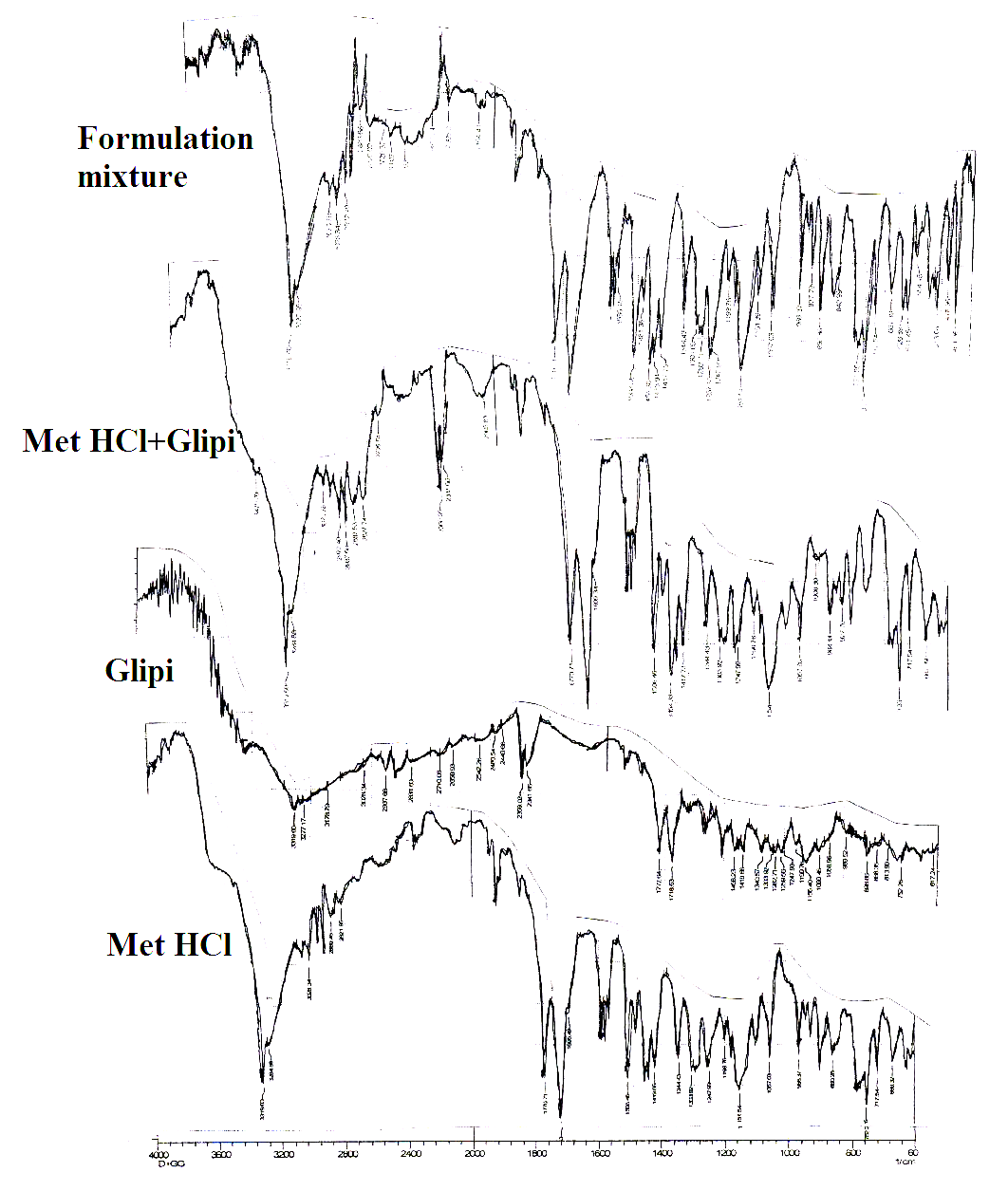
Compatibility studies were carried between the drug and the common excipients by FTIR. Metformin hydrochloride contains characteristic groups N-H stretching, C-H stretching, C-N stretching, N-H bending, C-H bending and C-N vibration, shows the values around 3319, 2938, 1770, 1504, 1304 and 860 cm-1. Glipizide contains characteristic groups N-H stretching, C-O stretching, C-C stretching, C-O stretching, S-O stretching, C-H bending and C-N vibration, shows the values around 3319, 1772, 1511, 1304, 1156, 899 and 859 cm-1.
Infrared studies reveal that all characteristic bands were present in all spectra. While no new bands or shift in characteristic peaks appeared. The FTIR results revealed that there was no interaction between the drug and the excipients used in the formulation. FTIR spectra are shown in Figure 1. Direct compression technique is not always feasible for hydrophilic matrix formulation containing methocel products. Wet granulation process low-shear or higher shear granulation techniques can be adopted. Wet granulation technique can avoid the segregation of the components in powder mix and provide better product flow on tablet press, overall improved tablet physical characteristics and uniform drug content within the dosage form.
The dried powder mixtures of metformin hydrochloride granules were tested for powder properties like angle of repose (between 20.04 ± 0.22 and 24.57 ± 0.48 o), bulk density (between 0.44 ± 0.03 and 0.59 ± 0.01 g/cc), tapped density (between 0.53 ± 0.03 and 0.66 ± 0.01 g/cc), carr’s index (between 7.41 ± 0.25 and 15.98 ± 0.24 g/cc) and Hausner’s ratio (between 1.08 ± 0.02 and 1.19 ± 0.02). The evaluation results revealed that all the powder mixture had good flow properties. The evaluation results are shown in Table 3.
| Angle of Repose (°) ± S.D | Bulk Density (g/ml) ± S.D | Tapped Density (g/ml) ± S.D | Carr’s Index (%) ± S.D | Hausner’s Ratio ± S.D | |
|---|---|---|---|---|---|
| M1 | 22.12 ± 0.20 | 0.52 ± 0.02 | 0.61 ± 0.01 | 14.75 ± 0.55 | 1.19 ± 0.01 |
| M2 | 23.59 ± 0.31 | 0.44 ± 0.03 | 0.53 ± 0.03 | 15.98 ± 0.24 | 1.19 ± 0.02 |
| M3 | 24.57 ± 0.48 | 0.48 ± 0.02 | 0.56 ± 0.02 | 15.84 ± 0.19 | 1.15 ± 0.01 |
| M4 | 20.28 ± 0.09 | 0.54 ± 0.04 | 0.61 ± 0.01 | 14.28 ± 0.18 | 1.12 ± 0.01 |
| M5 | 23.27 ± 0.21 | 0.53 ± 0.01 | 0.59 ± 0.03 | 10.17 ± 0.80 | 1.11 ± 0.02 |
| M6 | 21.49 ± 0.39 | 0.54 ± 0.03 | 0.61 ± 0.01 | 12.51 ± 0.31 | 1.12 ± 0.01 |
| M7 | 21.22 ± 0.29 | 0.49 ± 0.02 | 0.56 ± 0.03 | 11.47 ± 0.23 | 1.14 ± 0.01 |
| M8 | 24.06 ± 0.55 | 0.51 ± 0.01 | 0.58 ± 0.02 | 12.06 ± 0.15 | 1.14 ± 0.01 |
| M9 | 20.33 ± 0.41 | 0.53 ± 0.03 | 0.58 ± 0.01 | 8.62 ± 0.16 | 1.09 ± 0.01 |
| M10 | 22.14 ± 0.21 | 0.50 ± 0.01 | 0.54 ± 0.03 | 7.41 ± 0.25 | 1.08 ± 0.02 |
| M11 | 20.27 ± 0.10 | 0.49 ± 0.04 | 0.57 ± 0.03 | 14.03 ± 0.15 | 1.16 ± 0.01 |
| M12 | 20.04 ± 0.22 | 0.59 ± 0.01 | 0.64 ± 0.01 | 7.80 ± 0.38 | 1.08 ± 0.01 |
| M13 | 24.10 ± 0.16 | 0.51 ± 0.03 | 0.57 ± 0.04 | 10.56 ± 0.20 | 1.12 ± 0.02 |
| M14 | 22.19 ± 0.38 | 0.59 ± 0.01 | 0.66 ± 0.02 | 10.61 ± 0.37 | 1.12 ± 0.01 |
| M15 | 21.57 ± 0.25 | 0.53 ± 0.01 | 0.59 ± 0.01 | 10.17 ± 0.11 | 1.12 ± 0.01 |
| M16 | 24.39 ± 0.08 | 0.51 ± 0.03 | 0.58 ± 0.01 | 12.06 ± 0.34 | 1.13 ± 0.01 |
| M17 | 20.56 ± 0.15 | 0.55 ± 0.02 | 0.60 ± 0.02 | 8.33 ± 0.29 | 1.09 ± 0.01 |
Table 3: Pre-compression Parameters of Metformin HCl granules
The formulated tablets were evaluated for its physical properties like hardness, friability, and content uniformity. The hardness was found to be between 5.2±0.1 and 6.9±0.1; friability was found to be between 0.22±0.02 and 0.58±0.02% whereas the content uniformity was found to be between 97.09 ±1.06 and 99.45±0.52 %w/w. The evaluation results are shown in Table 4.
| Average weight of tablets(g) ± S.D | Hardness (Kg/cm2) ± S.D | Friability (%) ± S.D | Drug content (%) ± S.D | |
|---|---|---|---|---|
| $M_{1}$ | $0.508 ± 0.024 | 5.7 ± 0.1 | 0.39 ± 0.05 | 98.25 ± 0.51 |
| M_{2}$ | $0.501 ± 0.019 | 5.4 ± 0.3 | 0.27 ± 0.01 | 99.05 ± 0.76 |
| M_{3}$ | $0.498 ± 0.021 | 6.1 ± 0.2 | 0.58 ± 0.02 | 96.03 ± 1.25 |
| M_{4}$ | $0.500 ± 0.009 | 6.2 ± 0.2 | 0.31 ± 0.04 | 96.25 ± 0.90 |
| M_{5}$ | $0.495 ± 0.011 | 5.6 ± 0.4 | 0.52 ± 0.02 | 99.45 ± 0.52 |
| M_{6}$ | $0.507 ± 0.015 | 6.2 ± 0.1 | 0.31 ± 0.02 | 98.26 ± 0.75 |
| M_{7}$ | $0.501 ± 0.020 | 5.4 ± 0.3 | 0.38 ± 0.01 | 98.78 ± 1.20 |
| M_{8}$ | $0.504 ± 0.019 | 5.2 ± 0.1 | 0.27 ± 0.03 | 99.07 ± 1.05 |
| M9 | 0.652 ± 0.008 | 5.7 ± 0.2 | 0.38 ± 0.01 | 99.35 ± 1.55 |
| M10 | 0.659 ± 0.016 | 5.9 ± 0.1 | 0.27 ± 0.01 | 98.11 ± 0.42 |
| M11 | 0.648 ± 0.021 | 5.6 ± 0.1 | 0.52 ± 0.02 | 98.45 ± 1.10 |
| M12 | 0.651 ± 0.018 | 6.1 ± 0.1 | 0.32 ± 0.04 | 99.10 ± 0.61 |
| M13 | 0.654 ± 0.011 | 5.5 ± 0.3 | 0.22 ± 0.02 | 98.35 ± 0.53 |
| M14 | 0.649 ± 0.013 | 6.4 ± 0.2 | 0.41 ± 0.02 | 97.09 ± 1.06 |
| M15 | 0.656 ± 0.009 | 6.7 ± 0.1 | 0.32 ± 0.01 | 97.17 ± 1.24 |
| M16 | 0.653 ± 0.021 | 6.9 ± 0.1 | 0.46 ± 0.02 | 98.65 ± 0.49 |
| M17 | 0.648 ± 0.018 | 5.9 ± 0.2 | 0.45 ± 0.01 | 98.36 ± 0.80 |
Table 4: Physico – Chemical Properties of Metformin HCl matrix tablets The dried powder mixtures of glipizide granules were teste
Table 4: Physico – Chemical Properties of Metformin HCl matrix tablets The dried powder mixtures of glipizide granules were tested for powder properties like angle of repose (between 23.50 ± 0.21 and 24.89 ± 0.12o), bulk density (between 0.49 ± 0.04 and 0.63 ± 0.02 g/cc), tapped density (between 0.55 ± 0.03 and 0.70 ± 0.01 g/cc), carr’s index (between 9.66 ±
0.85 and 11.86 ± 0.19 g/cc) and Hausner’s ratio (between 1.05 ± 0.02 and 1.15 ± 0.02). The evaluation results revealed that all the powder mixture had good flow properties. The evaluation results are shown in Table 5.
| Angle of Repose (°) ± S.D | Bulk Density (g/ml) ± S.D | Tapped Density (g/ml) ± S.D | Carr's Index (%) ± S.D | Hausner's Ratio ± S.D | |
|---|---|---|---|---|---|
| G1 | 23.50 ± 0.21 | 0.54 ± 0.01 | 0.61 ± 0.01 | 11.47 ± 0.31 | 1.12 ± 0.01 |
| G2 | 24.46 ± 0.09 | 0.49 ± 0.04 | 0.55 ± 0.03 | 10.91 ± 0.08 | 1.12 ± 0.01 |
| G3 | 22.17 ± 0.08 | 0.54 ± 0.02 | 0.61 ± 0.02 | 11.47 ± 0.29 | 1.13 ± 0.01 |
| G4 | 24.41 ± 0.15 | 0.50 ± 0.02 | 0.61 ± 0.01 | 9.66 ± 0.85 | 1.21 ± 0.02 |
| G5 | 24.08 ± 0.19 | 0.51 ± 0.03 | 0.59 ± 0.02 | 11.86 ± 0.19 | 1.15 ± 0.01 |
| G6 | 23.51 ± 0.10 | 0.54 ± 0.01 | 0.60 ± 0.01 | 10.01 ± 0.09 | 1.11 ± 0.02 |
| G7 | 24.89 ± 0.12 | 0.63 ± 0.02 | 0.70 ± 0.01 | 10.33 ± 0.24 | 1.10 ± 0.01 |
| G8 | 24.88 ± 0.23 | 0.61 ± 0.01 | 0.64 ± 0.02 | 11.59 ± 0.16 | 1.05 ± 0.02 |
| G9 | 23.59 ± 0.20 | 0.57 ± 0.01 | 0.65 ± 0.01 | 11.03 ± 0.23 | 1.11 ± 0.01 |
Table 5: Pre-compression Parameters of Glipizide Matrix Layer.
The formulated tablets were evaluated for its physical properties like hardness, friability, and content uniformity. The hardness, friability and content uniformity was found to be between 5.1±0.1 and 5.9±0.3; 0.21 ±0.02 and 0.49±0.02%; 98.99 ±1.06 and 100.45±0.52 %w/w respectively. The evaluation results are shown in Table 6. The sustained release performance of the formulations is greatly affected by physicochemical properties of polymer. From the dissolution profile of all the formulations i.e., (M1 - M17), the formulation M14, M15 and M16 shows more retardation of drug release when compare to the other formulation. This retardation of drug release from formulation containing drug and polymers in the ratio 1:1:0.5, 1:0.5:1 and 1:1:1 might be due to the increase in the thickness of gel structure by the polymers concomitantly followed by increase in water permeation and hydration of matrix layer which results in an extensive swelling and increase in diffusion path length limiting the release of the active ingredient. The dissolution profiles of formulation M1 to M17 are shown in Figures 2 and 3.
| Formulation batch code | Average weight of tablets(g) ± S.D | Hardness (Kg/cm2) ± S.D | Friability (%) ± S.D | Drug content (%) ± S.D |
|---|---|---|---|---|
| G 1 | 0.149 ± 0.006 | 5.2 ± 0.1 | 0.43 ± 0.01 | 102.15 ± 1.27 |
| G 2 | 0.151 ± 0.004 | 5.7 ± 0.2 | 0.24 ± 0.05 | 101.07 ± 0.56 |
| G 3 | 0.148 ± 0.009 | 5.1 ± 0.1 | 0.38 ± 0.03 | 99.26 ± 0.45 |
| G 4 | 0.153 ± 0.006 | 5.5 ± 0.4 | 0.51 ± 0.03 | 102.17 ± 1.05 |
| G5 | 0.151 ± 0.003 | 5.4 ± 0.1 | 0.31 ± 0.02 | 100.26 ± 0.76 |
| G6 | 0.151 ± 0.009 | 5.9 ± 0.3 | 0.21 ± 0.01 | 98.99 ± 1.56 |
| G7 | 0.149 ± 0.004 | 5.5 ± 0.2 | 0.49 ± 0.02 | 101.60 ± 2.01 |
| G8 | 0.150 ± 0.002 | 5.7 ± 0.2 | 0.44 ± 0.04 | 102.21 ± 1.34 |
| G9 | 0.152 ± 0.010 | 5.5 ± 0.1 | 0.26 ± 0.02 | 100.37 ± 0.45 |
Table 6: Physico – Chemical properties of Glipizide Matrix Tablets
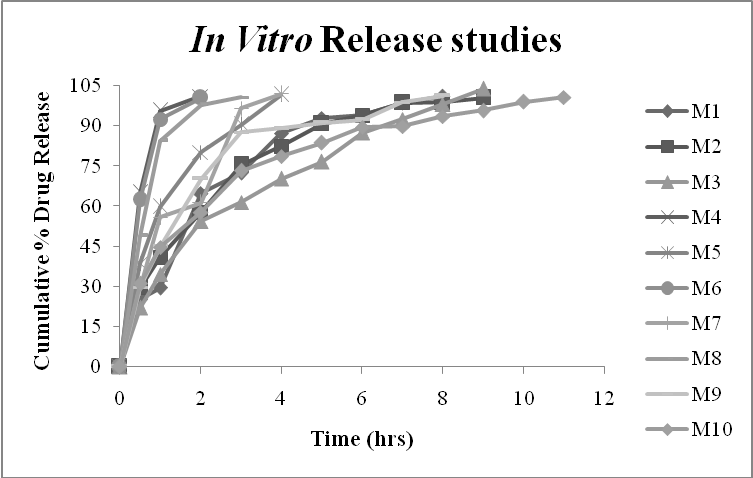
From the dissolution release results it was observed that, all sustained release formulation of Metformin HCl shows linear drug release profile (after six hours) which may be due to polymer relaxation mechanism.
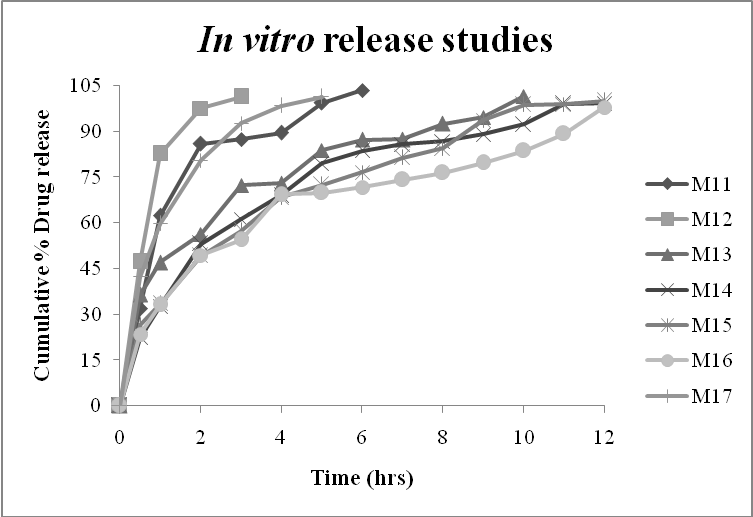
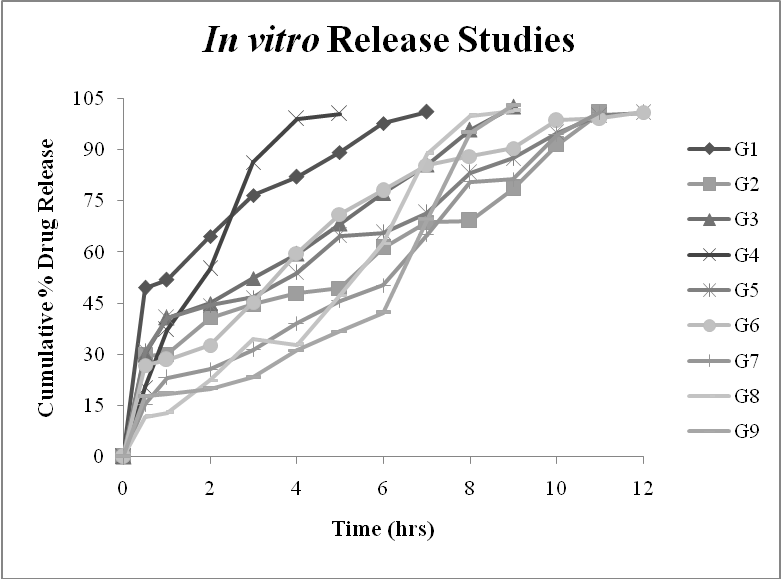
Hence the dissolution profiles of the formulation M14, M15 and M16 were analyzed statistically and fitted with kinetic models to get the optimized formula for the development of bilayer tablet. The results of dissolution data of selected Metformin HCl matrix tablet formulations M14, M15 and M16 were fitted to various drug release kinetic models i.e., Zero- Order, First-Order, Higuchi and Peppas models to find out the release mechanism of the drug. The results are 0.5139, 0.9843, The results revealed that all formulations follow first-order than zero-order. And from Peppas model, the results revealed that the release of drug was due to diffusion (fickian) of the swollen matrix layer rather than erosion and relaxation. From the dissolution profile of all the formulations i.e., (G1-G9), it was found that the formulation G5, G6 and G7 shows more drug retardation. This retardation of drug release from formulation containing drug and polymers in the ratio 1:9:3, 1:7.5:4.5 and 1:6:6 might be due to the increase in the thickness of gel structure concomitantly followed by increase in water permeation and hydration of matrix layer which results in an extensive swelling and increase in diffusion path length. The dissolution profile of formulation G1 – G9 are shown in Figure 4. From the dissolution release results it was observed that all sustained release formulation of Glipizide shows linear drug release profile (after six hours) which was mainly due to polymer relaxation mechanism.
Hence the dissolution profiles of the formulation G5, G6 and G7 were analyzed statistically and fitted with kinetic models to get the optimized formula for the development of bilayer tablet. The results of dissolution data of selected Glipizide matrix tablet formulations G5, G6 & G7 were fitted to various drug release kinetic models i.e., Zero-Order, First-Order, Higuchi and Peppas models to find out the release mechanism of the drug. The results revealed that all formulations follow first-order than zero-order. And from Peppas model, the results revealed that the release of drug was due to diffusion (fickian) of the swollen matrix layer rather than erosion and relaxation.
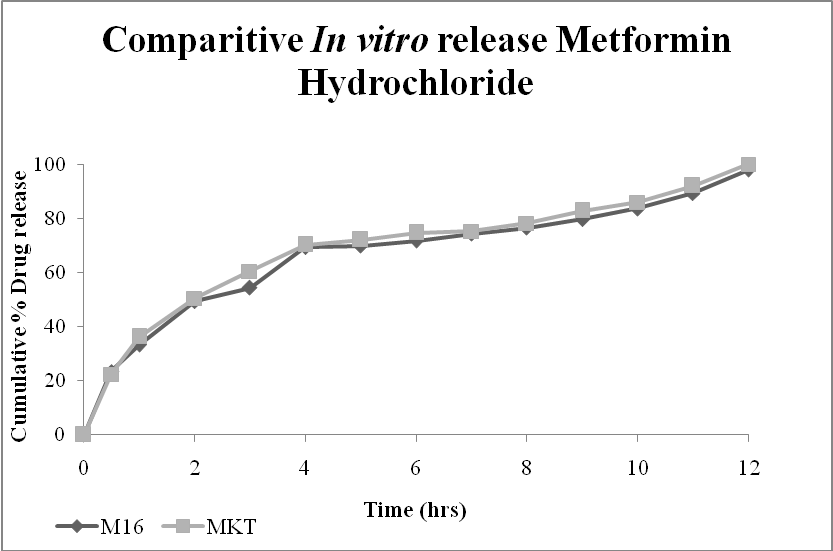
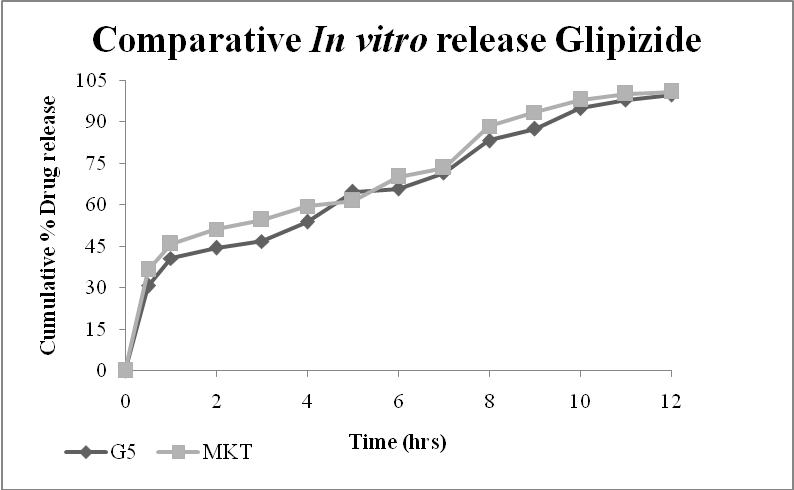
From the above release results, formulation M16 and G5 were selected as optimized formulation for the development of bilayer tablet. The dissolution release profile of optimized bilayer tablet formulation was compared with the market formulation, which was comparable with the market formulation. The comparative dissolution profiles are shown in Figure 5 and 6. The difference factor and similarity factor f1 and f2 were found to be 3.75 and 79.46 for metformin hydrochloride; 8.74 and 65.78 for glipizide respectively.
Stability studies were carried out at 40°C and 25°C and tested for its physical properties and in vitro release studies, stability study results revealed that the prepared formulation was stable in the stress condition.
Conclusion
The study shows that the matrix method can be employed for preparing metformin hydrochloride and glipizide sustained release bilayer tablet using combination of hydrophilic polymer HPMC K4M and hydrophobic polymer Eudrgit L 100. It was concluded that the formulation M16 which consist of 250 mg of metformin hydrochloride, 125 mg HPMC K4M and 250 mg of Eudurgit; G5 which consist of 6 mg of glipizide, 90 mg of HPMC K4M and 30 mg of Eudurgit as matrix forming polymers along with other ingredients provided a release that was comparable with the marketed formulation. The optimized Bilayer tablet formulation was stable at different stress conditions. The difference and similarity factors were found to be comparable with the marketed formulation.
References
-
Dhanorkar YN, Rajkapoor B, Ghode PD (2012) Development and Evaluation of oral multiparticulate drug delivery system of metformine and glimepiride by using extrusion and spheronization Technique. Int J Drug Form Res 3(1): 53-68.
-
Dixit RB, Gupta RR, Patel HV, Patel PS, Dixit BC (2009) Formulation and Characterization of Sustained Release Matrix Tablet of Metformin Hydrochloride. Int J Pharma Recent Res 1(1): 49‐53.
-
Ibrahim HK, Attia AM, Ghorab MM (2010) Biopharmaceutical evaluation of formulated metformin/ rosiglitazone tablets. Drug DiscoTher 4(2): 100‐108.
-
Rockville MD (1996) Diabetes 1996 Vital Statistics, American Diabetes Association, USA.
-
Harris MI, Cowie CC, Stern MP (1995) Diabetes in America, National Institutes of Health, National Institute of Diabetes and Digestive and Kidney Diseases. 2nd (Edn.), NIH Publication No. 95-1468.
-
Alberti KGMM, Gries FA. (1988) Management of non- insulin-dependent diabetes mellitus in Europe: a consensus view. Diabet Med 5(3): 275-281.
-
Scheen AJ, Lefebvre PJ (1998) Oral antidiabetic agents. A guide to selection. Drugs 55(2): 25-36.
-
Effect of intensive blood-glucose control with metformin on complications in overweight patients with type 2 diabetes (UKPDS 34) UK Prospective Diabetes Study (UKPDS) Group. (1998) Lancet 352(9131): 854-865.
-
UK Prospective Diabetes Study (UKPDS) (1995) Group UK Prospective Diabetes Study 16: Overview of 6 years therapy of type II diabetes: a progressive disease Diabetes 44(11): 1249-1258.
-
Bailey JC, Turner RC (1996) Metformin. N Engl J Med 334: 574-579.
-
Rahman Z, Ali M, Khar RK (2006) Design and evaluation of bilayer floating tablets of captopril. Acta Pharm 56(1): 49-57.
-
Amrutkar JR, Kalaskar MG, Shrivastav VG, Yeole PG (2009) Bilayer tablet formulation of metformin hydrochloride and gliclazide: A novel approach in the treatment of diabetes. Int J Pharma Res Development 1: 1‐11.
-
Rajendran NN, Natarajan R, Subashini R, Patel H (2011) Formulation and evaluation of sustained release bilayer tablets of Metformin hcl and pioglitazone HCl. Int J Current Pharma Res 3(4): 118-122.
-
Dills DG, Schneider J (1996) Clinical Evaluation of Glimepiride versus Glyburide in Type 2 Diabetes in a Double-blind Comparative Study. Horm Metab Res 28(9): 426-429.
-
Pattanayak DP, Dinda SC (2011) Bilayer tablet formulation of metformin hydrochloride and glimepiride: A novel approach to improve therapeutic efficacy. Int J Drug Disco Herb Res 1(1): 1-4.
-
Panchel HA, Tiwari AK (2012) A novel approach of Bilayer tablet technology: A review. Int Res J Pharm 3(5): 44-49.
-
Shiyani B, Gattani S, Surana S (2008) Formulation and evaluation of Bilayer tablet of metoclopropamide hydrochloride and ibuprofen. AAPS Pharm Sci Tech 9(3): 818-827.
-
Lakshmana Prabu S**,** Shnanawaz S, Arun Shirwaikar, Ravikumar (2007) Compatibility studies between granisetron hydrochloride and tablet excipients using thermal and non-thermal methods. Int J Pharm Excipients pp: 97-101.
-
Bankar GS, Anderson GS (1987) Tablets. In: The theory and practice of industrial pharmacy (Lachman L, Liberman HA, Kanig JL eds), 3rd (Edn.), Varghese publishing house, Mumbai, pp: 293-345.
- Effects of 5-HTP and Melatonin on the Sleep Cycle of Medical Students
- Adsorption of Bisphenol A on NH4OH- Modified Rice Husk and Sugar Cane Bagasse Biochar
- Comparative Assessment of the Reinforcement Efficiency of Palm Fruit Fibre and Coconut Fibre in High Density Polyethylene (HDPE) Matrix Composite
- Importance of Bio Compounds Naturally Present in Food with Functionality in Animal Metabolism
- Sub-Acute Study on the Cardiotoxic Effects of Monosodium Glutamate Ingestion in Albino Rat
- Weight Management and Its Natural Solutions: A Review