
Phytochemical and Chemical Characterization of Centella Asiatica and Cymbopogan Citratus Extracts
Epidemiological studies have consistently linked abundant consumption of foods of plant origin, to the reduced risk of cancer. The present study was conducted to perform the of chemical and phytochemical characterization of selected medicinal herbs Centella asiatica and Cymbopogan citratus which are commonly used in Malaysian diet. Phytochemical and chemical characterization of the plant extracts were determined by qualitative phytochemical analysis, HPLC analysis and GC-TOFMS analysis. The results from the phytochemical analysis indicated the presence of saponin, anthroquinone, flavonoid, tannin, alkaloid in Centella asiatica: reducing sugar, saponins, flavonoid, tannin, alkaloids in Cymbopogan citratus. In addition, the GC spectrum of Cymbopogan citratus indicated monoterpenes and cyclic terpenes, aromatic amine and alcohols and fatty acid methyl ester. Further, the GC spectrum of Centella asiatica indicated mono and cyclic terpenes and terpenoid alcohols, aromatic amine, alcohols and alkanes, caryophyllene and steroids. Since the major phytochemicals and chemicals identified in the tested plants are found to be chemopreventive and chemotherapeutic agents with antioxidant, anti-inflammatory potential and anti-tumor potential, the plants investigated may be recommended as good candidates for cytotoxicity and antiangiogenic potential.
Introduction
With the development of botanical drugs, including traditional herbal medicines, analysis of their bioactive components is imperative since the medicinal values of plants depends on the bioactive phytochemical constituents that produce defined physiological action in the human body. Qualitative and quantitative phytochemical screenings have been used for the detection of alkaloids, flavonoids, tannins, saponins and cardiac glycosides in medicinal plants [1]. Advances in the development of new spectroscopic and chromatographic techniques and other separation techniques has led to the increasing number of new bioactive compounds.
Gas-chromatography (GC) or gas-chromatography- mass-spectroscopy (GC-MS) is used almost exclusively for the qualitative analysis of the volatiles and complex mixtures of bioactive compounds from plant extract [2]. Comprehensive two-dimensional gas chromatography (GC×GC) also has been extensively applied in the essential oil study and the technique has also been successfully used in the industrial analysis of plant materials to improve component separation and identification [3]. Gas-chromatography-mass -spectrometry, gas-chromatography–time-of-flight–mass- spectrometry (GC-TOF-MS) and liquid-chromatography- mass-spectrometry (LC-MS) are currently the principal mass spectrometry methods for metabolite analysis [4]. The comprehensive two-dimensional gas chromatography with time-of-flight mass spectrometric detection (GC×GC- TOFMS) is the most advanced analytical technique of high sensitivity and selectivity. It is also a technique which provides a substantial enhancement of peak capacity and signal intensity over conventional GC analysis [5].
HPLC and HPTLC methods were commonly used for a qualitative and quantitative determination of phenolic compounds, luteolin, lithospermic acid and other compounds from thyme, wild thyme and sweet marjoram [6]. Quercetin glucoronides have been identified in human plasma samples by means of HPLC-UV-MS/MS with selective determination of positive mode electrospray ionization. A recent study has indicated that simultaneous isolation of catechin, epicatechin, rutin and luteolin were done by HPLC analysis [7].
Polyphenols including flavonoids, alkaloids, phenolics, essential oils, tannins and saponins are the major category of phytochemicals with potential health benefits [8]. A wide variety of flavonoids are distributed in vegetables. One of the major subgroups ubiquitously occurring in vegetables is flavanol-type flavonoids including kaempferol, quercetin and myrecitin and their glycosides [9]. To establish the effects of polyphenol consumption and health benefits it is essential to identify the existing polyphenols present in fruits, vegetables and culinary herbs that are likely to provide health benefits. In view of this, it would be useful to identify the commonly occurring beneficial flavonoids such as quercetin, rutin, kaempferol and caffeic acid in Mentha spicata, Centella asiatica and Cymbopogan citratus extracts. In addition, chemical profiling of the extracts would help us to identify lead structures with pharmacological potential. On this direction the present study was done to perform the phytochemical analysis and chemical profiling of the crude extracts of Centella asiatica and Cymbopogan citratus.
Materials and Methods
Extraction of Plant Material
200 g of the finely powdered plant material of the selected plants were macerated and soaked in 80% methanol for 4 days. The extracts were then clarified by filtration through filter paper (Whatman No.1) and is then concentrated in vacuo using a rotary evaporator at 40°C to give the respective crude extracts. The crude extracts were then weighed and transferred into vial wrapped with aluminum foil and stored at 4°C to prevent loss of material until further use [10].
Qualitative Phytochemical Analysis
Qualitative phytochemical tests were done to identify the presence of sugar, tannins, flavonoids, anthocyanins and alkaloids in the crude extracts. Several chemical reagents were used in the detection according to the previously published methods [11].
Preparation of the Plant Sample
About 100 mg/ml of crude extracts of the selected plants were prepared by diluting in methanol for the Benedict’s test, Borntrager’s test, flavonoid test, ferric chloride test and alkaloid test. For the saponin test the dried crude extracts were used.
Benedict’s Test
To 2.5 ml of the Benedict’s reagent, added 2 ml of the diluted crude extracts of the selected plants respectively and the mixture is vortexed and heated in a boiling water bath for 10 min. Formation of a brick red precipitate was recorded as a positive result (+) for the presence of reducing sugar.
Frothing Test
0.1 g of the crude extracts of the selected plants were diluted with 1 ml distilled water respectively in test tubes and shaken vigorously for 1 min and let to stand for 10 min to observe the persistent froth formation in the tube, frothing was recorded as a positive result (+) for the presence of saponins.
Borntrager’s Test
To 2 ml of the diluted plant extracts of the selected plants added 1 ml of the diluted ammonia (10%) and shaken well for few seconds to observe the color change. A formation of bright pink color was recorded as a positive result (+) for the presence of anthraquinones.
Flavonoid Test
To 2 ml of the diluted plant extracts of the selected plants added 2 ml of diluted sodium hydroxide and a few drops of concentrated HCL. The formation of a pink or red color solution was recorded as a positive result (+) for the presence of flavonoids.
Ferric Chloride Test
To 2 ml of the diluted plant extracts of the selected plants added 1ml of 15% ferric chloride solution respectively, in test tubes, shaken well and the color change was noted. Formation of a blue or green blackish precipitate was recorded as a positive result (+) for the presence of tannins.
Alkaloid Test
To 2 ml of the diluted plant extracts of the selected plants added 10 ml of ammoniacal chloroform, and few drops of 10% sulphuric acid and tested with Meyer’s reagent. Formation of a white precipitate indicated the presence of alkaloid and recorded as a positive result (+).
GC-TOFMS (Gas-chromatography-time-of-flight- mass-spectrometer) Analysis
GC-TOFMS is the most advanced analytical technique of high sensitivity and selectivity. It also provides a substantial enhancement of peak capacity and signal intensity over conventional GC analysis. For GC-TOF-MS analysis, 0.1 g of crude extract was mixed with 1 ml of distilled water and 4 ml of solvent mixture (ethyl acetate:hexane:methylene chloride). The mixture was agitated for 2 min at 3000 rpm. The supernatant was filtered and injected into the GC column. The chemical profiling of the crude extracts of the plants was done by using a time-of-flight mass spectrometer (TOFMS) (Pegasus®) for GC/MS analysis. The m/z of each ion determined by its time of flight and equation (t = Slope*(m/z)1/2 + Offset). Slope and offset values were determined using a mass calibration standard which was done automatically by the mass calibration routine of the Pegasus® Chroma TOF TM software [12].
GC-TOF MS Instrumentation Parameters Table 1
| Model | Leco Pegasus III |
| Detector | Leco Pegasus III Time-of-flight Mass Spectrometer |
| Software | ChromaTOFSoftware |
| Transfer Line | 260°C |
| Ion Source | 250°C |
| Acq. Rate | 10 spectra/sec (35 to 550 amu) |
| GC | Hewlett Packard 6890 |
| Column | DB-5 20 x 0.18 mm ID, 0.18 μm phase film |
| Oven | 50 (kept 2 min) to 250°C (kept 10 min), with a rate of 8°C/min |
| Injector | 250°C |
| Carrier gas | Helium, 1.2 ml/min, constant flow |
| Sample | 1.0 μL, split injection |
Table 1: Instrumentation parameters for GC -TOFMS
HPLC determination of polyphenols (quercetin, rutin, kaempferol, caffeic acid)
HPLC Instrumentation and Operating Conditions
HPLC Instrumentation: HPLC-determination was carried out on a Waters 2695 separation module which consists of an integrated quaternary solvent delivery system and sample management platform. Automated sample injection systems and multiport injection valves have good reproducibility so that a series of injections can be made with a variation in sample volume less than 1 %.
Sample Preparation
Crude Extracts: 0.1 g of the solvent free crude extracts were re-dissolved in 5 ml of 100% methanol. The extracts were filtered through 0.20 µm micro-filter. 20 µl was injected into the HPLC.
Standards: 1 mg of the standards (quercetin, rutin, kaempferol, caffeic acid) were diluted serially (1250, 2500, 5000, 7500 µg/ml) in HPLC grade acetonitrile and filtered through 0.2 µm micro-filter. 20 µl was injected into the HPLC.
Operating Conditions: The column used was a reverse- phase C18 Novapak column (4.6 x 250 mm I.D; 5µm). A two solvent gradient system was used. The optimized mobile phase was (A) water: formic acid (99:1) and (B) 49% water, 50% methanol, 1% formic acid. The sample injection volume was 20 µl. Gradient elution was performed at a flow rate of 1 ml / min for 30 min. The detector monitored the sample at 254.9 nm for quercetin, 256.1 nm for rutin, 230.1 for kaempferol and caffeic acid. The identification of the compounds in the samples were achieved by comparison of both retention time (tR) values and absorption spectra obtained for each eluted peak of the samples with those obtained for external standards quercetin, rutin, kaempferol and caffeic acid purchased from Sigma chemicals [13].
Quantification of Polyphenols (Quercetin, Rutin, Kaempferol, and Caffeic Acid): Quantification of polyphenols was performed based on the external standards with a mixture of standards of known concentration that were analyzed in duplicates before and after the batch of the samples and their peak area was recorded. The peak area was used to calculate the concentration of the compounds in the analyzed samples. The amount of the polyphenols in the plant samples was determined by the peak area, concentration of the external standards used by using the below calculation. Concentration of sample = Concentration of external standard / Peak area of external standard x Peak area of unknown.
Results
Extraction of the Plant Material
The percentage recovery of the crude extracts obtained were found to be 4.85%, 7.45% and 6.96% respectively for Centella asiatica, Cymbopogan citratus and Allium cepa extracts. The percentage recovery of the crude extracts is shown in Table 2.
| Dry weight of the Plant samples (g) | Weight of crude extracts (g) | Percentage recovery (%) | |
|---|---|---|---|
| 1. Centella asiatica | 200 | 9.7 | 4.85 |
| 2. Cymbopogan citratus | 200 | 14.9 | 7.45 |
Table 2: Percentage recovery of crude extracts.
200 g of the finely powdered plant material of the selected plants were macerated and soaked in 80% methanol for 4 days. The extracts were then clarified by filtration through filter paper (Whatman No.1) and is then concentrated in vacuo using a rotary evaporator at 40°C to give the respective crude extracts. The extracts were weighed, and the percentage recovery was calculated for 200 g of dried plant material.
Phytochemical Analysis
Results from the phytochemical analysis indicated the presence of saponin, anthroquinone, flavonoid and alkaloid in Ocimum basilicum extracts. Reducing sugar, flavonoid, alkaloids were found to be present in Mentha spicata. Meanwhile, saponin, anthroquinone, flavonoid, tannin and alkaloid are present in Centella asiatica extracts, whereas reducing sugar, saponins, flavonoid, tannin and alkaloids are present in Cymbopogan citratus. Allium cepa extracts were found to contain saponin, anthroquinone, flavonoid and alkaloid Table 3.
| Benedict's test | Frothing test | Borntrager's Test | Flavonoid test | Ferric chloride test | Alkaloid test | |
|---|---|---|---|---|---|---|
| Centella asiatica | - | + | + | + | + | + |
| Cymbopogan citratus | + | + | - | + | + | + |
Table 3: Phytochemical analysis of the plant extracts. (+ indicates the presence and - indicates the absence of the organic compo
Table 3: Phytochemical analysis of the plant extracts. (+ indicates the presence and - indicates the absence of the organic compounds tested by qualitative color reaction. (Benedict’s test- reducing sugar, frothing test- saponins, Borntrager’s test-anthro-quinones, flavonoid test-flavonoids, ferric chloride test- tannins, alkaloid test-alkaloids).
GC-TOFMS (Gas-chromatography-time-of-flight- mass-spectrometer) Analysis
GC Spectrum of Centella Asiatica: GC-spectrum of Centella asiatica extracts indicated the presence of fatty acid methyl esters (hexa decane, hepta decane, octa decane) terpenoids, terpenoid alcohol, caryophyllene and steroid derivatives. Table 4 represents the compounds identified, chemical formula, peak area (%) and retention time (s) of the crude extracts of Centella asiatica. GC spectrum of the crude extracts of Centella asiatica indicated the presence of 52 compounds Table 4.
| NO | Name of the compound | Formula | % Area | R.T (s) |
|---|---|---|---|---|
| 1 | 1,16-Cyclocorynan-16-carboxylic acid, 17-(acetyloxy)-19, 20- didehydro- 10-methoxy-, methyl ester (16.xi, 19E) | C H N O 24 28 2 5 | 0.15 | 1401.8 |
| 2 | 1,2 Epoxy-5, 9-cyclododecadiene | C H O 12 18 | 2.06 | 1142.46 |
| 3 | 1,6,10-Dodecatriene,7,11-dimethyl-3-methylene-(E)- | C H 15 24 | 0.85 | 819.387 |
| 4 | 13-Tetradec-11-yn-1-ol | C H O 14 24 | 0.46 | 1696.71 |
| 5 | 19-Norpregna-1,3,5,7,9-pentaen-21-al,3,17-bis 9(trimethylsilyl)oxy)-, O-methyloxime, (17ă)- | C H NO Si 27 4 3 2 | 1.68 | 1349.99 |
| 6 | 1-Adamantanemethylamine, ă-methyl- | C H N 12 21 | 1.25 | 1361.18 |
| 7 | 1H-Cyclopenta(1,3)cyclopropal(1,2)benzene,octahydro-7-methyl-3- methylene-4-(1-methylethyl)-, (3aS-{(3aă, 3bă,4ă,7ă,7aS*)} | C H 15 24 | 1.49 | 843.23 |
| 8 | 1-Methylene-2b-hydroxymethyl-3,3-dimethyl-4b-93-methylbut-2-enyl)- cyclohexane | C H 23 48 | 2.57 | 933.939 |
| 9 | 2,5-Dimethoxy-4-(methylsulfonyl)amphetamine | C H NO S 12 19 4 | 3.65 | 218.522 |
| 10 | 2-Amino-1-(o-methoxyphenyl)propane | C H NO 10 15 | 1.71 | 1105.3 |
| 11 | 2-Chloroethanol | C H ClO 2 5 | 4.18 | 582.358 |
| 12 | 2-Piperidinone, N-(4-bromo-n-butyl)- | C H BrNO 9 16 | 0.63 | 1635.97 |
| 13 | 2-Propenoic acid, tridecyl ester | C H O 16 30 2 | 0.43 | 1024.38 |
| 14 | 3,7, 11, 15-Tetramethyl-2-hexadecen-1-ol | C H O 20 40 | 4.5 | 1340.33 |
| 15 | 3- Eicosyne | C H 20 38 | 2.06 | 1142.13 |
| 16 | 5,7-Dodecadiyn-1, 12-diol | C H O 12 18 2 | 2.23 | 1261.01 |
| 17 | 5,8,11-Heptadeccatriynoic acid, methyl ester | C H O 18 24 2 | 5.29 | 1307.97 |
| 18 | 5-Nonadecen-1-ol | C H O 19 38 | 0.63 | 1159.91 |
| 19 | 7,10,13-Hexadecatrienoic acid,methyl ester | C H O 17 28 2 | 1.5 | 1184.56 |
| 20 | 7, 8 -Epoxylanostan-11-ol, 3-acetoxy- | C H O 32 54 4 | 0.8 | 1614.06 |
| 21 | 9, 11-Octadecadiynoic acid,8-oxo, methyl ester | C H O 19 28 3 | 1.55 | 757.25 |
| 22 | 9, 12, 15- Octadecatreinoic acid, methyl ester (Z,Z,Z) | C H O 19 32 2 | 9.22 | 1333.68 |
| 24 | 9, 12-Octadecadienoic acid, methyl ester | C H O 19 34 2 | 1.04 | 1334.87 |
| 25 | 9, Dodecenoic acid, methyl ester, (E)- | C H O 13 24 2 | 6.05 | 1327.68 |
| 26 | ậ- Caryophyllene | C H 15 24 | 0.85 | 817.589 |
| 27 | Actinobolin | C H N O 13 20 2 8 | 0.44 | 1709.76 |
| 28 | Amphetamine -3-methyl | C H N 10 15 | 0.18 | 1222.45 |
| 29 | Aromadendrene | C H 15 24 | 0.02 | 824.36 |
| 30 | Benzeneethanamine, 3-fluro-ậ, 5-dihydroxy-N-methyl- | C H FNO 9 12 2 | 3.59 | 1032.91 |
| 31 | Caryophyllene | C H 15 24 | 5.21 | 785.821 |
| 32 | Cis,cis, cis-7, 10, 13-Hexadeactreinal | C H O 26 26 | 0.04 | 1702.44 |
| 33 | Cyclohexane, 1-ethenyl-1-methyl-2,4-bis(1-methylethenyl)-, (1S-(1ậ, 2ậ,4ậ)}- | C H 15 24 | 2.68 | 758.781 |
| 34 | Diazoprogesterone | C H N 21 20 4 | 2.67 | 933.74 |
| 35 | Dodecane, 1-fluro- | C H F 12 25 | 0.21 | 1503.77 |
| 36 | E-8-Methyl-7-dodecen-1-ol acetate | C H O 15 28 2 | 1.45 | 1580.76 |
| 37 | Epinephrine | C H NO 9 13 3 | 0.63 | 1540.13 |
| 38 | Ethane, nitro | C H NO 9 5 2 | 1.72 | 212.328 |
| 39 | Ethaneperoxoic acid,1-cyano-1-(2-(2-phenyl-1, 3-dioxin-2-yl)ethylpentyl ester | C H NO 9 25 5 | 0.63 | 1160.65 |
| 40 | Phenylethyamine, p, ậ-dimethyl- | C H N 10 15 | 1.19 | 1431.84 |
| 41 | Tungsten, dicarbonyl-(Q-4-pinocarvone)[1,2- bis(dimethylphosphino) ethane | C H O P W 18 30 3 2 | 1.02 | 1521.68 |
| 42 | Ethyne, fluoro- | C HF 2 | 2.01 | 1160.65 |
| 43 | Hexadecanoic acid, methyl ester | C H O 17 34 2 | 7.78 | 1208.4 |
| 44 | Isopropylamine hydrochloride | C H N 3 9 | 1.65 | 889.604 |
| 45 | Methyl 2-O-methyl-ậ-D-xylopyranoside | C H O 7 14 5 | 0.01 | 1129.74 |
| 46 | Methyltetradecanoate | C H O 15 30 2 | 0.07 | 1050.42 |
| 47 | Naphthalene, 1,2,3,5,6,8a-hexahydro-4,7-dimethyl-1-(1-methylethyl)- ((1ậ4aậ,8aậ) | C H 15 24 | 0.32 | 743.597 |
| 48 | Octadecanoic methyl ester | C H O 19 38 2 | 1.68 | 1347.73 |
| 49 | Perhydrophenanthrene, (4aậ, 4bậ, 8aậ,10a.beta)_ | C H 14 24 | 6.05 | 1328.21 |
| 50 | Phosphorothioic acid, O-(4-bromo-2-chlorophenyl) O-ethyl S-propyl ester | C H BrClO PS 11 15 3 | 1.54 | 1379.36 |
| 51 | Stigmastan-6,22-dien, 3,5-dedihydro- | C H 46 29 | 0.01 | 2447.62 |
| 52 | Tetraacetyl-d-xylonic nitrile | C H NO 14 17 9 | 0.46 | 1308.76 |
Table 4: GC spectrum of Centella asiatica. Represents the compounds identified, chemical formula, peak area (%) and retention tim
GC Spectrum of Cympobogan Ctratus
GC-spectrum of Cympobogan citratus extracts indicated the presence of fatty acid methyl esters (hexa decane, hepta decane, octa decane) terpenoids, terpenoid alcohol. Table
5 represents the compounds identified, chemical formula, peak area (%) and retention time (s) of the crude extracts of Cympobogan citratus. It represents the GC spectrum of Cympobogan citratus indicating the presence of 65 compounds as listed in Table 5.
| NO | Name of the compound | Formula | % Area | R.T (s) |
|---|---|---|---|---|
| 1 | (E,E,E)-3,7,11,15-Tetramethyhexadeca-1,3,6,10,14-pentene | C H 20 32 | 0.15 | 1385.95 |
| 2 | (Z)6, (Z)9-Pentadecadien-1-ol | C H O 21 28 | 0.14 | 1690.25 |
| 3 | 1,3,14,16-Nonadecatetratraene | C H 19 32 | 0.14 | 1690.45 |
| 4 | 1,3,6, 10-Dodeccatetraene, 3,7,11-trimethyl- (Z,E)- | C H 15 24 | 0.32 | 1289.98 |
| 5 | 17-Pentatriacontene | C H 35 70 | 0.73 | 2176.1 |
| 6 | 1-Heptatriacotanol | C H O 37 76 | 0.19 | 1401.4 |
| 7 | 1-H-Indene-3-carboxaldehyde,2,6,7,7a-tetrahydro-4a,8-dimethyl- | C H O 12 16 | 1.4 | 924.882 |
| 8 | 1-Naphthalenol,1,2,3,4,4a,5,6,6a-octahydro-4a,8-dimethyl-2-(2-propenyl)- | C H O 15 24 | 0.88 | 1130.81 |
| 9 | 1 R-ă-Pinene | C H O 10 16 | 2.13 | 347.726 |
| 10 | 2.5-Dimethyl-4-(methylsulfonyl)amphetamine | C H NO4S 12 19 | 0.92 | 579.827 |
| 11 | 2,6-Octadien-ol, 3,7-dimethyl-, (Z),- | C H O 10 18 | 0.09 | 1219.12 |
| 12 | 2,6-Octadiene, 1-methoxy-3,7-dimethyl-,(E) | C H O 19 34 2 | 0.44 | 1323.08 |
| 13 | 2-4[methyl-6-(2,6,6-trimethylcyclohex-1-enyl) | C H O 23 32 | 1.79 | 1303.37 |
| hexa-1,3,5- | ||||
| 14 | 2.Amino-1-(o-methoxyphenyl)propane | C H NO 10 15 | 1.16 | 371.902 |
| 15 | 3-Demethylthiocolchicine, N- decarbonyl | C H NO4S 20 23 | 1.38 | 488.452 |
| 16 | 5-Benzofuranaceticacid, 6-ethynyl-2,4,5,6,7,7a-hexahydroxy-7a-hydroxy-3,6- dimethyl-ă-methylene-2-oxo-, methyl ester | C H O 16 20 5 | 0.43 | 789.264 |
| 17 | 5-Nonadecen-1ol | C H O 19 38 | 0.04 | 953.32 |
| 18 | 9,12-Octadecadien-1-ol, (Z,Z)- | C H O 18 34 | 2.5 | 1322.82 |
| 19 | 9,9’-Bi-9H-fluorene, 9 9’-dimethoxy- | C H O 28 22 2 | 0.12 | 1157.38 |
| 20 | ă-Caryophyllene | C H O 15 24 | 2.38 | 814.792 |
| 21 | Aminoguanidine | C H N 20 6 4 | 2.58 | 1126.61 |
| 22 | Azulene,1,2,3,4,5,6,7,8-octahydro-1,4-dimethyl-7-(-methylethylldene)-(1S-cis)- | C H 15 24 | 2.9 | 997.143 |
| 24 | Benzene, (1-methyldecyl)- | C H 17 28 | 0.1 | 856.95 |
| 25 | Benzoic acid, 2-(1-oxopropyl)- | C H O 10 10 3 | 0.05 | 1226.78 |
| 26 | Benzyl alcohol, ă-(1-aminoethyl)-m-hydroxy-, | C H NO 9 13 2 | 0.49 | 705.768 |
| 27 | Aromadendrene | CH N 6 4 | 2.9 | 1046.76 |
| 28 | Bicyclo(3,1,1)hept-2-ene 2,6-dimethyl-6-(4-methyl-3-pentenyl)- | C H 15 24 | 1.23 | 618.122 |
| 29 | Bicyclo(3,1,1)heptane, 6,6-dimethyl-2-methylene-, (1S) | C H 10 16 | 5.03 | 310.63 |
| 30 | Caryophyllene oxide | C H O 15 24 | 2.02 | 931.542 |
| 31 | ḉ-Elemene | C H 15 24 | 0.26 | 900.972 |
| 32 | ḉ- Himalchalene | C H 15 24 | 0.12 | 972.435 |
| 33 | Cis-(-)-2-4a, 5,6,9a-Hexahydro-3,5,6,9 tetramethyl (1H)benzocycloheptene | C H 15 24 | 11.45 | 786.62 |
| 34 | cis, cis, cis-7, 10, 13-Hexadecatrienal | C H O 16 26 | 0.82 | 1326.95 |
| 35 | Cis-p-Mentha-2,8-dien-1-ol | C H 15 24 | 0.08 | 632.241 |
| 36 | Copaene | C H 15 24 | 3.24 | 741.199 |
| 37 | Bicyclo(3,1,1)hept-2-ene,2,6,6-timethyl-(h) | C H NO 19 13 2 | 0.49 | 705.768 |
| 38 | Cyclohexane, 1-ethynyl-1-2,4-bis(1-methylethenyl)-,{1S-(1ă,2ă,4ă)} | C H 15 24 | 0.16 | 756.84 |
| 39 | Cyclopropanecarboxylic acid,2,2-dimethy-3-(2-methyl-1-propenyl)-, 2-methyl-4- oxo-3-(2,4-penyadienyl)-2-cyclopenten-1-ylester, {1R-[1ă[S* (Z),3ă)] | C H O 21 28 3 | 0.19 | 1376.9 |
| 40 | E-2-Tetradecen-1-ol | C H O 14 28 | 0.27 | 2067.74 |
| 41 | Epinephrine | C H NO 9 13 3 | 0.52 | 1459.15 |
| 42 | ё-Selinene | C H 15 24 | 7.38 | 964.775 |
| 43 | Hexadecanoic acid, 15-methyl-, methyl ester | C H O 18 36 2 | 0.07 | 1473.33 |
| 44 | Hexadecen-1-ol,tran-9- | C H O 16 32 | 0.08 | 1168.11 |
| 45 | Hexadecanoic acid, methyl ester | C H O 17 34 2 | 1.94 | 1203.8 |
| 46 | Isopropylamine hydrochloride | C H N 3 9 | 2.09 | 542.664 |
| 47 | 1-Alanine ethylamine, (S) | C H N O 5 12 2 | 0.54 | 636.237 |
| 48 | Limonen-6-ol, pivalate | C H O 15 24 2 | 0.52 | 1410.26 |
| 49 | Methanol,tris (methylenecyclopropyl)- | C H O 13 16 | 7.38 | 965.441 |
| 50 | Phenylethyamine, p, ậ-dimethyl- | C H N 10 15 | 0.19 | 2924.08 |
| 51 | Phenol, 3-methyl-5-(1-methylethyl)-mtehylcarbamate | C H NO 12 17 2 | 0.25 | 676.131 |
| 52 | Naphthalene, 1,2,3,4,4ậ,5,6,8a-octahydro-4a,8-dimethyl-2-(1-methylethenyl)-, [2R-(2ậ4aậ,8aậ)}- | C H 15 24 | 1.17 | 844.895 |
| 53 | Naphthalene, 1,2,3,4,4ậ,5,6,8a-octahydro-7-dimethyl-4-methylene-1- | C H 15 24 | 0.36 | 1006.13 |
| (1-methylethenyl)-, (1ậ4aậ,8aậ)}- | ||||
| 54 | Naphthalene, 1,2,3,4,4ậ,5,6,8a-octahydro-7-dimethyl-4-methylene-, [2R-(2ậ4aậ,8aậ)}- | C H 15 24 | 1.17 | 844.895 |
| 55 | Naphthalene, 1,2,3,4,tetrahydro-1,6-dimethyl-4-(1-methylethenyl)-, | C H 15 24 | 1.08 | 877.13 |
| (1S-cis)- | ||||
| 56 | Naphthalene, 1,2,3,5,6,8a-hexahydro-4,7-dimethyl-1-(1-methylethyl)- (1S-cis)- | C H 15 24 | 4.04 | 878.129 |
| 57 | Naphthalene, 1,2,3,5,6,8a-hexahydro-4,7-dimethyl-1-(1-methylethyl)- ((1ậ4aậ,8aậ) | C H 15 24 | 0 | 980.428 |
| 58 | Phthalan | C H O 8 8 | 2.66 | 583.89 |
| 59 | Retinoic acid, methyl acid | C H O 11 30 2 | 0.89 | 583.89 |
| 60 | Santolina treine | C H 10 16 | 11.45 | 786.887 |
| 61 | Tetradecanoic acid,10, 13-dimethyl-, methyl ester | C H O 17 34 2 | 0.51 | 1343.86 |
| 62 | Tetratriacontane | C H 34 70 | 0.08 | 871.335 |
| 63 | Trans-ậ-Bergamotene | C H 15 24 | 0.2 | 797.343 |
| 64 | Tungsten, dicarbonyl-(Q-4-pinocarvone) [1,2- bis(dimethylphosphino)ethane | C H O P W 18 30 3 2 | 1.41 | 1299.97 |
| 65 | Vitamin A aldehyde | C H O 20 28 | 0.14 | 1002.67 |
Table 5: GC spectrum of Cymbopogan citratus. Represents the compounds identified, chemical formula, peak area (%) and retention t
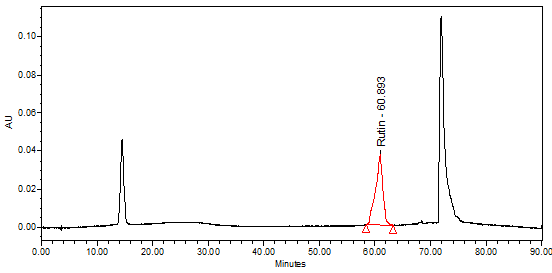
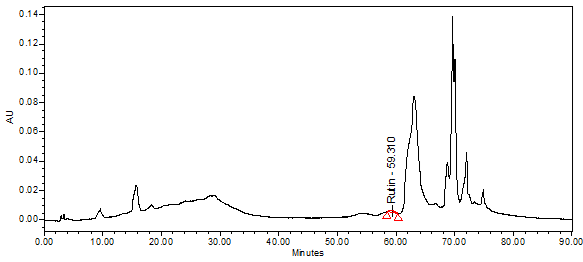
Table 5: GC spectrum of Cymbopogan citratus. Represents the compounds identified, chemical formula, peak area (%) and retention time (s) HPLC Determination of Polyphenols (Quercetin, Rutin, Kaempferol, Caffeic Acid): The HPLC profile indicated the presence of the flavonoids, quercetin and rutin, Kaempferol and Caffeic acid, in Cymbopogan citratus extracts. The retention time of quercetin was_, 20.440 min for _Cymbopogan citratus, retention time of standard quercetin (20.944 min). Meanwhile, the retention time of rutin was found to be 18.120 min for Cymbopogan citratus when compared to the retention time of standard rutin (17.899 min). In addition, the retention time of kaempferol was found to be 74.948 min for Cymbopogan citratus, when compared to the standard kaempferol with a retention time of 73.785 min. For caffeic acid, the retention time was found to be 14.638 min for Cymbopogan citratus when compared to the standard (14.741 min). For Centella asiatica, the retention time of quercetin was found to be 71.941 min when compared to the standard (71 min), and for rutin the retention time was 59.310 min when compared to standard (60.893 min). kaempferol and caffeic acid were not detected in Centella asiatica extracts (Table 6; Figures 1-4).
| Plant | Phenols | Retention Time (min) |
|---|---|---|
| Standards | Quercetin | 20.944 |
| Rutin | 17.889 | |
| Kaempferol | 73.785 | |
| Caffeic acid | 14.741 | |
| Cymbopogon citratus | Quercetin | 20.44 |
| Rutin | 18.12 | |
| Kaempferol | 74.948 | |
| Caffeic acid | 14.638 | |
| Centella asiatica | Standard | 71 |
| Quercetin | 71.941 | |
| Standard | 60.893 | |
| Rutin | 59.31 | |
| Kaempferol | nd | |
| Caffeic acid | nd |
Table 6: HPLC Chromatogram, retention time of poly phenols in CA and CC.
HPLC chromatogram of CC-Cymbopogan citratus and CA-Centella asiatica compared to standards. Detected under different wavelength: 254.9 nm for quercetin, 256.1 nm for rutin, 230.1 nm for kaempferol and caffeic acid.
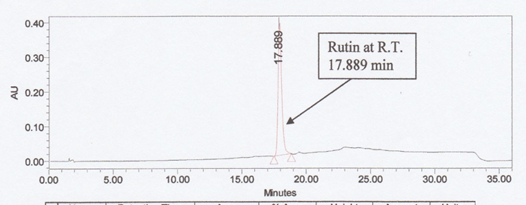
A B Different detection wavelength. a: 254.9 nm for quercetin with a retention time of 20.944 min, b: 256.1 nm for rutin 17.889 min. Figure 1: HPLC chromatogram of quercetin and rutin standard.
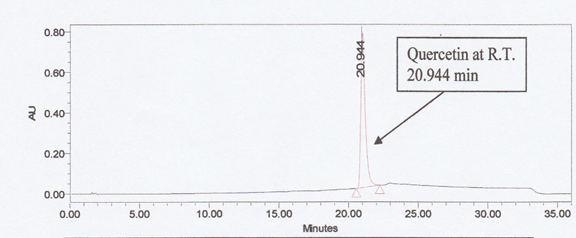
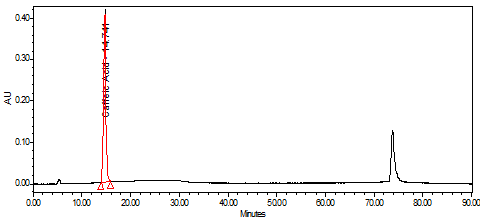
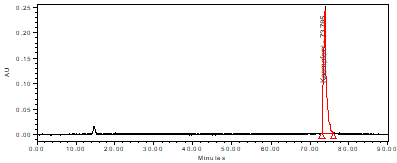
A B Different detection wavelength. a: 230.1 nm for kaempferol with a retention time of 73.785 min, b: 230.1 nm for caffeic acid with a retention time of 14.741 min. Figure 2: HPLC chromatogram of kaempferol and caffeic acid standard.
A B
Different detection wavelength. a: 254.9 nm for standard rutin with a retention time of 60.893 min, b: 256.1 nm for Centella asiatica with a retention time of 59.310 min.
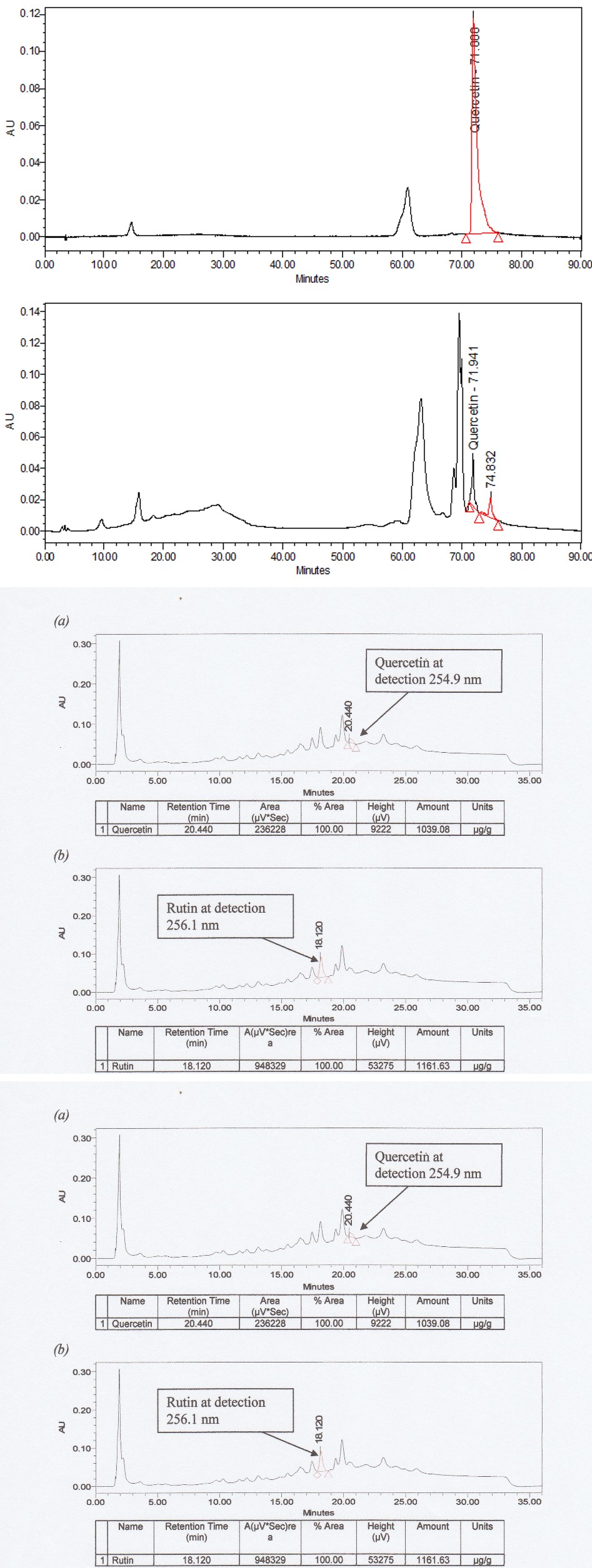
C D Different detection wavelength. a: 254.9 nm for standard quercetin with a retention time of 71.00 min, b: 256.1 nm for Centella asiatica with a retention time of 71.941 min. Figure 3: HPLC Chromatogram of Centella asiatica.
A
B
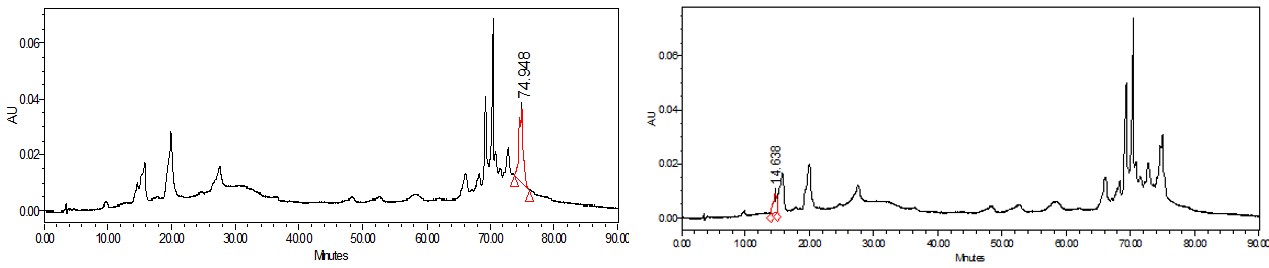
C D Different detection wavelength. a: 254.9 nm for quercetin with a retention time of 20.440 min, b: 256.1 nm for rutin with a retention time of 18.120 min. c: 230.1 nm for kaempferol with a retention time of 74.948 min, d: 230.1 nm for caffeic acid with a retention time of 14.638 min. Figure 4: HPLC Chromatogram of Cymbopogon citratus.
Quantification of Polyphenols (Quercetin, Rutin, Kaempferol, Caffeic Acid): HPLC quantification of the polyphenols (quercetin, rutin, kaempferol, caffeic acid indicated the concentration of the polyphenols (µg/g).
The concentration of quercetin was found to be 335.105 1039.08, and 107.82, µg/g in Centella asiatica and Cymbopogon citratu_s extracts respectively. _Cymbopogon _citratu_s was found to contain the highest concentration of
quercetin. The concentration of rutin was found to be 54.96, 1161.63 µg/g in the crude extracts of Centella asiatica and Cymbopogon citratu_s. The concentration of kaempferol was found to be 231.3 µg/g in the crude extracts of _Cymbopogon citratu_s respectively. The concentration of caffeic acid was found to be 39.38 µg/ g in the crude extracts of _Cymbopogon citratu_s . Kaempferol was not detected in _Centella asiatica extracts, while caffeic acid was not detected in Centella asiatica Table 7.
| Plant | Flavonoids | Concentration of phenols (µg/g) |
|---|---|---|
| Cymbopogon citratus | Quercetin | 1039.08 |
| Rutin | 1161.63 | |
| Kaempferol | 231.3 | |
| Caffeic acid | 39.38 | |
| Centella asiatica | Quercetin | 335.105 |
| Rutin | 54.96 | |
| Kaempferol | nd | |
| Caffeic acid | nd |
Table 7: Quantification of polyphenols in CA and CC. Quantification of polyphenols was performed based on the external standar
Nd: not detected. Table 7: Quantification of polyphenols in CA and CC. Quantification of polyphenols was performed based on the external standards with a mixture of standards of known concentration that were analyzed in duplicates before and after the batch of the samples. The peak area was used to calculate the concentration of the compounds in the analyzed samples.
Discussion
Extraction of Plant Material
The medicinal herbs, Centella asiatica and Cymbopogan citratus which are selected for the present study are culinary herbs which are commonly used in Malaysian diet. Preliminary phytochemical and chemical characterization of the plant extracts were done to identify selected bioactive compounds. Initially the powdered plant material was macerated with 80% methanol to obtain the crude extracts. Extraction of the plant material by standardized protocol is an essential step to isolate the organic constituents from the plant. Properties of a good solvent in plant extractions includes, low toxicity, ease of evaporation at low heat, promotion of rapid physiologic absorption of the extract, preservative action, inability to cause the extract to complex or dissociate. Alcohol is favored for the extraction of plant materials as it facilitates the complete extraction of the various organic compounds with different polarities and at lower temperatures and boiling point compared to aqueous extraction [13, 14, 15].
Organic solvents like methanol and ethanol are efficient to extract the volatile and saturated organic compounds from plant materials due less contamination problems during storage and easier evaporation compared to water extracts [16]. Studies have reported a higher percentage yield of crude extracts by methanol extraction when compared to non-polar solvents [17, 18]. Methanol and ethanol have been extensively used to extract antioxidant compounds from various plants and plant-based foods (fruits, vegetables etc.) such as plum, strawberry, pomegranate, broccoli, rosemary, sage, sumac, rice bran, wheat grain and bran, mango seed kernel, citrus peel, and many other fruit peels [19].
Phytochemical Analysis
Qualitative phytochemical tests were done to identify the presence of sugar, tannins, flavonoids, anthocyanins and alkaloids in Centella asiatica and Cymbopogan citratus extracts. Several chemical reagents were used for this following the previously published methods [13].
Saponin, anthroquinone, flavonoid, tannin and alkaloid were found to present in Centella asiatica extracts_. Previous phytochemical and biological investigations of _C. asiatica have yielded several triterpenes [20, 21]. Polyacetylenes [22] and flavonoids [23]. Centella contains components, including volatile oils, flavonoids, tannins, phytosterols, amino acids, and sugars. In the present study reducing sugar, saponins, flavonoid, tannin and alkaloids were found to be present in Cymbopogan citratus. A few investigations which have been accomplished about the Cymbopogon species reported alkaloids, saponins as the main components.
GC-TOFMS Analysis
The chemical profiling of the crude extracts of the plants was done by using a time-of-flight mass spectrometer (TOFMS) (Pegasus®) for GC/MS analysis. The m/z of each ion determined by its time of flight and equation (t = Slope*(m/z)1/2 + Offset). Slope and offset values were determined using a mass calibration standard which is done automatically by the mass calibration routine of the Pegasus®Chroma TOFTM software [14]. The rapid advances in spectroscopic and chromatographic techniques have totally changed the picture of chemical study of plants and essential oils. Many techniques have been used for studying the chemical profiles of plants and essential oils; e.g. IR- spectroscopy, UV-spectroscopy, NMR spectroscopy and gas chromatography [24]. Gas chromatography has been proved to be an efficient method for the characterization of plant constituents and essential oils [3, 25]. The combination of gas chromatography and mass spectrometry (GC-MS) allows rapid and reliable identification of essential oils components from plants [26, 27]. Time-of-flight mass spectrometry (TOFMS) is probably the simplest method of mass spectrometric measurement by the physical principle. The key features of TOFMS are extreme sensitivity (all ions are detected), practically unlimited mass range and as well as high-speed analysis recent TOFMS instruments are able to measure hundreds full spectra per second) which makes it one of the most desirable methods of mass analysis [27, 28].
GC spectrum of Cymbopogan citratus extracts the indicated monoterpenes and cyclic terpenes (pinene, caryophyllene, caryophyllene oxide, azulene, aromadendrene, and copaene, ё-selinene, santolina treine), terpenoid alcohols (9,12-octadecadien-1-ol,(Z,Z)-), aromatic amines (aminoguanidine, isopropylamine hydrochloride, methanol, phthalan), fatty acid methyl ester (hexadecanoic acid, methyl ester). Citral is the major component of the leaves (3,7-dimethyl-2,5-octadienal) is the name given to a natural mixture of two isomeric acyclic monoterpene aldehydes: geranail (trans-citral, citral A) and neral (cis- citral, citral B). 9,12-octadecadien-1-ol (Z,Z) was the major cyclic terpenoid reported in the present study. A recent study reported monoterpene olefins such as myrcene [29] this is in accordance with the results from the present study where monoterpenes such as, azulene, aromadendrene, copaene, ё-selinene, santolina treine were found to be present in Cymbopogan citratus. Lemon grass essential oil contains high content of citral, neral geranyl isomers [30] and Z- Caryophyllene (2.71%) in accordance with this, the present study indicated the presence of caryophyllene, caryophyllene oxide. Specific monoterpenes, myrcene (10.2-18%), limonene (0.4%) aldehydes geranial (45.2%), neral (32.4%), citronellal (0.2%), alcohols a-terpineol (0.9%), citronellol (0.3%), geraniol (5.5-40%) and esters geranyl acetate (1.2%) were present in C.citratus [29, 31, 32]. Trace components camphene, camphor, α-camphorene, caryophyllene, caryophyllene oxide, methyl heptenol, α-pinene, β-pinene, terpineol, terpinolene, 2-undecanone, neral, nerolic acid, and geranic acid were also reported indicated in recent studies, this is accordance with the present investigation where caryophyllene, caryophyllene oxide, methyl heptenol were found to be present in Cymbopogan citratus [33, 34, 35]. Cymbopogan citratus is a native herb from India and is also cultivated in other tropical and subtropical countries. Infusions or decoctions of dry leaves have been utilized as stomachic, antispasmodic, carminative and antihypertensive agents [35].
In the present study, the GC spectrum of crude extracts of Centella asiatica indicated mono and cyclic terpenes and terpenoid alcohols. A recent study has reported triterpene glycoside and asiaticoside as the main active principles of C. Asiatica, [36] in accordance with this in the present study several mono 36and cyclic terpenes and terpenoid alcohols have been found to be present. Recent studies have indicated the presence of several active constituents, of which the most important are the triterpenoid saponins, including asiaticoside, centelloside, madecassoside, and asiatic acid in Centella asiatica [37] Leaves contain a higher concentration of phytochemicals highly variable triterpenoid saponins, Centella asiatica extracts exerted in vitro antiproliferant effect due to the presence of triterpene glycosides. Centella asiatica is used to treat skin disease, rheumatism, inflammation, syphilis, mental illness, epilepsy, diarrhea and wounds, leprosy, phlebitis [38, 39] and as a remedy for fever, to reduce uric acid levels, to treat high blood pressure and as a memory enhancer [40].
In the present study the GC profiling of Centella asiatica, Cymbopogan citratus has indicated mainly the presence of fatty acid methyl esters. Over the last decades, an increasing body of evidence has been accumulated on the beneficial effect of polyunsaturated fatty acids both in primary and secondary prevention of cardiovascular diseases. Vast majority of the studies has been performed on long-chain polyunsaturated fatty acids, such as docosahexaenoic acid (DHA) and eicosapentaenoic acid (EPA). Some important evidences have been raised on the association between alpha linolenic acid (ALA) and cardiovascular mortality [41]. Saturated and unsaturated fatty acids of halophytic plants, showed antibacterial and antifungal activities [42].
Diets rich in selected natural antioxidants such as polyphenols, flavonoids, vitamin C and vitamin E are related to reduced risk of incidence of cardiovascular, other chronic diseases and certain types of cancer has led to the revival of interest in plants-based foods Polyphenols especially flavonoids that are rich in fruits, soybeans, vegetables, roots and leaves has a role in prevention of heart and cardiac disease [43, 44]. Fresh green tea contains large amount of catechin, polyphenols, while resveratrol and quercetin are rich in grapes, red wine and other food products [44]. Various kinds of Thai vegetables including bitter guard, turmeric, ginger, garlic, basil leaves, citrus leaves and lemon grass have shown to possess antimutagenic chemicals which induced detoxifying enzymes such as glutathione-S-transfrease inhibiting carcinogenesis [45].
HPLC Identification and Quantification of Poly Phenols
Based on the results of preliminary phytochemical analysis of _Centella asiatica, Cymbopogan citratu_s extracts, HPLC analysis was done to confirm the presence polyphenols, including flavonoids such as quercetin, rutin, kaempferol and caffeic acid. For the HPLC determination, a rapid and simple reverse-phase HPLC method was developed by using a C18 Novapak column (4.6 x 250 mm I.D; 5µm) with a PDA detector. Gradient elution was performed at a flow rate of 1 ml / minute for 30 minutes. The detector monitored the sample at 254.9 nm for quercetin, 256.1 nm for rutin and 230.1nm for kaempferol and caffeic acid. A recent study has reported the identification of quercetin glycosides in human plasma by reverse-phase HPLC-UV-MS method at 254 nm using a PDA detection system [46]. The identification of the compounds in the samples were achieved by comparison of both retention time (tR) values and absorption spectra obtained for each eluted peak of the samples with those obtained for external standards quercetin, rutin, kaempferol and caffeic acid purchased from Sigma chemicals [12]. A reverse-phase HPLC has been used in several occasions for the analysis of flavonoids in plants, it a used to distinguish species based on the quantitative variation of flavonoids among them [13]. It has been applied especially for the identification of flavonoid derivatives [47]. Flavonoids were quantified using 254 nm using peak area by comparison to a calibration curve derived from the quercetin. External flavonoids aglycones were already analyzed using HPLC method in various plant extracts 48. Seven flavonoid compounds including quercetin and its glycosides have been isolated from flowers of A.indicum [48, 49]. HPLC coupled with diode-array detection was used to identify and quantify the phenolic compounds such as rosmarinic acid, quercetin, and kaempferol in selected culinary herbs and medicinal [50] To accomplish the selectivity and specificity detection required to identify quercetin and its metabolites at trace levels in complex biological matrices, preliminary experiments had proved that HPLC-MS are superior when compared to UV or electrochemical detection [51].
The HPLC profile indicated the presence of quercetin, rutin and caffeic acid and Kaempferol in Cymbopogan citratus, extracts. Tannins, phenolic acids (caffeic acid, coumeric acid derivatives), flavone glycoside (apigenin and luteolin derivatives) have been reported in the essential oil fraction of cymbopogan citratus [52]. The concentration of quercetin was found to be 335.105, 1039.08 µg/g in the crude extracts of Centella asiatica and Cymbopogon citratu_s respectively. _Cymbopogon citratu_s was found to contain the highest concentration of quercetin The concentration of rutin was found to be 54.96, 1161.63 µg/g in the crude extracts of, _Centella asiatica and Cymbopogon citratu_s respectively. The concentration of caffeic acid was found to be 39.38 µg/g in the crude extracts of _Cymbopogon citratu_s . Caffeic acid was not detected in _Centella asiatica. Report from a previous study indicated the presence of quercetin in Allium cepa (1497.5 mg/kg), Mentha arvensis (48.5 mg/kg) and Centella aiatica. Kaempferol (178 mg/ kg) in Cymbopogan citratus and Centella asiatica. Querectin was not reported in the previous study in Cymbopogan citratus extracts 53. Among the plants investigated in the present study, all the species showed significant amount of the flavonoids, quercetin, rutin. Meanwhile caffeic acid was not detected in Centella asiatica. The major flavonoids that were found in these plants was found to be rutin, quercetin followed by kaempferol. The flavonoids content especially rutin and the caffeic acid have not been reported in previous literature. Studies have reported highest total flavonoid content in onion leaves and trace quantities in Mentha spp. Allium vegetables (onion leaves, chinese chive leaves and garlic) contained quite high flavonoid content [53]. The flavonoid content reported in the present study was found to be higher than previously reported studies [54].
Flavonols in the edible portion of the Allium vegetables (leeks, shallots, green onions, garlic and onions) range from less than 0.03 to 1 g/kg, white onions contained no detectable flavonols when compared to yellow and red onion which contained 60-1000 mg. A report on the locally consumed vegetables including pegaga, semambu, papaya shoot, cekur manis, belimbi leaves, cashew shoot, kesom leaves indicated high flavonoid content.lavonoids, one of the major subgroups ubiquitously occurring in vegetables is flavanol-type flavonoids including kaempferol, quercetin and myrecitin and their glycoside. Quercetin glucosides and rutin are present in onion and common vegetables. In vegetables quercetin glycosides predominant, but glucosides of kaempferol, luteolin and apigenin are also present [55]. The difference in the reported flavonoid content may be attributed to the difference on the method employed, lack of precision and accuracy, parts of the plants used, cultivars or varieties used. The concentration of secondary metabolites in plants are dependent on certain factors such as growing condition, size, degree of ripeness and variety [55].
Conclusion
In conclusion, the results from the phytochemical analysis indicated the presence of saponin, anthroquinone, flavonoid, tannin, alkaloid in Centella asiatica: reducing sugar, saponins, flavonoid, tannin, alkaloids in Cymbopogan citratus. In addition, the GC spectrum of Cymbopogan citratus indicated monoterpenes and cyclic terpenes, aromatic amine and alcohols and fatty acid methyl ester. Further, the GC spectrum of Centella asiatica indicated mono and cyclic terpenes and terpenoid alcohols, aromatic amine, alcohols and alkanes, caryophyllene and steroids.
In the present study, the commonly occurring beneficial flavonoids such as quercetin, rutin, kaempferol and caffeic acid have been identified in Cymbopogan citratus. In Centella asiatica both kaempferol and caffeic acid was not detected. _Cymbopogon citratu_s was found to contain the highest concentration of quercetin among the investigated plants. Since the major phytochemicals and chemicals identified in the tested plants are found to be chemopreventive and chemotherapeutic agents with antioxidant, anti- inflammatory potential and anti-tumor potential, the plants investigated may be recommended as good candidates for cytotoxicity and antiangiogenic potential. Further studies targeting the antioxidant, cytotoxic and antiangiogenic activity of the selected medicinal plants would be helpful to identify lead structures with chemopreventive and pharmacological potential.
References
-
Tiwari D, Kewlani P, Gaira KS, Bhatt ID, Sundriyal RC, et al. (2023) Predicting phytochemical diversity of medicinal and aromatic plants (MAPs) across eco-climatic zones and elevation in Uttarakhand using Generalized Additive Model. Sci Rep 13(1): 10888.
-
Zhao J, Wang M, Saroja SG, Khan IA (2022) NMR technique and methodology in botanical health product analysis and quality control. J Pharm Biomed Anal 207: 114376.
-
Shellie R, Mondello L, Dugo GPM (2002) Characterisation of lavender essential oils by using gas chromatography- mass spectrometery with correlation of linear retention indices and comparision with comprehensive two-dimentional gas chromatography. Journal of Chromatography A 970: 225-234.
-
Fernie AR, Trethewey RN, Krotzky AJ, Willmitzer L (2004) Metabolite profiling: from diagnostics to systems biology. Nature Reviews Molecular Cell Biology 5: 763- 769.
-
Mondello L, Tranchida PQ, Dugo P, Dugo G (2008) Comprehensive two-dimensional gas chromatography- mass spectrometry: A review. Mass Spectrometry Reviews 27(2): 101-124.
-
Fecka I, Turek S (2008) Determination of polyphenolic compounds in commercial herbal drugs and spices from Lamiaceae: thyme, wild thyme and sweet marjoram by chromatographic techniques, Food Chemistry 108: 1039-1053.
-
Mandana B, Rahman RA, Taip SF, Ganjiloo A, Liza MDS (2011) Comparison of different extraction for the extraction of major bioactive flavanoid compounds from spearmint (Mentha spicata L.) leaves. Food and bioproducts Engineering 89: 67-72.
-
Krishnaiah D, Devi T, Bono A, Sarbatly R (2009) Studies on phytochemicalconstituents of six Malaysian medicinal plants. J Med Plants Res 3(2): 67-72.
-
Terao J, Kawai Y, Murota K (2008) Vegetable flavonoids and cardiovascular disease. Asia Pac J Clin Nutr 17(1): 291-293.
-
Emre Y, Kursat M, Yilmaz O, Erecevit P (2021) Chemical compositions, radical scavenging capacities and antimicrobial activities in seeds of satureja hortensis l. And mentha spicata l. subsp. spicata from Turkey. Brazilian Journal of Biology 81(1): 144-153.
-
Jegathambigai R, Iekhsan O (2006) Phytoestrogens (Genistein and diadzein): Distribution intempeh and their endocrine-modulating effects in mice. M Med Sc thesis, PP: 35-60.
-
Jegathambigai R, Iekhsan Othman, Normadiah MK, Kumar P (2011) Effect of Isoflavones, Genistein and Diadzein on the Ovaries of Neonatal Mice. Journal of Ecobiology 28(1): 1-7.
-
Harborne JB (2005) Phytochemical methods – A guide to modern techniques of plant analysis. 3rd(Edn.), Springer PVT LTD, New Delhi, India.
-
Gherman C, Culea M, Cozar O (2000) Comparative analysis of some active principles of herb plants by GC/ MS. Talanta 53(1): 253-262.
-
Webster D, Taschereau P, Belland RJ, Sand C, Rennie RP (2008) Antifungal activity of medicinal plant extracts: preliminary screening studies. Journal of Ethnopharmacology 115(1): 140-146.
-
Tiwari D, Kewlani P, Gaira KS, Bhatt ID, Sundriyal RC, et al. (2023) Predicting phytochemical diversity of medicinal and aromatic plants (MAPs) across eco-climatic zones and elevation in Uttarakhand using Generalized Additive Model. Sci Rep 13(1): 10888.
-
Tognolini E, Barocelli V, Ballabeni R, Bruni A, Bianchi M, et al. (2005) Comparative screening of plant essential oils: Phenylpropanoid moiety as basic core for antiplatelet activity. Life Sciences 78(13): 1419-1432.
-
Bushra S, Anwar F, Ashraf M (2009) Effect of Extraction Solvent/Technique on the Antioxidant Activity of Selected Medicinal Plant Extracts. Molecules 14(6): 2167-2180.
-
Abdille MH, Singh RP, Jayaprakasa GK, Jens BS (2005) Antioxidant activity of the extracts from Dillenia indica fruits. Food Chem 90(4): 891-896.
-
Jiang ZY, Zhang XM, Zhou J, Chen JJ (2005) New Triterpenoid Glycosides from Centella asiatica. J Helv Chim Acta 88(2): 297-303.
-
James D, James JT, Dubey IA (2009) Leung’s Encyclopedia of Common Natural Ingredients Used in Food, Drugs, and Cosmetics. 2nd (Edn.), John Wiley and Son, New York, USA, pp: 284.
-
Govindan G, Sambandan TG, Govindan M, Sinskey A, Vanessendelft J, et al. (2007) A bioactive polyacetylene compound isolated from Centella asiatica. Planta Med 73(6): 597-599.
-
Satake T, Kamiya K, An Y, Oishi T, Yamamoto (2007) The anti-thrombotic active constituents from Centella asiatica. Biol Pharm Bull 30(5): 935-940.
-
Anwar F, Ali M, Hussain AI, Shahid M (2009) Antioxidant and antimicrobial activities of essential oils and extracts of fennel (Foeniculum vulgare Mill.) seeds from Pakistan. Flavour and Fragrance Journal 24: 170-176.
-
Yadegarinia D, Gachkar L, Rezaei MB, Taghizadeh M, Astaneh SA, et al. (2006) Biochemical activities of Iranian Mentha piperita L. and Myrtus communis L. essential oils. Phytochemistry 67(12): 1249-1255.
-
Gulluce M, Sahin F, Sokmen M, Ozer H, Daferera D, et al. (2007) Antimicrobial and Antioxidant Properties of the Essential Oils and methanol Extract from Mentha longifolia L. ssp. Longifolia. Food Chem 103(4): 1449- 1456
-
Bakkali FS, Averbeck D, Averbeck, M Idaomar (2008) Biological effects of essential oils-A review. Food and Chemical Toxicology 46(2): 446-475.
-
Tiwari D, Kewlani P, Gaira KS, Bhatt ID, Sundriyal RC, et al. (2023) Predicting phytochemical diversity of medicinal and aromatic plants (MAPs) across eco-climatic zones and elevation in Uttarakhand using Generalized Additive Model. Sci Rep 13(1): 10888.
-
Saddiq AA, Suzan AK (2010) Chemical and Antimicrobial Studies of Monoterpene: Citral. Pesticide Biochemistry and Physiology 98(1): 89-93.
-
Paviani L, Pergher SBC, Dariva C (2006) Application of molecular sieves in the fractionation of lemongrass oil from high-pressure carbon dioxide extraction. Braz J Chem Eng 23(2): 219-225.
-
Akhila A (2010) Chemisry and Biogenesis of Essential Oil from the Genus Cymbopogon. Essential Oil-Bearing Plants: The genus Cymbopogon. Anand A, et al. (Eds.), CRC Press, Taylor & Francis Group.
-
Devkota A, Dall’Acqua S, Comai S, Innocenti G, Jha PK, et al. (2010) Centella asiatica (L.) urban from Nepal: Quali- quantitative analysis of samples from several sites, and selection of high terpene containing populations for cultivation. Biochemical Systematics and Ecology 38(1): 12-22.
-
Devi RC, Sim SM, Ismail R (2011) Spasmolytic effect of citral and extracts of Cymbopogon citratus on isolated rabbit ileum. J Smooth Muscle Res 47(5): 143-156.
-
Shah G, Shri R, Panchal V, Sharma N, Singh B, et al. (2011) Scientific basis for the therapeutic use of Cymbopogon citratus, stapf (Lemongrass). J Adv Pharm Technol Res 2(1): 3-8.
-
Koffi K, Komla S, Catherine G, Christine R, Chaumont JP, et al. (2009) In vitro cytotoxic activity of Cymbopogon citratus L. and Cymbopogon nardus L. essential oils from Togo. Bangladesh J Phramacol 4(1): 29-34.
-
Randriamampionona D, Diallo B, Rakotoniriana F, Rabemanantsoa C, Cheuk K, et al. (2007) Comparative analysis of active constituents in Centella asiatica samples from Madagascar: application for ex situ conservation and clonal propagation. Fitoterapia 78(7- 8): 482-489.
-
Veriansyah B, Tjandrawinata RR (2008) Extraction and Separation of asiatic acid, asiaticoside from Centella asiatica using Subcritical Water. Theories and Applications of Chem 14(1): 363.
-
Ekhtelat M, Bahrani Z, Siahpoosh A, Ameri A (2019) Evaluation of antibacterial effects of mentha spicata L., cuminum cyminum L. And mentha longifolia L. Essential oils individually and in combination with sodium benzoate against Escherichia coli O157:H7 and Listeria monocytogenes. Jundishapur Journal of Natural Pharmaceutical Products 14(3): e59092.
-
Bich DH, Chung DQ, Chuong BX, Dong NT, Dam DT, et al. (2004) The Medicinal Plants and Animals in Vietnam. Hanoi Science and Technology, Hanoi_._
-
Devkota A, Jha PK (2008) Biology and medicinal characteristics of Centella asiatica. In: Jha PK, et al. (Eds.), Medicinal Plants in Nepal: An Anthology of Contemporary Research. Ecological Society (ECOS). Kathmandu, Nepal, pp: 68-80.
-
Harris WS (2005) Alpha-Linolenic Acid: A Gift From the Land? Circulation 111: 2872-2874.
-
Chandrasekaran M, Kannathasan K, Venkatesalu V (2008) Antimicrobial activity of fatty acid methyl esters of some members of chenopodiaceae. Z Naturforsch C J Biosci 63(5-6): 331-336.
-
Dufresne CJ, Farnworth ER (2001) A review of latest research findings on the health promotion properties of tea. J Nutr Biochem 12(7): 404-421.
-
Cao Y, Cao R, Bråkenhielm E (2002) Antiangiogenic mechanisms of diet-derived polyphenols. Journal of Nutritional Biochemistry 13(7): 380-390.
-
Kerhoas L, Aouak D, Cingöz A, Routaboul JM, Lepiniec L, et al. (2006) Structural charecterization of the major flavonoid glycoides from Arabdopsis thaliana seed. J Agric Food Chem 54(18): 6603-6612.
-
Nikolova M, Geverenova R, Ivancheva S (2004) High- perfomance liquid chromatographic separation of surface flavonoid aglycones in Artemisia annua L. and Artemisia vugaris L. J Serb Chem Soc 69(7): 571-574.
-
Rajalakshmi PV, Senthil KK (2009) Direct HPLC analysis of quercetin in exudates of Abutilon Indicum (Linn) Malvaceae. Journal of Pharmaceutical Science and Technology 1(2): 80-83.
-
Zheng W, Wang SY, (2001) Antioxidant Activity and Phenolic Compounds in Selected Herbs. J Agric Food Chem 49(11): 5165-5170.
-
Figueirinha A, Paranhos A, Pe´rez-Alonso JJ, Santos- Buelga C, Batista MT, et al. (2008) Cymbopogon citratus leaves: Characterisation of flavonoids by HPLC–PDA– ESI/MS/MS and an approach to their potential as a source of bioactive polyphenols. Food Chemistry 110(3): 718-728.
-
Githaiga BM, Gathuru EM, Waithaka PN, Kiarie LW (2018) Determination of antibacterial activity of essential oils from mint (Mentha spicata) leaves on selected pathogenic bacteria. Journal of Drugs and Pharmaceutical Science 2(2): 8-14.
-
Ha N, Duric K, Omeragic E, He N, Muratovic S, et al. (2018) Chemical characterization, antimicrobial and antioxidant properties of Mentha spicata L. (Lamiaceae) essential oil. Bulletin of the Chemists and Technologists of Bosnia and Herzegovina 50: 43-48.
-
Jaber H, Oubihi A, Ouryemchi I, Boulamtat R, Oubayoucef A, et al. (2021) Chemical composition and antibacterial activities of eight plant essential oils from Morocco against Escherichia coli strains isolated from different Turkey organs. Biochemistry Research International 2021: 6685800.
-
Labiad H, Et-Tahir A, Ghanmi M, Satrani B, Aljaiyash A, et al. (2020) Ethnopharmacological survey of aromatic and medicinal plants of the pharmacopoeia of northern Morocco. Ethnobotany Research and Applications 19: 1-16.
-
Menyiy NE, Mrabti HN, Omari NE, Bakili AE, Bakrim S, et al. (2022) A. Medicinal Uses, Phytochemistry, Pharmacology, and Toxicology of Mentha spicata. Evid Based Complement Alternat Med 2022: 7990508.
-
Li X, Tian T (2018) Phytochemical Characterization of Mentha spicata L. Under Differential Dried-Conditions and Associated Nephrotoxicity Screening of Main Compound with Organ-on-a-Chip. Front Pharmacol 9: 1067.
- Effects of 5-HTP and Melatonin on the Sleep Cycle of Medical Students
- Adsorption of Bisphenol A on NH4OH- Modified Rice Husk and Sugar Cane Bagasse Biochar
- Comparative Assessment of the Reinforcement Efficiency of Palm Fruit Fibre and Coconut Fibre in High Density Polyethylene (HDPE) Matrix Composite
- Importance of Bio Compounds Naturally Present in Food with Functionality in Animal Metabolism
- Sub-Acute Study on the Cardiotoxic Effects of Monosodium Glutamate Ingestion in Albino Rat
- Weight Management and Its Natural Solutions: A Review