
Carboxylic Acid & Alzheimer’s Disease
In this paper we consider the possible connection between carboxylic acid and Alzheimer’s disease. There appreas to be a possible link whereas the neurotransmitter acetylcholine depleted in Alzheimer’s patients may be mimicked by carboxylic acid.
Introduction
In a previous paper, this author suggested that carboxylic acid may be a cause of Dementia. In fact, we see that functional group carboxylic acid has the same structure as the neurotransmitter Acetylcholine (Figure 1).
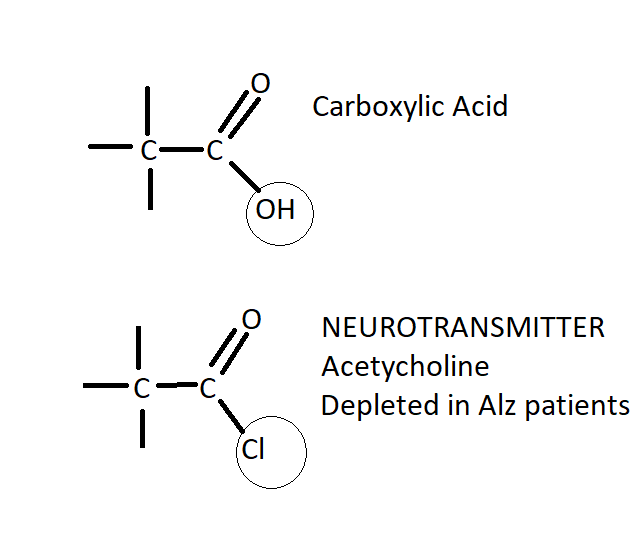
Acetylcholine has been found to be deficient in Alzheimer’s patients and is prominent in memory and learning. I suggest that carboxylic acid is the culprit and a possible cause of Alzheimer’s disease. Perhaps the carboxylic Opinion acid overload induces the neurotransmitter to be under produced leading to Alzheimer’s. Perhaps carboxylic acid mimics acetylcholine causing an imbalance of the necessary neurotransmitter. There may be more than one cause. Indeed, I have suggested in other papers that the herpes simplex virus may be a cause of dementia [1, 2, 3].
Conclusion
Studies should be undertaken to see if the connection between carboxylic acid and Alzheimer ’s disease is a valid one.
References
-
Cusack PTE (2018) Chlorine, Creosote, and Dementia. EC Psychology and Psychiatry 7.1: 11-12.
-
Cusack PTE (2018) Cancer and Alzheimer’s: Carboxylic Acid, Chlorine and Iron. EC Psychology and Psychiatry 7.9: 618.
-
Cusack PTE (2018) Cresol, A possible cause of Dementia. EC Psychology and Psychiatry 7.7: 380-381.
- Pattern of Gonadal Hormones in Oral Testosterone-Supplimented Male Wistar Rats with Diabetes-Induced Hypogonadism
- Re-Evaluation of the Genotoxicity of Currently Used Food Dyes in Mouse Multiple Organs Via Continuous Administration by Drinking Using the Comet Assay
- Pharmacogenetics of Type 2 Diabetes Mellitus: Linking Genetic Variability to Drug Efficacy and its Cardiovascular Outcomes
- Exploratory Proteomic Profiling of SARS-CoV-2 Infected THP-1 Macrophages Reveals Alterations in Inflammatory Response and Cellular Metabolism
- Study of Genotoxicity of Hepatocarcinogens in Multiple Organs in Mice by Feeding and Drinking Using the Comet Assay
- Spirulina Polypeptides Inhibit the Growth of Human Lung Tumor (H460) Cells